

India’s Democracy Marches On: CEC Gyanesh Kumar Announces 2026 Assembly Election Dates for 5 States
A comprehensive, data-driven guide to poll schedules, Model Code of Conduct, nomination timelines, and security plans for West Bengal, Assam, Tamil Nadu, Keralam & Puducherry
In a landmark press briefing at Vigyan Bhawan in New Delhi on Sunday 15th Feb 2026, Chief Election Commissioner (CEC) Gyanesh Kumar— flanked by Election Commissioners Sukhbir Singh Sandhu and Vivek Joshi— officially announced the schedules for the 2026 Assembly elections in four states and one Union Territory. The democratic exercise will involve 17.4 crore voters, 2.19 lakh polling stations, 824 constituencies, and nearly 25 lakh election officials— a human and logistical operation that, as Kumar himself noted, equals the combined electorate of Australia, France, South Africa, Germany, and Canada.

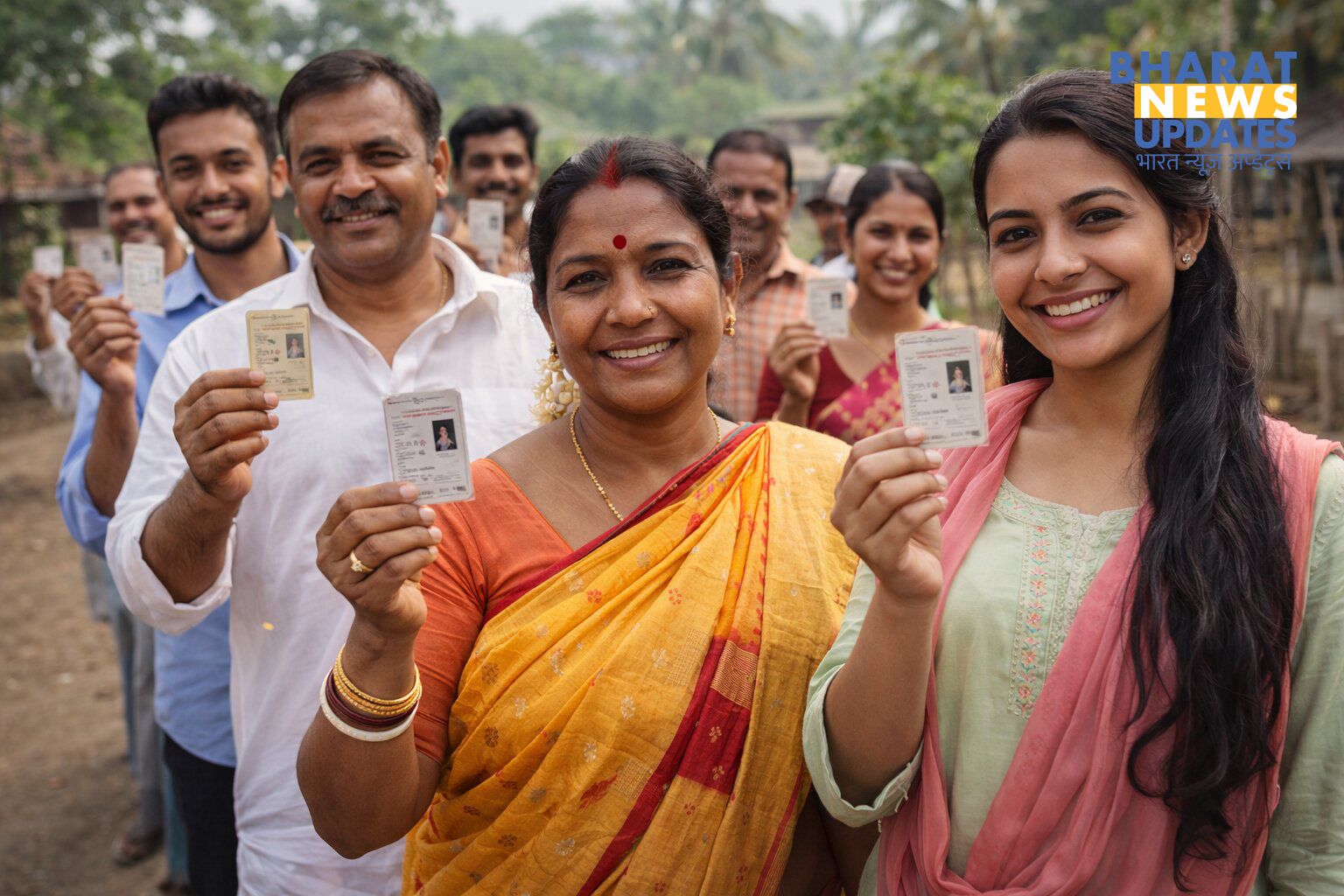
Calling elections a “festival of pride and democracy,” CEC Gyanesh Kumar addressed first-time voters directly: “You are about to step into one of the most important responsibilities of your life. Your vote is your choice in shaping the future of your state and the nation.“ The Model Code of Conduct” (MCC) came into force immediately upon the announcement by the ECI, binding all political parties, governments, and public servants across the five poll-bound regions.
“The commission, along with lakhs of election officials and security personnel, is committed to ensuring free, fair, transparent, accessible and peaceful elections.”— Chief Election Commissioner Gyanesh Kumar, Press Conference, March 15, 2026.

Understanding the Model Code of Conduct (MCC)
The MCC is the bedrock of free and fair elections in India. It kicks in the moment the ECI announces the poll schedule and remains in effect until results are declared on May 4, 2026. It governs the conduct of political parties, candidates, and government machinery alike, ensuring compliance with ECI regulations.
Core MCC rules now in force across all 5 regions:
- No new government schemes, projects, or freebies may be announced by any ruling government.
- Government vehicles, personnel, or resources cannot be used for campaign activities.
- Election rallies and public meetings require prior permission from local authorities.
- No candidate or party may use religious, caste, or communal appeals to seek votes.
- Hate speech, voter intimidation, or any form of electoral malpractice is strictly prohibited.
- Paid news or surrogate advertising by political parties is banned; all expenditure must be declared.
- Candidates must observe a 48-hour campaign silence before polling (no public events or media campaigns).
- Exit polls are banned from 7 AM on the first polling day until the final polling hour of the last phase.
- 100% CCTV/webcasting at all polling booths to be implemented; presiding officers upload turnout data every two hours.
- Central Armed Police Forces (CAPF) deployed under Article 324; Central Observers posted under Section 20B of the Representation of the People Act, 1951.

1. West Bengal (294 Constituencies)
The 294-seat West Bengal Assembly is the biggest battleground of the 2026 cycle, with Chief Minister Mamata Banerjee’s Trinamool Congress seeking a historic fourth consecutive term while the BJP mounts an aggressive challenge. In a significant departure from the past (2021 saw 8 phases), the ECI has reduced polling to just two phases — a decision CEC Kumar explained as aimed at making the process “convenient to everybody.
-
Total Electorate: 6,45,61,152 (including 5,23,229 young electors aged 18-19) .
-
Model Code of Conduct: Enforced immediately. In a pointed observation just hours before the MCC kicked in, the West Bengal government announced a hike in honoraria for religious priests. CEC Kumar refused to take note of such last-minute announcements, classifying them as “policy decisions” permissible before the code’s enforcement .
-
Security Arrangements: The Commission has sought a list of police officers involved in past election violence and assured action as per the law .
Phase I (152 Constituencies)
-
Date of Issue of Gazette Notification: March 30, 2026
-
Last Date for Nominations: April 6, 2026
-
Date for Scrutiny: April 7, 2026
-
Last Date for Withdrawal: April 9, 2026
-
Date of Poll: April 23, 2026
-
Vote Timings: Standard timing to be notified, generally 7 AM to 6 PM, varying by location.
Phase II (142 Constituencies)
-
Date of Issue of Gazette Notification: April 2, 2026
-
Last Date for Nominations: April 9, 2026
-
Date for Scrutiny: April 10, 2026
-
Last Date for Withdrawal: April 13, 2026
-
Date of Poll: April 29, 2026
-
Date of Counting: May 4, 2026 (for both phases)
-
Date Before Which Election Shall Be Completed: May 6, 2026.

2. Assam (126 Constituencies)
The BJP-led NDA government under Chief Minister Himanta Biswa Sarma aims for a second consecutive term, while a revived Congress-led Asom Sonmilito Morcha alliance — formed in November 2025— seeks to unseat them. Notably, 2021 saw three phases; 2026 has been consolidated into one, reflecting improved security preparedness in the Northeast.
-
Total Electorate: Over 2.5 crore voters spread across 31,486 polling stations .
-
Model Code of Conduct: In effect immediately. The ECI has mandated the setup of model polling stations, including those managed exclusively by women and Persons with Disabilities (PwD) .
-
Date of Issue of Gazette Notification: March 18, 2026 (Tentative, based on last nomination date)
-
Last Date for Nominations: March 24, 2026 .
-
Date for Scrutiny: March 26, 2026 (Standard +2 days from last nomination)
-
Last Date for Withdrawal: March 28, 2026 (Standard +2 days from scrutiny)
-
Date of Poll: April 9, 2026 .
-
Date of Counting: May 4, 2026.
-
Date Before Which Election Shall Be Completed: May 6, 2026.
-
Vote Timings: 7 AM to 6 PM (estimated).

3. Tamil Nadu (234 Constituencies)
The DMK government under Chief Minister M.K. Stalin— which swept the 2021 polls with 133 seats— faces its first re-election test in what analysts call a three-faction battle: the ruling DMK alliance, the opposition AIADMK bloc, and the fast-rising TVK party of actor-turned-politician Vijay, whose entry makes Tamil Nadu’s 234 seats one of the most fascinating political contests in the country this year.
-
Total Electorate: 5,67,07,380. This includes a significant gender balance with 2.77 crore males and 2.89 crore females .
-
Model Code of Conduct: Enforced. Notably, just before the announcement, BJP leader K. Annamalai had promised a ₹10,000 deposit to women’s accounts if voted to power. When questioned, the CEC did not comment on the specifics of this promise but reiterated the ban on cash inducements .
-
Date of Issue of Gazette Notification: March 24, 2026 (Tentative)
-
Last Date for Nominations: April 6, 2026 .
-
Date for Scrutiny: April 7, 2026 .
-
Last Date for Withdrawal: April 9, 2026 .
-
Date of Poll: April 23, 2026 (Single Phase) .
-
Date of Counting: May 4, 2026.
-
Date Before Which Election Shall Be Completed: May 6, 2026.
-
Vote Timings: 7 AM to 6 PM (estimated).
Constituencies: 188 general + 44 SC-reserved + 2 ST-reserved. All 38 districts vote simultaneously.

4. Kerala (140 Constituencies)
Keralam’s 140-seat assembly is a study in political rarity — the Left Democratic Front under Chief Minister Pinarayi Vijayan made history in 2021 by retaining power in a state famous for alternating governments every five years. Whether that historic streak continues in 2026 is the central question, with the UDF (Congress-led) mounting a strong comeback bid. CEC Kumar confirmed approximately 2.7 crore registered electors in the state.
-
Model Code of Conduct: Enforced. The Commission has directed strict adherence to spending limits.
-
Date of Issue of Gazette Notification: March 18, 2026 (Tentative)
-
Last Date for Nominations: March 24, 2026 (Estimated, aligning with Assam)
-
Date for Scrutiny: March 26, 2026
-
Last Date for Withdrawal: March 28, 2026
-
Date of Poll: April 9, 2026 .
-
Date of Counting: May 4, 2026.
-
Date Before Which Election Shall Be Completed: May 6, 2026.
-
Vote Timings: 7 AM to 6 PM (estimated).
Constituencies: 124 general + 14 SC-reserved + 2 ST-reserved. 30,471 polling stations across the state.
5. Puducherry (30 Constituencies)
India’s smallest and most distinctive electoral contest — the 30-seat Puducherry Legislative Assembly (33 including 3 Centre-nominated members) will decide a fierce coalition battle. The ruling All India NR Congress led by CM N. Rangasamy is chasing a third consecutive term alongside the BJP, while the Congress-DMK combine pushes for a change of government in the union territory.
-
Political Landscape: The Congress is in alliance with the DMK and CPI, facing the AINRC-BJP-AIADMK combine .
-
Model Code of Conduct: Enforced immediately.
-
Date of Issue of Gazette Notification: March 18, 2026 (Tentative)
-
Last Date for Nominations: March 24, 2026 (Estimated)
-
Date for Scrutiny: March 26, 2026
-
Last Date for Withdrawal: March 28, 2026
-
Date of Poll: April 9, 2026 (Alongside Kerala and Assam) .
-
Date of Counting: May 4, 2026.
-
Date Before Which Election Shall Be Completed: May 6, 2026.
-
Vote Timings: 7 AM to 6 PM (estimated).
Total registered voters: 9,44,539. Covers four districts: Puducherry, Karaikal, Mahe, and Yanam.
Security arrangements: a fortress-grade deployment
The ECI has signalled zero tolerance for electoral violence, particularly in West Bengal, which has historically seen poll-related incidents. Kumar warned that “strict action would be taken in cases of violations” and confirmed a massive security apparatus will be deployed across all five regions.

In one of his most significant remarks, CEC Kumar also addressed the pre-MCC DA hike announcement by West Bengal CM Mamata Banerjee, clarifying that “actions taken before the MCC comes into force fall within the prerogative of the government”— setting a clear legal and political baseline for post-announcement conduct.

Political Reactions: Cheers, Concerns, and a Civilizational Battle
The announcement has triggered immediate responses from key political players across the spectrum.
In West Bengal: The TMC vs. BJP Duel
The ruling Trinamool Congress (TMC) welcomed the two-phase schedule. Party General Secretary Kunal Ghosh expressed confidence, stating, “People of Bengal are with TMC. This was again shown in the massive turnout of youth in Yuva Sathi camps” .
The BJP framed the election in existential terms. In a post on X, the party declared, “This is not merely an election, it is a civilisational battle. The countdown to the end of Maha Jungle Raj has begun.” They added, “Fifty days to go—May 4 will mark a new dawn for Bengal” .
However, the Congress struck a cautious note. While welcoming the reduction in phases, senior leader Pradip Bhattacharya flagged concerns over voter safety. “My only concern is that the electors can cast their votes freely and without any fear… in past elections, voters could not cast their ballots despite polls being conducted in multiple phases,” he alleged .
In Tamil Nadu:
The DMK and BJP-AIADMK-TVK(Vijay) alliance have both begun mobilizing cadres, with the DMK highlighting its women’s benefit schemes and the AIADMK alliance criticizing the “administrative failures” of the current government.
The CEC’s Verdict: A Festival of Pride
Concluding the briefing, CEC Gyanesh Kumar made a fervent appeal to the electorate. He emphasized the “purity” of electoral rolls, noting that the Special Intensive Revision (SIR) was conducted to ensure no eligible voter is left out .
He reminded the nation that elections are a matter of pride. “Chunaav ka parv, hum sabka garv, elections in India are the festival of democracy,” he signed off, urging first-time voters to step into their role as architects of the nation’s future .
With the dates set and the MCC in force, the five states now brace for a high-decibel political campaign, culminating in the counting of votes on May 4, 2026.