

A dead activist, a censor board that wanted 127 cuts, and a streaming release that lasted less time than a long weekend the strange afterlife of Punjab’s most contested biopic.
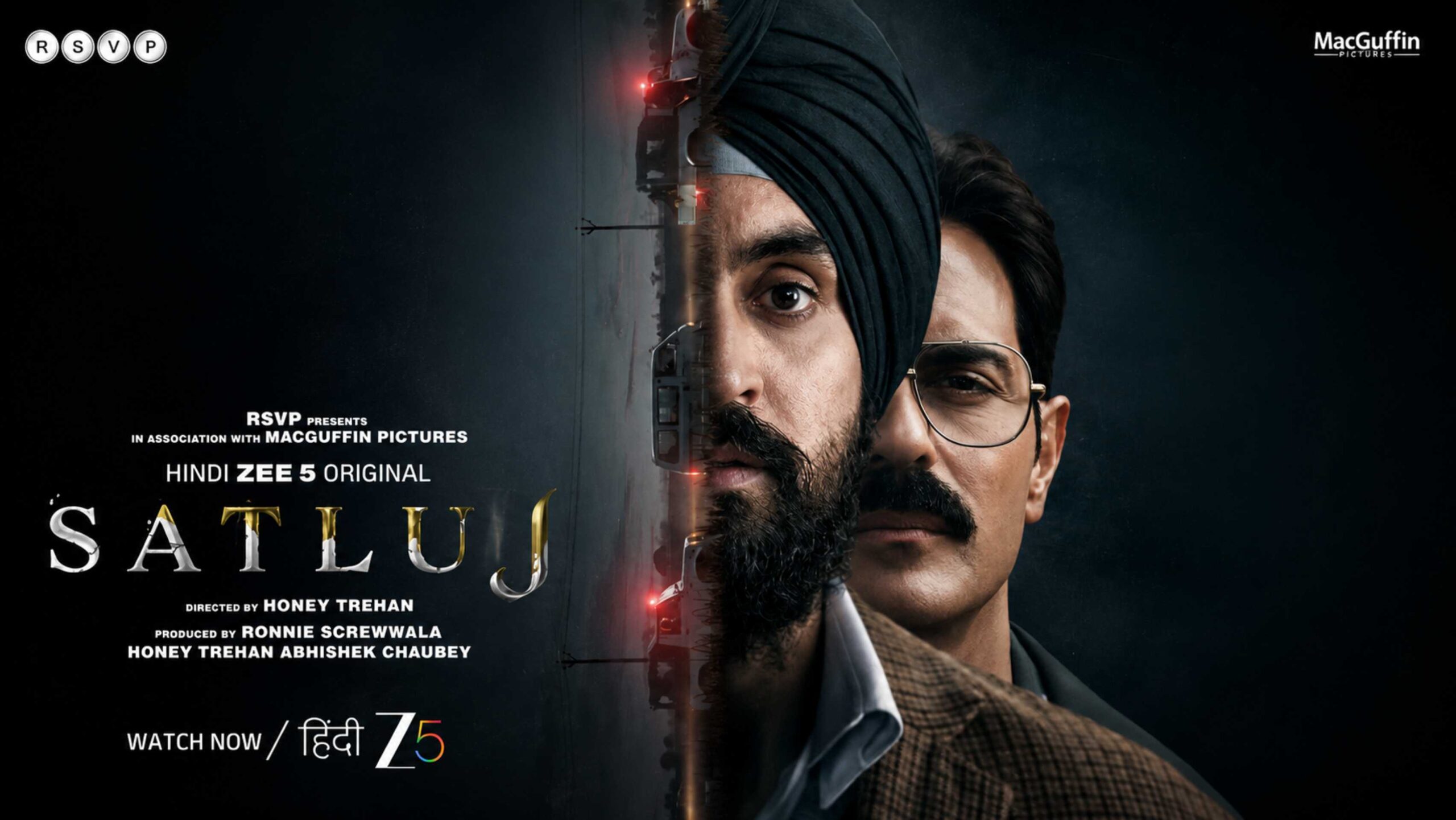
There is a particular kind of irony in a film about a man who was disappeared getting disappeared itself. That is exactly what happened to Satluj, the Diljit Dosanjh-starrer formerly called Punjab ’95, which streamed on ZEE5 for barely two days before the platform quietly pulled it off from Indian screens.
The Man Behind the Title
Long before he was a movie subject, Jaswant Singh Khalra was a bank employee in Amritsar who moonlighted as the general secretary of the Human Rights Wing of the Shiromani Akali Dal. In the mid-1990s he did something no official body had managed to do: he pulled municipal cremation records and matched them against lists of people who had disappeared in police custody during Punjab’s insurgency years. What he found was staggering thousands of bodies, many labelled “unidentified,” quietly cremated by the truckload between 1984 and 1994. He went public with the numbers. Within months, he himself was picked up and never seen again. A decade later, the Supreme Court‘s own record confirmed that Punjab Police officers had abducted and killed him; four were convicted, and an appeals court later upgraded their sentences to life.
That true story not a fictionalised composite, but a documented case with a court judgment attached is the spine of Satluj. Diljit Dosanjh plays Khalra, and by his own account, staying inside that character for the length of the shoot left him needing a week to decompress afterward.

Three Years in a Filing Cabinet
The film’s journey to an audience is almost a second plot in itself. Submitted to the Central Board of Film Certification in 2022 under its original title, it sat there for roughly three years while the board reportedly asked for 127 cuts, an extraordinary number for a single feature. A planned 2023 world premiere at the Toronto International Film Festival fell through with no public explanation from organisers. A February 2025 release date came and went. Eventually, the makers gave up on cinemas altogether, retitled the film Satluj after the Punjab river, and released it uncut on ZEE5 last Friday. Dosanjh was emphatic that not a single frame had been trimmed from the cut he’d seen in festival screenings years earlier.
Two days later, it was taken down from Indian ZEE5 OTT Platform though still watchable on ZEE5 Global outside the country. ZEE5 offered no detailed reason at first, only a line about “current developments,” before later putting out a statement standing by the film’s “creative vision” and promising to pursue “every appropriate avenue” to bring it back. Government sources, meanwhile, indicated the concern was that certain portions could be used to build sympathy for the Khalistan movement, with Punjab’s elections on the horizon.
Two Honest Readings of the Same Facts
Here is where the story stops being simple, and both sides deserve to be stated plainly rather than flattened into a villain narrative.
The case for pulling it: A government’s job includes weighing whether a widely-viewed film, however factually grounded, could be repurposed as a recruitment or radicalisation tool by separatist networks that still exist and still operate around Punjab’s diaspora. Cinema doesn’t stay in its lane, clips get stripped of context and recirculated on platforms Delhi doesn’t control. If intelligence assessments flagged specific scenes as exploitable, acting before an election cycle rather than after a crisis is a defensible, if unglamorous, instinct.
The case against it: The uncomfortable wrinkle is that the facts Satluj dramatises aren’t allegations dressed up as drama they’re facts a court already established. Khalra’s abduction and murder were adjudicated, appealed, and upheld. Banning a court-verified history is a different act than banning speculation.
But the harder, more honest context critics of the ban often skip past is this: Khalra’s investigation documented killings by the state, not killings by Khalistani militants and those were two separate, equally real horrors of the same decade. The 1980s-90s insurgency also saw targeted massacres of Hindu civilians in Punjab: bus passengers pulled off and shot, train bombings, families driven out of villages for refusing to pay “protection” atrocities carried out in the name of the same Khalistan movement the state was fighting when its own excesses spiraled. A film about one truth doesn’t cancel the other; it just means Satluj is a single frame from a decade that has several. Critics of the ban point out that other politically charged films like The Kashmir Files, on the exodus of Kashmiri Pandits, and The Kerala Story, built around the far more contested “love jihad” narrative remain fully available on the same platform, and ask why a court-verified case is treated more cautiously than a disputed one. Supporters of the ban would say that’s exactly backwards: a court-verified case naming police officers is precisely the kind of material a separatist movement can repackage as state atrocity propaganda, in a way a contested narrative film cannot. That asymmetry not a simple double standard is what’s actually fuelling Punjab’s cross-party anger, from AAP to Congress to the Akali Dal
The Part Nobody’s Saying Out Loud
The genuinely uncommon detail here isn’t the ban India has banned or delayed plenty of films. It’s the timing mismatch: a story is only “dangerous propaganda” once it reaches a mass streaming audience, despite having been publicly available as a Supreme Court judgment, newspaper archives, and human rights reports for two decades. The information was never secret. What changed was its packaging into something emotionally gripping enough for people to actually watch. That tension between information being freely available and information being freely felt is the real fault line, and it’s one Indian media policy hasn’t figured out how to talk about honestly yet.
Whether Satluj returns to Indian screens will likely depend less on artistic merit and more on how Punjab’s electoral map looks in the coming months.