

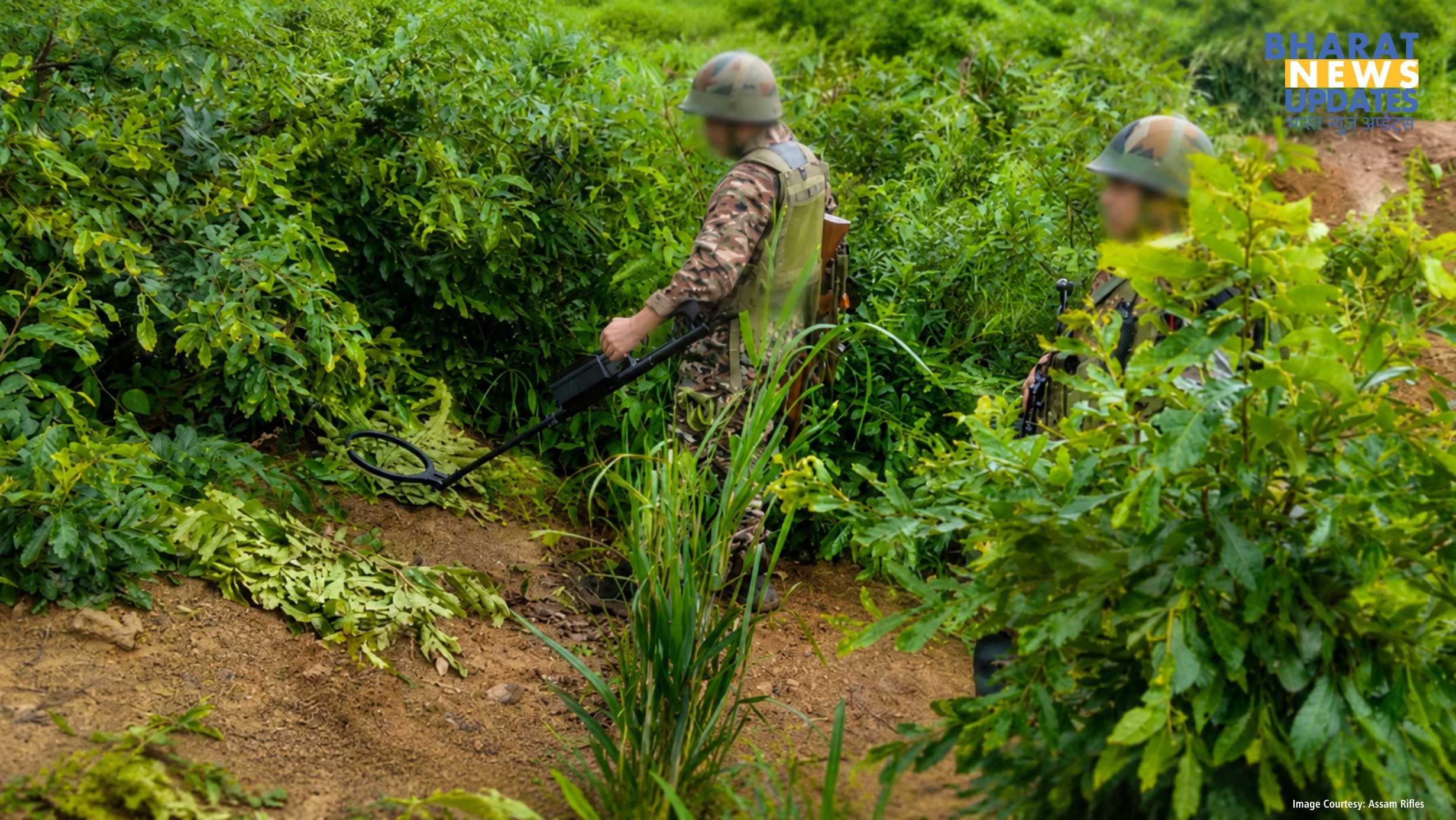
Monday afternoon, somewhere between 2 and 3 PM, an Assam Rifles convoy was doing what it does almost every day, moving between outposts near Sukhovi, in Nagaland‘s Chümoukedima district. Then it wasn’t routine anymore.
A powerful blast, suspected to be an improvised explosive device, tore into one of the vehicles. One jawan was killed on the spot. Four others were wounded and rushed to a nearby hospital, their conditions still being assessed. Defence PRO Col Amit Shukla confirmed the toll to PTI: one dead, four injured. That is the figure standing on official record right now. A few early reports some citing unnamed sources put the number of dead at three. No official statement has matched that claim. In a story this fresh, that gap between “confirmed” and “circulating” is itself worth watching.
Why this blast doesn’t fit the pattern
Here’s the detail that should stop you: locals in the area told reporters they couldn’t remember the last time something like this happened here. One investigation traced it further that this appears to be the first IED attack of its kind in this specific belt since 2004. Two decades of relative calm, broken on a Monday afternoon near a training school.
That’s not incidental. Sukhovi isn’t a random patch of road, it houses the Assam Rifles Training Centre and School. An attack that close to an institutional hub isn’t just violence; it’s a message about reach and intent.

The eight-day thread nobody’s connecting out loud
This is the part that gets buried under the day’s breaking-news noise: eight days before Chümoukedima, two Assam Rifles personnel, a warrant officer and a driver were killed in a strikingly similar ambush at Nungshang Khong, along the Imphal-Dimapur highway in Manipur’s Ukhrul district. Same force. Same method a convoy, an explosive, a swift claim of no responsibility from the usual suspects.
Security establishment sources have pointed toward the Myanmar-based eastern faction of NSCN-IM as a possible actor behind the Nagaland blast. NSCN-IM’s official line, issued quickly, was a denial: the group said it was “neither involved in nor had any knowledge of the said incident.” Denials like this are almost procedural in the Northeast’s insurgency landscape but the speed of this one, arriving before investigators had even secured the site, is its own small data point.
What actually happens after a blast like this
Skip past the condolence-and-outrage cycle for a second and look at the machinery: a “massive search operation” was launched within the hour. The area around Sukhovi was cordoned off. Additional personnel were rushed in. This is the unglamorous, unreported reality of these attacks as most of the actual work happens in the 48 hours after the cameras leave, sweeping terrain, questioning locals, tracing the device’s components back to a source. Whether that produces an arrest is the real test of whether “peace” in Nagaland means anything operationally, or just statistically.
The uncomfortable question underneath it
Nagaland has been sold, for years, as the Northeast’s peace-process success story of ceasefires, dialogue, political maturity. Two attacks on the same force in eight days, across two different states, complicate that narrative without necessarily disproving it. It’s possible for a broader peace process to hold while a fringe faction angling for leverage, relevance, or a seat at a negotiating table it feels excluded from, keeps detonating that peace in small, deliberate doses.
The dead and wounded from Monday’s blast don’t get a say in that political calculus. What they get, for now, is a search operation, a hospital bed, and a Defence PRO’s statement that’s still being updated as facts come in.
This is a developing story. Casualty figures and the identity of those responsible remain officially unconfirmed as of this writing.