

Iran Strikes Dimona and Arad, Nearly 200 Wounded as Nuclear Standoff Deepens
Trump gives Tehran 48 hours to reopen Strait of Hormuz or face destruction of its power plants; Iran vows to hit U.S. energy targets in the region
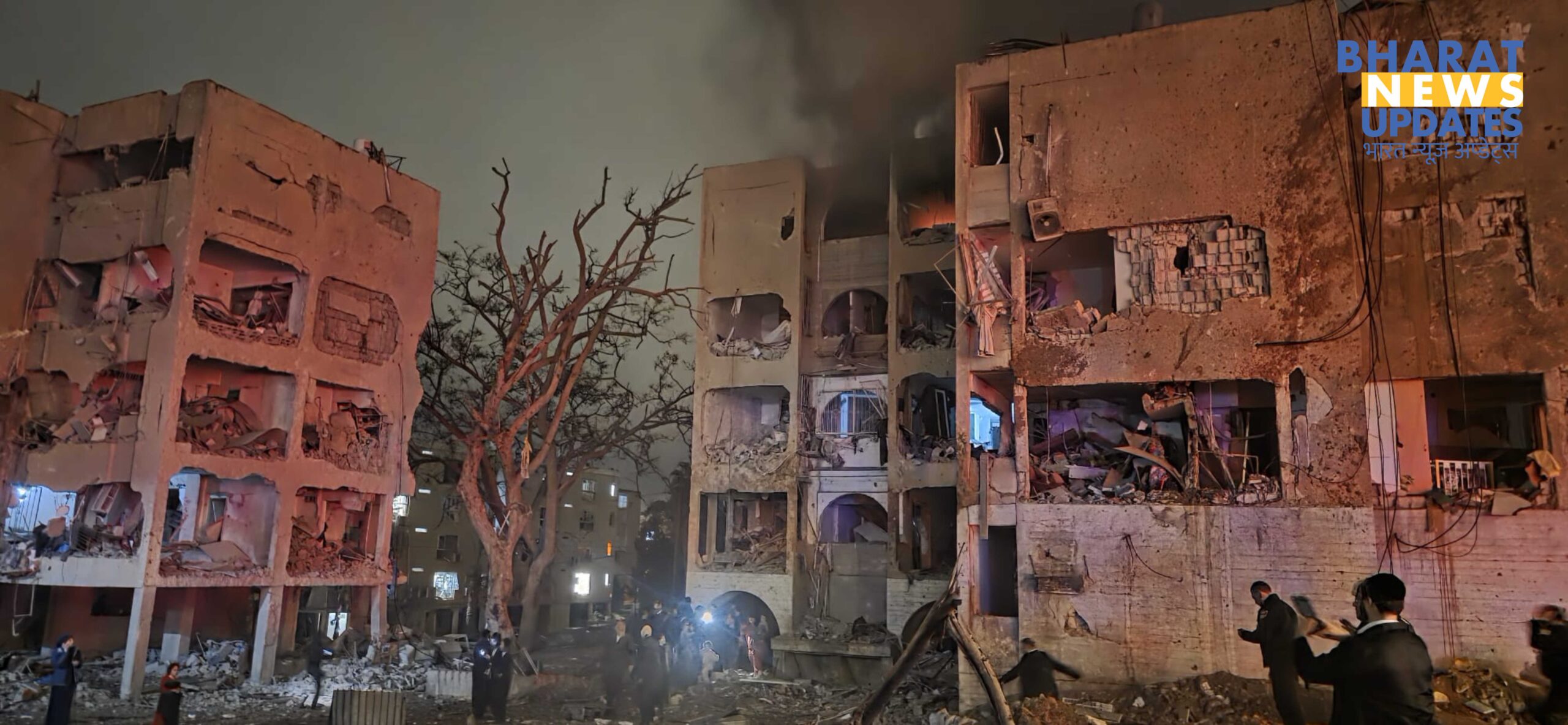
Iran fired ballistic missiles at two southern Israeli cities on Saturday night, wounding nearly 200 people and raising the stakes in a conflict now entering its fourth week. The strikes on Dimona— a city adjacent to Israel’s main nuclear research facility— and the nearby city of Arad mark what military analysts are calling a dangerous new phase of direct, nuclear-site-adjacent warfare.
The Israeli Health Ministry confirmed that close to 200 people were wounded in the two attacks, with 11 in serious condition. Among the most critically hurt were a 12-year-old boy in Dimona, struck by shrapnel, and a 5-year-old girl injured in the subsequent strike on Arad.

Rescue workers in Arad said the direct missile hit caused widespread damage across at least 10 apartment buildings, three of them badly damaged and in danger of collapsing. Soroka Medical Center in Beersheba treated 175 people from the two cities, with 36 still hospitalised as of Sunday morning. Schools across large parts of southern Israel have since been closed, with restrictions tightened across the Negev region.
Israel’s air defence systems failed on both occasions. IDF Spokesperson Brig.-Gen. Effie Defrin confirmed: “The air defence systems were activated but did not intercept the missile,” adding that the military would investigate the failure and that “this is not a special or different weapon than the one we are familiar with.” The inability to intercept missiles over one of Israel’s most heavily protected zones has rattled both civilian and military confidence. Iran‘s Parliament Speaker Mohammad Bagher Ghalibaf said the failure “operationally signals entering a new phase of the battle.”
Iran‘s state television described the strikes as retaliation for an earlier attack on its Natanz nuclear enrichment facility, which the Israeli military denied carrying out. The Pentagon declined to comment on the Natanz strike, which was also hit during the first week of the war and in a separate 12-day conflict last June.

The International Atomic Energy Agency (IAEA) said it had received no indication of damage to the Shimon Peres Negev Nuclear Research Centre in Dimona and that no abnormal radiation levels had been detected in the area. Israel maintains a long-standing policy of neither confirming nor denying the existence of nuclear weapons, though it is widely believed to be the only nuclear-armed state in the Middle East.
Prime Minister Benjamin Netanyahu, addressing the nation Saturday night, called it “a very difficult evening in the battle for our future” and pledged that Israel would “continue striking our enemies on all fronts.” The IDF separately announced it had launched strikes on what it called a nuclear weapons development facility at Tehran’s Malek Ashtar University.
Since the US-Israel offensive against Iran began on February 28, more than 1,500 people have been killed in Iran, including over 200 children, according to Iranian state media. Independent verification of those figures remains difficult.
The confrontation quickly spread beyond the battlefield. On Sunday, US President Donald Trump threatened to “hit and obliterate” Iran’s power plants if Tehran does not reopen the Strait of Hormuz within 48 hours. The Strait had been one of the world’s most critical shipping lanes, carrying roughly a fifth of global energy supplies before Iran blocked it after the war began, driving up fuel prices worldwide.

President Trump posted directly on Truth Social: “If Iran doesn’t FULLY OPEN, WITHOUT THREAT, the Strait of Hormuz, within 48 HOURS from this exact point in time, the United States of America will hit and obliterate their various POWER PLANTS, STARTING WITH THE BIGGEST ONE FIRST.”
Iran did not back down. The Iranian armed forces’ unified combatant command responded that if Iran’s fuel and energy infrastructure is hit, “all energy infrastructures belonging to the U.S. in the region will be targeted.”
The strike on Arad appears to be the single attack that has injured the most people since the war with Iran began. With both sides escalating— and Trump now explicitly threatening Iran’s civilian power infrastructure— the window for any diplomatic off-ramp appears to be narrowing rapidly.
The next 48 hours could define whether this conflict expands into a wider regional war.