

“This Was a Hospital”: 400 Dead in Kabul as Pakistan and Afghanistan’s Hidden War Turns Horrific
The Silence After the Bombs
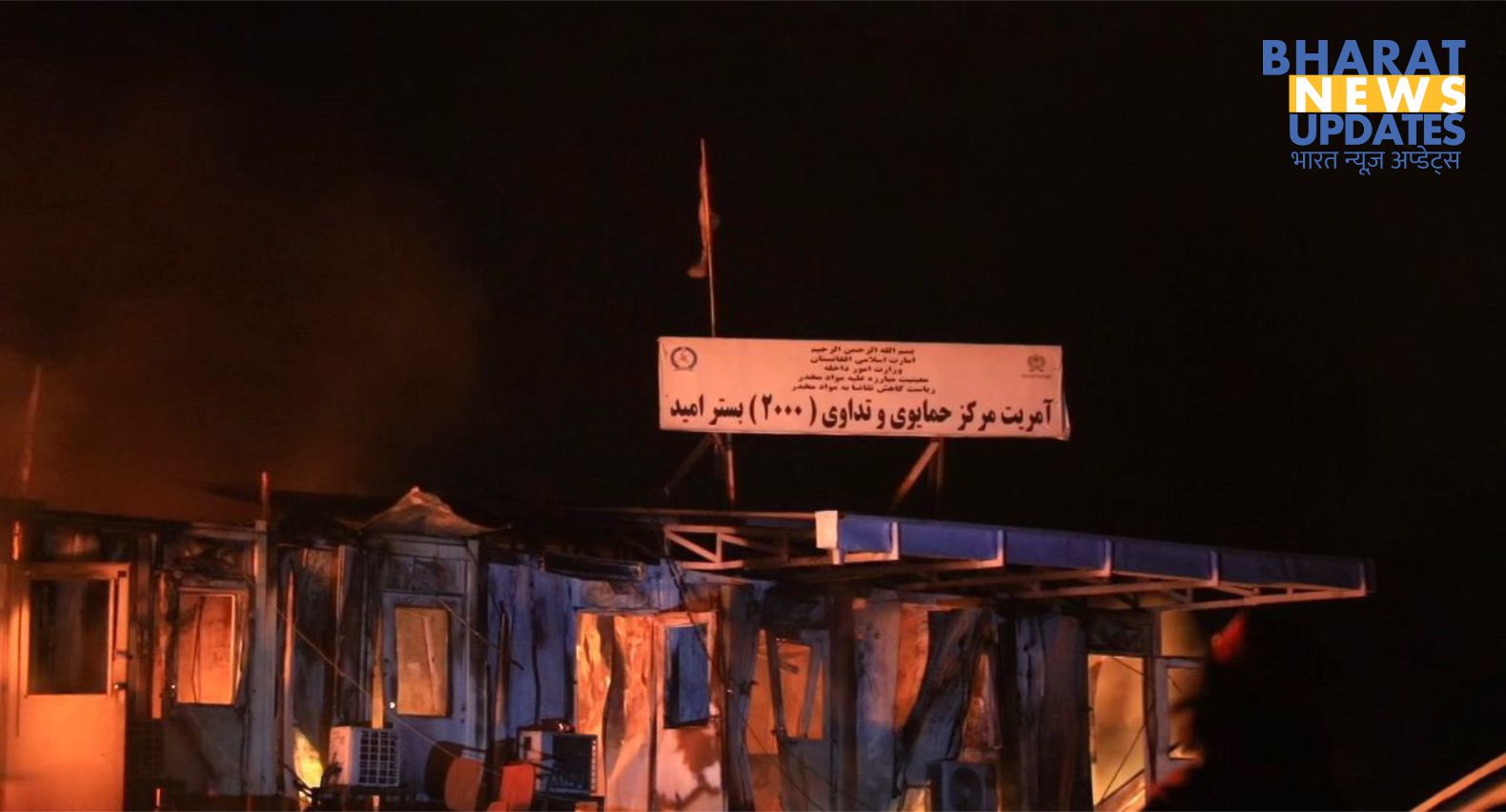
The fire burned through the night. By dawn, families had gathered outside what was left of the Omid Addiction Treatment Hospital in Kabul’s Pul-e-Charkhi area, pulling at rubble, asking questions no one would answer .
Hundreds of families now wait outside a building that no longer exists, hoping somehow their sons, brothers, fathers walked away before the bombs came. Most did not.
According to Afghan government Deputy Spokesman Hamdullah Fitrat, Pakistani aircraft struck the 2,000-bed facility at approximately 9:00 PM local time on Monday. The death toll has reached 408, with another 250 injured. Rescue teams are still pulling bodies from the debris .
The patients were drug addicts undergoing rehabilitation. They were not soldiers. They were not militants. They were men trying to rebuild lives broken by addiction, in a country where such second chances are rare.
Now they are gone.
What Actually Happened?
The strike targeted the Omid Addiction Treatment Hospital, one of the largest facilities of its kind in Afghanistan. At the time of the attack, patients were breaking their daily Ramadan fast, a moment of prayer and community.
Witnesses describe chaos. Multiple explosions, then fire. Patients trapped in beds. Staff running through smoke, dragging whoever they could. The building, largely destroyed, collapsed on those inside.
Afghanistan’s Health Ministry spokesman Sharafat Zaman confirmed that large sections of the hospital were completely destroyed. Firefighters worked through the night to extinguish flames, but for most victims, it was already too late .
Zabihullah Mujahid, the Taliban government’s chief spokesman, issued a sharp condemnation: “The Pakistani military regime has once again violated Afghanistan’s airspace and targeted a drug rehabilitation hospital in Kabul, resulting in the death and injury of addicts who were undergoing treatment. We strongly condemn this crime and consider such an act to be against all accepted principles and a crime against humanity.”

Pakistan’s Response: Denial and Defiance
Pakistan tells a different story.
The Ministry of Information and Broadcasting issued a statement rejecting Afghan claims, insisting that its forces carried out “precision strikes on military installations and terrorist support infrastructure” in Kabul and Nangarhar province. According to Islamabad, these strikes targeted “technical equipment storage and ammunition storage of the Afghan Taliban and Fitna al-Khawarij”— a term Pakistan uses for the Pakistani Taliban (TTP).
“Pakistan’s targeting is precise and carefully undertaken to ensure no collateral damage is inflicted,” the ministry said. It dismissed Afghan reports of a hospital strike as “false and aimed at misleading public opinion” and “inflaming public emotions”.
Information Minister Attaullah Tarar confirmed that the operation, named Ghazab Lil Haq, destroyed ammunition depots in Kabul and logistics hubs in Nangarhar, with secondary explosions indicating large weapons stockpiles.
In essence, Pakistan admits to striking Kabul. It admits to killing people. It simply denies they were civilians— or that a hospital was ever there.

The Human Cost: Eyewitness Accounts
Afghan officials and local residents contradict Pakistan’s claims.
The attack was not a small, contained operation. Witnesses describe multiple bombs hitting a single, clearly marked medical facility. Patients, many of them non-ambulatory, had no chance to escape.
One rescuer, speaking to local media, described pulling charred bodies from the wreckage through the early morning hours. “We found men still in their hospital clothes,” he said. “Some were handcuffed to beds. The fire reached them first.”
Ambulances from across Kabul rushed to the scene, but for most victims, there was nothing to do but collect the dead. Hospitals in the capital received hundreds of wounded, many with severe burns and shrapnel injuries.
In the border provinces, the situation remains equally grim. Even before the Kabul strike, Afghan officials reported that Pakistani shelling had killed four civilians — including three children and a woman — in Khost province overnight Sunday. In total, 18 civilians have been killed in Afghanistan over the past week from cross-border clashes.
The United Nations confirmed 185 civilian casualties, including 56 deaths, between February 26 and March 5 alone.

Cricket, Condolences, and Condemnation
The attack has resonated far beyond political circles.
Afghanistan’s cricketers, national heroes in a country starved of good news, have spoken out. Rashid Khan, the celebrated spinner, visited the site and condemned the strike. His presence, and that of other players, carried weight— a reminder that Afghanistan’s young generation, the very people rebuilding their nation, are watching.
On Monday, China said its special envoy had been shuttling between Kabul and Islamabad to mediate between the two sides and urged an immediate ceasefire, saying it would “continue to facilitate reconciliation and ease tensions.”
The UN Assistance Mission in Afghanistan urged both nations to cease hostilities and take steps to prevent harm to civilians. The EU called on all actors for immediate de-escalation. Bangladesh, China, Egypt, Iran, Iraq, Jordan, Malaysia, and Uzbekistan also called for a ceasefire and promoted dialogue.
UN Special Rapporteur Richard Bennett said he was “dismayed” by reports of the air raids: “I urge parties to de-escalate, exercise maximum restraint and respect international law, including the protection of civilians and civilian objects such as hospitals.”
India condemned the strikes, with Ministry of External Affairs spokesperson Randhir Jaiswal calling it “an act of aggression.”
Yet the international response has been, in substance, muted. The world is distracted. The US-Iran war commands headlines!

The Deeper Conflict: From Brothers to Enemies
To understand how we arrived here— at a bombed hospital, 408 dead, two neighbors at each other’s throats— requires looking back.
Pakistan and Afghanistan’s Taliban were once allies. During the US occupation, Pakistan provided sanctuary and support to Taliban leaders, viewing them as strategic depth against India. When the Taliban seized Kabul in 2021, Pakistan celebrated.
But victory soured. The Taliban’s return empowered not just the Afghan group, but its Pakistani offshoot, the Tehrik-i-Taliban Pakistan (TTP). The TTP, sharing ideology and often fighters with the Afghan Taliban, launched increasingly deadly attacks inside Pakistan from sanctuaries across the border.
Islamabad demanded action. Kabul demurred, citing either inability or unwillingness. Some analysts suggest the Afghan Taliban, indebted to TTP fighters who fought alongside them against the US, cannot move against them without fracturing their own movement.
Tensions escalated through 2024 and 2025. Clashes in October 2025 killed dozens. A fragile Qatari-mediated ceasefire collapsed in late February, when Afghanistan launched what it called a retaliatory border offensive after Pakistani airstrikes killed civilians.
Since then, the conflict has spiraled. Pakistan declared “open war.” Its air force has struck multiple provinces, including Kandahar and now Kabul. Afghanistan claims to have killed over 100 Pakistani soldiers; Pakistan claims to have killed 684 Taliban fighters.
The truth, as always, lies somewhere in between— and is measured in bodies, not boasts.
The Bagram Question: What Is Pakistan Really After?
Some analysts see a deeper game.
Bagram Airbase lies approximately 60 kilometers north of Kabul. It hosts the largest airbase in Afghanistan, with two long runways capable of handling heavy bombers, drones, and strategic airlift. Located less than 400 kilometers from China’s western Xinjiang region, Bagram offers extraordinary potential for intelligence, surveillance, and reconnaissance across a vast region— from Iran to the west, to China’s nuclear expansion in the east.
US President Donald Trump had warned Afghanistan of “bad consequences” if it refused to transfer Bagram to Washington’s control. The Taliban refused categorically.
Is Pakistan striking Taliban targets to pressure them into cooperation — perhaps on Bagram access? The theory, while speculative, aligns with regional dynamics. Washington and Islamabad maintain complex, often opaque relationships. Pakistan’s military establishment, historically wary of Indian influence in Afghanistan, may see advantage in facilitating US access if it serves Pakistani interests.
But there is no direct evidence. Pakistan’s stated rationale — targeting TTP infrastructure — is plausible on its face. The TTP has killed thousands of Pakistanis. Islamabad’s frustration with Taliban inaction is genuine.
Yet the scale and location of this strike raise questions. Hitting central Kabul, targeting what Afghanistan insists was a hospital, suggests either catastrophic intelligence failure or deliberate escalation. Neither reflects a purely counterterrorism operation.

Will This War Escalate— or Burn Itself Out?
The honest answer is that nobody knows. But the conditions for escalation are more present than those for peace.
Pakistan has declared “open war.” Taliban forces are determined to retaliate with operations on Pakistani border posts, and potentially with asymmetric tactics — from launching drones to sponsoring militant attacks in wider Pakistan.
The forced repatriation of Afghan refugees from Pakistan has added another pressure point. An estimated 2.7 million Afghans returned to Afghanistan in 2025 alone, mainly from Iran and Pakistan, contributing to a 12 per cent increase in population since 2023. An already impoverished country is now absorbing its own refugees while being bombed.
In northern Afghanistan, resistance in the Panjshir Valley led by the National Resistance Front has complicated Taliban control, and Pakistan has reportedly targeted Taliban-linked bases there — potentially weakening Taliban authority and creating space for resistance groups to expand operations.
But there are also pressures against a full-blown, sustained war. Pakistan is economically fragile. The Taliban government, for all its brutality, is the only structure preventing Afghanistan from descending into complete chaos. Neither side can truly afford a prolonged war. China — which has leverage over both — wants trade routes, stability, and no American foothold in the region. China’s mediation is the most credible off-ramp available.
What is clear is this: striking a hospital — whatever one believes about the precise chain of events — is a civilizational failure. It is the kind of act that echoes. The mothers standing outside the gates of the Omid hospital calling their sons’ names on the 28th night of Ramadan will not forget. Their children will not forget. This is how hatred compounds over generations, long after the generals who gave the orders have retired to comfortable homes.
Conclusion: A Hospital, A Lesson, and a Region at the Crossroads
The attack on the Omid hospital did not happen in isolation. It happened at the end of a long chain of grievances, proxy wars, border disputes, refugee expulsions, militant attacks, and great-power games stretching back decades. Both Pakistan and Afghanistan bear responsibility — not equally, not in the same way, but genuinely— for the condition their relationship is in.
Pakistan cannot bomb its way to security. Every strike that kills civilians in Afghanistan creates ten new recruits for the TTP. Afghanistan’s Taliban government, meanwhile, cannot claim victimhood while simultaneously sheltering militants who blow up Pakistani markets and schools.
What both countries share — and what the world should not forget — is an ordinary population of people who want nothing more than to live, work, feed their families, and, if they are struggling with addiction, be allowed to heal in peace.
Four hundred of them did not get that chance on Monday night in Kabul.