

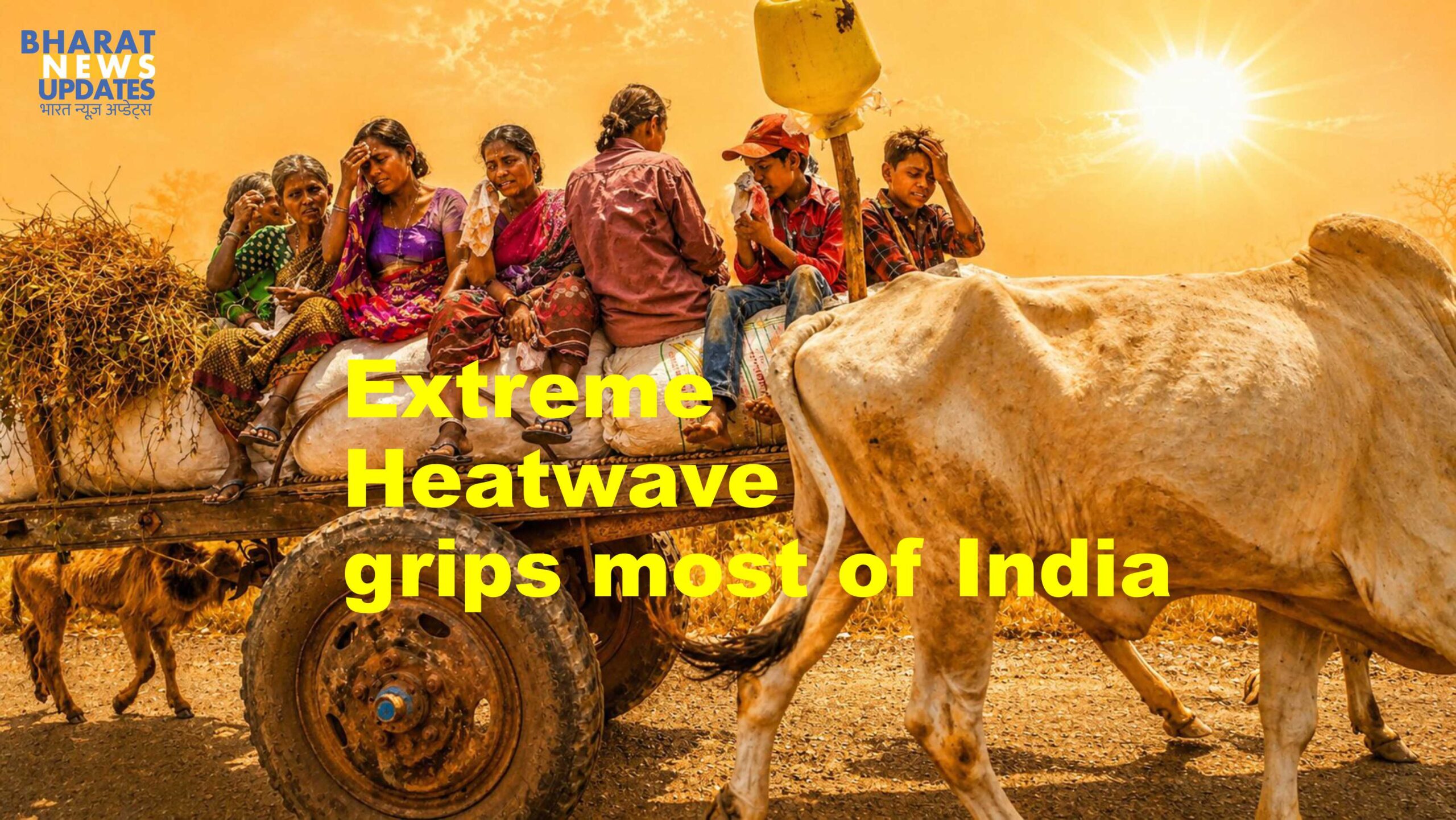
Indian Heatwave: The 2026 Hot Summer That Refuses to Leave
47.4°C in Banda. 46.1°C in Jaisalmer, four days running. 46.9°C in Akola. Nights warmer than they should ever be. And this time, the Pacific has a different name for what it’s doing to us.

There is a particular cruelty to this heatwave. By day, India bakes. By night, when bodies need rest, when outdoor workers who sleep in the open need relief, the air refuses to cool. Minimum temperatures across the northern plains are running five degrees above normal. You cannot recover from a day at 45°C if the night only dips to 32°C.
That is the hidden danger buried inside the weather bulletins. Heat mortality is not simply a function of peak temperatures. It is about cumulative thermal load, how many hours the human body is denied the chance to bring its core temperature down. In the summer of 2026, those hours are stretching uncomfortably long.
The Scorched Map: Who Is Burning and by How Much
The heatwave has swept from Rajasthan’s desert cities across the gangetic plains, through central India’s sun-baked plateau, reaching inland Karnataka, Andhra Pradesh, Telangana, and Tamil Nadu. IMD has issued alerts for Delhi, Rajasthan, Punjab, Haryana, UP, MP, Vidarbha (Maharashtra), Chhattisgarh, Bihar, and Telangana, a geographic spread unusual even for a country that knows brutal summers.
| City | State | Peak Temp | Alert Level | Key Risk Factor |
|---|---|---|---|---|
| Banda | Uttar Pradesh | 47.4 °C | Red · Extreme | Rural labour, no shelter access |
| Orai / Auraiya | Uttar Pradesh | 46–47 °C | Red · Extreme | Agricultural workers, open fields |
| Jhansi | Uttar Pradesh | 45–46 °C | Red · Severe | Stone-city heat retention at night |
| Jaisalmer | Rajasthan | 46.1 °C | Red · Extreme | 4-day streak; tourist exposure |
| Bikaner | Rajasthan | 45–46 °C | Red · Severe | Sandstorms, open markets |
| Phalodi | Rajasthan | 45–46 °C | Red · Severe | Historically among India’s hottest spots |
| Akola | Maharashtra (Vidarbha) | 46.9 °C | Red · Extreme | Inland cotton-belt, no coastal relief |
| Amravati | Maharashtra (Vidarbha) | 46.8 °C | Red · Extreme | Farmers, unshaded fields |
| Nagpur | Maharashtra (Vidarbha) | 43–45 °C | Orange · Severe | Urban heat island, zero sea breeze |
| Gwalior | Madhya Pradesh | 44–46 °C | Orange · Severe | Urban heat island, plateau exposure |
| Guna | Madhya Pradesh | 44–45 °C | Orange · Severe | Agriculture workers, thin tree cover |
| Gandhidham | Gujarat | 43–45 °C | Orange · Severe | Port industrial workers, concrete sprawl |
| Ahmedabad | Gujarat | 41–43 °C | Orange · High | Dense urban core, heat-island effect |
| Patna | Bihar | 41–43 °C | Orange · High | Dense population, low green cover |
| Delhi | NCT Delhi | 42–44 °C | Orange · High | Urban heat island; nights stay at 32°C+ |
| Hubli–Dharwad | Karnataka | 39–41 °C | Yellow · Moderate | Plateau dry heat, atypical for region |
| Hyderabad | Telangana | 38–40 °C | Yellow · Moderate | Humid heat; IT commuters under stress |
| Kurnool / Nellore | Andhra Pradesh | 40–42 °C | Orange · High | Interior zones lose coastal buffering |
| Chennai | Tamil Nadu | 37–39 °C | Yellow · Moderate | High humidity multiplies felt temperature |
| Sri Ganganagar | Rajasthan | 44.5 °C | Orange · Severe | Border district, dry desert winds |
Sources: IMD daily bulletins, PIB press releases, May 2026. Temperatures are peak/recent readings; conditions change daily.

Why Is It This Bad? The Honest 2026 Answer
April and May are always harsh. Continental dry winds blow in from the northwest. Solar radiation nears its annual peak. Heat troughs form over Rajasthan and reach into Pakistan. This is seasonal. What is not seasonal is an early onset arriving weeks ahead of historical norms, temperatures breaching 45°C across multiple states simultaneously, and nights that refuse to release heat accumulated over the day.
Climate Context: La Niña, Not El Niño, This Time
A critical distinction for 2026: it is La Niña the cool-Pacific counterpart whose prolonged effects are disrupting typical monsoon formation and intensifying pre-monsoon heat buildup this year, not El Niño. Many articles conflate the two. El Niño (warm Pacific) was the driver in 2024. La Niña can equally disrupt monsoon timing and suppress the moisture flows that ordinarily moderate Indian pre-monsoon temperatures. The mechanism is different; the damage is similar.
On top of the Pacific climate pattern sits a domestic stack of causes: the urban heat island effect (cities run 5–10°C hotter than surrounding rural areas), lower-than-normal pre-monsoon rainfall, clear skies with stalled circulation, deforestation, and loss of wetlands, all of which weaken India’s natural buffers against heat. And threading through all of it is a baseline that has shifted: India’s average annual temperature has risen 0.15°C per decade since 1951. The summers of the 2020s are not aberrations; they are the new floor.
The Contradiction Nobody Mentions
Coastal Mumbai sits in the high 30s uncomfortable but far below Akola‘s 46.9°C just 250 km inland. The Arabian Sea is still cooling Mumbai’s nights. That same ocean proximity is absent for the Vidarbha-Maharashtra region, which has emerged this year as one of India’s most dangerously hot zones, hotter even than parts of Rajasthan. Inland Maharashtra is the story few expected and even fewer are talking about.

The Hidden Victims: Who the Advisories Don’t Reach


What Comes Next: The Monsoon Question
The IMD’s seasonal outlook for April–June 2026 warns of above-normal heatwave days across east, central, and northwest India, as well as the southeast peninsula. Western disturbances and pre-monsoon thunderstorms will bring localized relief but no sustained break. The southwest monsoon’s arrival over Kerala typically by June 1 remains the only real reset, and its strength and timing this year are closely watched.
Until the monsoon asserts itself, residents across the worst-affected plains should plan for sustained high temperatures and treat each Red Alert day as genuinely dangerous not just uncomfortable.
This is not simply summer. It is a preview accelerated by La Niña-linked disruption, amplified by decades of urban sprawl and deforestation, and deepened by a warming baseline of what Indian summers may routinely look like within a decade if nothing structurally changes.