

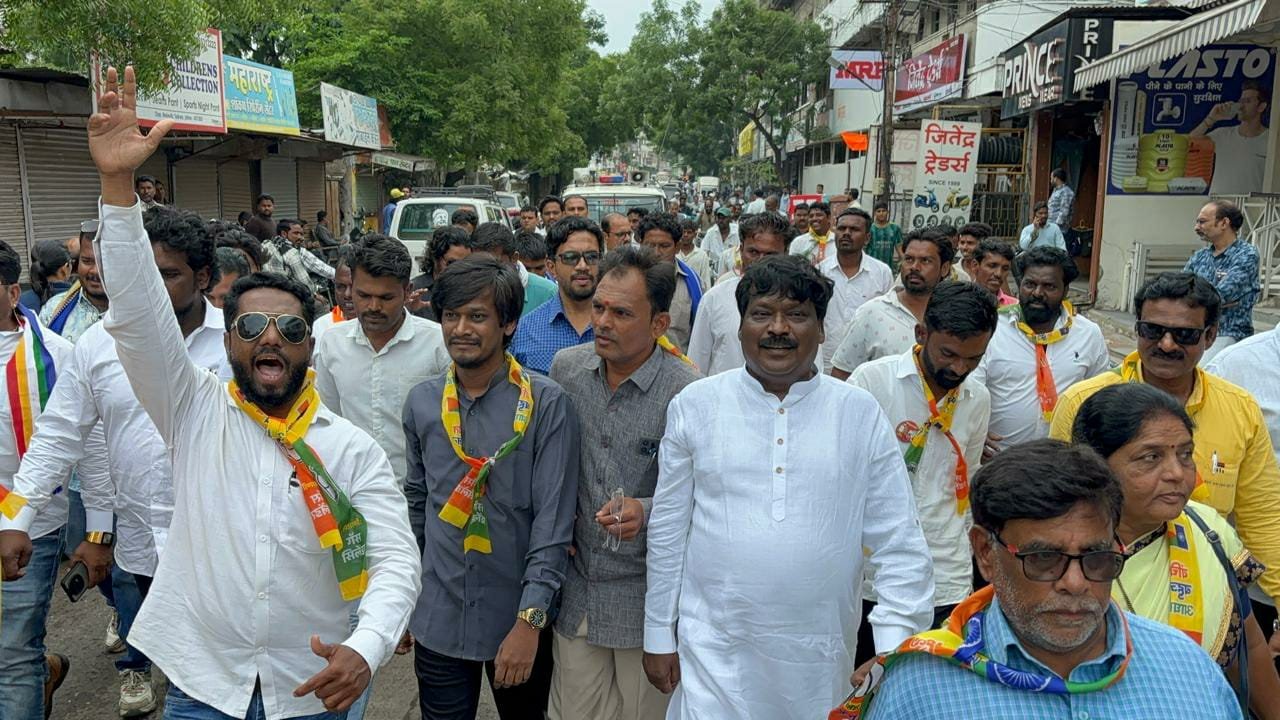
There’s a strange thing that happens with an Indian bandh: the noise around it is often louder than the bandh itself. Today’s Maharashtra Bandh, called by Vanchit Bahujan Aghadi chief Prakash Ambedkar grandson of Dr. B.R. Ambedkar is a good example. It’s being framed as a state-shaking event on WhatsApp forwards, but on the ground, it is something narrower and more interesting: a test of how much moral weight a symbolic protest still carries in 2026.
The trigger is real and troubling. Following large student demonstrations in Delhi over alleged NEET paper-leak irregularities, protestors say police used force to disperse them. Ambedkar’s call for the bandh is his way of saying the crackdown on students crossed a line, and he’s asked opposition parties, unions, and student groups to join in solidarity framing it, pointedly, as a defence of the constitutional right to protest, not just an anti-government stunt.
Here’s the part that rarely makes headlines: the Maharashtra government has not declared this an official holiday. No order has gone out shutting schools, colleges, offices, or public transport. Trains, buses, and flights are expected to run as usual. That distinction matters as a “bandh” in India is a call for voluntary participation, not a legal mandate, and shopkeepers who down shutters usually do so out of solidarity, caution, or peer pressure, not compulsion.

What’s less voluntary is the police response. Mumbai has prohibitory orders in force from July 23 all the way to August 6 with no gatherings of five or more, no processions, no loudspeakers in public spaces. Over a dozen FIRs have already been filed in Mumbai in the days leading up to today, and Vanchit Bahujan Aghadi claims thousands of its own workers were detained pre-emptively. That’s the quiet contradiction sitting at the heart of this story: a protest against police excess being met, in part, with a fresh round of preventive policing.
The impact on the ground, going by early reports, looks patchy rather than citywide. Pockets like Chembur, Ghatkopar, Bhandup, Virar, and Dharavi in Mumbai, along with parts of Nagpur, Dharashiv, Akola, Amravati, Parbhani, Jalana, and Sambhajinagar, are seeing localized shutdowns and stronger protest activity. Pune and Nashik have beefed-up police deployment but no widespread closures reported. Ironically, Mumbai’s real disruption today might come from the sky, not the street as IMD has issued an orange alert for heavy rain, with Thane and Palghar already declaring school holidays for weather, not politics. Two unrelated headlines are about to get mixed up in everyone’s group chats.
If you’re commuting today, some honest, unglamorous advice:
- Don’t assume trains and buses are running exactly on time as waterlogging is a bigger threat this evening than the bandh. Build in 30–45 extra minutes.
- Women travelling alone in the evening should stick to well-lit, populated routes near Dharavi, Chembur, and Ghatkopar specifically, where protest activity is concentrated not because of danger from protestors, but because heavy police presence plus rain plus crowd bunching is a bad combination for isolated commutes.
- Carry cash. Local shopkeepers shutting shop voluntarily means UPI-friendly stores may be closed even if digital payments work fine elsewhere.
- Parents: schools are officially open unless your specific school or district has issued a rain-related holiday check your school’s own circular, not a forwarded PDF. Several “bandh holiday” messages circulating today are recycled from past years.
- Office-goers: don’t cancel meetings outright; instead build a remote-work buffer for 2–3 hours in case your specific route gets affected, rather than writing off the whole day.
The state government’s official position, meanwhile, has stayed measured rather than combative with no counter-bandh rhetoric, just reassurance that essential services will continue and a promise (echoed even at the Centre, with fast-track courts announced for paper-leak cases) that accountability is coming. Whether that satisfies the students at the centre of this and the ones who actually got hit with lathis in Delhi is a separate question this bandh doesn’t fully answer.