
Tech
Delhi’s AI Moment: How India Is Shaping the Future of Intelligent Technology

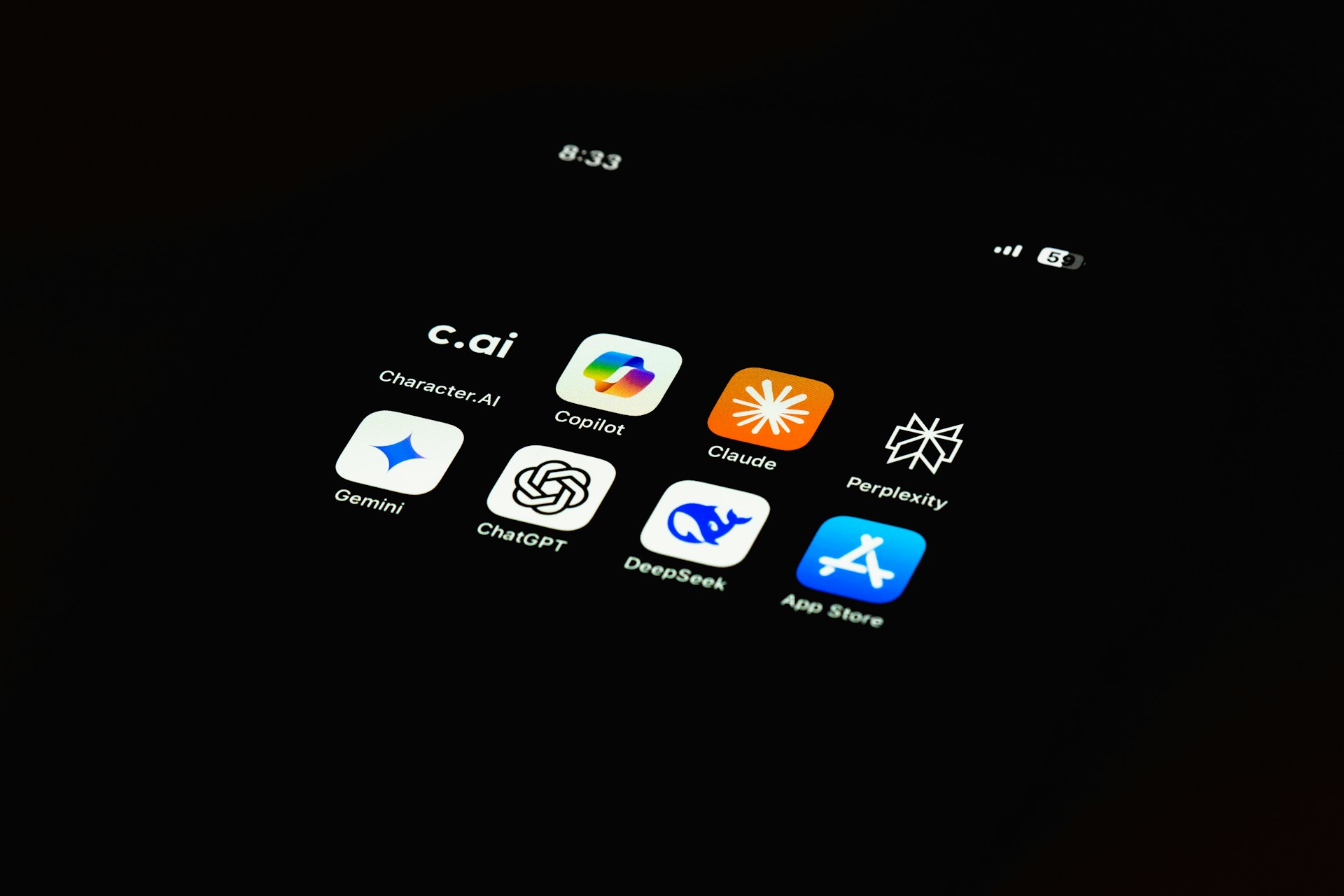
New Delhi is preparing for something larger than a technology conference. The India AI Impact Summit is not just a gathering of global tech leaders — it is a statement of intent. It signals that India no longer wants to be merely a consumer of artificial intelligence. It wants to shape it.
When leaders like Sundar Pichai of Google, Sam Altman of OpenAI, Dario Amodei, and AI thinkers such as Yann LeCun gather in Delhi, it reflects a deeper shift in the global technology map. India is no longer on the sidelines of the AI race — it is stepping into the arena with confidence.

The AI Summit Purpose: More Than Speeches and Handshakes
At its heart, the summit is about direction. Artificial intelligence is transforming how economies grow, how governments function, and how ordinary people live. The purpose of this summit is threefold:
First, to position India as a serious contributor to global AI innovation.
Second, to ensure AI solutions are affordable and accessible, not limited to wealthy nations.
Third, to align technology growth with ethical responsibility and human welfare.
India brings something unique to the table. With Aadhaar — the world’s largest biometric identity system — and digital payment systems like UPI, the country has already demonstrated how technology can scale to over a billion people. AI layered on top of this digital infrastructure could accelerate change in ways the world has not yet seen.
As Prime Minister Narendra Modi addresses global leaders, the message is clear: India wants AI to solve real problems — not just create impressive demos.

The Stakes: A $15 Trillion Technology
Artificial intelligence is no longer an experimental field. Analysts estimate AI could contribute up to $15 trillion to the global economy by 2030. India’s share of that opportunity, according to industry projections, could exceed $500 billion annually if adoption accelerates across sectors.
India already holds strategic advantages:
-
1.4 billion citizens
-
Over 800 million internet users
-
More than 750 million smartphone owners
-
World’s largest biometric ID system (Aadhaar)
-
UPI processing billions of digital payments monthly
These numbers matter because AI thrives on scale — data, users, and digital infrastructure. India has all three.
Over the past decade, the country has demonstrated an unusual ability to build population-scale systems quickly. It bypassed the landline era and leapt into mobile telephony. It missed the PC boom but became a global IT services powerhouse. Now it seeks to leapfrog again — this time in artificial intelligence.

India’s Digital Foundation (Explainer Snapshot)
Digital Identity (Aadhaar): 1B+ enrolled
UPI Monthly Transactions: 10B+
Internet Penetration: ~60% of population
AI Startup Growth: 3x increase in 5 years
Global AI Ranking: Top 3 ecosystem worldwide
(Figures based on government releases, industry reports, and global AI competitiveness studies.)
What Is Achievable?
The goals discussed at the summit are ambitious, but practical.
India aims to:
- Develop AI models trained in Indian languages.
- Make AI tools affordable for startups and small businesses.
- Strengthen research within Indian institutions.
- Create global partnerships for ethical and responsible AI use.
One of the most exciting developments is the unveiling of Bharat-focused AI systems. Government-backed BharatGen is introducing Param2, a multilingual model supporting 22 Indian languages. Meanwhile, Sarvam AI is building voice-first systems that work naturally in Indian contexts.
This is significant. In a country where millions are more comfortable speaking than typing — and often in regional languages — voice-enabled AI could unlock access to healthcare, education, and financial services for rural populations.
The summit highlights that AI cannot be English-only or urban-only. If it is to transform India, it must speak in many voices.
Healthcare: From Cities to Villages
In healthcare, AI is already assisting doctors in detecting diseases like tuberculosis and diabetic retinopathy earlier than before. With India’s vast rural population, AI-powered diagnostic tools could bridge the doctor-patient gap.
Global firms like NVIDIA are expanding computing partnerships in India, while Google and OpenAI are deepening enterprise and research collaborations.
The real impact, however, is not corporate. It is clinical.
If AI can reduce diagnosis time by even 20% across public hospitals, millions of patient hours could be saved annually. For a country managing both scale and scarcity, efficiency is not optional — it is essential.

Education: Personalized, Inclusive Learning
India has over 250 million school students. Teacher shortages, uneven quality, and language diversity complicate delivery.
At the summit, government-backed BharatGen is unveiling Param2, a multilingual AI model supporting 22 Indian languages. Startups are building voice-first systems aimed at students who may not be fluent in English or comfortable typing queries.
The potential gains are measurable:
-
AI tutoring systems can improve student retention rates by 15–30% in pilot studies.
-
Personalized learning platforms reduce dropout rates in underserved regions.
-
Translation models enable content accessibility in regional languages at scale.
For a generation preparing to enter an AI-driven job market, early access to intelligent tools may determine competitiveness.

Finance: Trust, Speed, and Inclusion
India’s Unified Payments Interface (UPI) processes more than 10 billion transactions monthly — an unprecedented digital footprint.
AI is now being layered into this ecosystem:
-
Real-time fraud detection models flag anomalies within milliseconds.
-
Alternative credit scoring systems assess borrowers using non-traditional data.
-
Predictive analytics optimize lending decisions for small businesses.
Global platforms such as Meta are exploring AI-enhanced financial ecosystems, recognizing India’s scale as unmatched testing ground.
For small entrepreneurs, access to AI-driven microcredit models could mean faster loans and lower default risk. For banks, it means improved portfolio health.
Manufacturing and Industry: Smarter Production
In manufacturing, AI-powered automation is improving efficiency while reducing waste. Predictive maintenance systems can identify machine failures before they happen. This lowers costs and increases productivity.
India’s ambition is not to replace workers but to equip them with smarter tools. The next wave of growth may come from blending skilled human labor with intelligent machines.
The Global Stakes
AI competitiveness rankings already place India among the top players globally, behind only the United States and China. But the summit is not about rivalry alone. It is about collaboration.
French President Emmanuel Macron is delivering a keynote address, reinforcing that AI governance and development must be international conversations. Global CEOs attending are not just seeking market share — they are seeking partnerships.
India’s vast developer base, young population, and expanding digital economy make it impossible to ignore.
Sector-Wise AI Opportunity in India (Projected Impact by 2030)
Healthcare: Improved diagnostics, reduced costs
Education: Personalized learning for 250M+ students
Finance: AI-enabled credit expansion to MSMEs
Manufacturing: 20–40% efficiency gains
Agriculture: Data-driven yield optimization

Recent Developments Worth Watching
- Rapid growth of generative AI tools such as ChatGPT.
- Expansion of AI data centers in India.
- Development of multilingual AI models.
- Increased venture capital flowing into Indian AI startups.
- Government investment in AI research hubs.
However, challenges remain. India must invest more deeply in fundamental AI research. It must ensure data privacy. It must avoid becoming only a testing ground for foreign technologies.
The summit provides an opportunity to confront these realities honestly.

The AI Challenges
Despite momentum, analysts caution against overconfidence.
India ranks among the top three AI ecosystems globally, but much of its strength lies in implementation and engineering services. Long-term leadership requires deeper investment in foundational research.
Industry observers note that without expanding university-led AI research and semiconductor capabilities, India risks becoming primarily a deployment market for foreign models.
The summit addresses this directly — emphasizing research funding, public-private partnerships, and indigenous model development tailored to India’s linguistic diversity.

Beyond Silicon Valley: India’s Bid to Shape the AI Century
Historically, major AI policy discussions have centered in Washington, Silicon Valley, or Beijing. Delhi’s summit signals geographic diversification of influence.
For global CEOs, India offers three things: talent, scale, and political will. For India, global collaboration brings capital, research partnerships, and credibility.
But the summit’s success will not be measured by applause or announcements.
It will be measured by outcomes:
-
How many AI tools reach rural clinics?
-
How many students gain personalized support?
-
How many small businesses secure smarter credit?
-
How many farmers receive timely crop advisories?
Artificial intelligence often feels abstract — defined by algorithms and parameters. In Delhi, the focus is more grounded.
The ambition is clear: build AI that speaks India’s languages, understands its realities, and operates at its scale.
If India succeeds, it will not merely participate in the AI century.
It will help define how intelligence — human and machine — coexists in one of the world’s most complex democracies.
And that may prove to be its most consequential export yet.


Tech
Google Pixel 10a Launch Confirmed: Familiar Looks, Subtle Upgrade or Sensible Buy for Pixel Fans?

Google is ready to pull the curtain on its next affordable Pixel, the Google Pixel 10a, with an official launch scheduled for February 18 in India and global markets.
Positioned as the successor to the Pixel 9a (launched in March 2025), the Pixel 10a continues Google’s familiar A-series formula — strong camera software, clean Android, and long-term updates — but with a few carefully chosen refinements rather than bold reinvention.
For Pixel loyalists, that may be exactly the point.
Google Pixel 10a Launch Date and Early Offers:
Google has confirmed that the Pixel 10a will debut on February 18. Ahead of the launch, the company is also dangling a small but interesting carrot: Google Store subscribers who sign up by February 13 (1:29pm IST) will be eligible for an exclusive purchase benefit. While Google hasn’t detailed the exact nature of the offer, it’s expected to unlock a future discount or store credit.
As usual, India is firmly on Google’s priority list this time around.

Image Courtesy : Google
Design: Safe, Familiar, and Very Pixel:
If you were expecting a radical redesign, the Pixel 10a isn’t chasing that dream. The phone sticks closely to the Pixel 9a’s flat design language, complete with a horizontal, pill-shaped camera module, centre-aligned Google branding, and a punch-hole selfie camera on the front.
One noticeable tweak is the cleaner rear finish — the camera bump appears more flush, framed with a subtle metal trim. The teaser showcases a soft powdery blue shade, reminiscent of last year’s Iris colour, while leaks point to additional options like Berry, Fog (Off White), Lavender (purple), and Obsidian (Black).
Bezels remain on the thicker side, reminding you this is still an A-series Pixel — not a flagship.
Display and Performance: Familiar Numbers, Reliable Experience:
The Pixel 10a is expected to feature a 6.85-inch Full HD+ OLED HDR display with a 120Hz refresh rate and up to 2000 nits peak brightness. On paper, this is nearly identical to the Pixel 9a — which isn’t a bad thing, considering Google’s OLED tuning remains among the best in its class.
Powering the device is the Tensor G4 chipset, the same silicon found inside the Pixel 9a. Google has opted not to bring the newer G5 chip to the A-series just yet. While that limits raw performance gains, it ensures stability, predictable thermals, and better long-term optimization. Security duties are handled by the Titan M2 chip, continuing Google’s focus on on-device data protection.

Image Courtesy : Google
Cameras: Software Still Does the Heavy Lifting:
Photography remains the Pixel 10a’s strongest calling card. The phone is expected to pack a 48MP dual rear camera setup with OIS, paired with a 13MP front camera. Hardware changes may be minimal, but Google’s real magic lies in computational photography — and early teasers suggest improved image processing and smarter AI-assisted features.
Features like Night Sight, Real Tone, and Gemini-powered enhancements are expected to carry forward, keeping the Pixel 10a among the most reliable camera phones in its segment.
Battery, Durability, and Software:
The Pixel 10a is tipped to include a 5100mAh battery, along with wireless charging support — still a rare feature in this price bracket. Google is also calling it the “most durable A-series Pixel yet”, hinting at an IP68 dust and water resistance rating, a meaningful upgrade for everyday durability.
On the software front, the phone will ship with Android 15 and Gemini built-in, offering long-term OS and security updates — an area where Pixel phones consistently outshine competitors.
Google Pixel 10a Price in India: The Real Question:
European pricing leaks suggest a starting price of EUR 549 (around ₹58,000) for the 128GB variant, with the 256GB model reaching EUR 649 (roughly ₹69,000). If these numbers translate directly to India, the Pixel 10a could feel uncomfortably close to flagship territory.
That’s where the honest debate begins: with no major design overhaul or processor upgrade, many users may find the Pixel 9a at discounted prices a smarter buy — unless Google undercuts expectations locally.
Verdict: Incremental, Predictable, Still Very Pixel:
The Google Pixel 10a isn’t trying to surprise anyone. It refines what already works — clean Android, dependable cameras, strong software support — while playing it safe on hardware. Whether that’s enough will depend almost entirely on Indian pricing.
For Pixel fans, it’s familiar comfort. For everyone else, it’s a waiting game until February 18, 2026.
Tech
Samsung Galaxy S26 Series Leak Roundup : Smarter Cameras, Stronger AI, and a Bold Leap Beyond S25

Samsung’s Galaxy S series has always been about dramatic reinvention every single year. It follows a quieter philosophy—fix what’s already good, and rethink what actually matters for the users. And that mind-set feels more powerful than ever as early information on the Samsung Galaxy S26 series starts to emerge ahead of the anticipated delayed launch in February 2026.
Samsung seems to be focussing more on extraordinary—better intelligence, smarter processing, and enhancements that show up in everyday use—instead of pursuing eye-catching numbers for the sake of headlines. Nowhere is this approach more visible than in the Galaxy S26 and Galaxy S26+, which looks set to be the true torchbearer of the lineup.
The Galaxy S25 series already pushed Samsung’s flagship formula into a very polished space. With the S26 family, the goal seems more about out performing it, visually and more about making the experience feel sharper, smoother, and more personal—especially through AI, display tuning, and camera optimization.
Galaxy S26 & S26+: Playing It Smart, Aggressively
At first glance, Samsung’s approach with the Galaxy S26 and S26+ might feel more aggressive — and that’s intentional.

Image Courtesy : Samsung
Industry chatter suggests the rear camera hardware will be the extraordinary strength more powerful than S25 series:
- 320MP primary sensor
- 108MP ultra-wide camera
- Dual camera 64MP + 32MP telephoto lenses
Yes, the numbers are familiar. But familiarity isn’t always a weakness.
By going with powerful sensors, Samsung will still keep costs under control at a time when flagship prices are under intense pressure—especially as rivals reportedly avoid price rise. More importantly, this decision allows Samsung to focus where it often shines best: tuning, processing, and real-world output.
Sources point to upgraded actuators, refined calibration, and improved image processing. In simple terms, the Galaxy S26 may advertise a “new camera,” but it could take more sharper photos—cleaner details, steadier videos, and more reliable low-light shots. It’s a reminder that great photography will always be about more impressive hardware—it’s about knowing how upgrade formidable what you already have.
Galaxy S26 And S26+: This Is Where Samsung Pushes Forward

Image Courtesy : Samsung
Exynos 2600 is Samsung’s next-generation flagship SoC built on a 2nm GAA process and has already entered mass production. It is expected to power the Galaxy S26 and S26+, with a clear focus on energy efficiency, sustained performance, and on-device AI rather than peak benchmark scores.
If the standard models are about restraint, the Galaxy S26 and S26+ is where Samsung lets loose—carefully.
Design & Display: Familiar, but More Polished
The Ultra is expected to retain its expansive 6.9-inch OLED display with a 120Hz refresh rate, but this isn’t a copy-paste job. Samsung is reportedly working on next-generation display refinements, including Colour-on-Encapsulation (CoE) and advanced pixel control.

Image Courtesy : Samsung
What does that mean for users?
- Richer, more natural colours
- Better outdoor visibility
- improved privacy at wider viewing angles
- Lower power consumption
Physically, the phone may grow ever so slightly, measuring close to 163.4 × 77.9 × 7.9 mm, yet feel slimmer and more refined in hand. One subtle but meaningful change could be the front camera itself—rumoured to feature the largest aperture ever on a Galaxy Ultra, offering a
wider 85-degree field of view. That’s a small tweak with real benefits for group selfies and video calls.
Camera System: Smarter Eyes, Not Louder Specs
The Galaxy S26 Ultra’s camera setup is expected to prioritize consistency and intelligence over complexity:
- 320MP main camera with a larger aperture for improved low-light photography
- 108MP ultra-wide sensor for cleaner landscapes
- Dual camera 64MP + 32MP periscope telephoto with up to 5x optical zoom
- A refined telephoto lens, possibly downsized but heavily supported by software

Image Courtesy : Samsung
Samsung’s real bet here is computational photography. A new Image Signal Processor and smarter AI algorithms could noticeably improve night shots, video stabilization, dynamic range, and portrait accuracy. The front camera is expected to be 12MP, though whispers of a higher-resolution sensor persist. Either way, content creators and video callers should see tangible improvements.
Performance & AI: The Quiet Revolution
Under the hood, the Galaxy S26 Ultra is expected to run on the Snapdragon 8 Elite Gen 5 chipset, delivering gains where they matter most:
- Better sustained performance
- Improved thermal efficiency
- Stronger on-device AI
Paired with 12GB of LPDDR5X RAM and storage starting at 256GB (going up to 1TB), the phone should feel effortlessly fast—even under heavy multitasking.
Running Android 16 with One UI 8.5, Samsung’s AI ambitions finally feel mature. Expect smarter notifications, adaptive battery behaviour, context-aware camera suggestions, and a system that learns how you use your phone instead of forcing you to adapt to it.
Bluetooth 6.1 support is also expected, bringing improved wireless stability and efficiency.
Battery & Charging: Same Size, Smarter Usage
Samsung isn’t increasing the battery capacity—but it’s improving how it’s used.
- 5000mAh battery
- Up to 60W wired charging
- 25W wireless charging
- Qi2 and magnetic ring support
With a more efficient chipset and AI-driven power management, users can expect longer screen-on time without constantly worrying about the charger.

Image Courtesy : Samsung
Launch Timeline & Tentative Pricing
The Galaxy S26 and S26+ are expected to be launched globally in February 2026 at a Galaxy Unpacked event, with an India release likely in March-April 2026. The base variant, 12GB + 256GB, could be tentatively priced around ₹1,45,000+, keeping it firmly in the premium flagship category.
Final Verdict
The Samsung Galaxy S26 series feels less like a spec race and more like a statement of maturity over its competition. With smarter cameras, deeper AI integration, and thoughtful refinements across the board, Samsung seems ready to define what a flagship phone should feel like in 2026: powerful, personal, and purposeful.
Disclaimer: Specifications, features, and pricing are based on leaks and industry reports. Final details will be confirmed at launch.


Surya Grahan 2026: Visibility, Astrology & Why No Sutak Kaal for India

Delhi’s AI Moment: How India Is Shaping the Future of Intelligent Technology

T20 World Cup : Brahmos Missile Ishan’s 77 Ignites Colombo as India Blast Pakistan by 61 Runs!
-

 Fashion9 years ago
Your comprehensive guide to this fall’s biggest trends
-

 Sports2 months ago
Renuka Struck, Deepti Controlled, Shafali Finished : India Outclass Sri Lanka To Seal Series 3–0
-
Entertainment9 years ago
Rappers are blowing up Twitter with praise for Jay Z and ‘4:44’
-
International News2 years ago
The United Nations Observes A Minute Of Silence In Memory Of The 101 Staff Who Died In Gaza
-

 Entertainment2 months ago
Dhurandhar Film Review—A Powerful, Action-packed, Engrossing, Yet A Bit Dragged-Out Theatrical Experience!
-

 International News2 months ago
President Vladimir Putin and Prime Minister Narendra Modi—both travel in “Fortuner Fortune Shield.” As global eyes watch, the message is clear – ये दोस्ती हम नहीं तोड़ेंगे!
-

 Business2 months ago
Historic milestone! New Zealand commits to an investment worth USD 20 billion in India under the India-New Zealand Free Trade Agreement
-
Business9 years ago
15 Habits that could be hurting your business relationships