
Connect with us

Health And Medicine

Cervical Cancer in India: Why the Government’s HPV Vaccination Push Could Save Millions of Indian Women

Published

on

We always talk about heart attacks and diabetes. We always talk about fevers and coughs. But we rarely talk about the cancer that is silently killing thousands of Indian women every single year. Here, we are talking about cervical cancer.

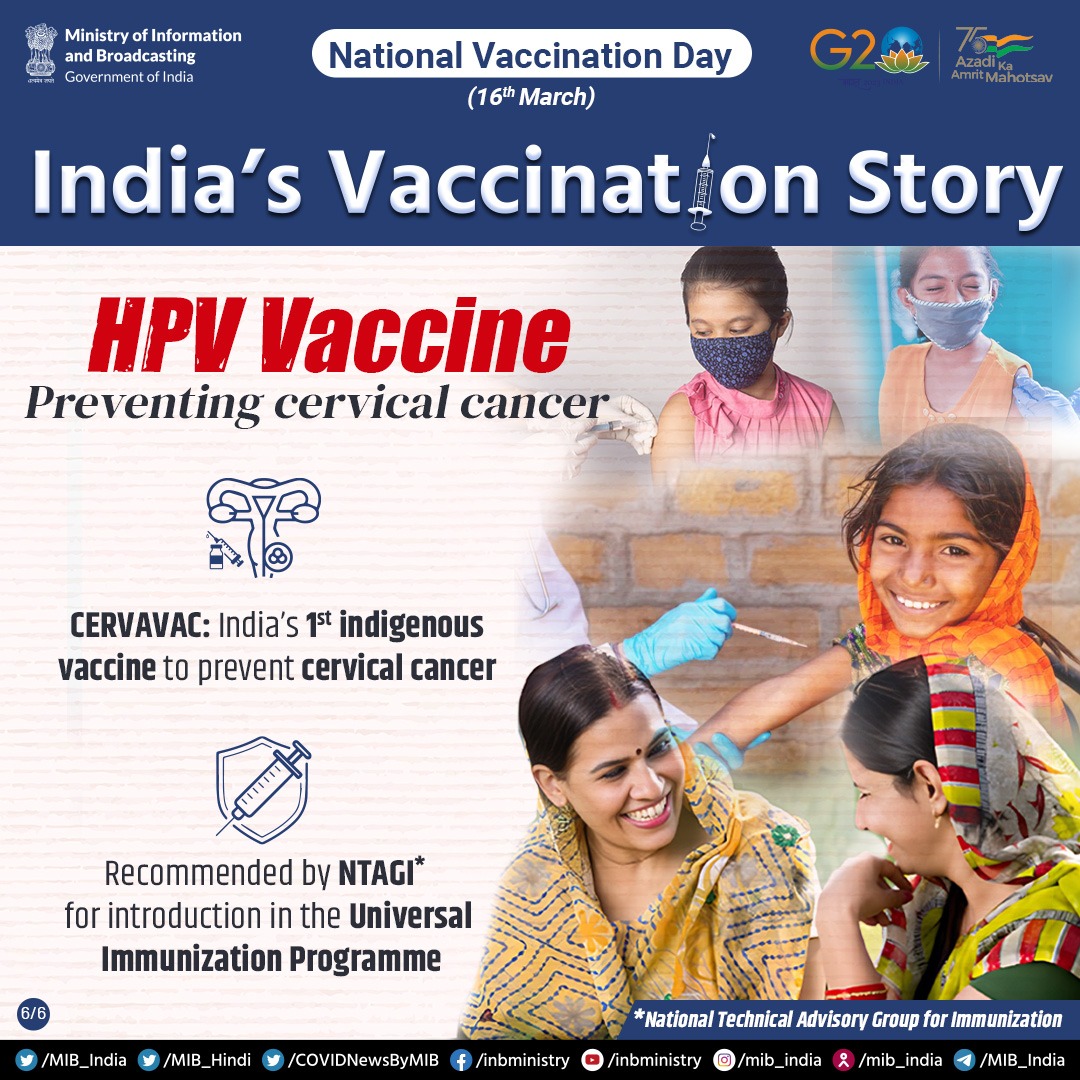
In a significant step toward improving women’s health, the Government of India is preparing to launch a nationwide vaccination programme against the Human Papillomavirus (HPV)  to nearly 1.15 crore girls aged 14 every year. This initiative focuses on adolescent girls and aims to prevent cervical cancer — one of the most common yet largely preventable cancers among women.

About Cervical Cancer

Think of the cervix as the gateway between the uterus and the vagina. Now, imagine a tiny, unwanted visitor—a virus. It’s called the Human Papillomavirus (HPV) .

This isn’t a rare, exotic virus. It is actually extremely common. In fact, most sexually active people will get some type of HPV in their lifetime without even knowing it. Usually, our immune system fights it off and we never have a problem. But sometimes, with certain high-risk types of HPV, the virus doesn’t leave. It stays, and over years, it begins to slowly cause changes in the cells of the cervix.

It’s a slow, silent process. It can take 10 to 20 years for those abnormal cells to turn into full-blown cancer. That long window is our greatest weapon—if we know how to use it.

The Indian Women And Cervical Cancer

Here is the heartbreaking reality: In India, cervical cancer is the second most common cancer disease in women.

The numbers are not just statistics; they are mothers, sisters, and daughters.

  • Every year, nearly 80,000 new cases are detected.

  • Every year, over 42,000 women lose their lives to it.

Globally, India contributes a massive chunk of the world’s cervical cancer cases. Why? Because unlike in Western countries where regular screening (Pap smears) catches the problem early, screening rates in India are very low. By the time a woman feels pain or notices bleeding, the cancer is often advanced.

The Reason For Cervical Cancer Non-Detection?

Besides the virus itself, several factors fuel the fire:

  1. Lack of Awareness: Most women have never heard of HPV.

  2. Lack of Screening: A simple, cheap test called a Pap smear or VIA (Visual Inspection with Acetic Acid) can detect pre-cancerous changes. But in rural India, access to these tests is rare.

  3. Social Stigma: Women often ignore symptoms like irregular bleeding because they are embarrassed to discuss it or because their health is not prioritized in the family.

Prevention vs. Treatment: The Cost of Living

If a woman is diagnosed with cervical cancer, the road ahead is scary.

  • Surgery: Removing the uterus (hysterectomy) can cost anywhere from ₹50,000 to ₹2,00,000 in a government – private hospital.

  • Radiation and Chemotherapy: A full course of radiation and chemo can easily run into ₹2 to ₹5 lakhs or more depending upon spread.

  • The Hidden Cost: The loss of wages, the travel to the city for treatment, the mental and financial toll on the family.

For a middle-class or poor family, this is financially devastating. Many sell land, take loans, or simply give up treatment.

This is where the HPV vaccine changes the game. It costs a fraction of that treatment. By giving it to the adolescent girls at age 14—long before they could ever be exposed to the virus—we are building a shield. We are telling the virus, “You are not welcome here.”

A Thought-Provoking Question

The government’s move to vaccinate 1.15 crore girls annually is historic, commendable, and represents hope for future generations. It is a commitment to the idea of “Swastha Nari” (Healthy Woman).

The HPV vaccination programme offers a chance to change this critical health hazard. With collective effort, India can move closer to a future where cervical cancer is no longer a leading threat to women’s health but a preventable chapter in medical history.

But it forces us to ask ourselves a tough question: If a vaccine existed that could prevent a cancer killing your wife, mother, or daughter, wouldn’t you want it?

The vaccine works best when given to girls between the ages of 9 and 14. It offers nearly 90% protection against the strains of HPV that cause most cervical cancers.

The science is clear. The path is set. Now, it is up to us—as parents and communities—to overcome our hesitations, to look past the myths, and to roll up our daughter’s sleeve. Because one jab isn’t just a medical procedure; it is a promise that she gets to grow old, something 42,000 women this year will not have the chance to do.

Continue Reading
Click to comment

Leave a Reply

Your email address will not be published. Required fields are marked *

Health And Medicine

When Infection Turns Life-Threatening: The Survival Story of Manjit Sangha and the Silent Danger of Sepsis


Published

on

“From ICU to Hope: Manjit Singha’s Fight Against Sepsis, after Losing Her Limbs but Not Life.”

The story of Manjit Sangha, a 56-year-old Indian-origin woman living in England’s West Midlands, is a powerful reminder that even a small infection can become life-threatening if sepsis develops.

After months of critical illness, multiple surgeries, and limb loss, Manjit survived against the odds. Today, her journey is not only about recovery but also about raising awareness of a medical emergency that many people fail to recognize in time.

How the Illness Began

In July last year, Manjit returned home from work feeling unwell. What initially symptoms appeared to be a mild illness worsened overnight. By morning, she was unconscious, struggling to breathe, and showed alarming symptoms:

  • Ice-cold hands and feet

  • Purple lips

  • Severe weakness

  • Altered consciousness

Doctors later suspected that the infection may have entered her body through a small skin bruise, possibly after contact with her pet dog’s saliva. While this remains unconfirmed, it highlights how even minor wounds can allow bacteria to enter the bloodstream.

Hospital Admission and Medical Investigations

Manjit was rushed to hospital and admitted to intensive care. Doctors performed several emergency investigations, including:

  • Blood tests showing severe infection

  • Imaging studies to assess organ damage

  • Coagulation tests revealing abnormal clotting

  • Kidney function tests indicating organ failure

She was diagnosed with septic shock, a severe form of sepsis that leads to dangerously low blood pressure and organ failure.

Her condition was further complicated by Disseminated Intravascular Coagulation (DIC) — a rare but critical disorder where widespread blood clotting disrupts circulation and damages tissues.

Critical Illness and Complications

During intensive care, Manjit’s condition remained unstable:

  • Cardiac arrest occurred six times

  • She required life support and mechanical ventilation

  • Dialysis was started due to kidney failure

  • Doctors placed her in an induced coma

Poor blood circulation caused irreversible tissue damage in her limbs. To save her life, surgeons performed amputations:

  • Both legs below the knee

  • Both hands

The surgeries were medically necessary to stop infection spread and prevent further organ failure.

Recovery and Emotional Impact

Despite a grim prognosis, Manjit survived. Her recovery journey has been physically and emotionally challenging, involving:

  • Long-term rehabilitation

  • Physiotherapy

  • Mental health support

  • Adjustment to limb loss

Her husband became her primary caregiver, leaving work to support her recovery.

Financial Burden and Fundraising Efforts

Serious illnesses often bring significant financial stress. Friends and family organised a fundraiser to help Manjit and her husband rebuild their lives. Over £30,000 was raised to support:

  • Advanced prosthetic limbs

  • Home modifications for accessibility

  • Rehabilitation and therapy

  • Psychological support

Any remaining funds are intended for charities supporting amputees.

Understanding Sepsis: A Medical Overview

Sepsis is a life-threatening condition that occurs when the body’s response to infection becomes uncontrolled and starts damaging its own organs.

According to the National Health Service, early symptoms may be subtle but can rapidly worsen.

Common warning signs

  • High fever or very low temperature

  • Rapid breathing

  • Confusion or slurred speech

  • Extreme shivering or muscle pain

  • Mottled or discoloured skin

  • Severe breathlessness

  • Reduced urine output

Septic shock can lead to organ failure and death if not treated urgently.

Precautions for People with Pets

Pets provide emotional comfort, but certain precautions help reduce infection risk, especially for people with weak immunity.

Recommended safety measures

  • Clean and cover any cuts or wounds promptly

  • Avoid allowing pets to lick open wounds

  • Maintain pet hygiene and regular veterinary check-ups

  • Wash hands after handling pets or cleaning litter areas

  • Seek medical advice if a wound becomes red, swollen, or painful

  • High-risk individuals (diabetes, elderly, immune disorders) should be extra cautious

It is important to note that pet-related infections are rare but possible.

Key Medical Lessons from Manjit’s Case

Manjit’s story highlights several clinical realities:

  • Sepsis can develop rapidly from seemingly minor infections

  • Early recognition saves lives

  • Delayed treatment increases risk of organ failure and amputations

  • Recovery involves long-term physical and psychological rehabilitation

  • Serious illness often carries major financial and social impact

Conclusion

Manjit Sangha’s survival is remarkable, but her experience also underscores the devastating consequences of sepsis. Awareness, early detection, and prompt treatment remain the most effective ways to reduce complications and save lives.

Her journey serves as a reminder that no infection should be ignored, and medical attention should be sought when symptoms worsen rapidly.

Continue Reading

Trending