
Business
Indian-Origin Asha Sharma Becomes Microsoft Gaming’s New CEO: Can Microsoft Redefine Xbox’s Next Decade?


Deep-insight feature: Leadership reset at Microsoft Gaming
The appointment of Asha Sharma as CEO of Microsoft Gaming marks one of the most consequential leadership changes in the global gaming industry in recent years. The transition follows the retirement of longtime Xbox chief Phil Spencer, whose influence shaped Microsoft’s gaming identity for more than a decade and helped rebuild trust with players and developers alike.
End of the Phil Spencer era
Phil Spencer’s tenure is widely seen as a period of strategic rebuilding. After early struggles in the console wars, he repositioned Xbox as a service-driven ecosystem rather than a hardware-only business. His leadership saw bold acquisitions such as ZeniMax Media, expansion of the subscription model through Xbox Game Pass, and a growing focus on cross-platform play.
More importantly, Phil Spencer cultivated a gamer-first culture. Studio autonomy, creative experimentation and open communication with the gaming community became hallmarks of the Xbox brand. His departure therefore signals not merely a management change but a shift in philosophy at a moment when gaming is rapidly evolving.

Asha Sharma, New Executive Vice President and CEO along with Retiring CEO of Microsoft Gaming, Phil Spencer.
Why Asha Sharma — and what led to her rise
Sharma’s elevation reflects a deliberate strategic pivot by Microsoft CEO Satya Nadella. Unlike Spencer, Sharma’s strength lies in scaling digital platforms and consumer ecosystems. Her career spans leadership roles at Meta Platforms (working on Messenger and Instagram products) and Instacart, where she helped expand large-scale user platforms before rejoining Microsoft to lead core AI product initiatives.
Behind her promotion is Microsoft’s growing belief that gaming is not just entertainment but a strategic technology platform — a testing ground for cloud, subscription services, creator tools and AI-driven personalization. Sharma’s experience building products for billions of users aligns with that ambition.
Her internal messaging suggests continuity with Xbox’s legacy but urgency around innovation. She has emphasized strengthening ties with developers while exploring new tools that can improve game discovery, personalization and development workflows.


What Microsoft stands to gain
Sharma’s appointment potentially accelerates three strategic goals:
- Platform integration: Gaming could become a central showcase for Microsoft’s cloud and AI ecosystem, strengthening cross-device experiences
across console, PC and mobile. - Service expansion: With Game Pass already reshaping consumption habits, Sharma’s background in subscription-driven growth may deepen personalization and retention strategies.
- Developer productivity: AI-assisted tools and cloud-based pipelines could reduce production costs and shorten development cycles — a crucial advantage as AAA budgets soar.

Challenges ahead
Yet the road forward is complex. Sharma must balance technological ambition with creative stewardship — a delicate task in an industry where culture matters as much as innovation.
Key risks include:
- Maintaining studio trust after leadership upheaval
- Balancing content quality with platform metrics
- Competing with rivals such as Sony Interactive Entertainment and Nintendo, both of which retain strong creative identities
- Managing community perception, as players closely associate Xbox’s recent revival with Phil Spencer’s leadership
A pivotal transition
Ultimately, Sharma’s elevation represents a broader transformation within Microsoft. The company is betting that gaming will be a central frontier
where entertainment, technology and digital services converge. Success will depend on whether Sharma can blend Spencer’s community-focused legacy with a platform-driven future — turning Microsoft Gaming into not just a console brand but a defining digital ecosystem.


International News
Trade, Tariffs and a $4 Trillion Dream, India–US Trade Deal: Why an 18% Tariff Could Reshape India’s Export Future
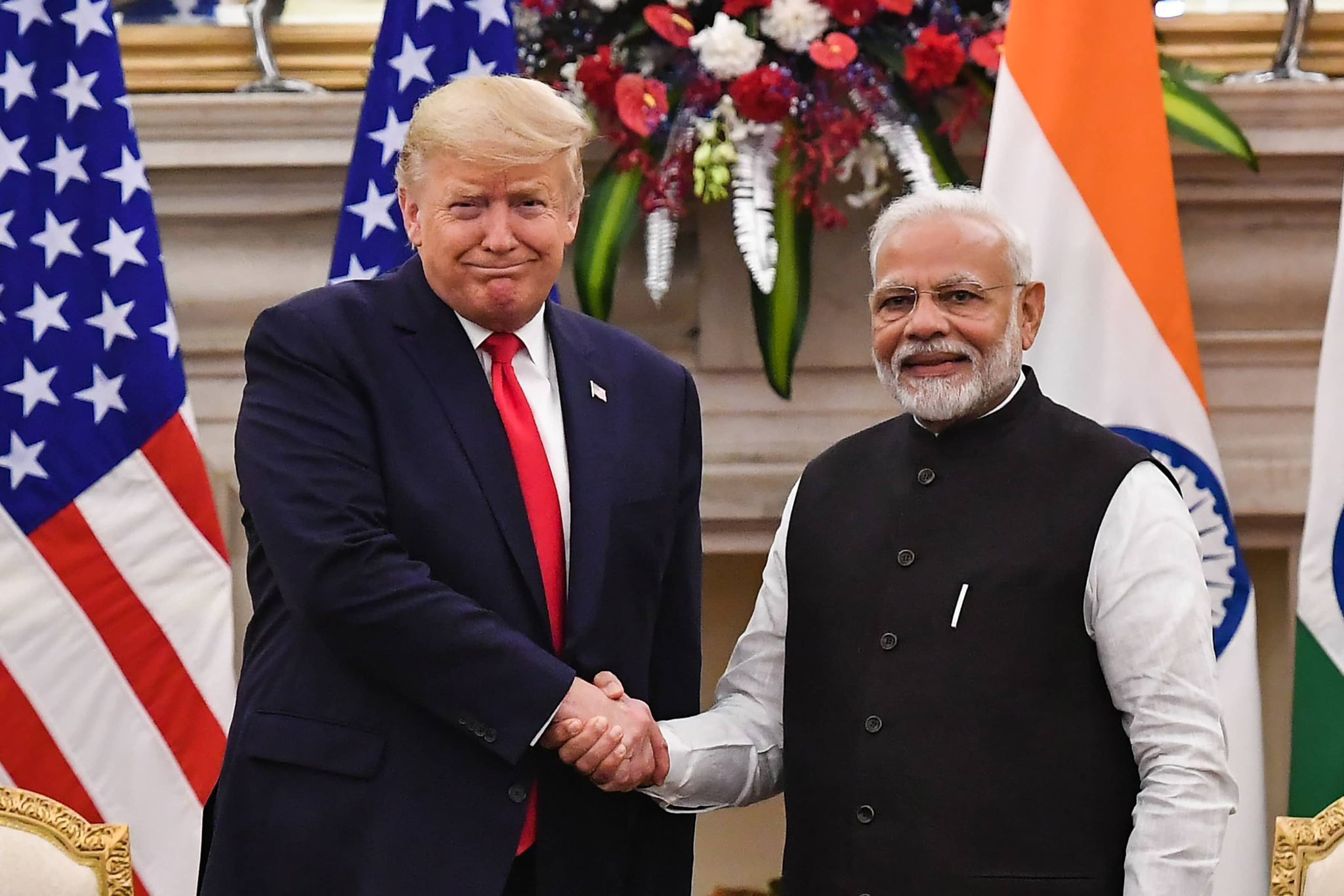
India–US FTA 2026: Why an 18% Tariff Could Be a Quiet Game-Changer for India’s Growth Story!
When the United States cut tariffs on Indian goods to 18 per cent under the newly announced India–US Interim Trade Framework, it did more than tweak a trade number. It quietly repositioned India inside the world’s largest consumer market at a time when global supply chains are being rewritten.
India’s Commerce and Industry Minister Piyush Goyal has described the move as giving Indian exporters a “competitive advantage.” The claim isn’t rhetorical. Compared with China’s 35 per cent tariff burden and higher levies faced by several other exporting nations, India now enters the US market with a meaningful cost edge.

But what does this really mean for India’s economy, its exporters, its farmers—and its long-term ambition of becoming a $4 trillion economy?
The Tariff Reset: Why 18% Matters More Than It Sounds
In isolation, an 18 per cent tariff still sounds high. In global trade, however, relative advantage matters more than absolute numbers.
- China: ~35% tariff on many product categories
- Several ASEAN and Latin American economies: 19–25%
- India: 18%, with zero-duty access in select sectors
For US buyers sourcing at scale—retailers, manufacturers, defense contractors—even a 3–7 percentage-point difference can decide where orders flow.
This differential gives India a pricing edge at a time when American firms are actively diversifying away from China due to geopolitical risk, sanctions exposure, and supply-chain fragility.
Sectors Set to Gain: Where the Growth Will Come From


1. Labour-Intensive Manufacturing Gets a Push

The biggest winners are sectors where India already has scale and employment depth:
- Textiles & apparel
- Leather & footwear
- Home décor and handicrafts
- Plastics, rubber and organic chemicals
These industries are dominated by MSMEs, which employ over 110 million Indians. Even a modest export increase here has an outsized impact on jobs—especially for women and semi-skilled workers.
2. Zero-Tariff Sectors: Quiet but Powerful

The agreement eliminates tariffs entirely on several high-value categories:
- Generic pharmaceuticals
- Gems and diamonds
- Aircraft parts and components
India already supplies over 40% of generic medicines used in the US. Removing tariff friction strengthens India’s role as a trusted, affordable healthcare supplier—especially as US healthcare costs continue to rise.
Similarly, aircraft parts exemptions under Section 232 open doors for India’s emerging aerospace ecosystem, linking domestic manufacturing with global aviation majors.
India vs China: A Strategic Moment, Not Just a Trade Deal


The US is not simply buying cheaper goods—it is re-engineering its supply chains.
China’s manufacturing dominance was built on scale, subsidies, and predictability. But rising wages, regulatory opacity, and geopolitical tensions have eroded that advantage.

India’s pitch is different:
- Democratic governance
- Rule-based trade engagement
- A young skilled workforce
- Expanding industrial capacity under Make in India and PLI schemes
The 18% tariff makes India commercially viable, not just politically attractive. That combination matters.
Connecting the Dots to the $4 Trillion GDP Goal
India’s GDP today stands just above $3.6 trillion. To cross $4 trillion, exports must play a larger role.
- Exports currently contribute~22% of GDP
- Government target: push this closer to 25–30% over time
If the US—India’s largest trading partner—absorbs even an additional $40–50 billion in Indian exports over the next few years, the multiplier effect through jobs, consumption, and investment could be substantial.
More importantly, export-led growth tends to be:
- More productive
- More employment-intensive
- Less inflationary
This trade framework, while interim, aligns neatly with that trajectory.
Agriculture: Where India Drew a Hard Line
Perhaps the most politically sensitive part of the agreement is also the clearest: India did not open its core agricultural sectors.
No concessions were granted on:
- Rice, wheat, maize, soya
- Dairy (milk, cheese)
- Poultry and meat
- Fruits, vegetables, spices
- Ethanol (fuel) and tobacco
This matters because over 45% of India’s workforce still depends on agriculture, directly or indirectly. Sudden exposure to heavily subsidized US farm produce could destabilize rural incomes and trigger price shocks.
By ring-fencing agriculture, India signaled that trade liberalization will not come at the cost of its Annadatas (The Farmers).


The Other Side of the Coin: Risks and Limitations
No trade deal is without downsides—and this one is no exception.
1. Still an Interim Framework
This is not a full-fledged FTA. Many issues—services trade, digital taxes, data localisation, visas—remain unresolved. Uncertainty
could delay long-term investments.
2. Pressure on Domestic Industry
Duty-free access for American goods could strain some Indian manufacturers, particularly in capital-intensive or technology-heavy
segments where US firms are more competitive.
3. Compliance Costs
Aligning with US standards—on quality, environment, labour—will raise compliance costs for Indian exporters, especially MSMEs.
Without adequate support, some may struggle to adapt.
4. Geopolitical Tightrope
Closer trade alignment with the US may complicate India’s balancing act with other partners, including Russia and parts of the
Global South.
The Bigger Picture: A Calculated Bet, Not a Giveaway
Critics argue India conceded too much by accepting an 18% tariff. But trade is rarely about perfection—it is about positioning.
This agreement:
- Restores momentum after months of friction
- Improves India’s relative standing in the US market
- Protects agriculture while promoting manufacturing
- Supports employment-heavy sectors
Most importantly, it keeps India inside the room as global trade rules are being reshaped.
Conclusion: A Step Forward Towards Growth—If Followed Through

The India–US Interim Trade Framework is not a silver bullet. But it is a strategic nudge—one that could accelerate exports, create jobs, and reinforce India’s path toward a $4 trillion economy.
Its success will depend less on headlines and more on execution: logistics reforms, MSME support, skill development, and sustained diplomatic engagement.
Handled well, this 18% tariff reduction could mark the moment when India stopped being just an alternative—and started becoming a preferred choice for Viksit Bharat goal.
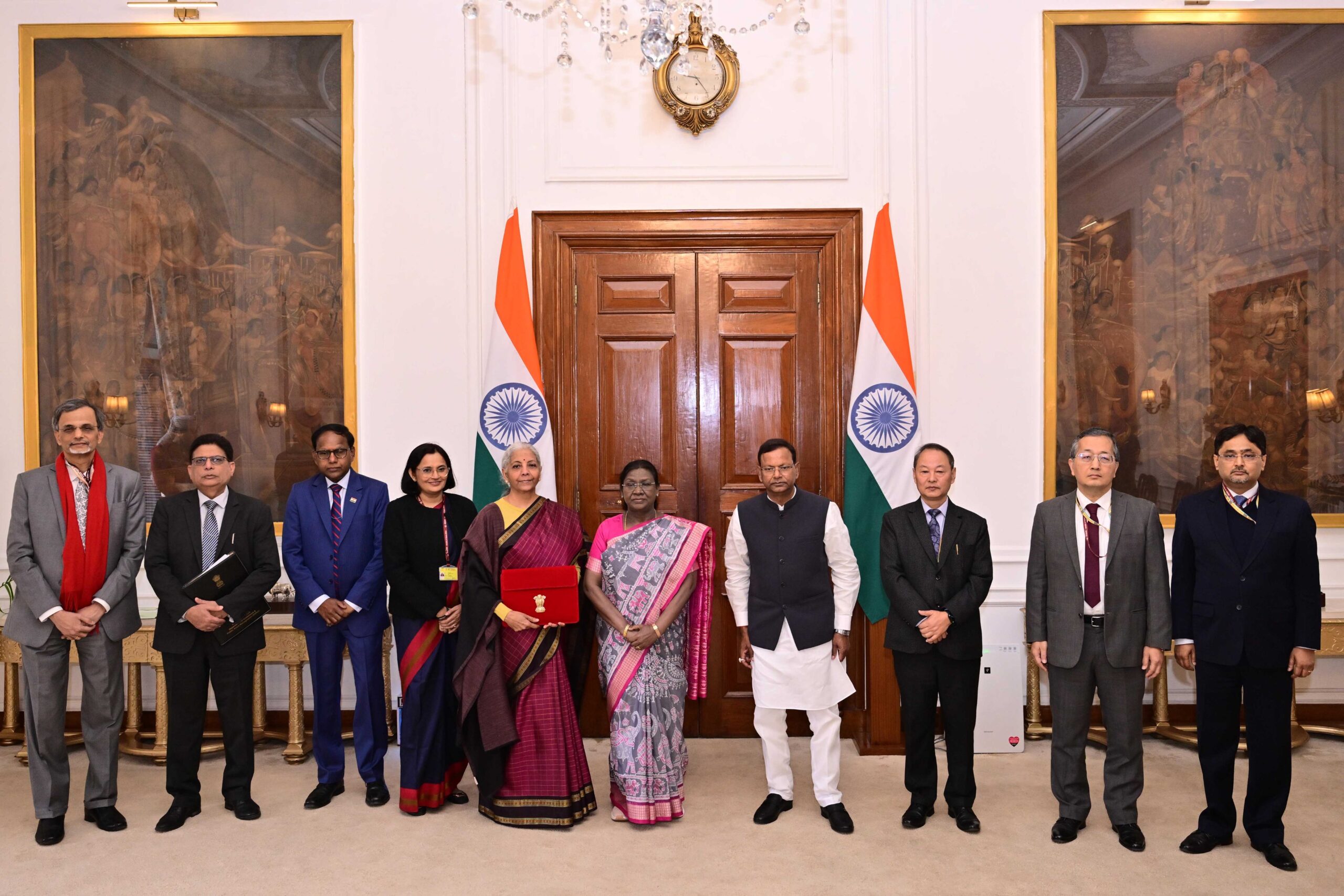
How India’s fiscal roadmap may shape growth, jobs, markets and everyday costs in FY 2026-27?

1. The Big Picture: Priorities and Philosophy
Finance Minister Nirmala Sitharaman framed the Budget around three guiding “kartavyas” (duties) — sustainable growth, capacity building, and inclusive access to resources. These principles aim to balance economic expansion with stability and fairness.
In practical terms:
Public capital expenditure (capex) is being raised to ₹12.2 lakh crore, a record high, to boost infrastructure and long-term productivity. Fiscal discipline remains a priority: the fiscal deficit target for FY 2026-27 is ~4.3 % of GDP. A revised Income-Tax Act, 2025 is set to take effect from 1 April 2026, consolidating and simplifying India’s tax code.
What this means: the government is signaling steady governance — pushing growth and modernizing the economy while keeping public finances under control.
2. What the Middle Class Got (and Didn’t)
Income Tax
Unlike last year’s big relief measures:
- No major reduction in tax rates was announced at the podium today.
- The new Income-Tax Act, 2025 aims to simplify slabs (effective 1 April).
This suggests the individual taxpayer will see more clarity and simpler compliance — but no headline tax cuts for middle-income groups this Budget.
Consumer Costs
There was no broad reduction in commodity taxes announced, meaning most everyday goods and services continue at current rates.
However:
- Certain duty reductions and exemptions were introduced for industrial inputs, medical equipment, etc., intended to reduce production costs.
Middle-class takeaway: no major surprise in your take-home pay — but potential long-term benefits from economic expansion and jobs growth.
3. Sector-wise Breakdown: Winners and Watch-Outs

A. Railways, Transport & Infrastructure
Infrastructure remains the biggest engine of this Budget:₹12.2 lakh crore capex will support highways, ports, waterways, and logistics. Railways gets one of its largest capex allocations with emphasis on safety (KAVACH), freight, and high-speed corridors (e.g., Mumbai–Pune, Delhi–Varanasi).
Railways in Budget 2026-27: Six Corridors, One Growth Spine
Railways remain one of the largest beneficiaries of public investment, and Budget 2026 sharpens focus on capacity, speed, safety, and logistics efficiency.
The Six Rail Corridors: What They Mean
While the Budget does not overload the speech with granular maps, it clearly outlines six strategic rail corridors, broadly covering:
High-Density Passenger Corridors
- Faster inter-city movement
- Reduced congestion on existing routes
Dedicated Freight & Logistics Corridors
- Faster movement of coal, steel, cement, containers
- Lower logistics cost for industries
Energy & Mineral Corridors
- Linking mines, ports, and power plants
- Critical for steel, cement, and rare-earth supply chains
Port Connectivity Corridors
- Direct rail links to ports
- Boost to exports and coastal shipping
Urban & Semi-Urban Rail Corridors
- Support for metro-rail, rapid rail, and suburban systems
Strategic & Border Corridors
- Strengthening connectivity in sensitive and remote regions
Big picture impact: Railways shift from being just a transporter of people to the backbone of India’s industrial and export economy.
Impact: Big construction and engineering firms may find sizeable new orders — jobs and production could rise.
AA. New Cities & Urban Development: Planning the Next 25 Years
Budget 2026 takes a measured but decisive step toward new city development, rather than over-stretching existing metros.
What’s Planned
- Development of new industrial and logistics cities along major rail and highway corridors.
- Integrated planning combining housing, transport, industry, and digital infrastructure.
- Focus on tier-2 and tier-3 regions, including underserved geographies.
Why This Matters
- Reduces pressure on Delhi, Mumbai, Bengaluru, Chennai.
- Creates new employment hubs closer to home.
- Improves quality of life with planned infrastructure instead of unplanned expansion.

B. Manufacturing & Supply Chains
This Budget marked a shift from incentives to ecosystem building:
- Biopharma SHAKTI (~₹10,000 crore) — boosting complex drugs and biotech.
- Electronics & Semiconductors — outlay nudged up to ₹40,000 crore and India Semiconductor Mission 2.0 launched.
- Container and Chemical Parks — measures to reduce import dependence and cut logistics costs.
- Textile & Rural Enterprise Programmes, with schemes to modernise clusters and employment hubs.
Impact: Manufacturing sectors tied to electronics, chemicals, pharma, textiles, and logistics are positioned for expansion and export growth.
C. MSMEs & Startups
- A ₹10,000 crore SME Growth Fund aims to help small firms scale.
- Self-Reliant India Fund receives a capital top-up.
Effect: MSMEs get improved access to capital and long-term support. Yet, credit flow and real execution will determine outcomes on ground.
D. Defense, Energy & Rare Earths
- Defence industry gets steady support focusing on indigenisation and manufacturing partnerships.
- Rare earth mineral corridors announced across states — a strategic move for critical tech inputs.
- Renewables and energy initiatives include support for hydrogen and green technologies.
Effect: Long-term strategic sectors align with global trends (EVs, renewables, defence exports).
E. Agriculture & Rural Tech
- New tech initiatives such as Bharat VISTAAR aim to make AI tools accessible to farmers in multiple languages.
Effect: Better decision-making and low-cost tech access may help productivity, but rural incomes and credit support remain critical.
F. Finance & Banking; Insurance; Corporate Tax
- The Budget continued to rationalise tax compliance and reduce litigation.
- Exemptions for cloud-based foreign operations and incentives for IT/ITES aim to support exports.
Corporate tax: No sweeping rate cuts, but broader structural simplification may aid business planning.
4. Health Sector in Budget 2026-27: From Treatment to Trust
Health did not arrive with headline-grabbing numbers this year, but Budget 2026 quietly deepens the shift from reactive healthcare to structured, long-term care systems. The emphasis is on capacity, affordability, research, and India’s growing role as a global health destination.
A. Auto-Immune & Rare Diseases: Moving Beyond Neglect
Auto-immune diseases such as lupus, rheumatoid arthritis, multiple sclerosis, and rare genetic disorders have historically been under-diagnosed and financially devastating for families.
What the Budget does:
- Strengthens research-linked medical institutions and biopharma platforms for complex disease studies.
- Expands support to advanced diagnostic infrastructure through public hospitals.
- Encourages domestic manufacturing of specialty biologic medicines under the biopharma push.
Benefit to common people:
Earlier diagnosis, gradual cost reduction of long-term medicines, and less dependence on imported biologics.
B. Cancer Care: From Urban Centres to Regional Reach
Cancer continues to be one of India’s fastest-growing health burdens.
Budget direction:
- Expansion of regional oncology centres, reducing pressure on metro hospitals.
- Support for indigenous cancer drug development and radiology equipment.
- Integration of cancer screening with digital health platforms.
For citizens: Less travel, earlier detection, and lower out-of-pocket expenditure — especially critical for middle- and lower-income families.
C. Trauma & Emergency Care: A Silent Priority
Road accidents and workplace injuries remain a major cause of death and disability.
Budget provisions focus on:
- Upgrading trauma care units along national highways and industrial corridors.
- Better coordination between railways, highways, and emergency health services.
- Skill development for paramedics and trauma specialists.
Impact: Faster response times can dramatically reduce fatalities — this is life-saving reform that often goes unnoticed.
D. Medicines & Affordability: Manufacturing Matters
Rather than announcing new price controls, Budget 2026 strengthens the root cause of affordability.
Key moves:
- Boost to API (Active Pharmaceutical Ingredient) manufacturing in India.
- Incentives for generic and biosimilar drugs.
- Lower import dependence on critical medicines.
What it means for households:
More stable prices, fewer shortages, and long-term affordability rather than short-term subsidies.
E. AYUSH & Integrative Healthcare
The Budget continues to treat AYUSH (Ayurveda, Yoga, Unani, Siddha, Homeopathy) as a complementary system — not an alternative.
Focus areas:
- Scientific validation and standardisation of AYUSH treatments.
- Integration with wellness, preventive care, and chronic disease management.
- Promotion of AYUSH under medical tourism.
Public benefit: Wider access to preventive and wellness-oriented healthcare — especially for lifestyle and chronic conditions.
F. Medical Tourism: Healthcare as an Export
India’s reputation for high-quality, affordable medical care is now being treated as an economic asset.
Budget intent includes:
- Streamlining regulations for foreign patients.
- Strengthening hospital infrastructure near major airports and cities.
- Skill development for global healthcare standards.
Why this matters domestically:
Medical tourism brings revenue that helps hospitals invest in better infrastructure — benefiting Indian patients as well.

5. Market Reaction: Why Stocks, Gold & Silver Slid (Today)
Stock Markets
Indian share markets fell sharply on Budget day — some of the worst budget-day drops in years, with Sensex and Nifty both down significantly.
Key contributors:
- Derivatives (F&O) STT hikes — investors saw higher trading costs, dampening liquidity outlook.
- Lack of new tax sweeteners or foreign investment magnets — particularly disappointing to FPI (foreign portfolio investors).
- Weak global cues also played a part in cautious sentiment.
In simple terms: Markets are forward-looking; when traders see tighter conditions and higher costs, they sell first and digest policy later.
Gold & Silver
Gold and silver prices also fell — sometimes sharply in futures trade.
Why?
- Profit booking after recent rallies.
- Strong U.S. dollar and rising yields made bullion less attractive.
- Not directly due to the Budget, though volatile sessions coincided with it.
6. External Sector: Trade, Forex and Debt
Today’s coverage doesn’t yet include formal Budget numbers on trade deficit or foreign exchange reserves, but India faces:
- Ongoing trade deficits in commodities — with metals and energy imports pressuring forex.
- The government continues to emphasise import substitution (manufacturing, rare earths), which could help trade balances over time.
External debt and forex reserves are typically addressed in Budget documents — but final figures will be released in Budget papers, not initial speech summaries.
7. The Middle-Class Reality Check
Middle-class wins:
- Simplified tax regime and clearer compliance.
- Long-term investment in infrastructure, health, education and jobs.
- Measures aiming to spur consumption indirectly.
Middle-class misses:
- No headline tax rate cuts or immediate relief on household costs.
- Consumer prices will depend on inflation and policy transmission.
7. What This Budget Means for FY 2026-27
Short-term: Markets may continue to be volatile as traders digest STT hikes and the absence of direct consumption boosts.
Medium-term: Sustained infrastructure spending and manufacturing ecosystems can create jobs and expand demand.
Long-term: If execution succeeds, the Budget could help India move into higher-growth phases, attract quality investment, and deepen industrial capability.
Conclusion: A Budget of Structure, Not Sensation
Budget 2026-27 is architectural rather than celebratory. It prioritizes long-term foundations- infrastructure, tech manufacturing, and ecosystem building— over immediate tax giveaways. For the salaried middle class, the biggest benefits may come not from this year’s tax slabs but from the jobs and incomes these policies help generate over time.
Markets reacted with caution, not panic — reflecting short-term tweaks and uncertainty, not a rejection of India’s growth story.
Business
Leadership Shift at Eternal: Deepinder Goyal to Step Down as Eternal CEO; Blinkit’s Albinder Dhindsa to Take Charge

Eternal Bets on Quick Commerce as Blinkit CEO Albinder Dhindsa Takes the Helm
Eternal, the parent company of Zomato and Blinkit, announced a major leadership transition on Wednesday. Founder Deepinder Goyal will step down as Group Chief Executive Officer and Managing Director effective February 1, 2026. Blinkit CEO Albinder Dhindsa will take over as the new Group CEO.
Goyal, who founded Zomato in 2008 and led the company through its public listing in 2021, will continue to remain closely associated with Eternal.
Subject to shareholder approval, he will stay on the board as Vice Chairman.
Why Goyal Is Stepping Aside
In a letter addressed to shareholders, Goyal said the decision was driven by his desire to pursue new, high-risk ventures that fall outside the scope of a listed company.


“While I believe I have the bandwidth to continue my role at Eternal, the expectations—legal and otherwise—of a public company CEO in India demand singular focus,” he wrote.
Over the past year, Goyal has quietly begun working on multiple new initiatives. These include aviation startup LAT Aerospace, longevity-focused venture Continue Research, and exploratory plans for a wearable technology company called Temple, which aims to track cerebral blood flow.
Albinder Dhindsa Takes Charge
With Goyal stepping back from day-to-day operations, operational control of Eternal will shift to Albinder Dhindsa. As Group CEO, Albinder Dhindsa will oversee execution, operating priorities, and business decisions across the group.
Goyal credited Dhindsa for turning Blinkit around after its acquisition in 2022.
“He built the team, the culture, the supply chain, and the operating rhythm. His ability to execute far exceeds mine,” Goyal said, adding that Dhindsa has the “DNA of a battle-hardened founder.
”Dhindsa founded Blinkit in 2014 and previously led Zomato’s international operations for over two years.
A Clear Bet on Quick Commerce
The leadership change underlines Eternal’s growing focus on quick commerce—an increasingly competitive space estimated at $11.5 billion in India. Blinkit has emerged as Eternal’s largest revenue contributor over recent quarters, driven by rising demand for instant deliveries.
Brand strategy expert Harish Bijoor summed it up:
“Bringing in the CEO from Blinkit is testimony that quick commerce is the future. It’s the rainmaker and the key differentiator.
”Eternal faces stiff competition in the segment from players such as Swiggy and Amazon.
Strong Financial Performance
The announcement comes on the back of solid quarterly results:
- Eternal reported a 73% year-on-year jump in profit to ₹1.02 billion for the quarter ended December 31, 2025.
- Blinkit turned Adjusted EBITDA positive for the first time, posting ₹40 million, compared to a loss of ₹1.56 billion in the previous quarter
- Blinkit’s Net Order Value (NOV) grew 121% YoY, while B2C GOV rose 55% YoY
- Zomato’s Adjusted EBITDA margin touched an all-time high of 5.4% (₹531 crore)
- Hyperpure achieved a positive Adjusted EBITDA margin for the first time
- District NOV grew 20% YoY
Shares of Eternal have more than doubled since listing, adding nearly $15 billion in market value. On Wednesday, the stock closed 4.9% higher at ₹282.80, after gaining over 5% earlier in the session.
What’s Next

Deepinder Goyal’s Important Update On Leadership Changes At Eternal.
While Dhindsa focuses on scaling Eternal’s fast-growing businesses, Goyal said he will remain involved in long-term strategy, culture, leadership development, and governance.
“This is where I have increasingly focused anyway,” he noted.
The transition marks a new chapter for Eternal—one that places quick commerce firmly at the center of its growth story, while allowing its founder to explore bold ideas beyond the constraints of a listed company.


Donald Trump vs. the Supreme Court of America: The Tariff Battle Reshaping Global Trade and Economies.

Indian-Origin Asha Sharma Becomes Microsoft Gaming’s New CEO: Can Microsoft Redefine Xbox’s Next Decade?

Youth Congress Leader’s Shirtless Protest: Sparks Shame & Embarrassment for India at AI Summit 2026
-

 Fashion9 years ago
Your comprehensive guide to this fall’s biggest trends
-

 Sports2 months ago
Renuka Struck, Deepti Controlled, Shafali Finished : India Outclass Sri Lanka To Seal Series 3–0
-
Entertainment9 years ago
Rappers are blowing up Twitter with praise for Jay Z and ‘4:44’
-
International News2 years ago
The United Nations Observes A Minute Of Silence In Memory Of The 101 Staff Who Died In Gaza
-

 Entertainment3 months ago
Dhurandhar Film Review—A Powerful, Action-packed, Engrossing, Yet A Bit Dragged-Out Theatrical Experience!
-

 International News3 months ago
President Vladimir Putin and Prime Minister Narendra Modi—both travel in “Fortuner Fortune Shield.” As global eyes watch, the message is clear – ये दोस्ती हम नहीं तोड़ेंगे!
-

 Business2 months ago
Historic milestone! New Zealand commits to an investment worth USD 20 billion in India under the India-New Zealand Free Trade Agreement
-
Business9 years ago
15 Habits that could be hurting your business relationships