

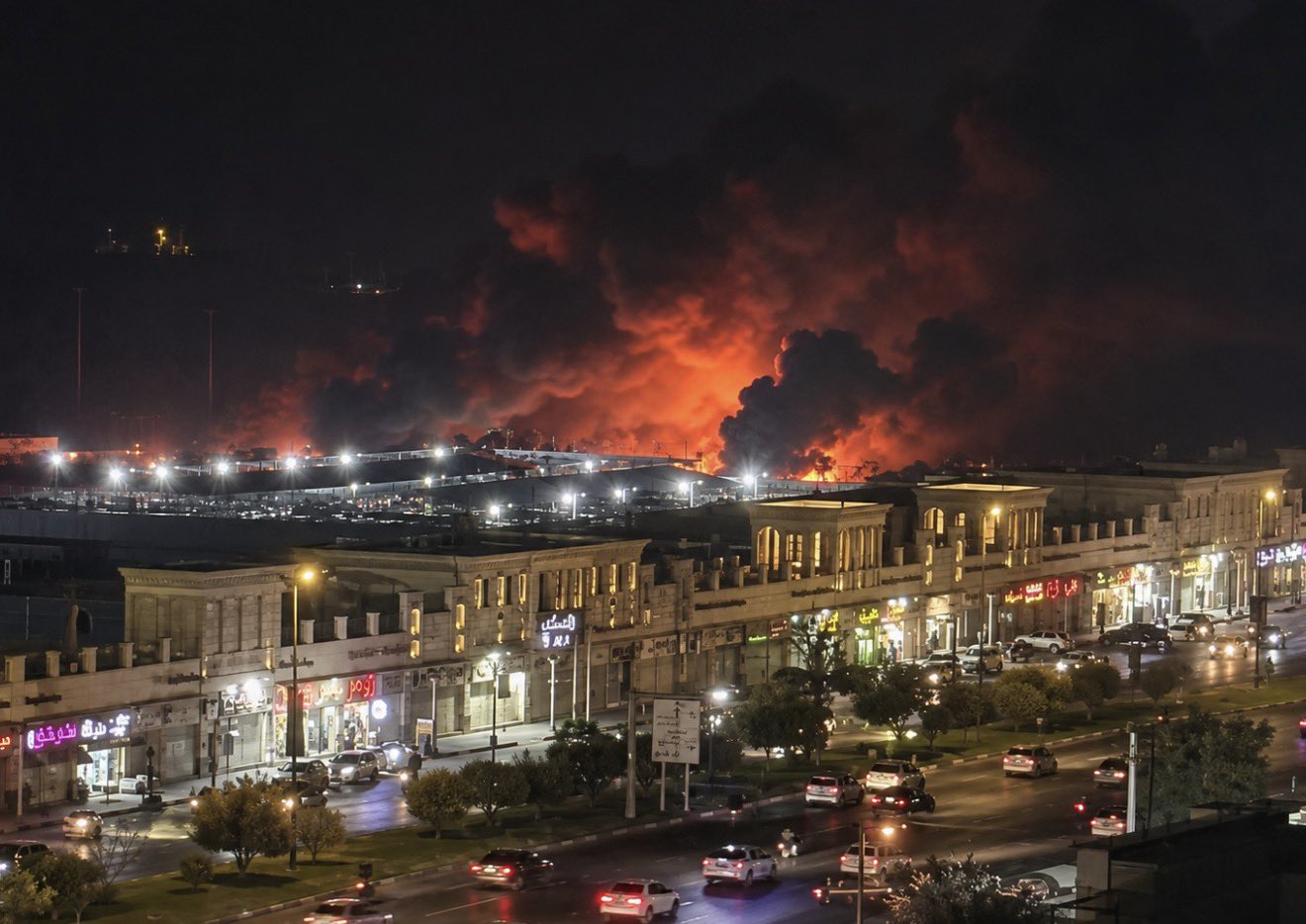
Kharg Island burns, the ceasefire is dead, oil markets are spooked and the man Iran just buried may matter less than the uniform standing behind his coffin.
Trump said it in six words that moved oil markets faster than any Fed statement this year: “For me, I think it’s over.” He said it on the sidelines of a NATO summit in Ankara, in between handshakes with European leaders, almost as an aside and that’s exactly what should worry people. Wars that end with a press conference start again the same way.
Overnight, American forces hit Kharg Island again, the narrow coral strip off Iran’s coast that moves roughly nine out of every ten barrels Iran sells to the world. Air defenses, radar sites, more than sixty Revolutionary Guard fast boats all gone, according to Central Command. Tehran answered with drones and missiles at Bahrain and Kuwait, both intercepted, both a message rather than a wound. That’s the pattern to watch: this isn’t a war of destruction anymore, it’s a war of proof-of-concept. Each side is demonstrating it still can, without yet deciding it will.
The Vessel Strikes Nobody’s Talking About Honestly
Here’s the detail buried under the noise: the three tankers hit in the Strait of Hormuz weren’t using the shipping lane Iran had insisted on controlling under the interim deal. They were hugging the Omani coastline instead, the internationally recognized route, the one the U.S. and Gulf states have always defended. Iran struck them anyway.
That’s not an accident of geography. It’s Tehran testing whether it can quietly claw back a toll booth on one-fifth of the planet’s oil and gas trade, sixty days into a truce that technically banned exactly that. Washington revoked Iran’s dollar-oil-sales license within hours, a license that, for the first time in years, had let Tehran sell crude openly instead of at a discount to Beijing through shadow fleets. That single move probably hurts the Iranian treasury more than the missiles do.

The Uncomfortable Truth: Trump Doesn’t Want Kharg Island Yet
Trump has floated seizing Kharg Island since 1988, decades before politics. He’s floated it again this war, then walked it back, then floated it again. That repetition isn’t indecision. It’s leverage management.
Taking Kharg outright means owning Iran’s oil infrastructure, its debts, its refugees, and its insurgency and the same trap that swallowed two decades of American policy in Iraq and Afghanistan. Officials quoted anonymously have said privately that seizing the island would “bankrupt” the IRGC financially. But bankrupting an institution that controls the missiles, the ports, the smuggling networks, and increasingly the succession itself doesn’t collapse it, it radicalizes it. A cornered IRGC with nothing left to lose is a more dangerous actor than a rich one negotiating a truce.
This is the part most coverage skips: Washington isn’t avoiding regime change because it lacks capability. It’s avoiding it because nobody not the Pentagon, not the Gulf states, not Israel has a credible answer for what replaces the IRGC’s grip once Khamenei’s bloodline is gone. Ayatollah Mojtaba Khamenei, the named successor, was reportedly badly burned in the same February strike that killed his father and hasn’t appeared publicly since. A regime can survive a dead figurehead. It cannot survive a power vacuum at the top of its own security apparatus, and everyone quietly negotiating in Ankara and Islamabad knows it.

The Hidden Contradiction Inside the Ceasefire Itself
The ceasefire was never a peace deal, it was a stalling tactic dressed up as diplomacy, useful to both governments for opposite reasons. Iran’s pragmatists wanted sanctions relief before their currency collapsed further. Its hardliners wanted time to rebuild the missile stockpile a five-week war had gutted. Washington wanted oil prices calm before elections mattered less to a president in his final term but very much to Republican governors up in 2026 midterms.
That’s why “over” doesn’t mean war has resumed in full, it means the fiction that both sides were negotiating in good faith has ended, and everyone’s back to negotiating with artillery instead of a memorandum. Expect this cycle strike, threaten, sanction, quietly signal a door still open to repeat for months, not days.
Khamenei’s Funeral: A Burial Four Months Late
Ali Khamenei was killed on February 28 in the opening strike of the war, but Islamic tradition, which typically demands burial within a day, was suspended for four months on security grounds, an almost unprecedented break from custom. His body was carried through Najaf and Karbala in Iraq before returning to his birthplace, Mashhad, for burial Thursday at the Imam Reza shrine. The delay wasn’t really about safety. It was about stagecraft: Iran needed a moment to project unity precisely when its succession was in doubt and its streets had already erupted once in deadly protest.
What the Markets Are Actually Pricing In
Brent crude jumped over 5% within minutes of Trump’s comments. The Dow slid 540 points. But watch the shape of the reaction, not just the size as bond yields climbed too, which is the market’s way of saying this isn’t just an oil shock, it’s an inflation shock layered on a war premium. Airlines already spent over $6 billion on fuel in May alone, up 84% year-on-year. That bill is about to grow, regardless of who wins the next round of strikes.
The Real Story Underneath
Israel will keep fighting Hezbollah and Hamas for exactly as long as Tehran keeps funding them and that thread doesn’t get cut by a ceasefire in the Gulf, because the money and weapons routes run through the IRGC, not through whichever cleric wears the title of Supreme Leader. Until that force is dismantled or defanged, every truce is a pause between rounds, not an ending. Washington knows this. It’s why the strikes keep coming, and why the invasion never does.