
Politics
UP Voter List Shake-Up: Nearly 3 Crore Names Missing in Draft Roll After Special Intensive Revision (SIR), Cities Lead Deletions


The Election Commission’s Special Intensive Revision (SIR) of the Uttar Pradesh voter list has thrown up startling numbers. The draft electoral roll, released on Monday, shows that nearly 3 crore voters are missing compared to the previous list — a development that is likely to trigger political debate and voter anxiety ahead of future elections.
Addressing a press conference in Lucknow, Uttar Pradesh Chief Electoral Officer Navdeep Rinva said the new draft roll contains 12,55,56,025 voters, down from 15,44,30,092 voters in the existing list.
In simple terms, 18.7 per cent of voters from the old list do not feature in the new draft roll.
The exercise during SIR
According to election officials, the SIR process involved door-to-door verification by Booth Level Officers (BLOs), collection of enumeration forms, and categorization of voters based on their current status.
Out of the total electorate:
81.3 per cent voters submitted their enumeration forms
2.89 crore names were dropped from the draft list
The deletions fall into four broad categories:
Break-up of deleted voters
- Deceased voters: 46.23 lakh names (2.99%) were removed after being verified as dead.
- Shifted voters: The biggest chunk — 2.17 crore voters (14.04%) — were marked as having shifted residence and could not be traced at their registered address.
- Duplicate entries: 25.47 lakh names (1.65%) were deleted as they appeared more than once in the rolls.
Election officials maintain that these corrections are essential to clean up voter rolls and eliminate ghost or duplicate voters.
However, the sheer scale of “shifted” voters has raised eyebrows.
Top districts with maximum Voter deletions
- Lucknow – 12,00,138 voters removed
- Prayagraj – 11,56,305 voters removed
- Kanpur Nagar – 9,02,148 voters removed
Other major districts with high deletions include:
- Agra: 8,36,943
- Ghaziabad: 8,18,139
- Meerut: 6,65,635
- Gorakhpur: 6,45,625
Officials admit that in several urban districts, more than one-fifth of the electorate was marked “uncollectable” due to people moving houses, changing cities for jobs, or living at temporary addresses.
Border districts also show concern
Apart from cities, border and migration-prone districts such as Bahraich, Shravasti, Balrampur, Siddharthnagar and Maharajganj reported a large number of voters marked absent or untraceable.
These districts often see seasonal migration, cross-border movement, and weak documentation, making voter verification challenging.
How to check if your name is deleted

Uttar Pradesh Election Commission Chief Electoral Officer (CEO) Navdeep Rinva urged citizens to check their status immediately.
Voters can visit:
ceouttarpradesh.nic.in
voters.eci.gov.in
Names are listed under the ASDDR category:
- A – Absent
- S – Shifted
- D – Dead
- D – Duplicate
- R – Refused enumeration
The SIR 2026 draft roll is available for download on the ECI website.
What to do if your name is missing
If a voter’s name does not appear in the draft list:
Form-6: For inclusion of name (new or deleted voters)
Form-6A: Overseas voters
Form-7: Objections or removal
Form-8: Corrections in details
Forms can be submitted through:
- Booth Level Officers (BLOs)
- Voter Registration Centres at tehsil offices
- ECINET mobile app
- voters.eci.gov.in
Key dates to remember
Claims & objections period: January 6 – February 6, 2026
Disposal of claims: Till February 27, 2026
Final voter list publication: March 6, 2026
Election officials insist that no genuine voter will be left out if they file claims on time. But with nearly 3 crore names missing in the draft, the coming weeks will be crucial — not just for voters, but for the credibility of the electoral process itself.


Politics
From “Kerala” to “Keralam”: The 2,000-Year Journey, From Emperor Ashoka’s Edicts to PM Modi’s Cabinet
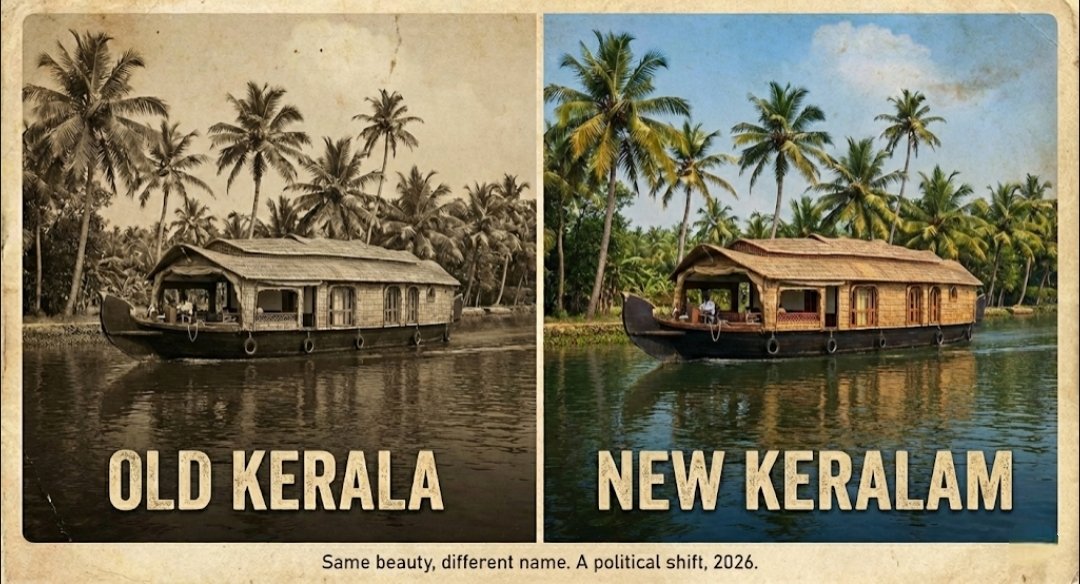
The Union Cabinet, under the leadership Prime Minister Narendra Modi, approved the proposal to rename “Kerala” as “Keralam.”
For many Malayalis scrolling through their phone screens, the first reaction was: “Wasn’t it always Keralam?”
And honestly, they’re not wrong!
The History Behind Keralam Identity
The land we call home has been “Keralam” in our hearts and tongues for as long as anyone can remember. When we say “Ente Keralam” (my Kerala), the word rolls off the tongue naturally in Malayalam.
But in the Constitution’s First Schedule, it’s been officially recorded as “Kerala” since the states were reorganized on linguistic basis back on November 1, 1956.
But here’s something interesting – the name itself is ancient. Way ancient.
Archaeologists and historians point to Emperor Ashoka’s Major Rock Edict II from 257 BCE, where the term “Keralaputo” appears in Prakrit. That’s “Keralaputra” – son of Kerala.
“एवमपि प्रचंतेसु यथ चोडा, पाडा, सतियपुतो, केरलपुतो, तंबपंनी, अंतियको योनराजा…”
Then there’s Patanjali’s Mahabhashya from around the 2nd century BCE, which uses the exact word “Kerala” while explaining Sanskrit grammar rules.
The Ramayana and Mahabharata? They mention “Kerala” and “Keralas” too. In the Kishkindha Kanda, when Sugriva sends search parties for Sita Maa, he specifically names the Cholas, Pandyas, and “Keralas” in the south.
नदीं गोदावरीं चैव सर्वमेवानुपश्यत । तथैवान्ध्रांश्च पुण्ड्रांश्च चोलान् पाण्ड्यान् केरलान् ।।
By the 11th century, Chola inscriptions at the Brihadisvara Temple in Thanjavur proudly record victories over Chera kings, and there it is – “Kēraḷam” with that distinctive -am suffix that Malayalis instinctively add. The 14th-century grammar text Lilatilakam refers to the region as “Keralam” and calls the local language “Kerala-bhasha.”
So the word “Keralam” isn’t some new invention. It’s been around for centuries. The Keralolpathi, a 17th-century text about Parashurama creating the land, has the word right there in its title.
Why Now? The Politics Behind the Keralam
Here’s where things get a bit tangled.
The Kerala Legislative Assembly passed a resolution on June 24, 2024, unanimously appealing to the central government to change the name from “Kerala” to “Keralam” in the Constitution. The resolution pointed out something obvious – the state’s name in Malayalam has always been “Keralam,” so why not make it official?
The Chief Minister Pinarayi Vijayan-led LDF government sent this request to the Centre. And then…they waited. And waited.
For nearly two years, the file sat somewhere in the corridors of North Block. The Ministry of Home Affairs, under Amit Shah, had to consult the Department of Legal Affairs and the Legislative Department. Everyone had to agree. Concurrence notes had to be written. Files had to
move from one desk to another.
Now, in 2026, with elections not too far away in political calculations, the cabinet has finally given its nod.
The Process Behind Name Change
For those wondering why a state can’t just rename itself – the Constitution has rules for this. Article 3 gives Parliament the power to alter the name of any state. But there’s a process.
First, the state legislature has to pass a resolution. LDF government in Kerala did that in 2024.
Then, the central government considers it. Which they just did.
Next, the President will refer a bill – officially the Kerala (Alteration of Name) Bill, 2026– back to the state assembly for its views. Yes, even though the assembly already passed a resolution, the Constitution wants this specific step. The assembly will express its views (likely the same ones), and then the bill goes to Parliament.
The Ministry of Home Affairs, under Amit Shah, had examined the proposal in consultation with the Law Ministry.
Finally, Parliament votes on it, and if passed, the First Schedule of the Constitution gets amended. “Kerala” becomes “Keralam.”
Even after approval, several administrative steps will be required, including changes in official records, government signage, educational documents, passports, and international references.

Will This Benefit The BJP In Kerala?
Now for the question everyone’s whispering about: Is this a political move?
Kerala has 20 Lok Sabha seats. The BJP has never won a single one. In the 2021 assembly elections, they managed to open their account with two seats, but that’s still a minor presence in the 140-member house.
The BJP has been trying for years to gain a foothold in Kerala. They’ve tried Hindutva, they’ve tried development talk, they’ve tried courting Christian and Muslim communities. Nothing has really worked.
Kerala’s political landscape has traditionally been dominated by the Left Democratic Front (LDF) and the Congress-led United Democratic Front (UDF).
So a name change that the Kerala government itself requested – and that coincide with cultural sentiments – might seem like an easy win.
The BJP can say, “See, we respect your identity. We cleared what your elected state government has asked for.”
But will common Malayalis buy it? The average person on the street in Thiruvananthapuram or Kochi knows that this request has been pending for two years. They know elections are approaching. They’ve seen this game before.
There’s also the fact that renaming doesn’t solve any real problems. It doesn’t fix potholes, create jobs, or improve schools. It’s symbolic politics – sometimes meaningful, sometimes just a distraction.
The Buzz Amongst Malyalis
Walk into any chai kada in Kerala, and you’ll hear mixed reactions. Some people shrug: “We already say Keralam. What changes?” Others are more cynical: “The BJP wants credit for something we asked for ages ago.”
There’s also the practical question: How much will this cost? Name changes mean updating official documents, signboards, government stationery, maybe even maps. That’s public money that could have gone elsewhere.
But there’s genuine sentiment too. For many, seeing “Keralam” in the Constitution feels like respect for the language. Malayalis are fiercely proud of their mother tongue, and if the official records can match what they speak at home, why not?
The Bigger Picture
India has seen many name changes – from Bombay to Mumbai, Madras to Chennai, Calcutta to Kolkata, Orissa to Odisha. Sometimes it feels organic, sometimes politically motivated. But in each case, the argument has been about shedding colonial hangovers or matching local pronunciation.
Kerala’s case is slightly different. “Kerala” isn’t exactly wrong – it’s the Sanskrit version that’s been used for millennia alongside “Keralam.”
The state’s own website is kerala.gov.in. Malayalam newspapers use both.
What makes this interesting is the timing. The BJP, which runs the central government, is approving something a Left-front state government asked for. In India’s polarized politics, that’s almost unusual. It suggests that on cultural-linguistic matters, there can still be some consensus.
Looking Forward
The bill still has to go through Parliament. With the NDA comfortably in power, passage seems certain. By the end of 2026, “Keralam” could officially be on the world map.
Whether this translates into votes for the BJP in 2026 for state election or 2029 for Lok Sabha is another question. Kerala voters are sophisticated. They watch, they analyze, and they rarely vote based on symbolism alone.
For now, though, Malayalis can smile a little. Their state’s name, the one their grandparents used, the one that appears in ancient inscriptions and modern conversations alike, is finally getting its due place in the Constitution.
Keralam it is. Always was, always will be!
Politics
Youth Congress Leader’s Shirtless Protest: Sparks Shame & Embarrassment for India at AI Summit 2026
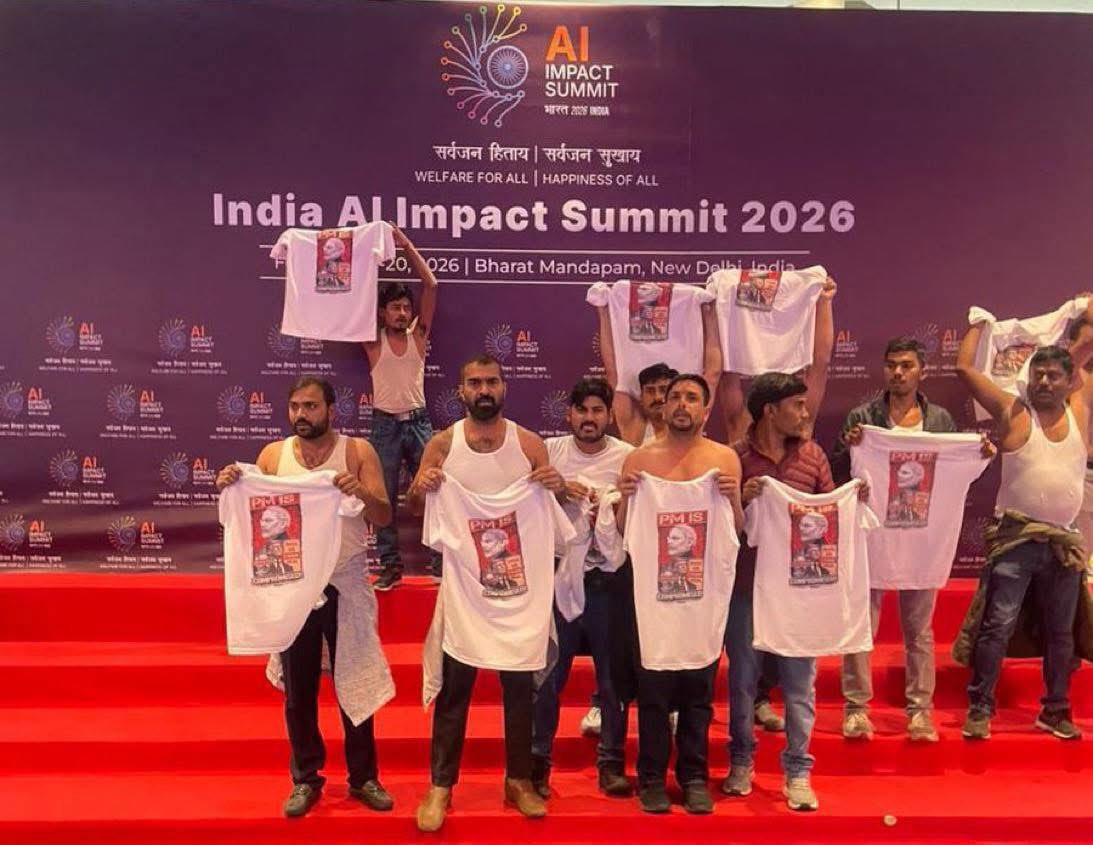
At moments when a nation stands before the world to present its progress and promise, politics must pause at the threshold of national interest. The recent protest by the Indian National Congress Youth wing at a prestigious AI summit 2026, Delhi did the opposite — it pulled domestic confrontation into a space meant for global collaboration, turning a moment of pride into one of discomfort.
The summit was not a partisan gathering. It was a national platform where global leaders, policy experts, and technology CEOs assembled to witness India’s expanding role in the future of artificial intelligence. Events of such scale are diplomatic theatres as much as policy forums, where perception shapes partnerships and credibility fuels investment.
Yet the shirtless protest “PM is Compromised” led by Indian National Congress youth leaders, with political messaging linked to Rahul Gandhi, diverted attention from innovation to agitation. What should have been remembered for technological ambition instead risked being reduced to headlines of protest and confrontation. In international forums, optics matter — and the optics here were deeply unfortunate.

Democratic dissent is the lifeblood of any republic. But democracy also carries a responsibility: to recognize context, timing, and consequence. Not every stage is appropriate for protest, and not every grievance demands expression at moments of national representation. When political theatre intrudes upon diplomatic showcases, it does not weaken a government alone — it risks diluting the country’s collective image.
What makes the episode particularly troubling is the symbolism. Gate-crashing a summit hosting international delegates sends a message of internal discord at precisely the moment India seeks to project stability, confidence, and technological leadership. The world watches not only policy announcements but political behaviour. The difference between constructive dissent and disruptive spectacle lies in whether the action strengthens national discourse or undermines national credibility.

Some actions, regardless of political motivation, cannot be justified under the broad shield of democratic freedom. Freedom of expression is not a license to disregard national dignity, especially in spaces where India speaks to the world as one voice. Political disagreements are inevitable, but their expression must be measured against the larger canvas of national interest.
India’s rise in emerging technologies is a collective achievement, built across governments, industries, and institutions. Moments that showcase this progress should unite rather than divide. The AI summit was one such moment — and the protest that overshadowed it serves as a cautionary reminder that political competition must never eclipse national representation.
In the end, nations are judged not only by their technological prowess but by their political maturity. When the global spotlight shines, restraint is not weakness; it is statesmanship
Developing Story :
Delhi Police detain four IYC workers at the AI Summit protest; they will be produced in Patiala High Court. New Delhi.
When Faith Meets the Rulebook: The Magh Mela Lesson India Must Not Ignore
The confrontation involving Shankaracharya Swami Avimukteshwaranand Saraswati in Prayagraj has moved far beyond a dispute over a ceremonial chariot procession. What unfolded during the Magh Mela is now a layered controversy — part administrative crisis, part symbolic injury, and part political chessboard ahead of future electoral battles in Uttar Pradesh.
This investigative feature examines what really happened, and why the episode matters far beyond a single religious gathering.
The Story So Far
On the peak bathing day of Mauni Amavasya, the Shankaracharya sought to proceed for the holy dip in a palanquin/chariot procession. Authorities denied this citing crowd control and a strict no-vehicle protocol, applicable to all participants. Police insisted the seer walk to the Sangam like other devotees.
When followers resisted, tension escalated. Police forcibly removed disciples; videos showing some Batuks dragged by their tuft (choti) went viral, triggering outrage.
The seer staged a protest claiming disrespect and denial of religious dignity, while officials maintained the action was purely for safety amid crores of pilgrims.
Government position: law over status
Chief Minister Yogi Adityanath defended the administration:
-
No VIP movement allowed on peak Snan day
-
Public safety took precedence amid massive crowds
-
“No one is above the law” and the Shankaracharya title has a defined process
The government’s argument is rooted in logistics. With more than 22 crore pilgrims attending the Mela, strict crowd management was essential to avoid stampede-like risks.
Deputy CM Brajesh Pathak’s damage-control outreach
Deputy CM Brajesh Pathak took a softer line:
-
Said pulling Batuks’ Choti was a “great sin” and action should be taken against guilty personnel.
-
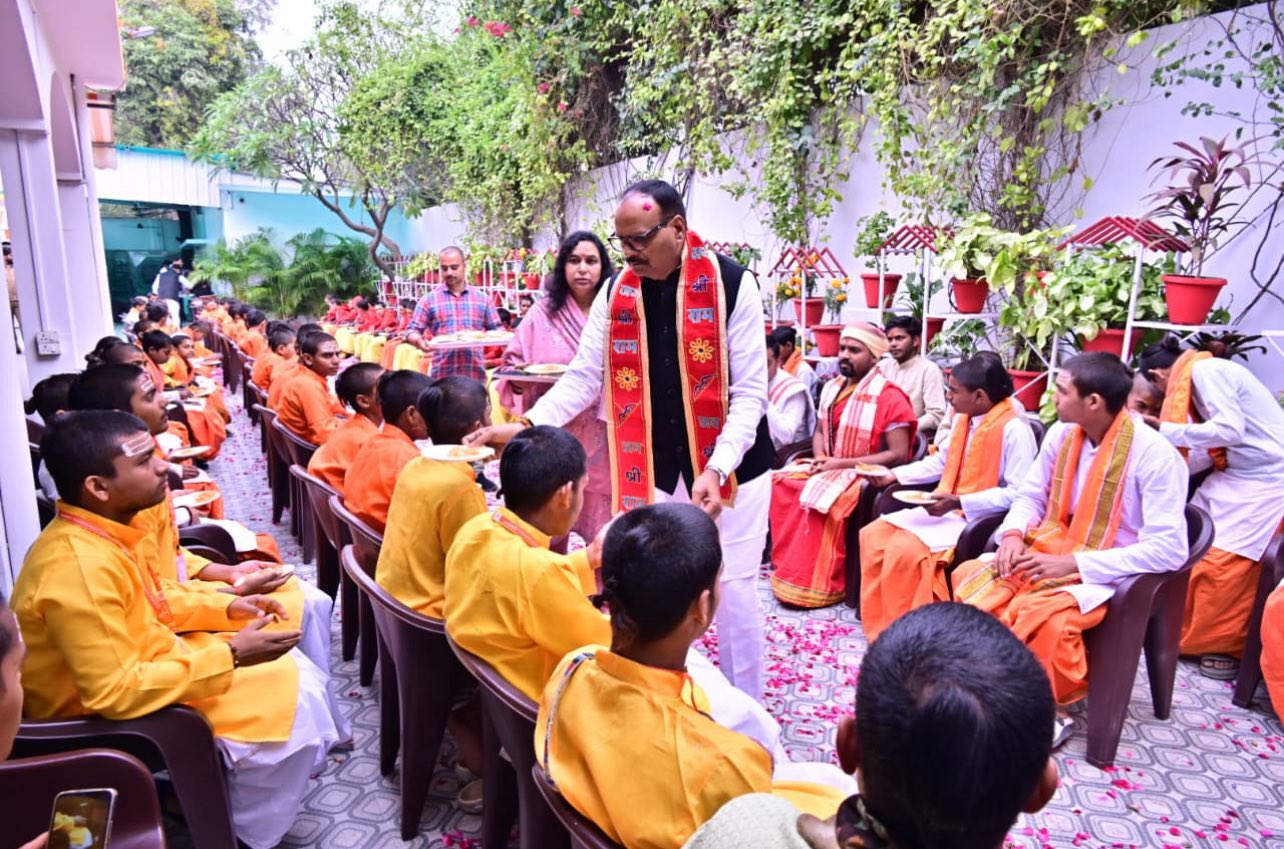
Later invited 101 Batuks to his residence and performed ritual honouring as a symbolic reconciliation gesture
Political observers interpret this as image repair toward the Brahmin community, where resentment was reportedly building.

Opposition narrative
Opposition parties framed the incident as:
-
Insult to saints and Sanatan tradition
-
Excessive police force
-
BJP’s alleged “selective respect” toward religious figures
However, the ruling side countered by recalling earlier instances of confrontation with Shankaracharya Swami Avimukteshwaranand Saraswati at Varanasi during previous Samajwadi Party government, accusing opposition of selective outrage.
This mutual historical blame game reflects India’s familiar pattern: religious controversies becoming political ammunition across regimes.
Is Brahmin anger real or exaggerated?
Reality appears nuanced:
Reasons for resentment
-
Viral visuals of Batuks’ treatment hurt symbolic religious sentiments
-
Perception of disrespect toward a Shankaracharya
-
Existing caste-political undercurrents and policy grievances
Reasons anger may be overstated
-
BJP still retains strong Brahmin leadership and representation in UP
-
Government narrative of equal law appeals to broader voters
-
Pathak’s outreach and investigation assurances may diffuse tension
Thus, anger exists emotionally and online, but whether it translates into electoral shift remains uncertain.
Political impact on upcoming UP elections
Possible risks for BJP
-
Micro-level Brahmin dissatisfaction in select constituencies
-
Opposition mobilization using symbolism of saint disrespect
-
Social media narrative amplification
Possible gains
-
Law-and-order consistency image among neutral voters
-
Reinforcement of “no VIP culture” message
-
Ability to neutralize controversy through outreach
Historically, UP elections hinge more on coalition arithmetic and welfare politics than single religious incidents. Hence, this controversy is unlikely to be decisive alone, but may influence perception margins.
Bigger takeaway: faith vs governance dilemma
The episode highlights a recurring tension in Indian public life:
-
Religious hierarchy expects ceremonial recognition
-
Modern administration prioritizes uniform rules and safety
-
Viral visuals convert administrative actions into emotional debates
The truth lies in the grey zone — both dignity of saints and crowd safety are legitimate concerns.
Conclusion
The Prayagraj Magh Mela controversy is less about one saint or one police action and more about the complex negotiation between tradition, protocol and politics. Government action appears administratively defensible, yet the optics of force created emotional backlash. Political outreach suggests recognition of this sensitivity.
Whether the issue fades as a temporary storm or leaves a deeper caste-political ripple will depend on how narratives evolve beyond social media outrage.


Sanju Samson’s unbeaten 97 wipes out West Indies’ 196: India storms into Semis With Record-Breaking Chase at Eden Garden.

When The Middle East Broke Open: The Iran–Israel–US War, the Fall of Khamenei, the Strait of Hormuz, and the World Geopolitics That Comes After

“Yami Gautam’s Tears Say It All: Why ‘Dhurandhar: The Revenge’ Isn’t Just a Sequel, It’s an Emotion”
-

 Fashion9 years ago
Your comprehensive guide to this fall’s biggest trends
-

 Sports2 months ago
Renuka Struck, Deepti Controlled, Shafali Finished : India Outclass Sri Lanka To Seal Series 3–0
-
Entertainment9 years ago
Rappers are blowing up Twitter with praise for Jay Z and ‘4:44’
-
International News2 years ago
The United Nations Observes A Minute Of Silence In Memory Of The 101 Staff Who Died In Gaza
-

 Entertainment3 months ago
Dhurandhar Film Review—A Powerful, Action-packed, Engrossing, Yet A Bit Dragged-Out Theatrical Experience!
-

 Business2 months ago
Historic milestone! New Zealand commits to an investment worth USD 20 billion in India under the India-New Zealand Free Trade Agreement
-

 International News3 months ago
President Vladimir Putin and Prime Minister Narendra Modi—both travel in “Fortuner Fortune Shield.” As global eyes watch, the message is clear – ये दोस्ती हम नहीं तोड़ेंगे!
-
Business9 years ago
15 Habits that could be hurting your business relationships