

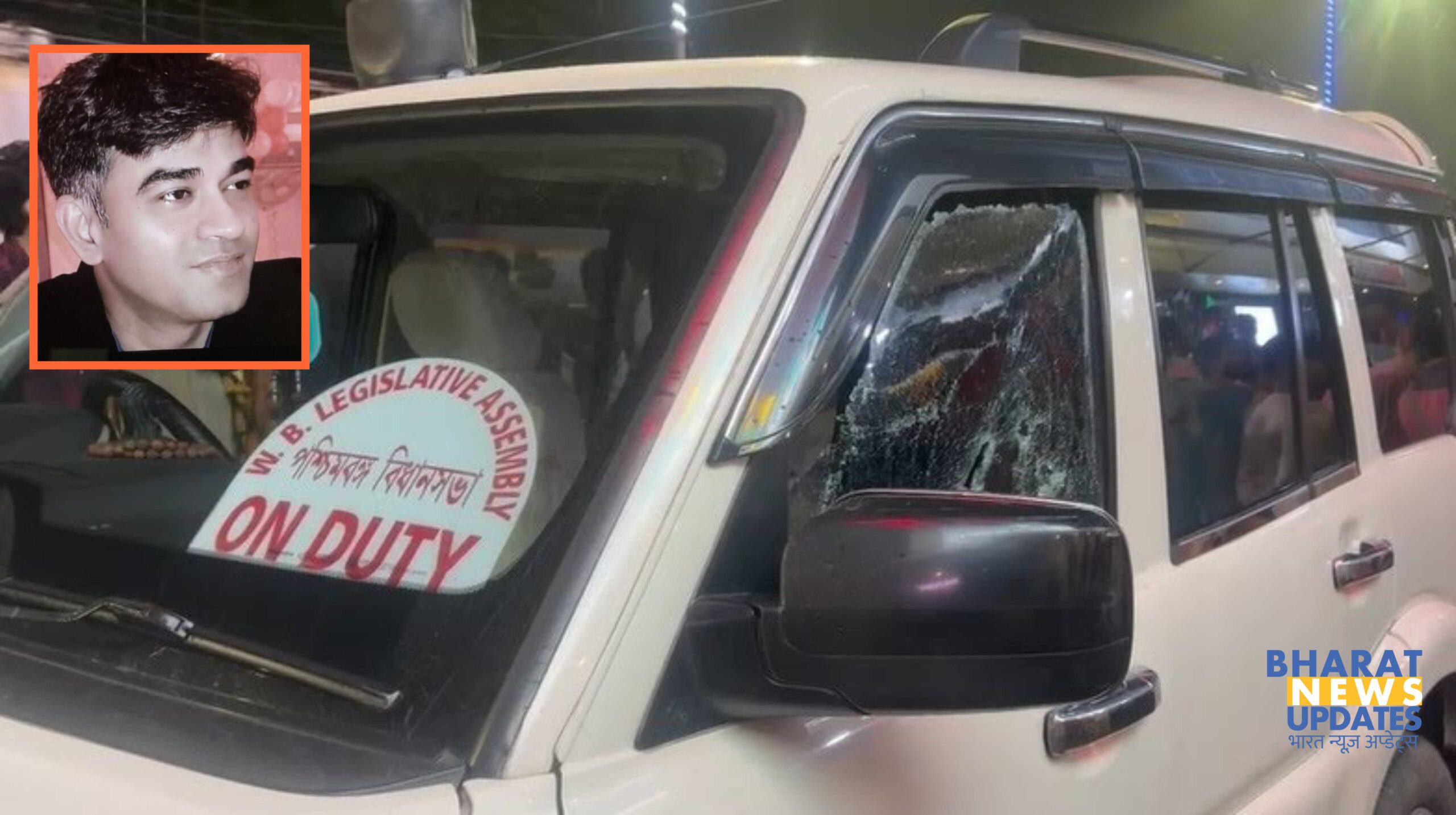
Shot Three Times in a Moving Car: The Murder of Chandranath Rath and What It Tells Us About Bengal’s Post-Poll Reckoning
Two days after the BJP’s historic sweep of West Bengal, the man who ran Suvendu Adhikari’s political life from behind the scenes was killed in a targeted roadside ambush. No one has been arrested. The questions are mounting.
He was not the man at the podium. He was not the face on the banners. But Chandranath Rath, the personal assistant of West Bengal BJP leader Suvendu Adhikari, was by nearly every account the man who made sure Adhikari’s political machinery moved. He scheduled meetings, coordinated party workers, managed sensitive communications, and sat at the centre of Adhikari’s inner circle for years. On the night of May 6, 2026— just two days after the BJP achieved what analysts are calling its most significant state election victory since 2014— four bullets were fired at Rath’s car in Madhyamgram. Three of them found their mark. His driver, Buddhadeb, survived with injuries. Chandranath Rath did not.
What happened in those moments— who ordered the hit, who pulled the trigger, and why — remains officially unanswered. But the circumstances of this killing, placed against the backdrop of West Bengal’s volatile post-election landscape, raise questions that go well beyond a single night of violence.
What we know: the sequence of events

Who was Chandranath Rath?
Unlike the many BJP workers whose names surface only in the ledger of political casualties, Chandranath Rath occupied a position of real influence. As Adhikari’s executive assistant and political coordinator, he was the gatekeeper to one of the most consequential BJP leaders in eastern India — a man who is now almost certain to be the next Chief Minister of West Bengal. Rath had served Adhikari for years, through his time as a TMC leader before his dramatic defection to the BJP in 2020, and through the Opposition years that followed. He knew names, factions, local organizers, and the internal fault lines of the party’s North 24 Parganas operations. In the language of political violence, he was not just a soft target— he was a high-value one.
His death was not a street scuffle. The method— tailed car, slowed vehicle, motorcycle-mounted shooters, multiple rounds— is the grammar of organized crime and targeted political elimination, not spontaneous post-poll anger.

Who could be responsible?
No group has claimed responsibility. Police have stated only that the motive is “yet to be ascertained.” But the political context and operational details allow for a structured analysis of likely angles.
The wider picture: a state on edge
Rath’s murder did not happen in a vacuum. By the time the shots were fired, West Bengal had already spent two days convulsing. At least four people had been killed in post-poll violence, according to various media reporting citing police. Both parties claimed their workers had been killed; both parties blamed the other. Videos circulated showing groups vandalising public property. Kolkata Police said they had taken at least 80 people into custody across different cases. The Trinamool, in a social media post, simultaneously condemned Rath’s murder and alleged “BJP-backed miscreants” had killed three TMC workers over the same period. The BJP, in turn, alleged TMC workers were impersonating BJP supporters to incite violence.
This is the context in which investigators must work— a state where the political victors and the defeated are both claiming victimhood simultaneously, where social media is awash with partisan versions of events, and where the local police apparatus has historically been accused of political bias regardless of who was in power.
The demand for CBI: legitimate or political?
Dibyendu Adhikari, Suvendu’s brother, immediately called for a Central Bureau of Investigation probe. This is a standard move in Bengal’s political playbook— whichever party is in opposition typically demands CBI whenever state police are in control of a sensitive investigation. Given that a BJP government is now on its way to power in the state, the logic here is more complicated than usual. A state-level police investigation may actually suit the incoming BJP government better— it will soon control the state’s law enforcement apparatus. A CBI probe, on the other hand, answers to the Centre, which the BJP also controls. Either way, independent and unobstructed investigation is what justice for Chandranath Rath demands— and what Bengal’s history of post-poll violence suggests is rarely guaranteed.
What needs to happen next
Three questions must drive any credible investigation. First: who were the motorcycle-borne shooters, and who hired them? Second: was Rath specifically targeted, or did the attack carry a message aimed at Adhikari himself? Third: does the trail lead to political operatives, criminal networks, or both? The forensics of the vehicle, witness accounts from the area, CCTV footage from Madhyamgram’s roads, and phone records from the hours preceding the attack are all essential starting points. The attackers clearly had prior knowledge of Rath’s movements — which means either surveillance was conducted in advance, or someone with access to his schedule passed on information. That question of who knew his route is, in many ways, the key to everything.
A 52-word Trinamool tweet condemning his death and a set of BJP press conferences demanding justice will not be enough. Chandranath Rath spent years working in the shadows so that someone else could stand in the light. He was killed in those same shadows. He deserves more than becoming a data point in each party’s post-election violence count.