
Politics
Bihar’s Longest Goodbye Story: Is Nitish Kumar’s Rajya Sabha Move a ‘Sanyas’ or a BJP Masterstroke?

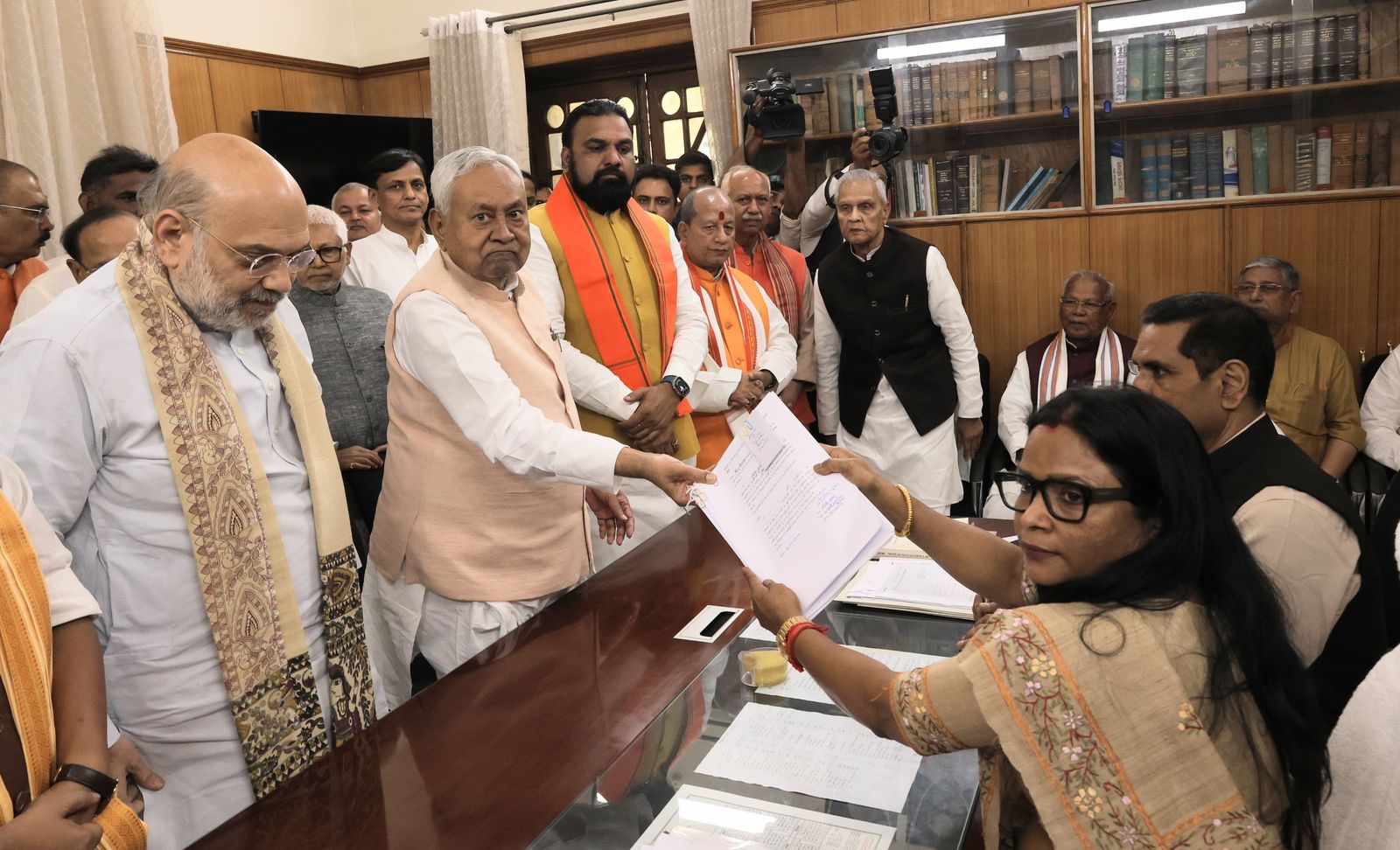
How Nitish Kumar’s 10th Exit as Bihar CM Is BJP’s Most Calculated Power Move Yet!
“When a king moves off the board, it is never because he is weak. It is because the board has changed.”
On the morning of March 5, 2026, something happened in the Bihar Assembly that has not happened in two decades of Indian political history. Nitish Kumar— ten-time Chief Minister, the man Bihar has known as its permanent address — walked in to file a Rajya Sabha nomination. Walking right beside him, lending the gravitas of the Union Home Ministry, was Amit Shah.
That single image told you everything you needed to know. This was not a retirement. This was not a personal aspiration. This was a choreographed transition, and every actor in it knew their lines before they even showed up.
Within hours, some JDU workers gathered outside Nitish’s residence in Patna raising slogans, urging him not to go. Media was barred beyond Gate No. 10 of the Bihar Assembly. And in Delhi, the opposition was already pointing fingers, calling it a coup dressed as a courtesy.
So what really happened today? And more importantly — what happens next?

Bihar CM Nitish Kumar’s Old File Photo
The 10th Time: A Record That Hides a Story
Nitish Kumar has now been sworn in as Bihar’s Chief Minister ten times. That alone is an extraordinary number. Most politicians celebrate a second term. Nitish Kumar treated the Chief Ministership like a room he kept coming back to, sometimes through the front door, sometimes through a window.
He has been a member of the Bihar Legislative Assembly. He has served in the Bihar Legislative Council. He has been a Lok Sabha MP. The one house he had never entered was the Rajya Sabha. That, he now says, was always his “desire” — to complete the full house of India’s legislature.
It is a tidy story. It is also a convenient one.
Because the timing — barely four months after his record 10th swearing-in on November 20, 2025 — does not suggest a man following an old personal dream. It suggests a man who has been nudged, gently but firmly, toward the exit door. And the person holding that door open is Amit Shah.
The Numbers Game BJP Has Been Playing For Years
To understand today, you have to go back to November 2025. The NDA won 202 of 243 seats in the Bihar Assembly elections— a landslide that would have embarrassed most opposition parties. But look more carefully at who won what.
BJP secured 89 MLAs. JDU secured 85. For the very first time in Bihar’s political history, the BJP was the larger partner inside the ruling alliance. Yet Nitish Kumar was still sworn in as Chief Minister, because the BJP — publicly, at least — said the election was fought under his leadership and he deserved the top job.
But here is what they were also saying quietly: the election was actually run largely by the BJP’s own machinery. No joint rallies were held between Nitish and BJP‘s top brass. The NDA manifesto launch lasted just 26 seconds, and Nitish Kumar did not speak a word at it. The BJP refused to formally declare him as their Chief Ministerial candidate, even while accepting his face would help them win.
BJP needed Nitish to win. But once they won, they no longer needed him in the same way. The 89-vs-85 arithmetic had shifted the moral authority within the NDA. The largest party in the coalition had never, not once in Bihar’s history, held the Chief Minister‘s chair. Today, that changes.

Was This Forced? The Health Question Nobody Wants to Say Aloud
Political insiders and academic observers in Patna have, for months, been talking about something the Bihar government has been careful to keep out of the headlines: Nitish Kumar’s health.
There have been visible gaffes, moments of apparent confusion at public events, and reports that the Chief Minister has increasingly been shielded from the media and from difficult interactions. A Patna University professor told a national newspaper bluntly that the state administration had, for some time, been effectively run by bureaucrats rather than the political leadership.
Jan Suraaj leader Prashant Kishor had provocatively — and controversially — alleged during the Bihar elections that Nitish Kumar was “mentally unfit.” That claim was dismissed by the ruling alliance and disputed widely. But the pattern of limited appearances, brief photo-ops, and controlled access to the CM has not gone unnoticed.
The decision to send him to the Rajya Sabha — a chamber that has no executive responsibility, where a frail or ailing leader can still be a party figurehead without the daily grind of running a state — fits this narrative too cleanly to dismiss.
Was he forced? Officially, everyone says no. Lalan Singh said “the decision is Nitish Kumar‘s alone.” HM Amit Shah attended the nomination ceremony to signal NDA solidarity, not pressure. But the JDU workers protesting outside his residence did not look like they had been given the same reassurance.
The Dynasty Deal: Enter Nishant Kumar
Here is the other layer to this story, the one that makes it feel less like a retirement and more like a negotiated settlement.
Nitish Kumar has spent his entire political life loudly opposing dynasty politics. He has said it repeatedly, at public meetings, in interviews, in party forums. His opposition to the Yadav family’s dynastic hold on Bihar was, in many ways, the founding energy of the JDU’s identity.
And yet, on the very day he filed his Rajya Sabha nomination, his son Nishant Kumar formally joined the JDU.
The timing is too precise to be a coincidence. What appears to be unfolding is a deal — possibly the price Nitish extracted from BJP in exchange for vacating the CM’s chair. The deal: Nishant Kumar gets a Deputy Chief Ministership, or a powerful cabinet role, in the new Bihar government. Nitish gets the Rajya Sabha and a dignified exit. BJP gets the Chief Minister‘s post it has wanted for years.
Congress leader Adhir Ranjan Chowdhury said it with characteristic bluntness: “To build his son’s future, Nitish Kumar is going to the Rajya Sabha and bringing his son into the Bihar government.”
It is not flattering. But it is probably accurate.

Bihar CM Nitish Kumar and Son Nishant Kumar on Rangotsav Eve 2026.
The Chessboard: BJP’s Bihar Gambit Explained
Step back from the details and look at the board. Bihar is the last major Hindi-heartland state where the BJP has never held the Chief Minister‘s post. Uttar Pradesh, Madhya Pradesh, Rajasthan, Chhattisgarh, Jharkhand— across the Hindi belt, BJP has installed its own faces. Bihar alone remained the exception, because Nitish Kumar was too valuable, and too popular, to displace.
But the 2025 mandate changed the calculus. BJP is now the largest party. Nitish is aging. The alliance is structurally lopsided. And the 2029 Lok Sabha elections are not far away — establishing a BJP Chief Minister in Bihar now gives the party four years to build that face into a state-level brand.
Amit Shah‘s presence at the nomination was not symbolic. It was a statement of ownership. The Home Minister flew into Patna, sat in that room, and watched Bihar’s longest-serving CM sign away the chair. That is not how you treat a beloved elder. That is how you close a deal.
The RJD understood this immediately. Senior RJD leader Manoj Kumar Jha said Nitish’s post on social media announcing the move “doesn’t sound like Nitish Kumar ji’s own voice”— suggesting the words were, as he put it, “crafted somewhere else and merely recited here.”
Who Sits in the Chair Next? The Race for Bihar’s CM
This is now the most important question in Bihar’s politics. And it is genuinely open. The BJP has not officially named a successor. Political sources suggest the party may even surprise observers by going with a face nobody is currently expecting. Here is who is being talked about:

Samrat Choudhary— The Front-Runner
Currently one of Bihar’s two Deputy Chief Ministers, Samrat Choudhary also holds the Home portfolio and is the most visible BJP face in the state. He comes from the Koeri-Kushwaha community— an extremely politically important OBC group — and has been building his own political brand for years. Most analysts rate him as the most likely pick. He has the seniority, the caste arithmetic, and the organizational backing.

Vijay Kumar Sinha— The Other Deputy CM
The second Deputy CM, Sinha has been a Bihar MLA since 2010 from Lakhisarai. He is dependable, experienced, and close to the BJP central leadership. Less flashy than Samrat Choudhary, but not to be underestimated.

Nityanand Rai— The Dark Horse
A Union Minister of State for Home Affairs, former Bihar BJP president, and four-time MLA from Hajipur— Nityanand Rai is a quiet but powerful figure. If BJP wants someone who combines organizational depth with a national profile, Rai is the name that surprises people but makes sense on reflection.
Sanjeev Chaurasia & Dilip Jaiswal— The Outsiders
Chaurasia is a BJP MLA from Digha who won by a stunning 59,000-vote margin in 2025, signalling mass popularity. Dilip Jaiswal is a third-time MLC and former state BJP president. Both are being mentioned, though they are considered longer shots than the first three names.
What About Nishant Kumar?
The Congress allegation — that Nishant may become Deputy CM— is being taken seriously in political circles. If BJP wants to keep JDU happy and ensure the alliance holds, offering Nishant a Deputy CM‘s position (while keeping the CM’s post for themselves) is an elegant solution. The two Deputy CM positions currently held by BJP could be rebalanced — one going to a JDU leader, possibly Nishant, and one remaining with BJP.
The Caste Equation: Bihar’s Permanent Chessboard
In any other state, a Chief Minister change might be primarily about governance. In Bihar, it is always, fundamentally, about caste.
Bihar is one of the most caste-stratified states in India. The Yadav-Muslim combine built by Lalu Prasad Yadav once dominated. Nitish Kumar created a counter-coalition of OBCs, EBCs (Extremely Backward Classes), Dalits, and upper castes— a fragile but functional alliance he held together for twenty years through a combination of development delivery and personal trust.
BJP knows that whoever becomes CM must maintain this social balance. A Brahmin or Rajput CM could alienate the OBC vote. A dominant-OBC CM could upset upper castes. The safest path — which is why Samrat Choudhary’s Koeri-Kushwaha identity works — is someone from a non-dominant OBC community who can claim to represent Bihar’s vast middle-caste layers without threatening anyone above or below.
Nitish Kumar’s genius was always that he embodied the aspirations of Bihar’s Kurmi community (his own caste) while speaking in the language of all EBCs. Whoever replaces him will need to perform the same trick — or risk the fragile social coalition cracking before the 2029 elections.

Mahabodhi Temple Of Bodhgaya (UNESCO World Heritage Site)
Is This Good for Bihar? The Honest Answer
The honest answer is: we don’t know yet, and anyone who tells you otherwise is guessing.
The case for yes is straightforward. A BJP Chief Minister could mean more decisive Central-State coordination on development projects, faster execution of infrastructure, and a stronger voice in Delhi given that BJP runs the Union government. Bihar has been demanding Special Category Status for years — a BJP CM might finally be able to push that through more effectively.
The case for concern is equally straightforward. Nitish Kumar had something no BJP leader in Bihar currently has: genuine cross-caste, cross-community trust built over two decades. His personal brand was the glue in the NDA coalition. Without that glue, the 202-seat alliance could develop cracks that don’t show up immediately but become visible before 2029. Bihar also has genuine administrative challenges — chronic flooding, unemployment, poor public health infrastructure — that require continuity, not just political change.
There is also the deeper question of whether Bihar is getting a new leader or just a new face on the same government. If the bureaucracy continues to run the state, and the political figure at the top merely attends inaugurations — then the change is cosmetic.
The King’s Move: What Nitish Actually Won
Give Nitish Kumar credit for this: very few politicians in India manage their own displacement with this much dignity. He has not been thrown out. He has not been humiliated. He has walked off the field with a Rajya Sabha seat, a legacy statement in his farewell post, his son’s political future secured, and Amit Shah standing beside him to confirm that he remains valued.
That is not a defeat. That is a negotiated exit from a position that, by the numbers, he could not have held indefinitely. The BJP is the larger party. His health is uncertain. His grip on the administration was visibly loosening. The only question was whether he left on his terms or theirs.
Today suggests he leaves on something between the two— a settlement, not a surrender.
In chess, when a king moves, it is rarely the most powerful move on the board. But it is sometimes the most necessary one. Nitish Kumar has moved. Now Bihar waits to see whether the new pieces that take his place can hold the board — or whether the opposition, led by a resurgent Tejashwi Yadav and a RJD that smells blood, will finally find the opening they have been waiting for.
The crown has changed hands. The game has not ended.


Business
India’s Oil Countdown: Russia, the Strait of Hormuz, Iran War, and 45 Days of Crude, 15 Days of Cooking Gas—And Then What?
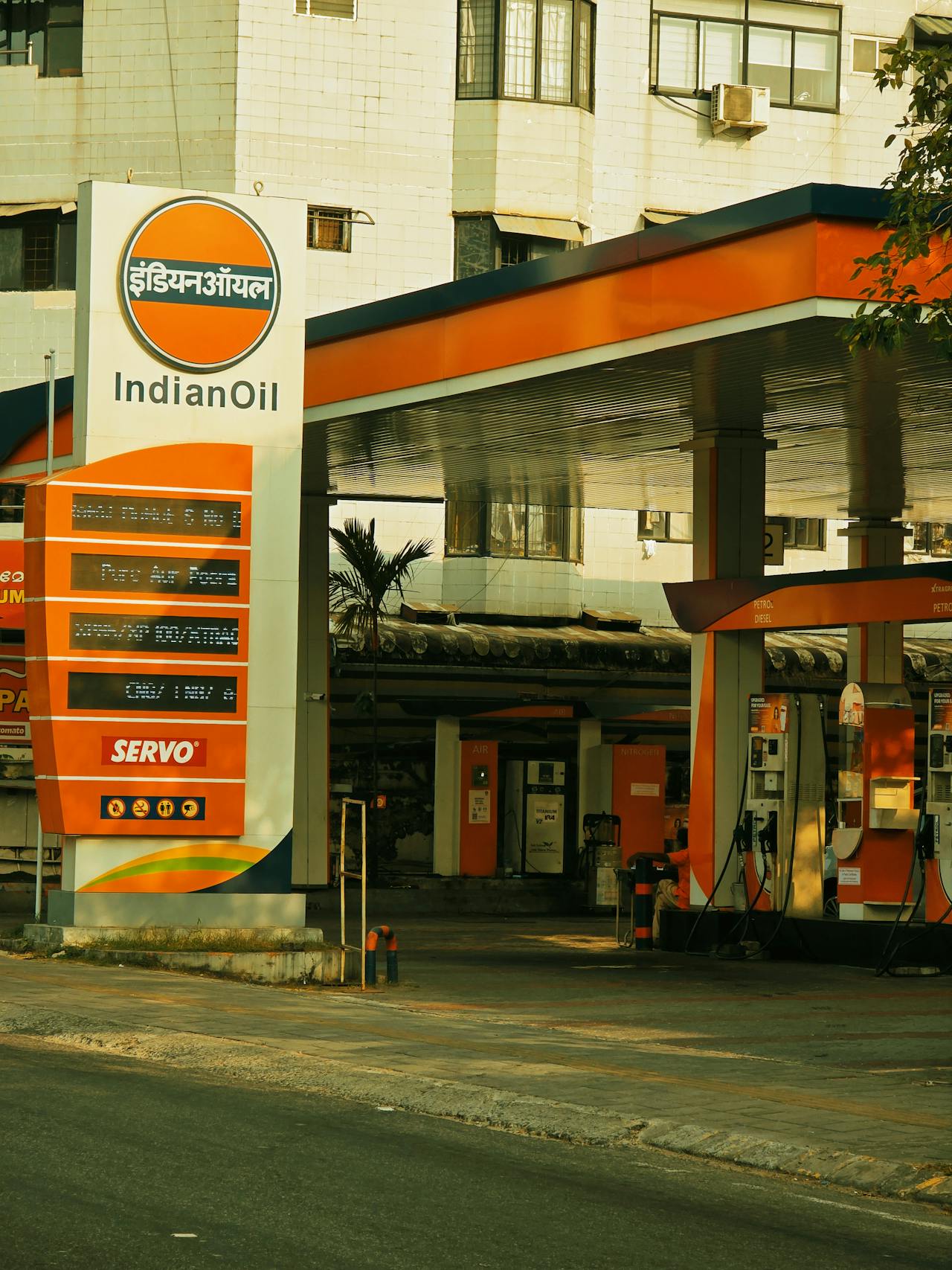
INDIA’S OIL LIFELINE UNDER FIRE
How soon the Iran–Israel–America War Is Threatening Every Drop of Fuel India Burns
Imagine waking up one morning and finding the tap at your kitchen cylinder dry. No gas to cook breakfast. The LPG dealer shrugs and says: ‘Supply is stuck somewhere in the Gulf.’ That scenario is not fiction anymore. As of this week, the Strait of Hormuz — a 33-kilometre sliver of sea between Iran and Oman — is effectively frozen. Tankers are stacking up on both sides. Insurance rates have gone through the roof. And India, the world’s third-largest consumer of crude oil, is staring at one of its most serious energy challenges in decades.
The trigger: coordinated US–Israel military strikes on Iran on February 28, 2026, which killed Iran’s Supreme Leader and set off retaliatory missile attacks across the Gulf — hitting Saudi Arabia, the UAE, Kuwait, Qatar, Bahrain, Iraq, and Jordan. Iran then declared the Strait of Hormuz closed. Global oil prices shot up nearly 10% overnight. And in New Delhi, emergency meetings were quietly convened.
This article breaks down exactly what is at stake for India — in hard numbers, honest analysis, and plain English.
The Strait of Hormuz: Why One Narrow Sea Lane Controls India’s Kitchen
The Strait of Hormuz is the only maritime exit for the Persian Gulf. Every barrel of oil produced by Saudi Arabia, Iraq, the UAE, Kuwait, and Qatar must pass through this 3-kilometre-wide shipping lane before it reaches the rest of the world.
According to the US Energy Information Administration, roughly 20 million barrels of oil per day moved through the Strait in 2024 — nearly one-fifth of the world’s entire oil supply. For India, the numbers are even starker: approximately 50% of India’s crude imports and 80–85% of its LPG (cooking gas) pass through this single chokepoint.
As of March 1, ship-tracking data from Kpler and Windward showed only 2–3 tankers crossing per day, against a normal daily average of vessels carrying 19.8 million barrels. Over 700 tankers — crude carriers, LNG ships, and product vessels — are now anchored on both sides of the Strait, waiting.


How Many Days Can India Survive? The Numbers Broken Down
The most searched question right now: will India run out of oil? The honest answer is — not immediately, but the clock is ticking, and LPG is the real weak link.
India currently holds about 100 million barrels of commercial crude, spread across storage tanks, underground strategic petroleum reserves (SPR), and tankers already in transit. Energy analytics firm Kpler estimates this can cover roughly 40–45 days of crude import requirements if Hormuz flows stop entirely. Oil Minister Hardeep Singh Puri put the combined crude and petroleum product buffer — including refined fuel at refineries and downstream depots — at approximately 74 days.
But the operational reality is more granular than a single headline number:

LPG is the most exposed. India imports nearly 80–85% of its LPG from Gulf suppliers — the UAE, Saudi Arabia, Kuwait and Qatar. Kpler data shows total monthly LPG imports ranged between 1.83 and 2.03 million tonnes in early 2026, of which 1.6–1.8 million tonnes came from Gulf sources. Unlike crude oil, India has no strategic LPG reserves. Once commercial stocks run out — which analysts say could happen in under two weeks if the Strait stays shut — there is no emergency buffer for cooking gas. Indian Oil, HPCL and BPCL have begun ramping up LPG production at select refineries, but this cannot fully replace import volumes.

The Russia Option: India’s Best Card in a Bad Hand
Before Russia invaded Ukraine in February 2022, Russian crude oil made up barely 2.5% of India’s total imports. Today, that figure stands at 35–50% depending on the month, making Russia India’s single largest supplier of crude oil. In 2024, India spent $52.73 billion on Russian crude alone.
The pivot happened for simple economic reasons. As Western sanctions isolated Russia, Moscow offered steep discounts to Asian buyers — reportedly $15–20 per barrel below Brent benchmark in early 2026. Indian refiners, legally permitted to buy Russian oil (unlike European counterparts), lapped it up. Reliance Industries alone buys roughly a third of India’s Russian crude intake.
Now, with Gulf supplies frozen, Russia becomes even more critical. And the logistics of this supply chain work in India’s favour — Russian oil travels via the Indian Ocean and does not pass through the Strait of Hormuz at all.

However, scaling up Russian supply is not a simple dial to turn. There are real friction points: US sanctions on Rosneft and Lukoil (which together supply 60% of India’s Russian crude intake) took effect in November 2025, complicating shipping, insurance, and payment. India has been partially replacing these sanctioned volumes with purchases from smaller Russian traders. But a sudden, large surge in demand would test the shadow fleet logistics and insurance workarounds that the India-Russia trade currently relies on.
Putin has personally assured Modi of ‘uninterrupted fuel shipments’ — a promise made during their December 2025 bilateral summit in New Delhi. But promises are tested when logistics, sanctions, and war-zone insurance all collide simultaneously.
Other Sourcing Options: Who Can Fill the Gap?
India’s petroleum ministry is actively scouting alternatives. The realistic short-to-medium term options are:

Saudi Arabia’s East-West Pipeline can carry roughly 5 million barrels per day to the Red Sea port of Yanbu — bypassing Hormuz entirely. The UAE has a similar pipeline to the port of Fujairah on the Gulf of Oman. India has already begun quiet diplomatic coordination with Riyadh and Abu Dhabi to maximise these flows. But the total bypass capacity is limited, and both pipelines themselves suffered damage in recent Iranian retaliatory strikes, reducing their operational capacity temporarily.

Alternative Shipping Routes: Getting Around Hormuz
If the Strait of Hormuz stays closed for weeks, tankers and LNG ships face a brutal choice: wait, or find a longer way around.

Major shipping lines including Maersk and CMA CGM have already confirmed diversion around the Cape of Good Hope, citing an ‘uncertain international context.’ This adds 10–15 days to voyage times, raises freight costs significantly, and requires more tankers to cover the same supply volume. For India, this means: even if alternative oil is available, getting it to port quickly is the next challenge.
If the War Goes Beyond a Month: What Happens Then?
Here is where the analysis gets uncomfortable.
In the first two to three weeks, India’s existing stocks, combined with Russian and West African cargoes already loaded and in transit, insulate the country reasonably well. Petrol and diesel prices may not jump at the pump immediately — the government has asked oil marketing companies to hold off on retail price hikes and has banned petroleum product exports to preserve domestic buffers.
But if the war drags past the 30-day mark, pressure will build rapidly on multiple fronts:
- LPG: Cooking gas supply chains begin breaking. Even if India redirects LPG procurement to the US Gulf Coast or Australia, spot cargoes are expensive and transit takes 25–35 days. Low-income households who depend on subsidized cylinders will feel it first.
- Crude prices: Analysts at JM Financial project Brent could breach $90 if Hormuz remains shut, and cross $100 in a wider regional war scenario. At $100/barrel, India’s annual import bill rises by roughly $20–25 billion compared to the $60/barrel baseline of early 2026.
- Russia as the dominant supplier: India would likely push Russian imports to their operational ceiling — perhaps 2.2–2.5 million barrels per day — relying almost entirely on Moscow for crude. This means the US-India tariff confrontation over Russian oil purchases escalates dramatically at the worst possible moment.
- Refinery output: Some Indian refineries are configured for Gulf crude grades (primarily heavy-sour crude from Iraq and Saudi Arabia). Russian Urals crude has a different sulphur and density profile. Not all Indian refineries can seamlessly switch without configuration changes, creating operational friction.

The Forex Reserve Question: How Long Can India Afford This?
India entered this crisis from a position of relative strength. Foreign exchange reserves hit a record $725.7 billion in February 2026 — the fourth-largest in the world — providing over 11 months of merchandise import cover according to the RBI Governor.
But oil price shocks erode this buffer methodically. Consider the arithmetic: India was on track to spend approximately $130–140 billion on crude imports in FY2026. Every $10/barrel increase in sustained oil prices adds roughly $7–8 billion to that annual bill. If prices hold above $90 for two to three months, India’s current account deficit could widen by 0.3–0.4 percentage points of GDP beyond the baseline estimate of 0.9% of GDP for FY27.
The rupee is already feeling the strain. The INR was trading near 91 per dollar in late February 2026, with the RBI intervening to prevent a breach of the 91 level. A sustained oil shock would put further downward pressure on the rupee, which in turn makes the oil import bill even more expensive in rupee terms — a classic imported inflation spiral.
The good news: India’s forex reserves are large enough to absorb a short war. The RBI has both the ammunition and the institutional capacity to manage orderly depreciation without a currency crisis. The 1991 scenario — when reserves barely covered three weeks of imports and India nearly defaulted — is not remotely comparable to today’s position. But every week of $90+ oil costs India approximately $1.5–2 billion in additional import expenditure, and that compounds.
The Economic Ripple: What It Means for You
The human cost of an oil shock is rarely captured in percentage points of GDP. Here is what it actually translates to:
- Transport costs rise: Truckers and logistics operators pay more for diesel. This feeds into every product that moves on a road — vegetables, medicine, electronics. The poor spend a larger share of their income on food and transport, so they feel it disproportionately.
- LPG cylinder prices: If the government is forced to pass on the cost, a domestic LPG cylinder could see significant hikes. For a family in a Tier-2 or Tier-3 city buying four cylinders a month, this is a real hit.
- Aviation: Jet fuel (ATF) is largely imported-oil-dependent. Airline operating costs rise, fares go up. Connectivity to smaller cities suffers first.
- Manufacturing and chemicals: Petrochemical feedstocks become costlier. Paint companies, plastic manufacturers, fertiliser producers — they all feel the heat, and pass it on.
- The stock market: Aviation, OMCs (Oil Marketing Companies like IOCL, BPCL, HPCL), paint companies, and chemical stocks get hit first. But for patient investors, history shows geopolitical oil shocks tend to reverse — the 2022 Ukraine shock and the 2020 pandemic crash both saw V-shaped recoveries.

The Honest Bottom Line
India is not about to run out of oil tomorrow. The government’s reserves, diversified sourcing over the past four years, and the Russia relationship provide a genuine buffer. For crude oil, India has approximately 40–45 days of runway even if Hormuz stays shut. Officials in New Delhi are calm, methodical, and largely prepared for a short disruption.
The two real vulnerabilities are LPG and price. Cooking gas supply is exposed in a way that crude oil is not — India has no strategic LPG buffer and is almost entirely dependent on Hormuz-routed Gulf supply. If this crisis extends beyond three weeks, LPG rationing or sharp price hikes become genuinely plausible. For millions of Indian households — especially those at the bottom of the income pyramid — that matters enormously.
On price: even without a physical shortage, a sustained $90–100 oil environment eats into India’s fiscal headroom, widens the current account deficit, pressures the rupee, and feeds inflation that the RBI will have to battle with tighter monetary policy. The economic damage is real, even if petrol stations stay open.
The deeper lesson — one that Indian policymakers have been slowly absorbing since 2022 — is that energy security and geopolitical strategy are the same thing. Russia’s oil is affordable but politically costly. The US wants India to buy American crude but offers no guarantee of supply in a crisis. The Gulf supplies cheap logistics but puts 50% of India’s energy through a 3-kilometre-wide lane that any regional power can threaten.
India has no perfect answer. But right now, in this particular crisis, Russia is the most reliable fallback — and New Delhi knows it.
Politics
From “Kerala” to “Keralam”: The 2,000-Year Journey, From Emperor Ashoka’s Edicts to PM Modi’s Cabinet
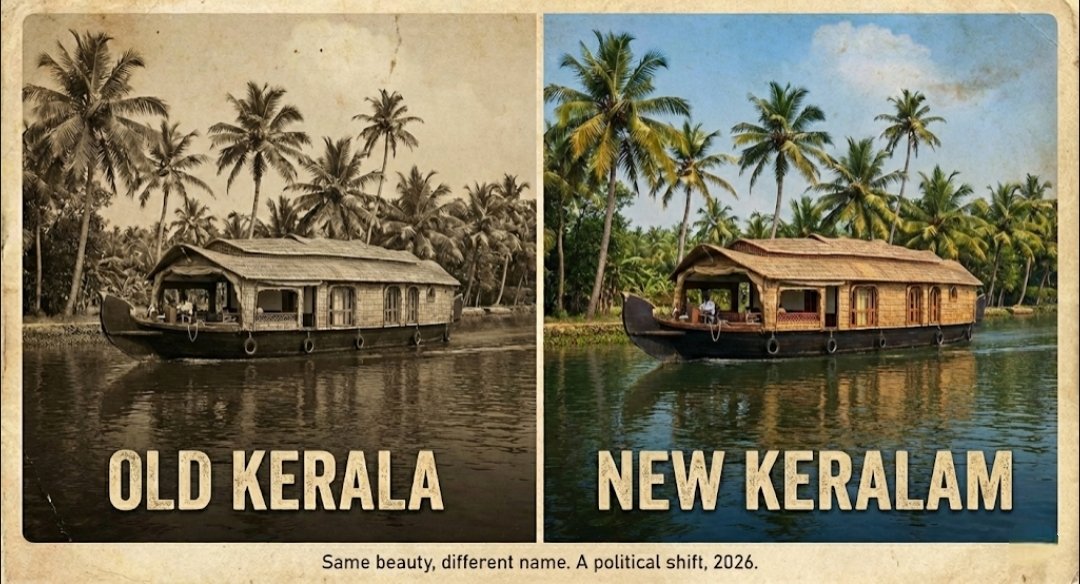
The Union Cabinet, under the leadership Prime Minister Narendra Modi, approved the proposal to rename “Kerala” as “Keralam.”
For many Malayalis scrolling through their phone screens, the first reaction was: “Wasn’t it always Keralam?”
And honestly, they’re not wrong!
The History Behind Keralam Identity
The land we call home has been “Keralam” in our hearts and tongues for as long as anyone can remember. When we say “Ente Keralam” (my Kerala), the word rolls off the tongue naturally in Malayalam.
But in the Constitution’s First Schedule, it’s been officially recorded as “Kerala” since the states were reorganized on linguistic basis back on November 1, 1956.
But here’s something interesting – the name itself is ancient. Way ancient.
Archaeologists and historians point to Emperor Ashoka’s Major Rock Edict II from 257 BCE, where the term “Keralaputo” appears in Prakrit. That’s “Keralaputra” – son of Kerala.
“एवमपि प्रचंतेसु यथ चोडा, पाडा, सतियपुतो, केरलपुतो, तंबपंनी, अंतियको योनराजा…”
Then there’s Patanjali’s Mahabhashya from around the 2nd century BCE, which uses the exact word “Kerala” while explaining Sanskrit grammar rules.
The Ramayana and Mahabharata? They mention “Kerala” and “Keralas” too. In the Kishkindha Kanda, when Sugriva sends search parties for Sita Maa, he specifically names the Cholas, Pandyas, and “Keralas” in the south.
नदीं गोदावरीं चैव सर्वमेवानुपश्यत । तथैवान्ध्रांश्च पुण्ड्रांश्च चोलान् पाण्ड्यान् केरलान् ।।
By the 11th century, Chola inscriptions at the Brihadisvara Temple in Thanjavur proudly record victories over Chera kings, and there it is – “Kēraḷam” with that distinctive -am suffix that Malayalis instinctively add. The 14th-century grammar text Lilatilakam refers to the region as “Keralam” and calls the local language “Kerala-bhasha.”
So the word “Keralam” isn’t some new invention. It’s been around for centuries. The Keralolpathi, a 17th-century text about Parashurama creating the land, has the word right there in its title.
Why Now? The Politics Behind the Keralam
Here’s where things get a bit tangled.
The Kerala Legislative Assembly passed a resolution on June 24, 2024, unanimously appealing to the central government to change the name from “Kerala” to “Keralam” in the Constitution. The resolution pointed out something obvious – the state’s name in Malayalam has always been “Keralam,” so why not make it official?
The Chief Minister Pinarayi Vijayan-led LDF government sent this request to the Centre. And then…they waited. And waited.
For nearly two years, the file sat somewhere in the corridors of North Block. The Ministry of Home Affairs, under Amit Shah, had to consult the Department of Legal Affairs and the Legislative Department. Everyone had to agree. Concurrence notes had to be written. Files had to
move from one desk to another.
Now, in 2026, with elections not too far away in political calculations, the cabinet has finally given its nod.
The Process Behind Name Change
For those wondering why a state can’t just rename itself – the Constitution has rules for this. Article 3 gives Parliament the power to alter the name of any state. But there’s a process.
First, the state legislature has to pass a resolution. LDF government in Kerala did that in 2024.
Then, the central government considers it. Which they just did.
Next, the President will refer a bill – officially the Kerala (Alteration of Name) Bill, 2026– back to the state assembly for its views. Yes, even though the assembly already passed a resolution, the Constitution wants this specific step. The assembly will express its views (likely the same ones), and then the bill goes to Parliament.
The Ministry of Home Affairs, under Amit Shah, had examined the proposal in consultation with the Law Ministry.
Finally, Parliament votes on it, and if passed, the First Schedule of the Constitution gets amended. “Kerala” becomes “Keralam.”
Even after approval, several administrative steps will be required, including changes in official records, government signage, educational documents, passports, and international references.

Will This Benefit The BJP In Kerala?
Now for the question everyone’s whispering about: Is this a political move?
Kerala has 20 Lok Sabha seats. The BJP has never won a single one. In the 2021 assembly elections, they managed to open their account with two seats, but that’s still a minor presence in the 140-member house.
The BJP has been trying for years to gain a foothold in Kerala. They’ve tried Hindutva, they’ve tried development talk, they’ve tried courting Christian and Muslim communities. Nothing has really worked.
Kerala’s political landscape has traditionally been dominated by the Left Democratic Front (LDF) and the Congress-led United Democratic Front (UDF).
So a name change that the Kerala government itself requested – and that coincide with cultural sentiments – might seem like an easy win.
The BJP can say, “See, we respect your identity. We cleared what your elected state government has asked for.”
But will common Malayalis buy it? The average person on the street in Thiruvananthapuram or Kochi knows that this request has been pending for two years. They know elections are approaching. They’ve seen this game before.
There’s also the fact that renaming doesn’t solve any real problems. It doesn’t fix potholes, create jobs, or improve schools. It’s symbolic politics – sometimes meaningful, sometimes just a distraction.
The Buzz Amongst Malyalis
Walk into any chai kada in Kerala, and you’ll hear mixed reactions. Some people shrug: “We already say Keralam. What changes?” Others are more cynical: “The BJP wants credit for something we asked for ages ago.”
There’s also the practical question: How much will this cost? Name changes mean updating official documents, signboards, government stationery, maybe even maps. That’s public money that could have gone elsewhere.
But there’s genuine sentiment too. For many, seeing “Keralam” in the Constitution feels like respect for the language. Malayalis are fiercely proud of their mother tongue, and if the official records can match what they speak at home, why not?
The Bigger Picture
India has seen many name changes – from Bombay to Mumbai, Madras to Chennai, Calcutta to Kolkata, Orissa to Odisha. Sometimes it feels organic, sometimes politically motivated. But in each case, the argument has been about shedding colonial hangovers or matching local pronunciation.
Kerala’s case is slightly different. “Kerala” isn’t exactly wrong – it’s the Sanskrit version that’s been used for millennia alongside “Keralam.”
The state’s own website is kerala.gov.in. Malayalam newspapers use both.
What makes this interesting is the timing. The BJP, which runs the central government, is approving something a Left-front state government asked for. In India’s polarized politics, that’s almost unusual. It suggests that on cultural-linguistic matters, there can still be some consensus.
Looking Forward
The bill still has to go through Parliament. With the NDA comfortably in power, passage seems certain. By the end of 2026, “Keralam” could officially be on the world map.
Whether this translates into votes for the BJP in 2026 for state election or 2029 for Lok Sabha is another question. Kerala voters are sophisticated. They watch, they analyze, and they rarely vote based on symbolism alone.
For now, though, Malayalis can smile a little. Their state’s name, the one their grandparents used, the one that appears in ancient inscriptions and modern conversations alike, is finally getting its due place in the Constitution.
Keralam it is. Always was, always will be!
Politics
Youth Congress Leader’s Shirtless Protest: Sparks Shame & Embarrassment for India at AI Summit 2026
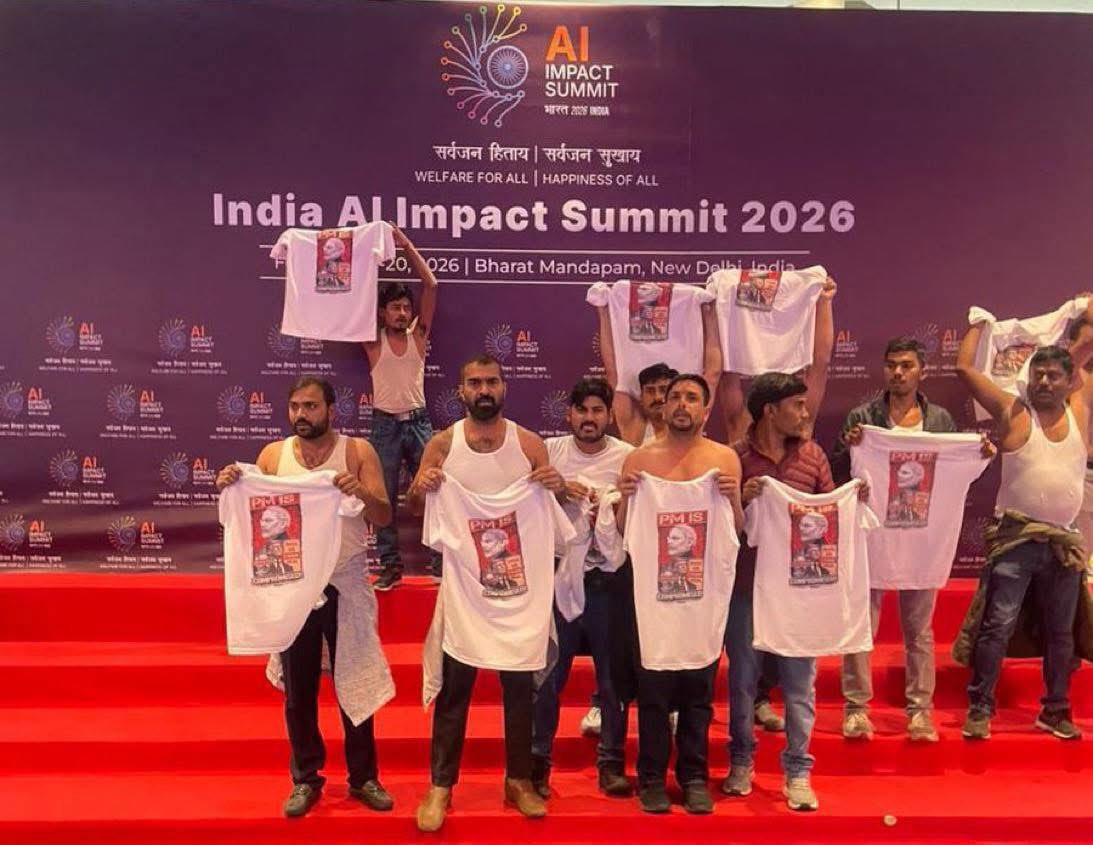
At moments when a nation stands before the world to present its progress and promise, politics must pause at the threshold of national interest. The recent protest by the Indian National Congress Youth wing at a prestigious AI summit 2026, Delhi did the opposite — it pulled domestic confrontation into a space meant for global collaboration, turning a moment of pride into one of discomfort.
The summit was not a partisan gathering. It was a national platform where global leaders, policy experts, and technology CEOs assembled to witness India’s expanding role in the future of artificial intelligence. Events of such scale are diplomatic theatres as much as policy forums, where perception shapes partnerships and credibility fuels investment.
Yet the shirtless protest “PM is Compromised” led by Indian National Congress youth leaders, with political messaging linked to Rahul Gandhi, diverted attention from innovation to agitation. What should have been remembered for technological ambition instead risked being reduced to headlines of protest and confrontation. In international forums, optics matter — and the optics here were deeply unfortunate.

Democratic dissent is the lifeblood of any republic. But democracy also carries a responsibility: to recognize context, timing, and consequence. Not every stage is appropriate for protest, and not every grievance demands expression at moments of national representation. When political theatre intrudes upon diplomatic showcases, it does not weaken a government alone — it risks diluting the country’s collective image.
What makes the episode particularly troubling is the symbolism. Gate-crashing a summit hosting international delegates sends a message of internal discord at precisely the moment India seeks to project stability, confidence, and technological leadership. The world watches not only policy announcements but political behaviour. The difference between constructive dissent and disruptive spectacle lies in whether the action strengthens national discourse or undermines national credibility.

Some actions, regardless of political motivation, cannot be justified under the broad shield of democratic freedom. Freedom of expression is not a license to disregard national dignity, especially in spaces where India speaks to the world as one voice. Political disagreements are inevitable, but their expression must be measured against the larger canvas of national interest.
India’s rise in emerging technologies is a collective achievement, built across governments, industries, and institutions. Moments that showcase this progress should unite rather than divide. The AI summit was one such moment — and the protest that overshadowed it serves as a cautionary reminder that political competition must never eclipse national representation.
In the end, nations are judged not only by their technological prowess but by their political maturity. When the global spotlight shines, restraint is not weakness; it is statesmanship
Developing Story :
Delhi Police detain four IYC workers at the AI Summit protest; they will be produced in Patiala High Court. New Delhi.


Bihar’s Longest Goodbye Story: Is Nitish Kumar’s Rajya Sabha Move a ‘Sanyas’ or a BJP Masterstroke?

India’s Oil Countdown: Russia, the Strait of Hormuz, Iran War, and 45 Days of Crude, 15 Days of Cooking Gas—And Then What?

Sanju Samson’s unbeaten 97 wipes out West Indies’ 196: India storms into Semis With Record-Breaking Chase at Eden Garden.
-

 Fashion9 years ago
Your comprehensive guide to this fall’s biggest trends
-

 Sports2 months ago
Renuka Struck, Deepti Controlled, Shafali Finished : India Outclass Sri Lanka To Seal Series 3–0
-
Entertainment9 years ago
Rappers are blowing up Twitter with praise for Jay Z and ‘4:44’
-
International News2 years ago
The United Nations Observes A Minute Of Silence In Memory Of The 101 Staff Who Died In Gaza
-

 Entertainment3 months ago
Dhurandhar Film Review—A Powerful, Action-packed, Engrossing, Yet A Bit Dragged-Out Theatrical Experience!
-

 Business2 months ago
Historic milestone! New Zealand commits to an investment worth USD 20 billion in India under the India-New Zealand Free Trade Agreement
-

 International News3 months ago
President Vladimir Putin and Prime Minister Narendra Modi—both travel in “Fortuner Fortune Shield.” As global eyes watch, the message is clear – ये दोस्ती हम नहीं तोड़ेंगे!
-
Business9 years ago
15 Habits that could be hurting your business relationships