Connect with us

News

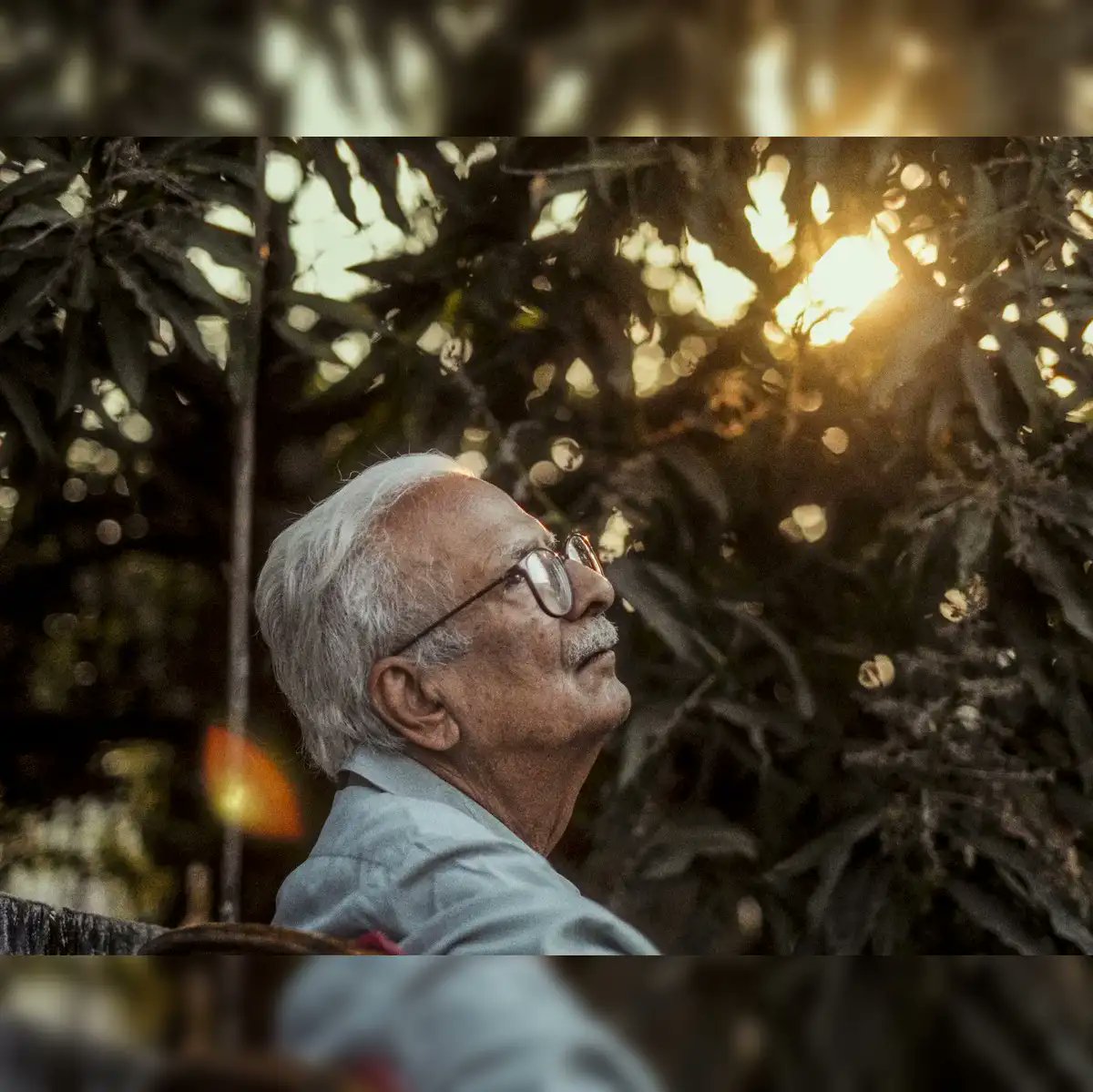
On the evening of December 23, 2025, Hindi literature lost one of its quietest yet most profound voices—the Jnanpith Award–winning writer Vinod Kumar Shukla.

Published

on

Bharatnewsupdates - Writer Vinod Kumar Shukla

The Jnanpith Award–winning writer Vinod Kumar Shukla, who taught generations of readers how to listen to silence, passed away at the age of 89. His passing away does not knock with noise or spectacle—just like his writing, it leaves behind a quiet pause, conveying us to feel the painful silence rather than react.

“I want to stay alive till i die a natural death, Not till I killed by someone else” ~late Vinod Kumar Shukla

Prime Minister Narendra Modi voiced despair over Shukla’s passing, calling him a literary figure whose contribution to Hindi literature will be remembered for generations. In a message posted on X, the Prime Minister extended condolences to Shukla’s family, admirers, and the larger literary fraternity.

But Vinod Kumar Shukla’s true memorial does not live in official tributes. It lives in a clerk’s unspoken fatigue, in a window opening quietly in a wall, in a servant’s worn shirt that becomes an entire universe. His literature never shouted for attention; it waited patiently for readers who were willing to slow down. A Writer Who Chose the Ordinary—and Made It Eternal.

Born on January 1, 1937, in Rajnandgaon (in present-day Chhattisgarh), Shukla grew up far from the power centres of Indian literature. Perhaps that distance shaped his gaze. He looked not at heroes, but at everyday people—middle-class families, small-town clerks, silent households—and found in them a depth that others often overlooked.

He began his literacy journey as a poet, and poetry always lived in him. Even when he turned to fiction, his literary style carried the softness of verse. His passages moved slowly, deliberately, as if they did not want to disturb the inner lives they described. Unlike conventional narratives driven by dramatic events, Shukla’s stories often unfolded through stillness—through thoughts left unfinished, emotions barely spoken, and lives lived with quiet dignity.

In a literary world increasingly drawn to spectacle, his work gently resisted it. Books That breathe, Yet Stayed Forever Among his most celebrated works, Naukar Ki Kameez remains iconic—later adapted into a film by filmmaker Mani Kaul—a rare novel that transformed simplicity into philosophy.

Deewar Mein Ek Khidki Rehti Thi, for which he received the Sahitya Akademi Award in 1999, further established his reputation as a master of inward-looking fiction.

Books like Lagbhag Jai Hind, Khilega To Dekhenge, and Ek Chuppi Jagah revealed his unique ability to mix the everyday with quiet imagination—never loud, never forceful, but deeply unsettling in their honesty.

Often associated with the post–Nayi Kavita sensibility, Shukla stood apart even from his contemporaries. His writing carried moral clarity without preaching, compassion without sentimentality, and resistance without slogans. Recognition came late—but meaningfully in 2023, Vinod Kumar Shukla received the 59th Jnanpith Award, India’s highest literary honour, becoming the first writer from Chhattisgarh to do so.

Many felt the recognition was long overdue. In an interview that year, he responded to the honour with characteristic humility, saying that writers do not write for awards, and that recognition arrives naturally when one remains honest to the path of writing.

He also spoke fondly of his early years in Rajnandgaon (Chhattisgarh), recalling how his first poetry collection was published after poet and critic Ashok Vajpeyi selected his poems.

He often credited his mother’s love for Bengali literature for shaping his early reading habits.

The Final Chapter Of Life

Shukla had been admitted to AIIMS Raipur on December 2 after experiencing breathing difficulties. He had also undergone treatment at a private hospital earlier in the year. His family confirmed that he passed away due to age-related health issues on December 23, 2025 at 4:58 PM. He is survived by his wife, son Shashwat, and a daughter.

The last rites of renowned Hindi writer and Jnanpith Award recipient Vinod Kumar Shukla were performed with full state honour in Raipur. Chhattisgarh Chief Minister Vishnu Deo Sai visited residence of Vinod Kumar Shukla and paid his final farewell.

At Bharatnewsupdates, we deeply mourn the passing of Vinod Kumar Shukla, one of the most original and quietly radical voices in Indian literature. His legacy will live on forever.

With his passing, Hindi literature does not lose a celebrity writer—it loses a conscience that believed in softness, restraint, and listening. Vinod Kumar Shukla showed us that the most powerful literary works are not always loud. Sometimes, they simply sit beside us, quietly changing how we see the world.

And long after the headlines fade, his words will remain—unhurried, humane, and endlessly alive.

Continue Reading
Click to comment

Leave a Reply

Your email address will not be published. Required fields are marked *

News

From Uttar Pradesh to Arunachal, Mumbai to Bengaluru: India’s Kitchens and Restaurants Under The Great LPG Crisis

Published

on

“We Are Down to Our Last Cylinder”: The Inside Story of India’s Commercial Gas Crisis

The flames in the tandoors of Mumbai and the woks of Bengaluru are flickering out. And it has nothing to do with a lack of customers.

Across India’s metropolitan cities—from the busy by lanes of Kolkata to the corporate lunch spots in Delhi—a silent crisis is unfolding. It doesn’t start in the kitchen, but 2,000 kilometers away, in the troubled waters of the Strait of Hormuz.

The ongoing conflict in the Middle East has triggered a chain reaction that is now emptying commercial Liquefied Petroleum Gas (LPG) supplies in India. While the government scrambles to secure reserves, the hospitality industry is staring down the barrel of a temporary shutdown.

“The situation has now become even more critical. Commercial LPG distributors have completely stopped supplying cylinders,” the Chennai Hotel Association recently wrote in a desperate letter to Prime Minister Narendra Modi .

This is not just a supply chain issue; it is a human crisis unfolding in the kitchens that feed the nation.

Bharatnewsupdates - Indian Woman Kitchen Under LPG Shortage Crisis

Indian Woman Kitchen Under LPG Shortage Crisis

The Anatomy of a Shortage

To understand why your favorite restaurant is serving a limited menu today, you have to look at the math of dependency. India consumes roughly 31.3 million tonnes of LPG annually, and nearly 87% of that is meant for household kitchens—the 14.2-kg cylinder that cooks your dal at home.

The remaining 13% is the lifeblood of the commercial sector: the hotels, the roadside stalls, the banquet halls, and the railway kitchens. But here is the kicker—62% of India’s total LPG requirement is imported, and historically, 85-90% of those imports flowed through the Strait of Hormuz.

When that strait became a conflict zone, those imports stopped. And when the pie shrinks, someone has to go hungry.

The government, invoking the Essential Commodities Act, 1955, did what any administration would do: it prioritized the household . The domestic cylinder became sacred. The commercial cylinder became a luxury.

The Restaurant Countdown: 72 Hours to Closure

In Mumbai, the mood is grim. The AHAR (Hotel and Restaurant Association of Western India) dropped a bombshell this week: nearly 20% of the city’s hotels and restaurants have already shut their kitchens temporarily.

“We are only serving sandwiches, salads, and other items which can be prepared without the use of gas,” said Mohar Singh, manager at the lawyers’ canteen at the Delhi High Court, encapsulating the desperation of thousands.

Down south in Bengaluru, the Bruhat Bengaluru Hotel Owners Association reported that 25-30 hotels were hit immediately as suppliers simply stopped providing gas. For those still open, it is a game of survival.

Rahul Rohra, who runs Veranda in Mumbai’s Bandra, pointed out the cultural cost of this crisis. “High-flame cooking, particularly for Pan-Asian and Oriental dishes, has come to a near halt as induction cannot replicate that intensity,” he said.

Chefs are being forced to revert to primitive methods. Shiladiya Chaudhury, owner of popular chains Oudh 1590 and Chowman, told reporters they are prioritizing tandoor items cooked in coal-based ovens, while electric alternatives prove inefficient for other dishes.

But not everyone can pivot. Bangalore Thindi, a famous eatery on Infantry Road known for its heavy footfall, simply declared it would serve only beverages for now.

Faced with uncertainty, many restaurants across India are experimenting with new approaches like Induction cooktops, Electric ovens, Coal-based tandoors, Reduced menus, Faster cooking dishes. However, the transition is not simple.

Bengalurus-Vidyarti-Bhavan.jpg

The Human Cost: Unemployment and the Black Market

When a restaurant closes, even temporarily, the ripple effect is brutal. The waiters, the cleaners, the delivery boys—they are the first to feel the pinch.

Mumbai’s iconic Dhobi Ghats, the world’s largest open-air laundries, have ground to a halt. These are not just businesses; they are ecosystems employing over 5,000 workers who wash 4 lakh garments daily for hotels and hospitals. Without gas to boil water for starching, the vats are cold. Workers are losing daily wages of Rs 800, and the uniforms of the Taj and Oberoi hotels are lying unwashed.

Where there is scarcity, there is profiteering.

Reports from Noida, Lucknow, Delhi, and Bhubaneswar indicate a thriving black market. A commercial 19-kg cylinder, which normally costs around Rs 1,900, is now being sold for Rs 3,000 . Desperate restaurant owners, staring at lost business, are forced to pay up or shut down.

Even domestic Ujjwala cylinders, meant for the poor, are being diverted and sold at nearly double the price .

Trains, Fertilizers, and Factories: The Domino Effect

It isn’t just restaurants. The Indian Railway Catering and Tourism Corporation (IRCTC) , which serves nearly 17 lakh meals daily, is in turmoil. Base kitchens, where food for long-distance trains is prepared, are running on empty. Reports suggest IRCTC is considering temporarily halting cooked meal services and refunding passengers .

The government has issued a strict priority list via the Natural Gas (Supply Regulation) Order, 2026 .

  • Top Priority: Domestic PNG, CNG for transport, and LPG production. These get 100% supply.

  • Second Priority: Fertilizer plants, crucial for food security, get 70%.

  • Third Priority: Industrial consumers and tea manufacturers get 80%.

  • The Losers: Petrochemical facilities and power plants face curtailment, with refineries asked to cut gas use by 35% .

This means that while your car might get CNG, the factory making your plastic bottles or the plant powering your grid might be running at half capacity.

At present, energy coordination is being handled by GAIL (India) Ltd, which is working with the government’s planning agencies to redirect supplies.

Is It Just the War? The Hoarding Question

While the government attributes the crisis squarely to the “force majeure” declared by suppliers due to the Iran war, the ground reality suggests another layer of complexity .

To prevent artificial scarcity, the government has now extended the minimum gap between domestic LPG bookings from 21 days to 25 days. This is a clear signal that they suspect hoarding.

“There is no shortage,” the Oil Ministry maintains officially, stating that production is at full capacity and alternative supplies are being sourced from the US, Algeria, and Australia. Yet, the queues outside distribution centers in Lakhimpur, Gorakhpur, and Varanasi tell a different story. Many industry insiders suspect that panic buying by consumers and hoarding by distributors and suppliers will be worsening the situation.

Prashant, a resident of Lakhimpur, summed up the common man’s anxiety: “I did not receive my cylinder even five days after booking. Earlier, deliveries were made the same day.”

What Happens Next?

The hospitality industry is resilient, but it needs a roadmap. The Hotel and Restaurant Association of India has advised its members to gradually adopt electric cooking, but the capital expenditure for a small eatery to switch from gas to high-power induction is prohibitive.

For now, the nation is adapting. Kitchens are trimming menus. Tandoors are being lit with coal. Induction plates are being dusted off.

But if the Strait of Hormuz remains closed and the conflict drags on, the 20% of restaurants that have shut in Mumbai might just be the beginning. And for the workers counting their daily wages, the next meal might be harder to come by than the one they usually serve.

The long term burning issue will be unemployment as apart from other industries, India’s restaurant industry employs millions of people—from chefs and waiters to delivery workers and supply vendors.

If the gas shortage continues, temporary closures could become unavoidable for some establishments and potential consequences may include: temporary restaurant closures, higher food prices, reduced employment in hospitality, disruption in catering and events, lower supply for food delivery platforms.

Continue Reading

News

₹60 More for LPG: The Middle East Geopolitics Story Behind the LPG Price Hike in India

Published

on

The Kitchen Economics of War: Why Your LPG Cylinder Now Costs Rs 60 More?

If you refilled your household cooking gas cylinder this week, you likely felt a familiar pinch—an extra Rs 60 on the bill. The increase in commercial LPG cylinder price is Rs. 115. While the government calls it a modest adjustment—”20 paise extra per day for a family of four”—the reality is far more complex and turbulent.

Yet for households already dealing with inflation, even small increases matter.

The forces pushing this change are unfolding thousands of kilometers away, in one of the world’s most fragile energy corridors-the middle east.

Behind the numbers lies a complicated mix of war, disrupted energy infrastructure, and a global gas market suddenly under stress.

For millions of Indian households, the cost of cooking is once again tied to geopolitics.

The Saudi Contract Price (CP): The Ticking Meter

To understand the hike, you have to look at the Saudi Contract Price (CP). This is the benchmark set by Saudi Aramco every month. It is the baseline upon which almost all LPG imported into India is priced.

Over the last few months, the CP has been climbing a wall of worry. Why? Because the premium for risk has exploded. When the CP rises, Oil Marketing Companies (OMCs) in India—IOCL, BPCL, HPCL—have a choice: absorb the loss or pass it on. For the past few months, they absorbed it, hoping for a diplomatic calm. That calm never came.

The government’s rationale is honest and data-driven: keeping prices artificially low forever distorts the market. However, the catalyst for the recent spike isn’t just “market forces”—it is the missile.

The Domino Effect: From Missile Strikes to Your Stove

The current crisis is a direct result of the escalating shadow war between Iran and Israel spilling into the energy heartland. But the trigger wasn’t just the direct conflict; it was the retaliatory strikes on critical infrastructure.

In the weeks leading up to this price revision, the situation escalated dramatically:

  1. The Direct Hit on Production: In a significant escalation, Iran launched missile and drone strikes not just at Israeli assets, but at key LPG and oil infrastructure facilities in Qatar, Saudi Arabia, the United Arab Emirates (UAE), and Kuwait. These weren’t symbolic strikes. They targeted fractionation plants and storage units—the very facilities that produce and hold the propane and butane that becomes your cooking gas.

  2. The Production Gap: While Saudi Aramco maintains massive reserves, any physical damage to processing facilities creates an immediate supply crunch. Even a temporary shutdown of a single facility in Ras Tanura or Ruwais sends shivers through global traders. They hoard supply, and prices bid up.

  3. The Strait of Hormuz: The World’s Most Dangerous Chokepoint: Following the strikes, and as part of the broader Iran-US confrontation, Iran signaled a willingness to restrict shipping through the Strait of Hormuz. This is the neck of the bottle through which nearly 20% of the world’s LPG passes.

    • The Immediate Impact: Shipping insurance premiums for tankers going through the Strait skyrocketed overnight. Some shipping companies declared force majeure, refusing to sail. Even if the gas is physically available in Qatar or Saudi Arabia, if the ships can’t get it out safely, it might as well not exist for India.

Can India Look Beyond the Middle East?

The million-dollar question. If the Gulf is on fire, where do we turn? The government is aggressively signaling a pivot, but the data shows a sobering reality.

  • The Russia Option: Thanks to the US waiver and a pragmatic foreign policy, India is still lapping up Russian crude. However, there is a catch: Logistics. While India imports massive amounts of Russian crude oil (which is refined into diesel and petrol), importing LPG from Russia is a different ball game.

    • The Ice Problem: Russian LPG primarily comes from the Arctic and Siberian gas fields. It requires specialized ice-class tankers and terminals, which India lacks in sufficient quantity.

    • The Distance: The voyage from Novorossiysk or Baltic ports to India is three times longer than from the Gulf. The freight cost eats up the discount.

  • The Canada & US Option: North America is emerging as a major LPG exporter thanks to shale gas. Canada, in particular, has vast reserves.

  • Africa: Countries like Algeria and Nigeria export LPG, though volumes remain limited compared    with the Gulf.

    • The Bottleneck: The problem is the Panama Canal. As climate change affects water levels, transiting the canal has become expensive and slow. For LPG carriers coming from the US Gulf or Canada, it’s a long, costly journey around the Cape of Good Hope or through the Suez (which has its own geopolitical risks).

  • The Middle East Reality: Despite the war, the Middle East remains the only viable short-term option. It is close, the contracts are decades old, and the infrastructure is built for it.

Safeguarding India’s Interest: A 3-Pronged Strategy

To ensure that a missile strike in Oman doesn’t cause financial pain in Mumbai, India needs to move beyond mere diplomacy and into hardcore energy realism.

1. Strategic Storage (The Buffer):
India has built strategic petroleum reserves for crude oil, but LPG is trickier to store (requires pressurized or refrigerated tanks). We need to aggressively expand commercial cavern storage for LPG on both the east and west coasts. This would allow us to buy spot cargoes when prices are low (like during a temporary ceasefire) and use them when the CP spikes.

2. The “Two-Basket” Import Policy:
India must officially bifurcate its LPG sourcing.

  • Basket A (Short Haul): Maintain 50-60% from the Gulf for speed and contract stability.

  • Basket B (Long Haul): Aggressively sign long-term deals with the Russia, US and Canada, even if they are slightly more expensive. The premium paid for diversity is essentially an insurance policy against the Strait of Hormuz being shut.

3. Fleet Expansion (The Indian Flag):
Right now, we rely on international shipping lines that get spooked easily. India needs to expand its own fleet of Very Large Gas Carriers (VLGCs) under the Indian flag. If Indian ships carry Indian cargo, the government has direct control over deployment, rather than begging a Greek, Japan (e.g. Mitsui OSK Lines-MOL), Norway/Singapore (e.g., BW LPG) tanker owner to sail into a war zone.

The Honest Truth

The Rs 60 hike is not an act of greed, but an act of survival passed down the chain. The new price comes into effect from March 7, 2026. As long as the Iran-Israel-US tension simmers, and as long as the Strait of Hormuz is a potential flashpoint, the price of your LPG will remain volatile.

In a world where energy supply chains are increasingly vulnerable to conflict, the lesson is clear: energy security is no longer just about economics.

It is about strategy.

The government can shield the Ujjwala Yojana beneficiaries, but for the common household, the era of “cheap and stable” energy is being held hostage by geopolitics. The only way out is to build enough storage and source from enough places so that a war 2,000 kilometers away stops dictating the economics of your kitchen fire.

Continue Reading

Politics

Bihar’s Longest Goodbye Story: Is Nitish Kumar’s Rajya Sabha Move a ‘Sanyas’ or a BJP Masterstroke?

Published

on

How Nitish Kumar’s 10th Exit as Bihar CM Is BJP’s Most Calculated Power Move Yet!

“When a king moves off the board, it is never because he is weak. It is because the board has changed.”

On the morning of March 5, 2026, something happened in the Bihar Assembly that has not happened in two decades of Indian political history. Nitish Kumarten-time Chief Minister, the man Bihar has known as its permanent address — walked in to file a Rajya Sabha nomination. Walking right beside him, lending the gravitas of the Union Home Ministry, was Amit Shah.

That single image told you everything you needed to know. This was not a retirement. This was not a personal aspiration. This was a choreographed transition, and every actor in it knew their lines before they even showed up.

Within hours, some JDU workers gathered outside Nitish’s residence in Patna raising slogans, urging him not to go. Media was barred beyond Gate No. 10 of the Bihar Assembly. And in Delhi, the opposition was already pointing fingers, calling it a coup dressed as a courtesy.

So what really happened today? And more importantly — what happens next?

Bihar CM Nitish Kumar’s Old File Photo

The 10th Time: A Record That Hides a Story

Nitish Kumar has now been sworn in as Bihar’s Chief Minister ten times. That alone is an extraordinary number. Most politicians celebrate a second term. Nitish Kumar treated the Chief Ministership like a room he kept coming back to, sometimes through the front door, sometimes through a window.

He has been a member of the Bihar Legislative Assembly. He has served in the Bihar Legislative Council. He has been a Lok Sabha MP. The one house he had never entered was the Rajya Sabha. That, he now says, was always his “desire” — to complete the full house of India’s legislature.

It is a tidy story. It is also a convenient one.

Because the timing — barely four months after his record 10th swearing-in on November 20, 2025 — does not suggest a man following an old personal dream. It suggests a man who has been nudged, gently but firmly, toward the exit door. And the person holding that door open is Amit Shah.

The Numbers Game BJP Has Been Playing For Years

To understand today, you have to go back to November 2025. The NDA won 202 of 243 seats in the Bihar Assembly elections— a landslide that would have embarrassed most opposition parties. But look more carefully at who won what.

BJP secured 89 MLAs. JDU secured 85. For the very first time in Bihar’s political history, the BJP was the larger partner inside the ruling alliance. Yet Nitish Kumar was still sworn in as Chief Minister, because the BJP — publicly, at least — said the election was fought under his leadership and he deserved the top job.

But here is what they were also saying quietly: the election was actually run largely by the BJP’s own machinery. No joint rallies were held between Nitish and BJP‘s top brass. The NDA manifesto launch lasted just 26 seconds, and Nitish Kumar did not speak a word at it. The BJP refused to formally declare him as their Chief Ministerial candidate, even while accepting his face would help them win.

BJP needed Nitish to win. But once they won, they no longer needed him in the same way. The 89-vs-85 arithmetic had shifted the moral authority within the NDA. The largest party in the coalition had never, not once in Bihar’s history, held the Chief Minister‘s chair. Today, that changes.

Was This Forced? The Health Question Nobody Wants to Say Aloud

Political insiders and academic observers in Patna have, for months, been talking about something the Bihar government has been careful to keep out of the headlines: Nitish Kumar’s health.

There have been visible gaffes, moments of apparent confusion at public events, and reports that the Chief Minister has increasingly been shielded from the media and from difficult interactions. A Patna University professor told a national newspaper bluntly that the state administration had, for some time, been effectively run by bureaucrats rather than the political leadership.

Jan Suraaj leader Prashant Kishor had provocatively — and controversially — alleged during the Bihar elections that Nitish Kumar was “mentally unfit.” That claim was dismissed by the ruling alliance and disputed widely. But the pattern of limited appearances, brief photo-ops, and controlled access to the CM has not gone unnoticed.

The decision to send him to the Rajya Sabha — a chamber that has no executive responsibility, where a frail or ailing leader can still be a party figurehead without the daily grind of running a state — fits this narrative too cleanly to dismiss.

Was he forced? Officially, everyone says no. Lalan Singh said “the decision is Nitish Kumar‘s alone.” HM Amit Shah attended the nomination ceremony to signal NDA solidarity, not pressure. But the JDU workers protesting outside his residence did not look like they had been given the same reassurance.

The Dynasty Deal: Enter Nishant Kumar

Here is the other layer to this story, the one that makes it feel less like a retirement and more like a negotiated settlement.

Nitish Kumar has spent his entire political life loudly opposing dynasty politics. He has said it repeatedly, at public meetings, in interviews, in party forums. His opposition to the Yadav family’s dynastic hold on Bihar was, in many ways, the founding energy of the JDU’s identity.

And yet, on the very day he filed his Rajya Sabha nomination, his son Nishant Kumar formally joined the JDU.

The timing is too precise to be a coincidence. What appears to be unfolding is a deal — possibly the price Nitish extracted from BJP in exchange for vacating the CM’s chair. The deal: Nishant Kumar gets a Deputy Chief Ministership, or a powerful cabinet role, in the new Bihar government. Nitish gets the Rajya Sabha and a dignified exit. BJP gets the Chief Minister‘s post it has wanted for years.

Congress leader Adhir Ranjan Chowdhury said it with characteristic bluntness: “To build his son’s future, Nitish Kumar is going to the Rajya Sabha and bringing his son into the Bihar government.”

It is not flattering. But it is probably accurate.

Bihar CM Nitish Kumar and Son Nishant Kumar on Rangotsav Eve 2026.

The Chessboard: BJP’s Bihar Gambit Explained

Step back from the details and look at the board. Bihar is the last major Hindi-heartland state where the BJP has never held the Chief Minister‘s post. Uttar Pradesh, Madhya Pradesh, Rajasthan, Chhattisgarh, Jharkhand— across the Hindi belt, BJP has installed its own faces. Bihar alone remained the exception, because Nitish Kumar was too valuable, and too popular, to displace.

But the 2025 mandate changed the calculus. BJP is now the largest party. Nitish is aging. The alliance is structurally lopsided. And the 2029 Lok Sabha elections are not far away — establishing a BJP Chief Minister in Bihar now gives the party four years to build that face into a state-level brand.

Amit Shah‘s presence at the nomination was not symbolic. It was a statement of ownership. The Home Minister flew into Patna, sat in that room, and watched Bihar’s longest-serving CM sign away the chair. That is not how you treat a beloved elder. That is how you close a deal.

The RJD understood this immediately. Senior RJD leader Manoj Kumar Jha said Nitish’s post on social media announcing the move “doesn’t sound like Nitish Kumar ji’s own voice”— suggesting the words were, as he put it, “crafted somewhere else and merely recited here.”

Who Sits in the Chair Next? The Race for Bihar’s CM

This is now the most important question in Bihar’s politics. And it is genuinely open. The BJP has not officially named a successor. Political sources suggest the party may even surprise observers by going with a face nobody is currently expecting. Here is who is being talked about:

Samrat Choudhary— The Front-Runner

Currently one of Bihar’s two Deputy Chief Ministers, Samrat Choudhary also holds the Home portfolio and is the most visible BJP face in the state. He comes from the Koeri-Kushwaha community— an extremely politically important OBC group — and has been building his own political brand for years. Most analysts rate him as the most likely pick. He has the seniority, the caste arithmetic, and the organizational backing.

Vijay Kumar Sinha— The Other Deputy CM

The second Deputy CM, Sinha has been a Bihar MLA since 2010 from Lakhisarai. He is dependable, experienced, and close to the BJP central leadership. Less flashy than Samrat Choudhary, but not to be underestimated.

Nityanand Rai— The Dark Horse

A Union Minister of State for Home Affairs, former Bihar BJP president, and four-time MLA from HajipurNityanand Rai is a quiet but powerful figure. If BJP wants someone who combines organizational depth with a national profile, Rai is the name that surprises people but makes sense on reflection.

Sanjeev Chaurasia & Dilip Jaiswal— The Outsiders

Chaurasia is a BJP MLA from Digha who won by a stunning 59,000-vote margin in 2025, signalling mass popularity. Dilip Jaiswal is a third-time MLC and former state BJP president. Both are being mentioned, though they are considered longer shots than the first three names.

What About Nishant Kumar?

The Congress allegation — that Nishant may become Deputy CM— is being taken seriously in political circles. If BJP wants to keep JDU happy and ensure the alliance holds, offering Nishant a Deputy CM‘s position (while keeping the CM’s post for themselves) is an elegant solution. The two Deputy CM positions currently held by BJP could be rebalanced — one going to a JDU leader, possibly Nishant, and one remaining with BJP.

The Caste Equation: Bihar’s Permanent Chessboard

In any other state, a Chief Minister change might be primarily about governance. In Bihar, it is always, fundamentally, about caste.

Bihar is one of the most caste-stratified states in India. The Yadav-Muslim combine built by Lalu Prasad Yadav once dominated. Nitish Kumar created a counter-coalition of OBCs, EBCs (Extremely Backward Classes), Dalits, and upper castes— a fragile but functional alliance he held together for twenty years through a combination of development delivery and personal trust.

BJP knows that whoever becomes CM must maintain this social balance. A Brahmin or Rajput CM could alienate the OBC vote. A dominant-OBC CM could upset upper castes. The safest path — which is why Samrat Choudhary’s Koeri-Kushwaha identity works — is someone from a non-dominant OBC community who can claim to represent Bihar’s vast middle-caste layers without threatening anyone above or below.

Nitish Kumar’s genius was always that he embodied the aspirations of Bihar’s Kurmi community (his own caste) while speaking in the language of all EBCs. Whoever replaces him will need to perform the same trick — or risk the fragile social coalition cracking before the 2029 elections.

Mahabodhi Temple Of Bodhgaya (UNESCO World Heritage Site)

Is This Good for Bihar? The Honest Answer

The honest answer is: we don’t know yet, and anyone who tells you otherwise is guessing.

The case for yes is straightforward. A BJP Chief Minister could mean more decisive Central-State coordination on development projects, faster execution of infrastructure, and a stronger voice in Delhi given that BJP runs the Union government. Bihar has been demanding Special Category Status for years — a BJP CM might finally be able to push that through more effectively.

The case for concern is equally straightforward. Nitish Kumar had something no BJP leader in Bihar currently has: genuine cross-caste, cross-community trust built over two decades. His personal brand was the glue in the NDA coalition. Without that glue, the 202-seat alliance could develop cracks that don’t show up immediately but become visible before 2029. Bihar also has genuine administrative challenges — chronic flooding, unemployment, poor public health infrastructure — that require continuity, not just political change.

There is also the deeper question of whether Bihar is getting a new leader or just a new face on the same government. If the bureaucracy continues to run the state, and the political figure at the top merely attends inaugurations — then the change is cosmetic.

The King’s Move: What Nitish Actually Won

Give Nitish Kumar credit for this: very few politicians in India manage their own displacement with this much dignity. He has not been thrown out. He has not been humiliated. He has walked off the field with a Rajya Sabha seat, a legacy statement in his farewell post, his son’s political future secured, and Amit Shah standing beside him to confirm that he remains valued.

That is not a defeat. That is a negotiated exit from a position that, by the numbers, he could not have held indefinitely. The BJP is the larger party. His health is uncertain. His grip on the administration was visibly loosening. The only question was whether he left on his terms or theirs.

Today suggests he leaves on something between the two— a settlement, not a surrender.

In chess, when a king moves, it is rarely the most powerful move on the board. But it is sometimes the most necessary one. Nitish Kumar has moved. Now Bihar waits to see whether the new pieces that take his place can hold the board — or whether the opposition, led by a resurgent Tejashwi Yadav and a RJD that smells blood, will finally find the opening they have been waiting for.


The crown has changed hands. The game has not ended.

Continue Reading

Trending