
International News
Airstrikes Over Kabul, Drones Over Peshawar: Pakistan vs. Afghanistan Open War on the Durand Line

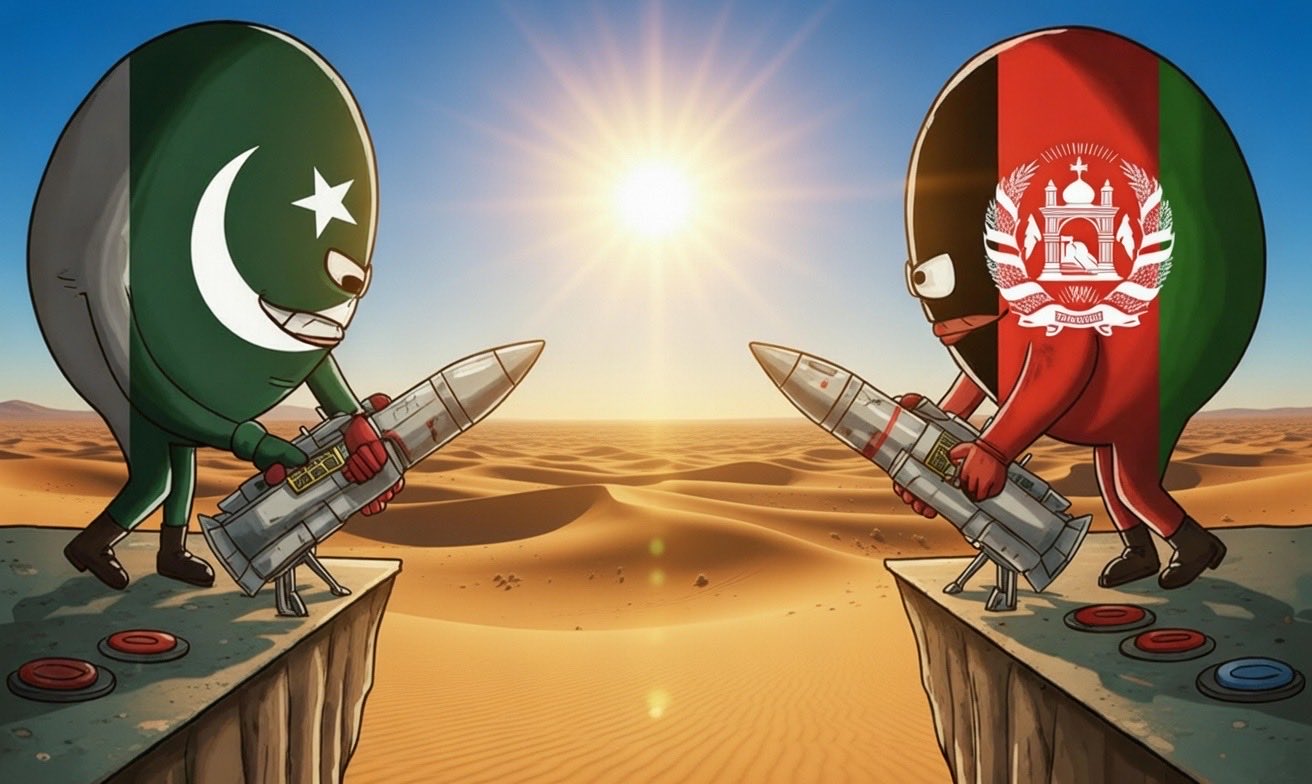
When the Terror Nursery Burns: Pakistan, Afghanistan, and the War Nobody Should Be Surprised By!
A war decades in the making finally has a name.
There is a bitter, almost tragic irony in what is unfolding on the Pakistan-Afghanistan border. The country that spent decades cultivating Islamic militancy groups as instruments of foreign policy sheltering them, nurturing them, training them, funding them, hiding them and then dubiously, shamelessly looking away when the world asked questions — is now fighting one of its own creations. The Taliban, once Pakistan’s most reliable strategic asset, has become its most dangerous adversary. And the border that was always a Illusory— a colonial line drawn through Pashtun homelands that neither side ever truly accepted — is now a battlefield.
This is not a sudden war. It is a slow collapse arriving all at once.
How It Started — Or Rather, How It Finally Boiled Over
The immediate trigger is straightforward enough. Pakistani airstrikes hit Afghan territory earlier in the week, targeting positions Islamabad claims are used by Tehreek-e-Taliban Pakistan (TTP)— the Pakistani Taliban— to plan and launch attacks inside Pakistan. The TTP has killed hundreds of Pakistani security personnel over recent years and claimed responsibility for a suicide bombing at an Islamabad courthouse last November that killed a dozen people.
Afghanistan’s Taliban government retaliated by storming more than 50 Pakistani border posts in a coordinated ground assault — exactly the kind of operation the Taliban perfected during two decades of insurgency against American forces.
Pakistan answered with airstrikes on more than 20 locations across Afghanistan, including the capital Kabul, the southern city of Kandahar— home to Taliban supreme leader Sheikh Haibatullah Akhundzada— and four border provinces. Pakistan’s Defense Minister Khawaja Asif put it bluntly on social media: “Our cup of patience has overflowed. Now it is open war between us and you.”
The Taliban spokesman Zabiullah Mujahid insisted Kabul did not start a war— only answered one. “Our operation was retaliatory,” he said at a press conference in Kandahar. ” A response to Pakistan’s operation, not an attack to start a war.”
Both sides claim the other started it. Both sides are, in their own way, correct.

The Killing and the Chaos
Casualty figures from active war zones are always contested, and this one is no different. Pakistan’s military spokesman Lt. Gen. Ahmed Sharif Chaudhry claimed at least 274 people had been killed in border fighting— a number that makes no distinction between Afghan civilians, TTP fighters, and Afghan security forces. The Taliban government’s spokesman said 55 Pakistani soldiers were killed. Satellite imagery reviewed by intelligence and press confirmed strikes on at least one ammunition depot in Kabul. Pakistan’s state broadcaster reported another depot hit in Kandahar.
Afghan forces have also launched drone strikes inside Pakistani territory— a development that signals the Taliban now possesses capabilities, reportedly including weapons supplied to TTP fighters, that go beyond the AK-47 and rocket-propelled grenade imagery most people still associate with them. The United Nations Security Council has noted that Afghanistan’s Taliban administration provided TTP with rifles and drones. Pakistan has lost at least one aircraft to Afghan fire during the exchange— a humiliation that carries symbolic weight far beyond the hardware.
In the border regions of Pakistan’s Khyber Pakhtunkhwa province, ordinary families are sheltering in basements. “When firing begins from both sides, we rush our children into the basements and wait for hours, uncertain of what will happen next,” said Zar Wali, a poor farmer from near the Torkham crossing. In the district of Kurram, a schoolteacher described villagers climbing into trenches alongside security forces. Communities that once shared ethnic roots — Pashtun families with relatives on both sides of the Durand Line— are now taking sides in a armed conflict.
This is what the abstraction of “geopolitical tension” looks like on the ground: children in basements during Ramadan, farmers clutching their children, teachers choosing trenches instead of classrooms.
The Mediation That Hasn’t Worked
Qatar, Saudi Arabia, and Turkey have all tried. None have succeeded. A ceasefire signed in October 2025 was broken almost immediately by skirmishes that became so routine that border communities stopped expecting peace. The United Nations had hoped Ramadan would provide a natural pause— a shared religious obligation to step back. Instead, the holy month became the backdrop for the fiercest fighting in years.
The international community is watching with alarm but limited leverage. China, which has cultivated ties with the Taliban and has significant investments in the region through the China-Pakistan Economic Corridor (CPEC), has urged restraint. Russia, which became the first country to formally recognize the Taliban government, finds itself in the uncomfortable position of having legitimized a regime now openly at war with a nuclear-armed neighbour. The once-discussed possibility of Afghanistan joining CPEC— a corridor that would have tied the region’s economies together— is now, as one Pakistani official put it, “out of the question.”
The Terror Nursery That Burned Itself Down
To understand why this war feels less like a surprise and more like an inevitability, you have to go back further than the TTP attacks, further than 2021, further than 9/11.
Pakistan’s military and intelligence establishment — particularly the Inter-Services Intelligence (ISI) directorate— built its strategic doctrine around the cultivation of militant proxies. This was not an accident or a failure of oversight. It was policy: deliberate, sustained, and enormously profitable in the short term. The logic was straightforward — use non-state actors to bleed adversaries (primarily India and, through Afghanistan, the broader American and Western allies presence in the region) without triggering conventional war.
The Afghan Taliban was sheltered in Quetta and Peshawar for the entire duration of the American war. The Haqqani Network— the Taliban’s most lethal operational arm — operated with near impunity from Pakistani soil. When American Navy SEALs found Osama bin Laden in Abbottabad in 2011, he was not hiding in a cave. He was living in a large compound, barely a kilometer from Pakistan’s premier military academy. Pakistan denied knowledge. The denial was, to put it diplomatically, not persuasive to anyone who examined it seriously.
The 2001 America’s World Trade Center attacks were planned by al-Qaeda. Al-Qaeda found sanctuary, sympathy, and operational space in the Afghanistan-Pakistan region. The Pakistani state’s relationship with groups that shared ideological DNA with al-Qaeda— through the madrassas, through the ISI’s funding networks, through the revolving door of militant commanders — has been documented extensively by American officials, UN reports, and investigative journalists over two decades.
And while Pakistan pointed outward, it destroyed inward. The Baloch people— an ethnically distinct group in Pakistan’s largest but least-developed province— have faced what human rights organizations describe as systematic enforced disappearances, extrajudicial killings, mass rape and collective punishment stretching back decades. Baloch activists speak of a pattern: a family member is picked up, no paperwork is filed, no charge is brought, and the body, if it surfaces at all, shows signs of torture. Pakistan calls its Balochistan operations counterterrorism. The United Nations Human Rights Committee calls them deeply disturbing. The Baloch call it what it feels like: a slow extermination of their identity.
The nursery of extremism, built to export instability to neighbours, has been leaking back into the house for years. Now it is on fire.

What Pakistan Stands to Lose— and Has Already Lost
Pakistan enters this war from a position of profound weakness. Its economy has been in intensive care for the better part of three years, surviving on IMF bailouts and the goodwill of Gulf states increasingly impatient with Islamabad’s circular crises. Inflation has gutted the middle class. Unemployment among young people is structural, not cyclical. The Pakistani rupee has been in freefall. Foreign exchange reserves have repeatedly dipped to levels that would fund only weeks of imports.
The military— which has, in practice, run Pakistani foreign and security policy for most of the country’s existence— now faces simultaneous insurgencies. The TTP attacks in the northwest. The Baloch Liberation Army in the southwest of Pakistan. And now, a conventional conflict with Afghanistan.
A prolonged war with Afghanistan will further drain reserves, disrupt trade through the Torkham and Chaman border crossings (already almost closed), and provide the TTP with exactly the kind of chaos it needs to expand operations inside Pakistan. The Pakistani military’s considerable air power advantage is real, but air power has never resolved the kind of territorial, ethnic, and political conflicts that define the
Pakistan-Afghanistan relationship. The Taliban know this better than anyone— they beat the Americans, who had infinitely more air power superiority, over twenty years of grinding attrition.
What does Pakistan gain? In the optimistic scenario, there is enough military pressure to force the Taliban to genuinely act against TTP sanctuaries. In the realistic scenario, a prolonged, unwinnable conflict accelerates the country’s financial collapse and political turmoil and may lead to Balochistan’s separation.

What Afghanistan Stands to Lose — and What It Never Had
Afghanistan’s Taliban government came to power in 2021 inheriting a destroyed economy, zero international recognition (beyond a handful of states), and a country with no functioning banking system, no tax base, and a population increasingly desperate after four decades of war. They have governed with an iron rigid Islamic ideology but limited administrative capacity, banned girls from education, expelled women from public life, and made themselves a pariah in the international community whose aid money had kept Afghanistan’s basic functions running.
A war with Pakistan— a nuclear-armed state with a modern air force— is not a fight the Taliban can win conventionally. What they can do is what they have always done: absorb punishment, retreat, disperse, and wait. Afghanistan’s mountains and the Taliban’s institutional knowledge of guerrilla warfare make Pakistan’s air strikes failure in political terms even when they succeed militarily claim through ISPR propaganda.
But Afghan civilians, who have endured more war per capita than almost any people on earth except Hindus and the Jews, will pay the price. The strikes on Kabul and Kandahar are not landing in unpopulated deserts. They are landing in cities. The humanitarian consequences are serious, and the international community— already struggling to fund Afghan aid given the Taliban’s human rights record— has almost no mechanisms left to respond effectively.

How India Is Watching
India watches this war with the cool, careful attention of a country that has spent decades being burned by precisely what Pakistan has now built. The instinct might be to feel a certain grim satisfaction— Pakistan reaping what it sowed, the jihadist infrastructure turned against its architects. But India’s strategic establishment is far too sober to indulge that feeling for long.
A Pakistan in full-blown chaos is not, from India’s perspective, an unambiguous gift. A nuclear state in anarchy, with command-and-control structures under strain, a military stretched thin across multiple fronts, and an economy in free fall, is a significantly more dangerous neighbor than a stable, if adversarial, one. The question Indian policymakers are asking is not whether Pakistan deserves its current predicament — they know the answer — but what the consequences of Pakistani state failure would mean for the region.
At the same time, India sees the war as vindication of what it has argued for years: that Pakistan’s use of militant proxies as instruments of foreign policy was always going to produce blowback, and that the international community’s closed eye tolerance of that policy— in exchange for Pakistani cooperation on Afghanistan front during the American war— was a catastrophic mistake. The TTP is not a creation India had any hand in. The Haqqani Network‘s shelter in Pakistan was not India’s doing. The Abbottabad compound was not India’s failure to notice.
India also watches the Chinese dimension carefully. Beijing’s investments in Pakistan through CPEC are enormous— estimated at over $60 billion— and a destabilized Pakistan threatens Chinese infrastructure projects and supply chains running through a country that is now at war. China’s influence over both Pakistan and, increasingly, the Taliban gives it leverage that India does not have. How China plays that
leverage— whether it mediates, pressures, or simply protects its assets— will shape the regional outcome as much as anything happening on the Durand Line.
India is not neutral. But it is wise enough to know that gloating is a luxury it cannot afford.
The Honest Reckoning
What is happening at the Pakistan-Afghanistan border is not simply a bilateral military conflict. It is the visible symptom of a deeper disease: the idea that states can use violent non-state actors as foreign policy tools without eventually being consumed by them.
Pakistan tried it with the Afghan Taliban. It worked, for a while— until the Taliban came home. Pakistan tried it with the TTP — or rather, tolerated the TTP’s growth in the ungovernable tribal areas— until the TTP started bombing courthouses in Islamabad. Pakistan tried it against India through Lashkar-e-Taiba and Jaish-e-Mohammed, and the result is a permanent state of near-war with a neighbour that has grown stronger while Pakistan has grown weaker.
The people paying for these strategic Islamic terrorism gambles are not the generals who made them. They are the farmers sheltering in basements in Khyber Pakhtunkhwa. The Baloch families waiting for sons who never came home. The Afghan girls who were allowed one brief decade of education before the men with guns came back. The families who lost someone in Mumbai in 2008, or New York in 2001, or Kabul every year since.
History does not always deliver justice. But occasionally it delivers consequences. Pakistan is living inside one now.
International News
Donald Trump vs. the Supreme Court of America: The Tariff Battle Reshaping Global Trade and Economies.
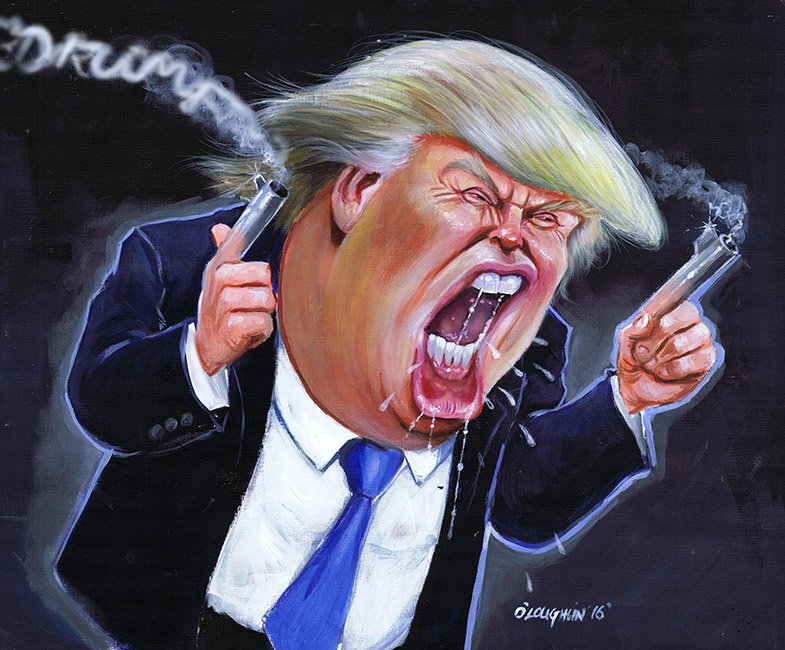
The clash between trade power and judicial limits has returned to the center of American politics after a landmark ruling by the Supreme Court of the United States that blocked President Donald Trump from using sweeping tariff authority the way he intended.
What followed was a swift counter-move from President Donald Trump: a 10% global tariff under Section 122 of the Trade Act of 1974 — a rarely discussed provision that suddenly matters for the world economy.
Below is a clear, analytical look at what happened inside the court, what the ruling means, and why the ripple effects extend from Washington to Mumbai, Beijing, Berlin, and beyond.
What went behind the US Supreme Court ruling
At the heart of the dispute was executive authority over tariffs. Trump argued that existing statutes allowed the president to impose broad tariffs without congressional approval, framing trade deficits and unfair practices as economic emergencies.
Opponents — including industry groups, importers, and some lawmakers — challenged this approach, saying the administration stretched statutes beyond their intended limits. The key constitutional question was simple yet profound:
How far can Donald Trump as a President go in imposing tariffs unilaterally?
Inside the court, the majority signaled concern that the administration’s interpretation effectively granted the president open-ended tariff power, bypassing Congress’s constitutional role in regulating commerce.
The ruling therefore emphasized three themes:
-
Statutory boundaries matter – emergency or trade laws cannot be expanded indefinitely.
-
Separation of powers – tariffs cannot become a tool of unchecked executive policymaking.
-
Economic impact – broad tariffs have consequences beyond trade disputes, affecting consumers, inflation, and supply chains.
The decision was not unanimous. Justices Brett Kavanaugh, Clarence Thomas, and Samuel Alito dissented, arguing the president historically holds wide discretion in trade enforcement. Meanwhile, even Trump-appointed justices Amy Coney Barrett and Neil Gorsuch joined the majority — a striking political signal.

Economic meaning of the ruling
For the US economy
The decision brings policy stability, which markets usually welcome. Companies gain predictability in supply chains and pricing decisions. Analysts expect:
-
Reduced tariff uncertainty
-
Potential easing of import costs
-
Slight relief for inflation pressures
-
Stronger investor confidence
However, it also limits the White House’s ability to use tariffs as a rapid negotiating weapon in trade disputes.
For the global economy
Globally, the ruling signals that US trade policy may face stronger institutional checks, which reduces fears of sudden tariff shocks. That stabilizes commodity markets, shipping rates, and manufacturing planning worldwide.
Trump’s response: invoking Section 122
Within hours, Trump pivoted — announcing a 10% tariff on all countries using Section 122 of the Trade Act of 1974.
What is Section 122?
Section 122 allows a president to impose a temporary import surcharge to address:
-
Large balance-of-payments deficits
-
Fundamental international payments problems
But it has strict limits:
-
Tariff cannot exceed 15%
-
Duration capped at 150 days
-
Intended as a short-term corrective measure
Notably, this provision has rarely been tested in court, making Trump’s move both legally creative and politically controversial.
Trump argued the tariff was necessary to defend American industry and trade balance, saying the court ruling was influenced by politics and foreign interests, while calling some justices “a disgrace to the nation.”
How major economies view the tariff shift
India
India sees both risk and opportunity. Export sectors like textiles, pharmaceuticals, and IT hardware may face price pressure, but companies could benefit if tariffs reshape supply chains away from China.
Brazil
Commodity exports — especially agriculture and metals — could face temporary headwinds. Yet Brazil may gain market share if trade tensions push diversification.
China
China remains most exposed. Even uniform tariffs can intensify geopolitical trade rivalry and accelerate decoupling trends already underway.
Australia
Australia’s mining and agricultural exports face modest risk, but its diversified Asia-Pacific trade partnerships cushion impact.
Japan
Japan worries about auto and electronics exports but values predictability from the court ruling more than it fears temporary tariffs.
Germany
Germany’s manufacturing sector remains highly sensitive to tariffs, particularly autos and machinery. European policymakers are watching closely.
Canada and United Kingdom
Canada’s exemption reduces immediate risk, while the UK views the tariff as a reminder that post-Brexit trade relations with the US remain vulnerable to political swings.
The broader impact: a new era of tariff politics
The episode highlights a deeper shift in global trade:
-
Courts increasingly shape economic policy
-
Trade is now a domestic political battleground
-
Temporary tariffs can still disrupt global markets
-
Supply chain diversification is accelerating
In short, even when courts limit presidential power, trade tensions don’t disappear — they simply evolve.
Cover Image Courtesy : Niall O’Loughlin Artist @nialloloughlin on X
International News
‘I Am Somebody’: The Life, Fire, and Faith of Jesse Jackson, Who Taught America to Keep Hope Alive, Dies at 84
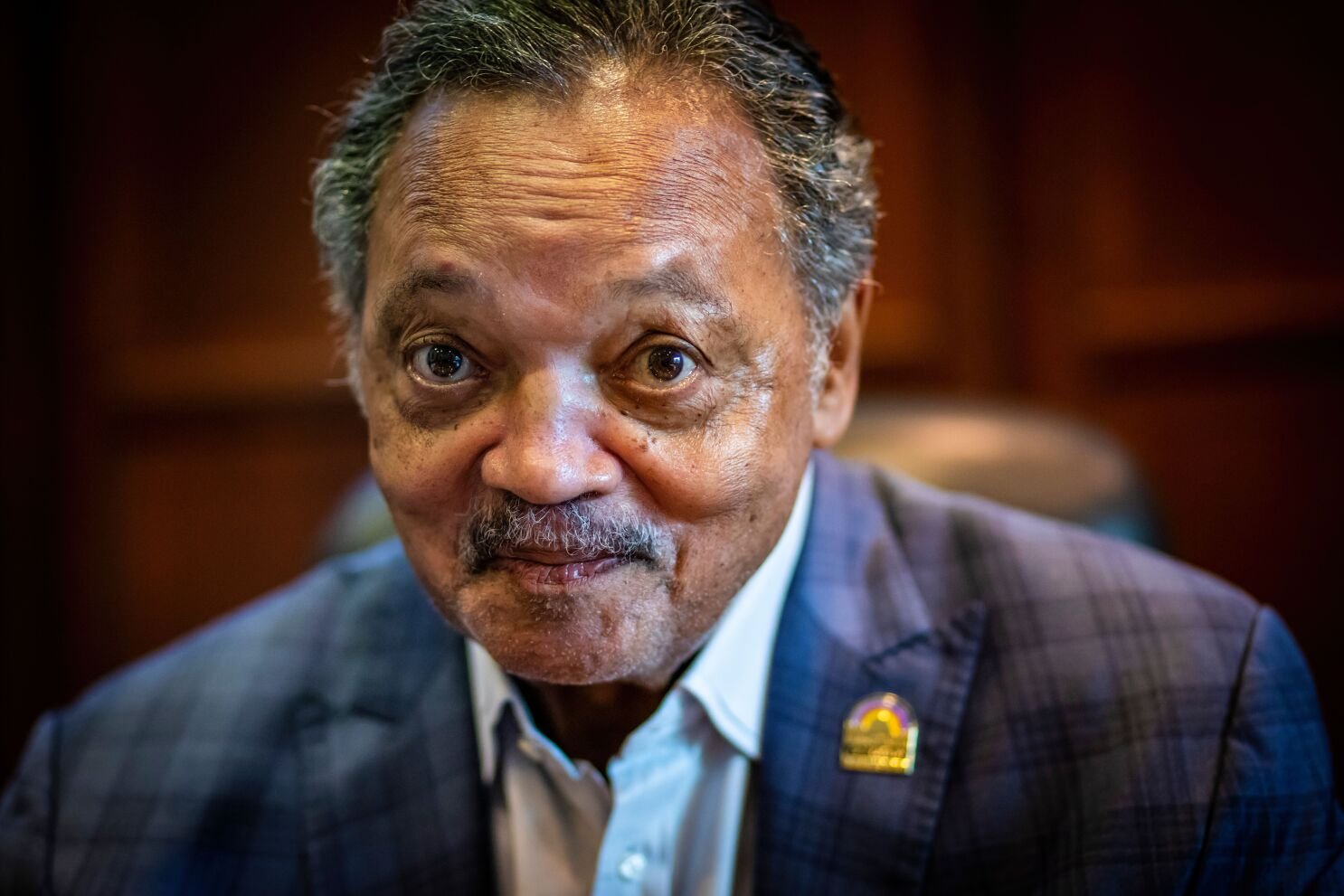
Before Obama, There Was Jackson: The Man Who Rewired the Democratic Party
The Rev. Jesse Jackson never walked quietly into a room. He entered like a sermon in motion — tall, rhythmic in speech, eyes flashing with conviction. For more than six decades, he stood at the intersection of faith and politics, insisting that America live up to its own promise.
On Tuesday morning, surrounded by family, Jackson died at 84. With him passes one of the last towering figures who bridged the age of segregation, the assassination of Martin Luther King Jr., and the rise of a multicultural political coalition that now defines modern Democratic politics.

On April 3, 1968, civil rights activists Ralph Abernathy, Jackson, King, and Hosea Williams stand on the balcony of the Lorraine Motel in Memphis, Tennessee. James Earl Ray killed King on that balcony the following day. Image Courtesy : AP/Charles Kelly
But before the podiums and presidential campaigns, before the chant that would echo across convention halls — “Keep hope alive!” — there was a boy in Greenville.
A Child Named Jesse Louis Burns
He was born Jesse Louis Burns on October 8, 1941, in segregated Greenville, South Carolina. His mother, Helen Burns, was just 16. His biological father, Noah Robinson, lived next door and had another family. A year later, when Helen married Charles Henry Jackson, the boy took his stepfather’s surname and became Jesse Louis Jackson.

Jackson at the 1958 homecoming football game at Greenville, South Carolina’s Sterling High School. Image Courtesy : Greenville News/Imagn/USA Today Network
In the Jim Crow South, that origin story mattered. He was teased for being born out of wedlock. He was made to feel different. He later described himself as a “double outcast” — Black in a rigidly segregated society, and fatherless in the eyes of his classmates.
Yet even then, he had a gift. Teachers noticed how young Jesse could turn a phrase. He spoke in cadences. He loved metaphor. He listened to sermons not just for salvation but for structure.
Faith would become both his refuge and his megaphone.
Finding His Idol — and His Calling
Jackson attended North Carolina A&T State University and later enrolled at the Chicago Theological Seminary. In Chicago, he encountered the man who would shape his life: Martin Luther King Jr..
King’s movement was cresting. Sit-ins, marches, and the moral thunder of nonviolent protest were reshaping America. Jackson joined the Southern Christian Leadership Conference (SCLC) and quickly emerged as one of King’s most dynamic young lieutenants.
He absorbed King’s belief that civil rights was not merely about integration but about economic justice, voting rights, and dignity. He also absorbed criticism — some saw him as too ambitious, too visible. But even critics admitted he could electrify a crowd.

In Memphis, a crowd marches a few days after King’s murder. Jackson is positioned in the middle, behind Coretta, King’s widow. Image Courtesy : Archive Photos/Santi Visalli-Getty Images
When King was assassinated in Memphis in April 1968, the movement splintered with grief. Jackson, just 26, suddenly found himself without his mentor — and with a choice: retreat or rise.
He rose.
After Martin Luther King Jr: The Fight Continues
The years after King’s death were volatile. Urban uprisings, Vietnam protests, political assassinations. Many wondered whether nonviolent protest could survive.
Jackson insisted it must.
He launched Operation Breadbasket in Chicago to pressure corporations to hire Black workers and do business in Black neighborhoods. The model was simple but powerful: economic leverage for economic justice.
He later founded Operation PUSH (People United to Save Humanity), and eventually the Rainbow PUSH Coalition — an organization built on a radical premise at the time: that the struggle for justice was multicolored.
“Our flag is red, white and blue,” he often said. “But our nation is a rainbow — red, yellow, brown, Black and white.”

In August 1980, Republican presidential candidate Ronald Reagan visits Operation PUSH headquarters and listens to Jackson. Image Courtesy : Bettmann Archive/Getty Images
That vision became known as the Rainbow Coalition — a political and moral alliance of African Americans, Latinos, labor unions, farmers, Native Americans, Asian Americans, LGBTQ Americans, and poor whites. Long before diversity became a political buzzword, Jackson was organizing it.
The Greenville Eight and Courage Under Fire
One of Jackson’s lesser-known but formative battles involved the “Greenville Eight,” a group of young Black activists in South Carolina charged during a 1971 boycott of white-owned businesses. Jackson threw his weight behind their defense, arguing that economic protest was a constitutional right. The case galvanized local activism and reinforced Jackson’s belief that justice required both courtroom strategy and street pressure.

It was in moments like these — far from television cameras — that he refined his method: negotiation mixed with moral urgency.
The Golden Moment: 1984 and 1988
By 1984, Jackson stunned the political establishment by running for president. Many dismissed it as symbolic. It was not.
He won millions of votes and several primaries. He forced debates about apartheid in South Africa, about Palestinian rights, about economic inequality. He pushed the Democratic Party to adopt proportional delegate rules — a structural change that later made possible insurgent candidacies, including that of Barack Obama.

In September 1987, Jackson plays pickup basketball. He formally declared his intention to run for president in 1988 the following month of October. Image Courtesy : Shutterstock/Bill Pierce/The LIFE Picture Collection
In 1988, he ran again. This time, he won 11 contests and nearly 7 million votes. For a moment, it was no longer unthinkable that a Black man could become president of the United States.
Though he did not secure the nomination, he reshaped the party. He expanded the electorate. He made voter registration drives a national strategy. He helped transform the Democratic coalition into what it is today — urban, diverse, youth-driven.
He was, as he later said without bitterness, “a trailblazer.”
The Orator
Jackson’s speeches were sermons with policy footnotes. He rhymed instinctively.
“If my mind can conceive it, and my heart can believe it, then I can achieve it.”
And of course: “Keep hope alive.”
The phrase became parody material for comedians, but to Jackson it was sacred. Hope was not naïve optimism. It was discipline. It was survival.

Rev. Jesse Jackson with Late South African President Nelson Mandela
He also popularized “I Am Somebody,” a chant that schoolchildren across America would recite — an affirmation of worth in a society that often denied it.
A Life in Headlines — and Humanity
Jackson’s public life was not without turbulence. He apologized in the 1980s for remarks widely condemned as anti-Semitic. In 2001, he acknowledged fathering a daughter outside his marriage — a revelation that wounded his family and tarnished his image.
Yet his marriage to Jacqueline Brown, whom he wed in 1962, endured. Together they raised five children, weathering political storms that might have capsized other families.
He negotiated the release of American hostages abroad. He marched for voting rights into his 80s. Even as Parkinson’s disease slowed his gait, it never silenced his conviction.
When Barack Obama delivered his 2008 victory speech in Chicago’s Grant Park, cameras captured Jackson in tears. He later said he wept for those who did not live to see it — King, Abernathy, Evers.

Following Barack Obama’s victory in the November 2008 presidential election, Jackson is overcome with emotion in Grant Park in Chicago. Image Courtesy : Damon Winter/The New York Times/Redux
The arc had bent, at least in that moment.
The Legacy
Jesse Jackson’s life spanned three Americas: the segregated South of his childhood, the burning cities of the late 1960s, and the diverse, politically fractured nation of the 21st century.
He forced America to confront uncomfortable truths about race and poverty. He expanded who could imagine themselves on a presidential debate stage. He proved that moral language could coexist with political machinery.

Rev. Jesse Louis Jackson With French President Emmanuel Macron as France honours him with the Legion d’Honneur
Most of all, he insisted on dignity — for the poor, the marginalized, the forgotten.
He once said, “Both tears and sweat are salty. But sweat will get you change.”
Jesse Jackson sweated for change — in pulpits, in jail cells, in convention halls, in forgotten neighborhoods. He did not see every dream fulfilled. No civil rights leader ever does.
But he left behind something sturdy and enduring: a coalition, a cadence, and a command to believe.
Keep hope alive.
And for millions who grew up hearing that chant, hope remains his most indelible inheritance.
International News
Trade, Tariffs and a $4 Trillion Dream, India–US Trade Deal: Why an 18% Tariff Could Reshape India’s Export Future
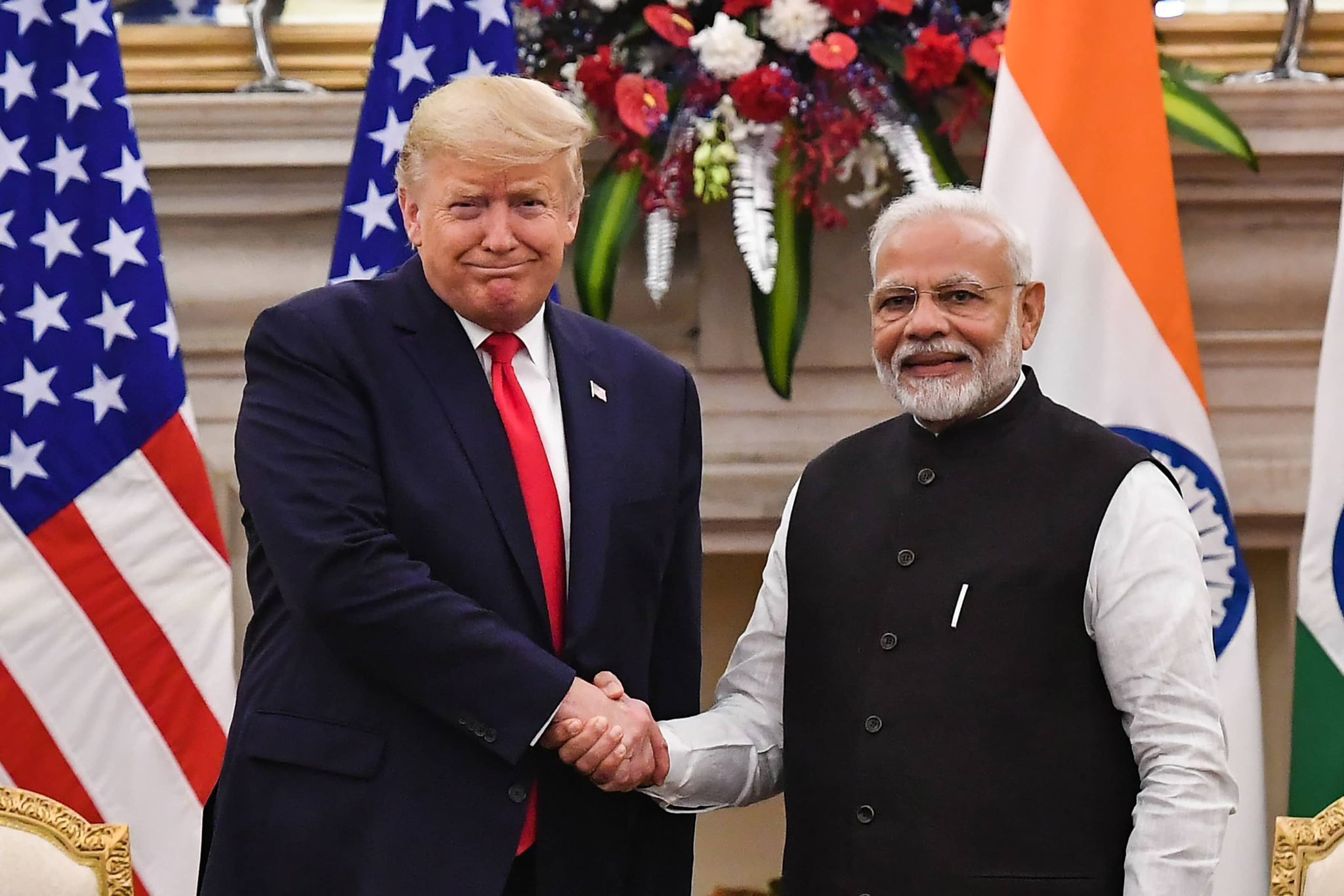
India–US FTA 2026: Why an 18% Tariff Could Be a Quiet Game-Changer for India’s Growth Story!
When the United States cut tariffs on Indian goods to 18 per cent under the newly announced India–US Interim Trade Framework, it did more than tweak a trade number. It quietly repositioned India inside the world’s largest consumer market at a time when global supply chains are being rewritten.
India’s Commerce and Industry Minister Piyush Goyal has described the move as giving Indian exporters a “competitive advantage.” The claim isn’t rhetorical. Compared with China’s 35 per cent tariff burden and higher levies faced by several other exporting nations, India now enters the US market with a meaningful cost edge.

But what does this really mean for India’s economy, its exporters, its farmers—and its long-term ambition of becoming a $4 trillion economy?
The Tariff Reset: Why 18% Matters More Than It Sounds
In isolation, an 18 per cent tariff still sounds high. In global trade, however, relative advantage matters more than absolute numbers.
- China: ~35% tariff on many product categories
- Several ASEAN and Latin American economies: 19–25%
- India: 18%, with zero-duty access in select sectors
For US buyers sourcing at scale—retailers, manufacturers, defense contractors—even a 3–7 percentage-point difference can decide where orders flow.
This differential gives India a pricing edge at a time when American firms are actively diversifying away from China due to geopolitical risk, sanctions exposure, and supply-chain fragility.
Sectors Set to Gain: Where the Growth Will Come From


1. Labour-Intensive Manufacturing Gets a Push

The biggest winners are sectors where India already has scale and employment depth:
- Textiles & apparel
- Leather & footwear
- Home décor and handicrafts
- Plastics, rubber and organic chemicals
These industries are dominated by MSMEs, which employ over 110 million Indians. Even a modest export increase here has an outsized impact on jobs—especially for women and semi-skilled workers.
2. Zero-Tariff Sectors: Quiet but Powerful

The agreement eliminates tariffs entirely on several high-value categories:
- Generic pharmaceuticals
- Gems and diamonds
- Aircraft parts and components
India already supplies over 40% of generic medicines used in the US. Removing tariff friction strengthens India’s role as a trusted, affordable healthcare supplier—especially as US healthcare costs continue to rise.
Similarly, aircraft parts exemptions under Section 232 open doors for India’s emerging aerospace ecosystem, linking domestic manufacturing with global aviation majors.
India vs China: A Strategic Moment, Not Just a Trade Deal


The US is not simply buying cheaper goods—it is re-engineering its supply chains.
China’s manufacturing dominance was built on scale, subsidies, and predictability. But rising wages, regulatory opacity, and geopolitical tensions have eroded that advantage.

India’s pitch is different:
- Democratic governance
- Rule-based trade engagement
- A young skilled workforce
- Expanding industrial capacity under Make in India and PLI schemes
The 18% tariff makes India commercially viable, not just politically attractive. That combination matters.
Connecting the Dots to the $4 Trillion GDP Goal
India’s GDP today stands just above $3.6 trillion. To cross $4 trillion, exports must play a larger role.
- Exports currently contribute~22% of GDP
- Government target: push this closer to 25–30% over time
If the US—India’s largest trading partner—absorbs even an additional $40–50 billion in Indian exports over the next few years, the multiplier effect through jobs, consumption, and investment could be substantial.
More importantly, export-led growth tends to be:
- More productive
- More employment-intensive
- Less inflationary
This trade framework, while interim, aligns neatly with that trajectory.
Agriculture: Where India Drew a Hard Line
Perhaps the most politically sensitive part of the agreement is also the clearest: India did not open its core agricultural sectors.
No concessions were granted on:
- Rice, wheat, maize, soya
- Dairy (milk, cheese)
- Poultry and meat
- Fruits, vegetables, spices
- Ethanol (fuel) and tobacco
This matters because over 45% of India’s workforce still depends on agriculture, directly or indirectly. Sudden exposure to heavily subsidized US farm produce could destabilize rural incomes and trigger price shocks.
By ring-fencing agriculture, India signaled that trade liberalization will not come at the cost of its Annadatas (The Farmers).


The Other Side of the Coin: Risks and Limitations
No trade deal is without downsides—and this one is no exception.
1. Still an Interim Framework
This is not a full-fledged FTA. Many issues—services trade, digital taxes, data localisation, visas—remain unresolved. Uncertainty
could delay long-term investments.
2. Pressure on Domestic Industry
Duty-free access for American goods could strain some Indian manufacturers, particularly in capital-intensive or technology-heavy
segments where US firms are more competitive.
3. Compliance Costs
Aligning with US standards—on quality, environment, labour—will raise compliance costs for Indian exporters, especially MSMEs.
Without adequate support, some may struggle to adapt.
4. Geopolitical Tightrope
Closer trade alignment with the US may complicate India’s balancing act with other partners, including Russia and parts of the
Global South.
The Bigger Picture: A Calculated Bet, Not a Giveaway
Critics argue India conceded too much by accepting an 18% tariff. But trade is rarely about perfection—it is about positioning.
This agreement:
- Restores momentum after months of friction
- Improves India’s relative standing in the US market
- Protects agriculture while promoting manufacturing
- Supports employment-heavy sectors
Most importantly, it keeps India inside the room as global trade rules are being reshaped.
Conclusion: A Step Forward Towards Growth—If Followed Through

The India–US Interim Trade Framework is not a silver bullet. But it is a strategic nudge—one that could accelerate exports, create jobs, and reinforce India’s path toward a $4 trillion economy.
Its success will depend less on headlines and more on execution: logistics reforms, MSME support, skill development, and sustained diplomatic engagement.
Handled well, this 18% tariff reduction could mark the moment when India stopped being just an alternative—and started becoming a preferred choice for Viksit Bharat goal.


“Yami Gautam’s Tears Say It All: Why ‘Dhurandhar: The Revenge’ Isn’t Just a Sequel, It’s an Emotion”

Airstrikes Over Kabul, Drones Over Peshawar: Pakistan vs. Afghanistan Open War on the Durand Line

Abhishek, Hardik, and Tilak Run Riot: India’s 256 Crush Zimbabwe Before West Indies Clash
-

 Fashion9 years ago
Your comprehensive guide to this fall’s biggest trends
-

 Sports2 months ago
Renuka Struck, Deepti Controlled, Shafali Finished : India Outclass Sri Lanka To Seal Series 3–0
-
Entertainment9 years ago
Rappers are blowing up Twitter with praise for Jay Z and ‘4:44’
-
International News2 years ago
The United Nations Observes A Minute Of Silence In Memory Of The 101 Staff Who Died In Gaza
-

 Entertainment3 months ago
Dhurandhar Film Review—A Powerful, Action-packed, Engrossing, Yet A Bit Dragged-Out Theatrical Experience!
-

 Business2 months ago
Historic milestone! New Zealand commits to an investment worth USD 20 billion in India under the India-New Zealand Free Trade Agreement
-

 International News3 months ago
President Vladimir Putin and Prime Minister Narendra Modi—both travel in “Fortuner Fortune Shield.” As global eyes watch, the message is clear – ये दोस्ती हम नहीं तोड़ेंगे!
-
Business9 years ago
15 Habits that could be hurting your business relationships