

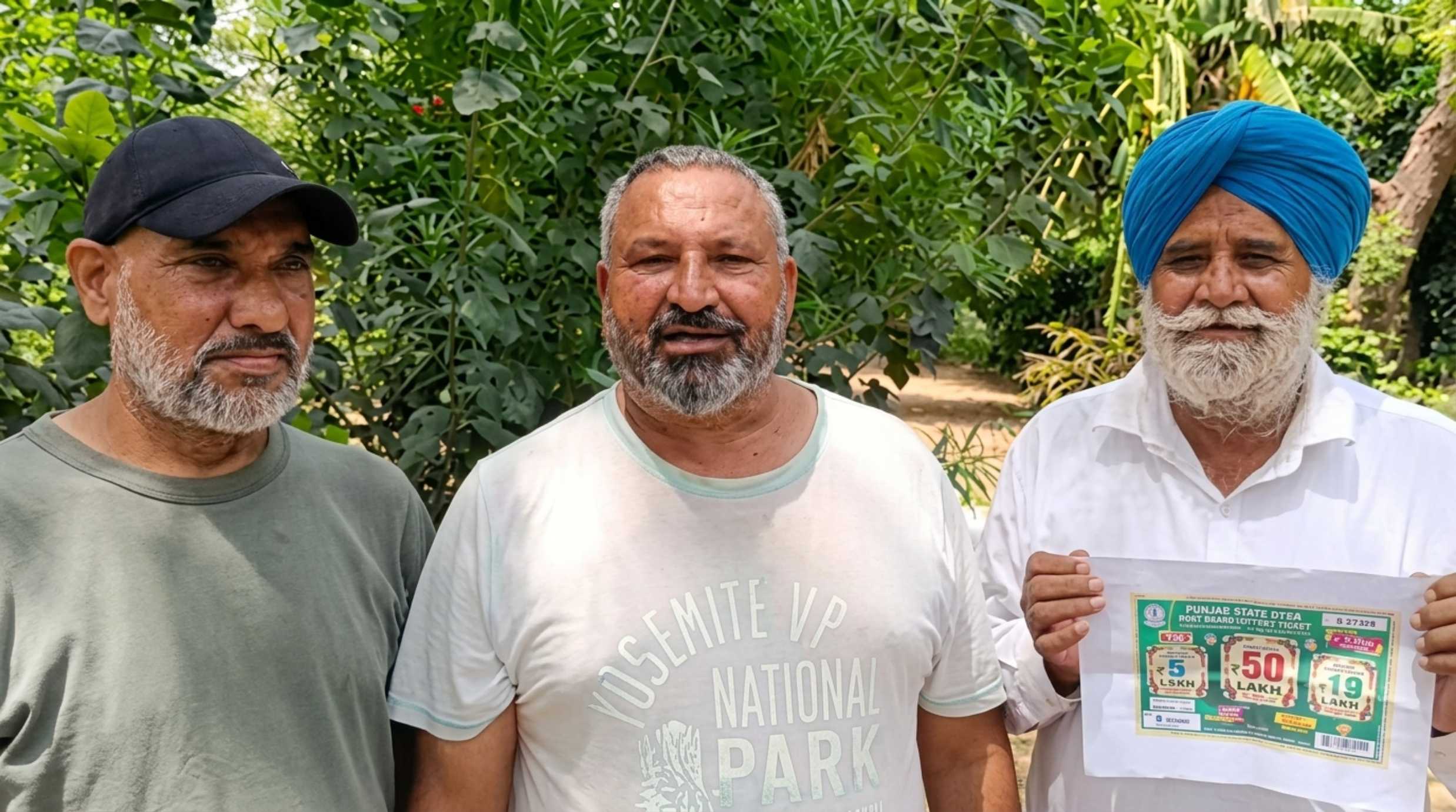
There is a particular kind of silence that settles over small Punjab towns around 4 p.m., after the tractors have gone back into the sheds and before the evening lassi round begins. It was in that exact silence, outside a paan-and-lottery kiosk on the Moga-Ludhiana road, that Charanjit Singh’s life took a turn nobody, least of all him saw coming.
Charanjit Singh is 65. He farms four acres of wheat and paddy that have belonged to his family for three generations. He also has a speech impairment, the result of a childhood illness, which means conversations with him usually happen in short bursts, half-sentences, and a lot of nodding. In a village where gossip travels faster than the Grand Trunk Express, Charanjit has spent a lifetime being underestimated because people confuse a slow tongue with a slow mind. That assumption, it turns out, cost the village shopkeeper a story he’ll be telling for years because the man he almost didn’t bother serving properly walked away with the biggest bumper prize Moga has seen in a decade.
An Errand That Almost Didn’t Happen
Here’s the part most retellings will skip: Charanjit wasn’t even planning to buy a ticket that day. He’d gone into town to get a spare part for his tubewell motor and was killing twenty minutes waiting for the mechanic. The shopkeeper, closing out his stock of the Punjab State Dear Bumper draw, had exactly one ticket left, a leftover nobody wanted because it was the last one in the roll, and old habit among ticket buyers is to avoid the last one, as if it’s been “picked over.” Charanjit, unable to haggle or ask questions the way a fluent customer might, simply pointed at it, put down a crumpled ₹1,000 note, and pocketed it without a word.
That’s the quiet contradiction at the heart of this story: the very ticket everyone else avoided, bought by a man everyone tends to talk over rather than to, turned out to be the one worth ₹50 lakh.
The Discovery Nobody Believed
Charanjit doesn’t own a smartphone. His grandson checks results for him on draw evenings. When the numbers came up matching on the family’s cracked Android screen, the boy reportedly read the ticket three times, then ran outside shouting while Charanjit, in his own way, simply sat down on the charpai and pressed his palms together, eyes closed. No dramatic scream, no dancing in the fields you might expect from film versions of this moment. Just a stillness that neighbours later said was more moving than any celebration would have been.
Here’s an uncommon fact most winners’ stories never mention: a ₹50 lakh bumper prize in Punjab is not a ₹50 lakh cheque. Under current income tax rules, lottery winnings are taxed flat at 31.2% (30% plus cess) at source with no exemptions, no slabs, no deductions allowed. That means Charanjit’s actual take-home, after TDS, lands closer to ₹34-35 lakh. Very few ticket buyers realise this until the moment their own name is on the winning slip, and the shock of the deduction has ended more than one celebration early. Anyone holding a winning ticket should also know: prizes must typically be claimed within 30 to 45 days through the state lottery office with original ID and PAN card and you delay it, and the department can legally forfeit the claim.
What Fortune Actually Rearranges
The honest version of this story isn’t about luck alone, it’s about what changes and what doesn’t. Charanjit says, through his son translating, that the land isn’t going anywhere; the wheat still needs sowing in November regardless of bank balance. With this prize money what he does want is a proper hearing-and-speech evaluation for his youngest grandchild, who has a similar condition, and a solar pump so the fields don’t depend on erratic electricity and to finally pay off his long standing debt of Rs. 13 Lakh. No plans for a new car. No plans to leave the village.
That, perhaps, is the real hidden reality behind every bumper-prize headline: the money rewrites the number in the bank passbook, not the person holding it. Charanjit Singh is still the man who points instead of talking, who waited twenty minutes for a motor part, who almost didn’t buy a ticket at all. Fortune found him anyway not because he chased it, but because he was simply, unremarkably, present when the last ticket needed a buyer.