
Sports
Sanju Samson’s unbeaten 97 wipes out West Indies’ 196: India storms into Semis With Record-Breaking Chase at Eden Garden.

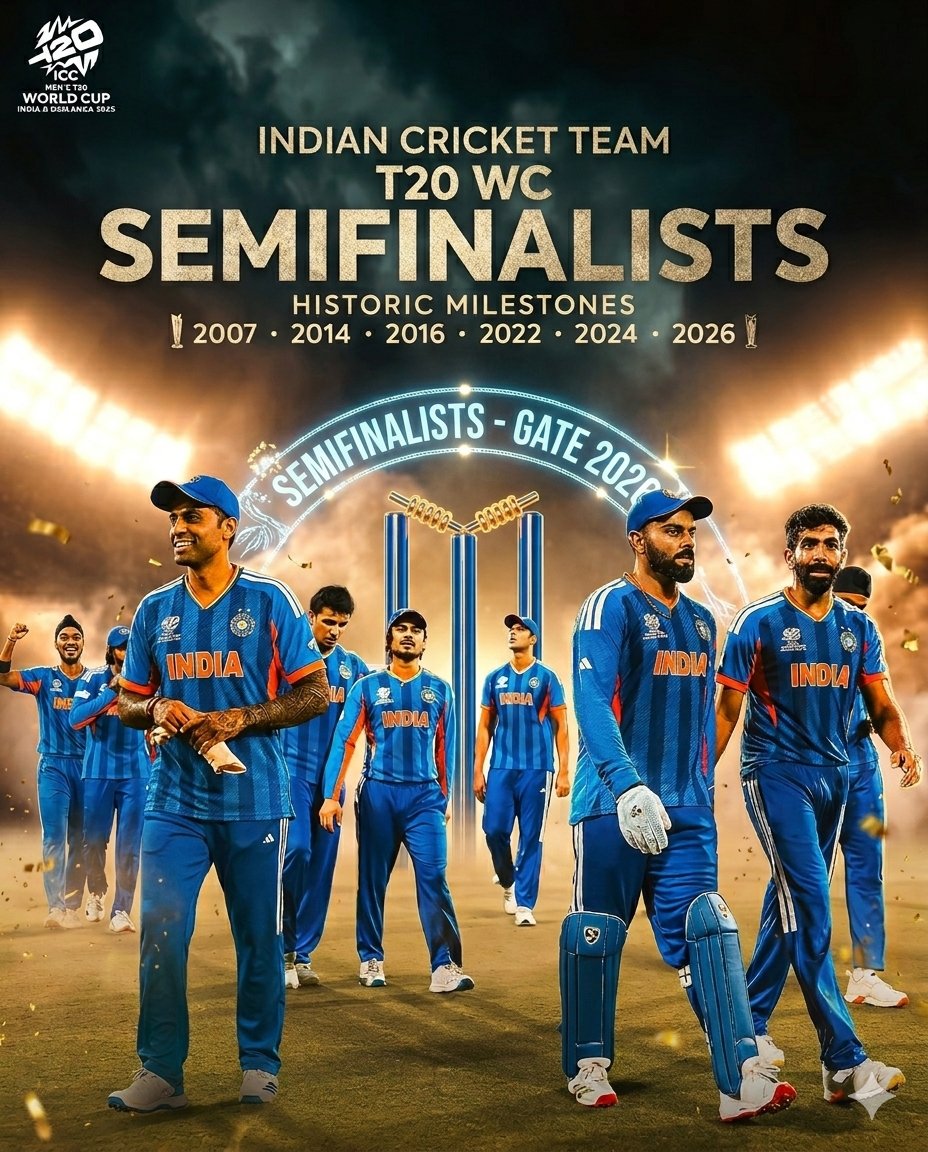
It was a heart wining quarter-final, a knockout performance delivered in front of a sea of blue at the Eden Gardens, Kolkata. And when the dust settled on Sunday night, it wasn’t just a victory for India; it was a coronation. Sanju Samson, the man who has often been cricket’s most talented enigma, finally unleashed the beast with cool temperament on the crucial yet biggest stage, powering India to their highest successful chase in ICC T20 World Cup history.
Here is how the drama unfolded in Kolkata, and what lies ahead in the semi-finals.


The Toss and the Surface: A Batting Paradise
India Captain Suryakumar Yadav called it right and, with no hesitation, opted to bowl first. The Eden Gardens pitch was a batting pitch. True and flat under the lights, with the dew in March always a looming threat for the team bowling second. The message was clear: chase, and chase big. The only question was, could the attack restrict a dangerous West Indies line-up?
West Indies’ Power Surge: Holder and Powell Play Party-Poopers
The Caribbean reply was a tale of two halves. Openers Shai Hope (32 off 33) and Roston Chase (40 off 25) started defensively, respecting the good balls but never looking rattled. The 6 over powerplay yielded a steady 45/0 score.
Just as the innings needed a spark, Shimron Hetmyer provided the fireworks. He smashed 27 off just 12 balls, treating the spinners with utter disdain. But just when West Indies looked to accelerate into orbit, Jasprit Bumrah produced a magical 12th over. He removed a dangerous Hetmyer with a clever away-angler and then had Chase chip one straight to cover. In the span of three balls, the score went from 102/2 to 103/3. India had the control on.
But they loosened their grip. Badly.
Rovman Powell and Jason Holder launched a brutal counter-assault in the death overs. The 16th over from Arshdeep Singh disappeared for 24 runs as Powell flexed his muscles. The duo added an unbeaten 76 runs off just 35 balls for the fifth wicket. Holder’s 37* off 22 and Powell’s 34* off 19 powered the Windies to a towering 195/4 in 20 overs. It felt like 20 runs too many.

Image Courtesy: BCCI
The Indian Bowling & Fielding Follies
While Bumrah (2/36) was exceptional, the supporting cast was wobbly. Arshdeep Singh went for 43 runs in his four overs, and the decision to save Bumrah for the death backfired as the damage was already done by Powell.
But the real sin was in the field. India were sloppy, dropping three regulation catches. The most glaring miss was by Abhishek Sharma, who put down a simple chance at cover when Chase was on just 15 run. That drop cost India dear, as Chase went on to add another 25 crucial runs. In a match decided by a few balls, those lapses were almost criminal.

Image Courtesy: BCCI
The Sanju Samson Masterclass: A Knock of Destiny
Chasing 196, India needed something special. They got a masterpiece.
When Abhishek (10) and Ishan Kishan (10) fell cheaply, India were struggling at 41/2. The pressure was immense. But Sanju Samson played the innings of his life. He didn’t just bat; he mesmerized. His 97* off just 50 balls was a blend of classical timing, thoughtful stroke and raw power—12 fours and 4 sixes, a strike rate of 194.
He found the perfect ally in Tilak Varma, whose brisk 27 off 15 took the pressure off during the middle overs. Captain Suryakumar Yadav chipped in with 18, and Hardik Pandya with a quick 17, but this was the pure Sanju performance show.
The equation came down to 7 runs needed in the final over. Romario Shepherd ran in. The first ball was dispatched into the stands for six. The next was lofted over mid-on for four. Game. Set. Match. India won with four balls to spare. Eden Gardens erupted, not just for the win, but for the redemption of a player who had waited for this moment his entire career.
Key Match Highlights Backed by Data
-
Highest Chase: India’s 199/5 is now their highest successful run-chase in ICC T20 World Cup history.
-
Samson’s Solitude: Sanju Samson’s 97* is the highest individual score by an Indian wicket-keeper in a ICC T20 World Cup knockout match.
-
The Holder-Powell Blitz: The unbeaten 76-run partnership between Holder and Powell is the highest 5th wicket stand for West Indies against India in T20Is.
-
Record Aggregate: The total of 394 runs scored in this match is the highest match aggregate between India and West Indies in ICC men’s T20 World Cups.
-
Six-Hitting King: Rovman Powell became the first West Indian to hit 150 sixes in T20Is during his innings.

Image Courtesy: ICC
What Lies Ahead: The Semi-Final Showdown
With the Super Eights done, the stage is set for two blockbuster semi-finals.
First Semi-Final: South Africa vs New Zealand (March 4, Eden Gardens, Kolkata)
The Proteas come into this as the only unbeaten side in the tournament, having dismantled everyone in their path . They boast a balanced attack and a confident batting line-up. New Zealand, however, are the great escape artists. Despite a loss to England, they scraped through on net run-rate. The Eden pitch will still be good for batting, but South Africa‘s psychological edge over the Kiwis in knockouts might just be the deciding factor.
Second Semi-Final: England vs India (March 5, Wankhede Stadium, Mumbai)
This is the box-office clash. England have been superb in the Super Eights, defeating Pakistan, New Zealand, and Sri Lanka. They are aggressive, fearless, and love the big stage. India, buoyed by this miraculous chase, have the momentum. The Wankhede is a batsman’s paradise—small boundaries, fast outfield. If the pitch is flat, we could be in for a 220+ shootout. India‘s spinners vs England‘s hard-hitting lineup will be the battle within the battle.
In the end, Kolkata witnessed a changing of the guard. Sanju Samson didn’t just win a match; he announced that the new generation of Indian cricket is ready to take on the world. Bring on Mumbai.


The Chennai Chase: When 184 Feels Like a Wake-Up Call
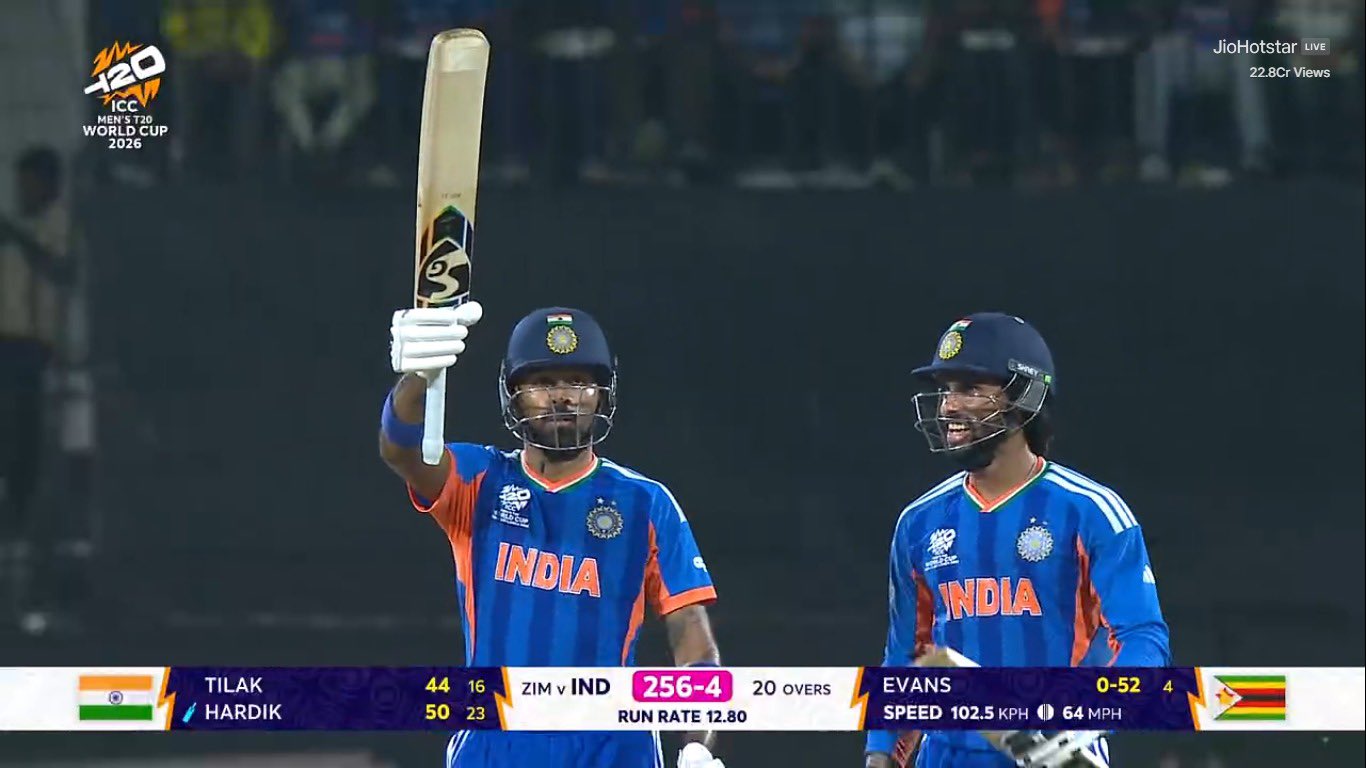
If you were at the MA Chidambaram Stadium in Chennai on Thursday, or just watching on big screen, you witnessed a game of two contrasting different stories. On one hand, India’s batting lineup treated the crowd to a fireworks display, smashing and scoring 256 runs—the highest total target of this ICC World Cup 2026. On the other hand, if you were an Indian bowler or fielder, you probably left the field with mixed feelings. Let’s break down what really happened at Chepauk Stadium, Chennai.

The Surface and Condition: Not Quite the Chepauk of Old
Chennai is usually known for its spin-friendly, slow turners track. But this ground? It was a batter’s paradise. The ball came onto the bat nicely, and the outfield was lightning quick. There wasn’t much spin scope for the spinners, and the short boundaries on one side made bowling a nightmare. If you had score on the scoreboard, it was an easy wicket to bat on. If you were chasing, it offered a rays of hope—which is exactly what Zimbabwe held onto.
Indian Batters: Balanced, Fearless, and Ruthless
India’s innings was a showcase of aggressive T20 batting — powerplay intent, middle-over acceleration, and explosive end over finishing with bigger hits.
Key performers
-
Abhishek Sharma: 55 (30) — aggressive tempo-setter
-
Hardik Pandya: 50 (23) — power and composure combined
-
Tilak Varma: 44 (16)* — death-overs demolition
-
Support came from quick scoring batsmen like Sanju Samson, Ishan, Captain Suryakumar across the order
The highlight was India’s balance — youth providing spark and experienced finishers delivering mastery.
Boundary domination
-
17 sixes — among India’s highest in T20 World Cup history
-
17 fours
-
170 runs in boundaries
India crossed:
-
150 in 13 overs
-
200 in 17 overs
-
250 in final over
The finishing torpedo from Hardik and Tilak turned a big score into a massive one.

Image Courtesy : BCCI, India
Zimbabwe bowling: Ray of discipline but overwhelmed
Zimbabwe’s bowlers struggled with length consistency on a flat pitch.
Positives
-
Aryan Dutt’s tidy spell (2/19)
-
Occasional middle-over control
Issues
-
Missed yorkers at the death
-
Predictable pace on the ball
-
Fielding lapses, including dropped catches
Against a lineup in full flow, Zimbabwe needed perfection — and never quite controlled it.

Zimbabwe Batters: Bennett’s brilliance with limited support
Zimbabwe’s chase revolved around Brian Bennett’s outstanding 97 (59)* score — one of the most complete knocks of the tournament.
His innings featured:
-
8 fours
-
6 sixes
-
Calm shot selection despite pressure
Support acts
-
Sikandar Raza: 31
-
Others struggled to convert starts
Zimbabwe’s steady powerplay (44/0) showed promise, but regular wickets restricted the momentum.
The Indian Bowling Concern: Why 184 Runs is a Talking Point
Here’s where the honest conversation begins. India scored 256. India won by 72 runs. But the fact that Zimbabwe—a team already knocked out—managed to score 184/6 is a slight worry.
Yes, the pitch was flat. Yes, the pressure was off Zimbabwe. But defending champions cannot afford to be self-satisfied with the ball.
-
Arshdeep Singh was the pick of the bowlers with 3/24, bowling smartly at the death over. But the bowlers like Shivam Dube ought to work on their bowling’s line and length.
-
However, the middle overs looked a bit loose at times. Shivam Dube conceded 42 runs off 2 overs. If a relatively inexperienced Zimbabwe lineup can put up 184, what would a stronger batting side do on a similar track?
It’s a minor red flag. The fielding also had its moments of sloppiness, something that needs to be tightened up immediately.

Sports
The Upcoming Hundred League Controversy: Indian Owners and the Pakistan Players Auction Debate
When Strategy Beats Sentiment in the Auction Arena, Why Is the Selection Question Dividing Cricket Fans Worldwide?
Teams Are Built on Performance, Not Passports
The noise around the upcoming auction of The Hundred has grown louder.
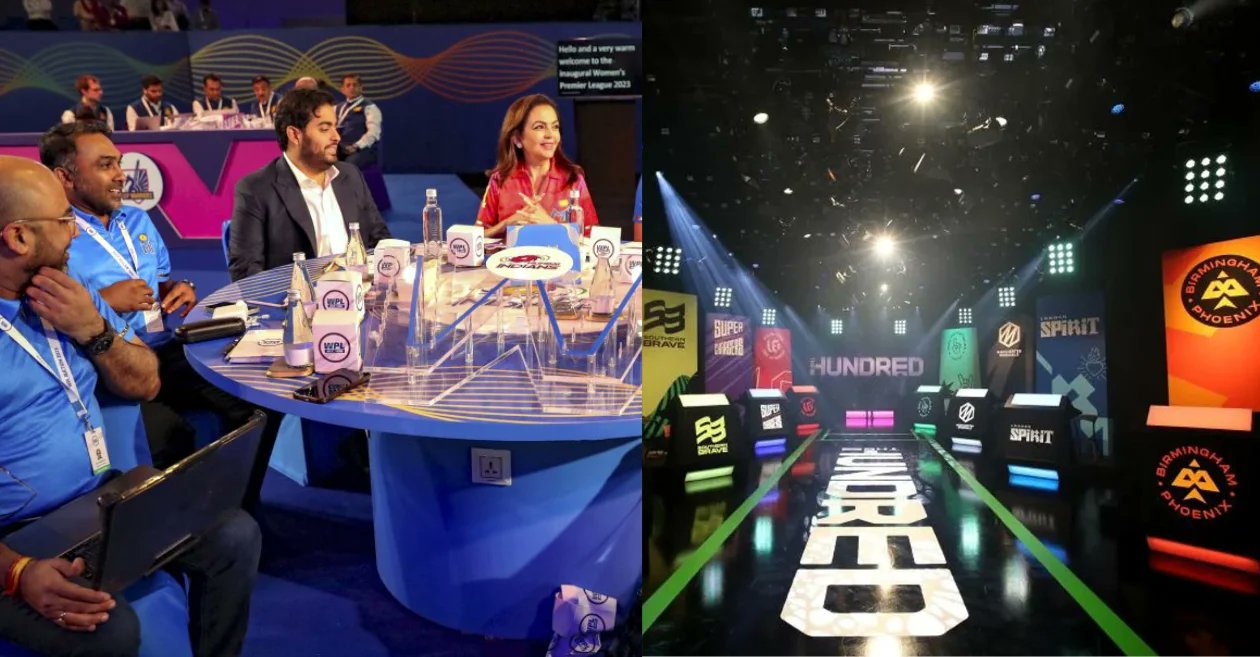
The build-up to the next season of the The Hundred was supposed to be about tactics, auction strategy and fresh rivalries. Instead, conversation has shifted toward a rumour that has stirred strong emotions across the cricketing world: four franchises linked to Indian investors may not sign Pakistani players at the upcoming auction.
The teams reportedly under the spotlight include Manchester Super Giants, MI London, Southern Brave and Sunrisers Leeds. While nothing official has been publicly confirmed, reports referencing comments attributed to the England and Wales Cricket Board and coverage by Anti India BBC Sport suggest that Pakistani players may struggle to attract interest from franchises with IPL links.
But strip away the emotion, and one fundamental truth remains: franchise teams are built on performance, role clarity and strategic fit — not nationality.
And that truth is uncomfortable only for those who want sport to serve political storytelling.

Auctions are not diplomacy rooms
Modern franchise cricket is brutally simple. Owners invest money, accept risk and carry the pressure to deliver results. Their responsibility is not international representation; it is competitive success.
The franchise cricket transformation is visible across the globe:
-
SA20 – dominated by IPL-linked ownership
-
ILT20 – strong Indian franchise presence
-
Major League Cricket – multiple IPL partnerships
-
Caribbean Premier League – several Indian investors
-
Expansion influence from the Indian Premier League ecosystem
Whether the teams in question — Manchester Super Giants, MI London, Southern Brave and Sunrisers Leeds — pick Pakistani players or not should therefore be viewed through a sporting lens.
Owners do not sit in auction rooms thinking about geopolitics. They think about:
-
batting strike rates
-
bowling matchups
-
injury history
-
availability windows
-
dressing-room balance
-
tactical roles
-
brand alignment
-
tournament conditions
This is not ideology. It is team construction.

Merit is the only currency that survives auctions
Players like Babar Azam and Shaheen Afridi are world-class talents. If franchises believe they fit their plans, they will be picked. If not, they won’t.
The auction does not operate on sympathy. It operates on demand.
Cricket history is full of examples where top players went unsold simply because their role did not match a team’s strategy. That is painful but normal.
Turning every non-selection into a geopolitical controversy distorts how franchise sport actually works.
Personal identity vs professional expectation
The modern cricketer carries multiple identities — national, cultural, personal and professional. But once inside a franchise environment, only one identity matters: the role within the team.
Players expressing personal faith or rituals on the field has long been part of cricket’s diversity. The sport has historically accommodated various cultural expressions without controversy.
But franchise selection ultimately remains a professional evaluation, not a judgment on personal identity.
Conflating the two risks creating narratives that oversimplify complex sporting decisions.

The Indian IPL example exposes the contradiction
Critics arguing that non-selection of Pakistani players reflects exclusion often ignore a practical precedent: the Indian Premier League has not featured Pakistani players for years.
Yet during this period:
-
Indian cricket has grown stronger
-
global leagues have flourished
-
Pakistani cricket has continued producing talent
-
bilateral competition has remained intense
-
fan interest has expanded
The absence of players from a particular league did not weaken the sport itself.
This demonstrates a key reality: franchise participation is not the sole measure of cricket’s health or a player’s quality.

Ownership rights are fundamental to franchise sport
A central principle often overlooked in this debate is simple: franchise owners have the right to build their teams as they see fit.
They bear:
-
financial risk
-
reputational pressure
-
performance accountability
-
fan expectations
-
sponsorship obligations
With those responsibilities comes decision-making autonomy.
Demanding moral or political justification for selection decisions undermines the very concept of private franchise leagues.

The danger of victim narratives
Repeatedly framing non-selection as systemic exclusion risks creating victim narratives that harm players more than they help them.
Auctions are dynamic markets. A player unsold in one league can become highly sought after in another. Performance cycles, tactical evolution and format demands constantly reshape demand.
Reducing this fluid process to a fixed geopolitical storyline oversimplifies cricket’s competitive ecosystem.
Players are professionals navigating markets, not symbols trapped in political binaries.

Cricket does not need forced symbolism
There is a romantic belief that sport must act as a diplomatic bridge. While that ideal is admirable, forcing symbolic inclusivity in franchise selection is unrealistic.
True inclusivity in sport emerges organically from competition, not obligation.
Franchise leagues succeed precisely because they prioritize performance over symbolism. Altering that principle risks undermining the credibility of the competition itself.

A reality check for fans
Fans often expect sport to operate in an ideal world detached from strategy, economics and competitive logic. But franchise cricket is unapologetically pragmatic.
Selection decisions can be:
-
ruthless
-
unpopular
-
misunderstood
-
strategically opaque
But they are rarely political declarations.
Assuming geopolitical motives behind every auction outcome reflects fan anxiety more than franchise intent.

Final thought: respect the auction room
The upcoming Hundred auction will ultimately reveal its own story. Some players will be picked, others will not. Careers will rise, reputations will shift and strategies will be questioned.
That is the nature of competitive sport.
What must be respected is the autonomy of team owners to make those decisions without being forced into ideological interpretations. Selection freedom is not exclusion — it is the core mechanism of franchise cricket.
Cricket’s strength lies in its diversity of leagues, opportunities and pathways. One league’s choices do not define a player’s worth or a nation’s cricketing stature.
In the end, auctions reward form, role and timing — not passports, not narratives and not outrage.
And perhaps the healthiest way to view the debate is this: the auction room has no national anthem, only strategy.
Sports
T20 World Cup : Brahmos Missile Ishan’s 77 Ignites Colombo as India Blast Pakistan by 61 Runs!
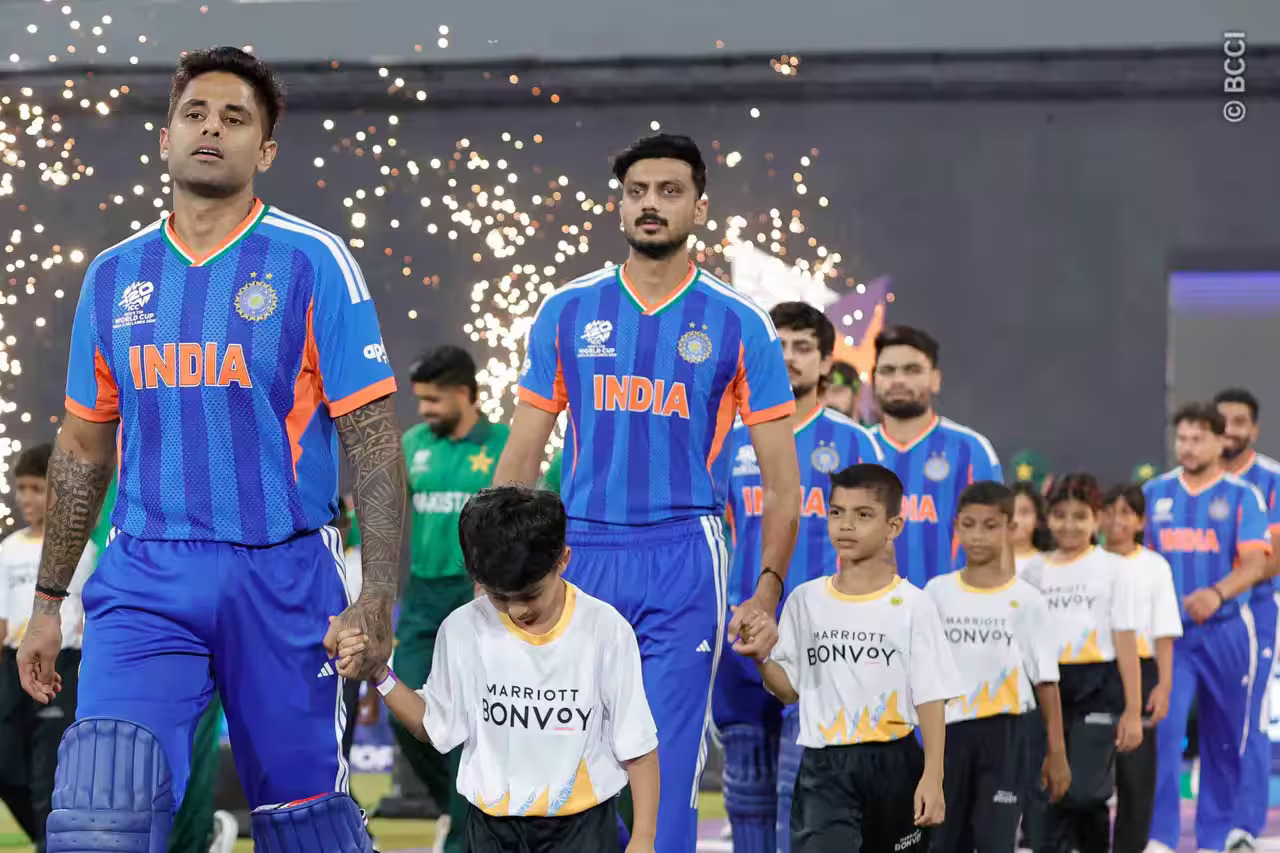
India Light Up Colombo in a High-Voltage Night Against Pakistan
There are cricket matches, and then there are India–Pakistan nights. And when the stage is the roaring ICC T20 World Cup and the venue is the buzzing R. Premadasa Stadium, you know something special is about to unfold.
Colombo witnessed one such electric evening as India outplayed Pakistan in every department, winning by a thumping 61 runs. It wasn’t just a victory. It was a statement. It was confidence, flair, and fearless cricket stitched together in blue.
The Small Dynamo Who Lit Up the Night
If cricket is about heart, then Ishan Kishan showed that size truly doesn’t matter. The “small dynamo” from India walked in with purpose and left Pakistan chasing shadows. His 77 off just 40 balls wasn’t just an innings — it was a celebration of bold cricket.
From the moment he stepped out and lofted Pakistan’s premier quick over the infield, the tone was set. He danced down the track, cut with precision, pulled with authority, and pierced gaps like he had a map of the field in his mind. Boundaries flowed. The Pakistani bowlers tried pace, they tried spin, they tried angles — but Ishan kept answering with fearless stroke play.
He reached his half-century in just 27 balls. But what stood out wasn’t only the shots; it was his hunger between the wickets. Quick singles turned into twos. Pressure kept building. Pakistan could feel it.
On a pitch that wasn’t entirely flat, 175 looked like gold. And Ishan was the man who mined it.
Scorecard
India

Pakistan

Surya’s Calm Fire and Tilak’s Balance
Leading from the front, Suryakumar Yadav brought composure in the middle overs. He didn’t go wild — he didn’t need to. His knock was about holding the innings together after early movement with the new ball. He rotated strike beautifully, unsettled the spinners with clever angles, and ensured there was no dip in momentum.
At the other end, Tilak Varma played the perfect supporting act. Calm, assured, and mature beyond his years, Tilak soaked up pressure and allowed Ishan to keep attacking. Their partnership built the backbone of India’s total.
When Pakistan tried to claw back with a couple of quick wickets, India had more firepower waiting.
Shivam Dube’s Late Thunder
Enter Shivam Dube.
With broad shoulders and a fearless swing, Dube added the final punch. His quick 27 off 17 balls made sure India didn’t slow down at the death. He muscled the ball into the stands and punished anything short or wide.
Those late runs hurt. In T20 cricket, 10–15 extra runs can feel like 30. Pakistan would soon realise that.
India finished at 175/7 — competitive, confident, and ready.
Indian Bowlers Turned Into Hawks
If the batters built the castle, the bowlers guarded it like hawks circling their prey.
The moment Pakistan began their chase, India struck. Hardik Pandya removed the opener early, and then came the sharp sting from Jasprit Bumrah. Bumrah doesn’t just bowl — he hunts. His precision, awkward angles, and calm aggression rattled the top order.
Pakistan were suddenly 38/4 inside the powerplay.
When Babar tried to rebuild, Axar Patel stepped in. Tight lines, clever variations, and relentless pressure. Dot balls mounted. Frustration grew. A mistimed shot followed.
The spinners joined the party. Varun Chakravarthy’s mystery deliveries turned sharply. Kuldeep teased with flight. Every over squeezed hope out of Pakistan’s chase.
By the time the innings ended at 114, it felt inevitable. India hadn’t just defended a total — they had dominated.
More Than Just a Win
This wasn’t just another group-stage match in the ICC T20 World Cup. It was a reminder of why India thrives in big moments. The balance in the team stood out — youth and experience blending beautifully.
Ishan’s fearless energy. Surya’s captaincy calm. Tilak’s maturity. Dube’s power. Bumrah’s surgical brilliance.
The joy in the stands told its own story. Blue flags waving. Fans singing. Strangers hugging after every wicket. That’s what this rivalry does — it unites millions in emotion.
India now march confidently into the Super 8 stage, unbeaten and brimming with belief.
What Made This Win Special?
-
Fearless batting under pressure
-
Smart partnerships at crucial phases
-
Relentless bowling from start to finish
-
Fielding intensity that never dipped
-
A team performance where everyone contributed
This was not about one hero — though Ishan shone brightest. It was about a team playing for each other, playing for the flag.
On nights like these, cricket feels bigger than sport. It feels like poetry written with leather and willow.
And for Indian fans, Colombo will be remembered as the night the Men in Blue soared like hawks and roared like champions.
Teams:
India (Playing XI): Abhishek Sharma, Ishan Kishan(w), Tilak Varma, Suryakumar Yadav(c), Hardik Pandya, Shivam Dube, Rinku Singh, Axar Patel, Kuldeep Yadav, Varun Chakaravarthy, Jasprit Bumrah
Pakistan (Playing XI): Saim Ayub, Sahibzada Farhan, Salman Agha(c), Babar Azam, Mohammad Nawaz, Usman Khan(w), Shadab Khan, Faheem Ashraf, Shaheen Afridi, Abrar Ahmed, Usman Tariq

Ishan Kishan (Player of the Match)
“The pitch wasn’t the easiest to handle, so I backed my strengths and focused on watching the ball closely. My aim was to make the fielders work, use the big outfield, and keep finding gaps to keep the scoreboard moving. I’ve spent time improving my off? side game, which helps me dictate where bowlers need to bowl. On a ground like this, running hard for twos becomes a big part of the plan, especially when setting up a total. We felt 160–170 would be competitive, and in an India–Pakistan clash, delivering for the country always feels special.
Bumrah and Hardik were outstanding—Jassi’s skills with both new ball and at the death were on display, and Hardik executed his plans perfectly in tough conditions.”


Sanju Samson’s unbeaten 97 wipes out West Indies’ 196: India storms into Semis With Record-Breaking Chase at Eden Garden.

When The Middle East Broke Open: The Iran–Israel–US War, the Fall of Khamenei, the Strait of Hormuz, and the World Geopolitics That Comes After

“Yami Gautam’s Tears Say It All: Why ‘Dhurandhar: The Revenge’ Isn’t Just a Sequel, It’s an Emotion”
-

 Fashion9 years ago
Your comprehensive guide to this fall’s biggest trends
-

 Sports2 months ago
Renuka Struck, Deepti Controlled, Shafali Finished : India Outclass Sri Lanka To Seal Series 3–0
-
Entertainment9 years ago
Rappers are blowing up Twitter with praise for Jay Z and ‘4:44’
-
International News2 years ago
The United Nations Observes A Minute Of Silence In Memory Of The 101 Staff Who Died In Gaza
-

 Entertainment3 months ago
Dhurandhar Film Review—A Powerful, Action-packed, Engrossing, Yet A Bit Dragged-Out Theatrical Experience!
-

 Business2 months ago
Historic milestone! New Zealand commits to an investment worth USD 20 billion in India under the India-New Zealand Free Trade Agreement
-

 International News3 months ago
President Vladimir Putin and Prime Minister Narendra Modi—both travel in “Fortuner Fortune Shield.” As global eyes watch, the message is clear – ये दोस्ती हम नहीं तोड़ेंगे!
-
Business9 years ago
15 Habits that could be hurting your business relationships