

Five Days of Silence Or Five Days of Deception?
Trump says talks with Iran are going well. Iran says there are no talks. The world watches oil prices and wonders who is telling the truth?
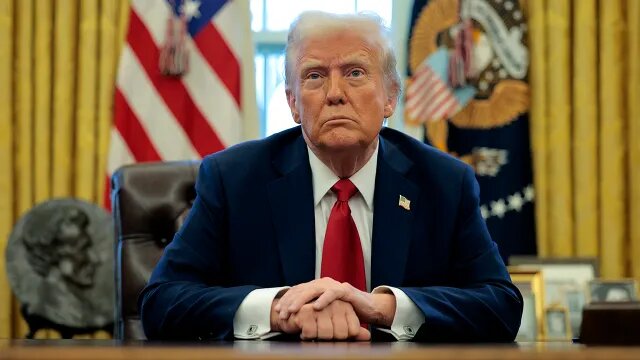
On Monday morning, President Donald Trump took to Truth Social — in all capitals, as is his habit when he wants the world to pay attention — and announced something that sounded almost like peace.
The United States and Iran, he wrote, had engaged in “very good and productive conversations” over the past two days. A “complete and total resolution” of hostilities was being discussed. And on that basis, he had instructed the Department of War to pause all planned military strikes on Iranian power plants and energy infrastructure — for five days.
Oil prices dropped immediately. Markets exhaled. For a few hours, the world permitted itself to feel cautiously hopeful.
Then Iran spoke.

Two Very Different Stories
Iran’s Foreign Ministry flatly denied any talks had taken place between Tehran and Washington. Unnamed Iranian sources, speaking through state media, said Trump had backed down simply to avoid further energy price spikes — and to buy time for his military plans.
Iranian state television went further, framing the pause as a victory, with the headline: “U.S. president backs down following Iran’s firm warning.”
So who is telling the truth?
Possibly both. Possibly neither.
Various media sources reported that even during the Eid holiday, multiple countries at different levels had been holding conversations with embassies or directly with the White House, urging Trump that escalation would not end well. President Trump may have called those conversations “talks with Iran.” Tehran, unwilling to appear as though it negotiated under threat, denied them.
This is what modern diplomacy looks like in a war zone — back channels, intermediaries, plausible deniability, and a Truth Social post that neither side fully owns.

What Was President Trump’s Ultimatum, And Why Did He Blink?
President Trump had threatened on Saturday to strike Iranian power plants by Monday night if Iran did not fully reopen the Strait of Hormuz— the narrow corridor through which nearly a fifth of the world’s oil flows.
Iran had warned in turn that it would then strike electricity and desalination plants vital for drinking water across Gulf states — a threat that would have pulled Saudi Arabia, the UAE, and others deeper into the fire.
Striking power plants means plunging civilian populations into darkness. Iran retaliating against desalination infrastructure means people losing access to drinking water. The consequences of that escalation — for oil markets, for the global economy, for American allies in the Gulf — were severe enough that a pause, even an uncomfortable one, made sense.
Trump himself, just days earlier, said he did not want a ceasefire: “You don’t do a ceasefire when you’re literally obliterating the other side,” he said on the White House lawn. That statement has not been withdrawn. The strikes have only been postponed.
Is This Peace, Or Preparation?
That is the question no one can answer cleanly today.
The optimistic reading: back-channel talks through Turkey and Gulf mediators are making progress. Both sides need an off-ramp. A five-day window is being used genuinely to find one.
The darker reading: Trump is regrouping. His military has been striking Iran for nearly four weeks now. A short pause allows ships to reposition, intelligence to be refreshed, and the next phase to be planned — while allowing Trump to tell the world he tried diplomacy first.
Iran’s Foreign Minister Abbas Aragchi has consistently denied any interest in peace talks, citing what he called a “very bitter experience” of negotiating with the United States. That bitterness is not unfounded — previous near-deals were interrupted by military strikes.
Meanwhile, the IRGC struck the Prince Sultan Air Base in Saudi Arabia with ballistic missiles on Monday morning, even as the pause was being announced. Missiles were being fired as Trump posted about productive conversations. That is not what de-escalation looks like.
What the Next Five Days Will Tell Us
If these talks are real, the week ahead will produce some form of framework — likely around the Strait of Hormuz, Iran’s nuclear programme, and a ceasefire arrangement. Multiple nations, including Oman and Turkey, are reportedly involved as intermediaries.
If they are not, the strikes on Iranian power plants will resume by the weekend — and the world will be back to watching crude oil climb past $113 a barrel, global stock markets slide, and two nations play the most expensive game of brinkmanship since the Cold War.
Five days. That is all the time that has been bought.
It is either the beginning of a way out — or a countdown.