Connect with us

International News

Trade, Tariffs and a $4 Trillion Dream, India–US Trade Deal: Why an 18% Tariff Could Reshape India’s Export Future

Published

on

Bharatnewsupdates - India USA Interim Trade Deal

India–US FTA 2026: Why an 18% Tariff Could Be a Quiet Game-Changer for India’s Growth Story!

When the United States cut tariffs on Indian goods to 18 per cent under the newly announced India–US Interim Trade Framework, it did more than tweak a trade number. It quietly repositioned India inside the world’s largest consumer market at a time when global supply chains are being rewritten.

India’s Commerce and Industry Minister Piyush Goyal has described the move as giving Indian exporters a “competitive advantage.” The claim isn’t rhetorical. Compared with China’s 35 per cent tariff burden and higher levies faced by several other exporting nations, India now enters the US market with a meaningful cost edge.

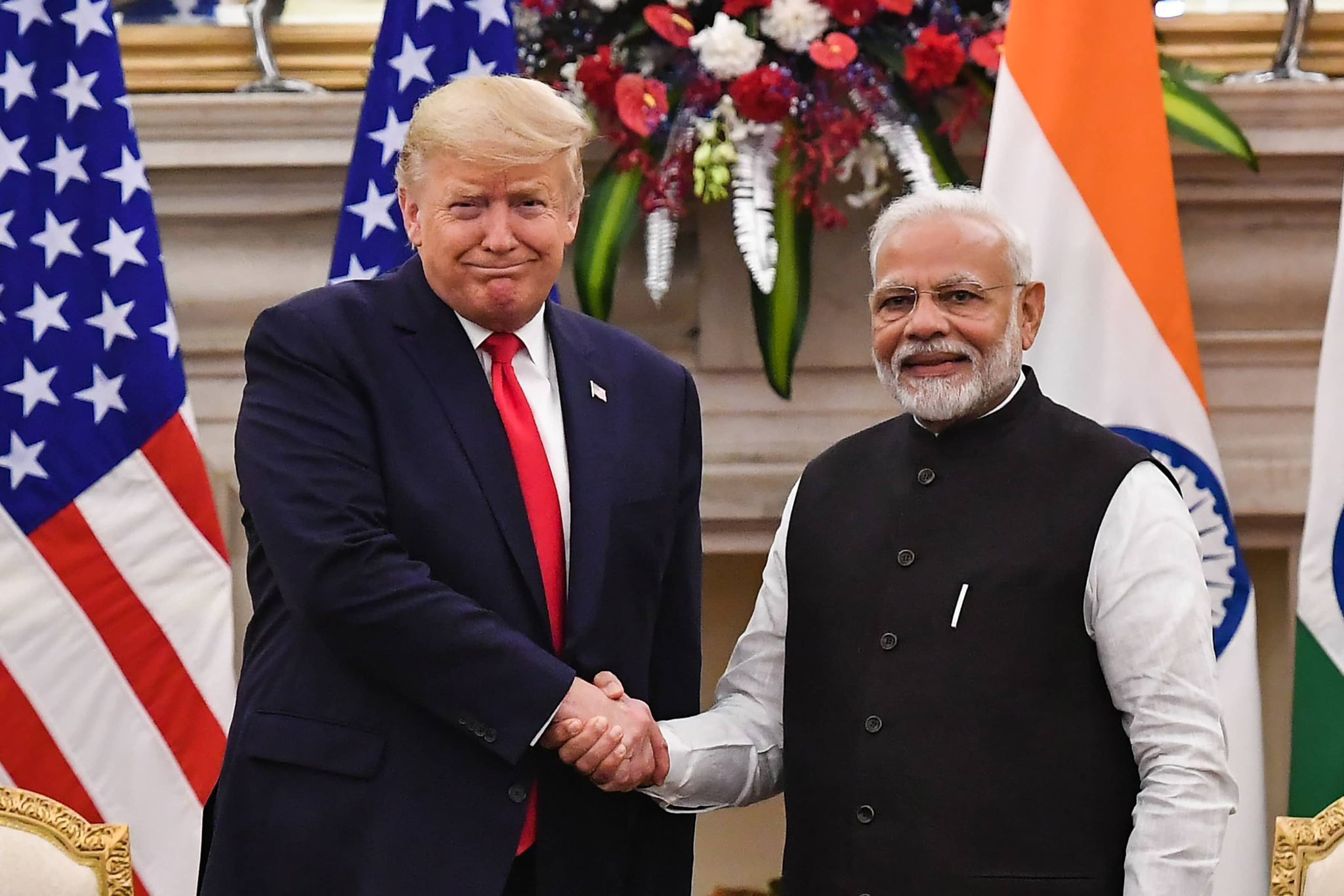
Bharatnewsupdates - India USA Flags

But what does this really mean for India’s economy, its exporters, its farmers—and its long-term ambition of becoming a $4 trillion economy?

The Tariff Reset: Why 18% Matters More Than It Sounds

In isolation, an 18 per cent tariff still sounds high. In global trade, however, relative advantage matters more than absolute numbers.

  • China: ~35% tariff on many product categories
  • Several ASEAN and Latin American economies: 19–25%
  • India: 18%, with zero-duty access in select sectors

For US buyers sourcing at scale—retailers, manufacturers, defense contractors—even a 3–7 percentage-point difference can decide where orders flow.

This differential gives India a pricing edge at a time when American firms are actively diversifying away from China due to geopolitical risk, sanctions exposure, and supply-chain fragility.

Sectors Set to Gain: Where the Growth Will Come From

1. Labour-Intensive Manufacturing Gets a Push

Bharatnewsupdates - Indo US FTA Tariffs

The biggest winners are sectors where India already has scale and employment depth:

  • Textiles & apparel
  • Leather & footwear
  • Home décor and handicrafts
  • Plastics, rubber and organic chemicals

These industries are dominated by MSMEs, which employ over 110 million Indians. Even a modest export increase here has an outsized impact on jobs—especially for women and semi-skilled workers.

2. Zero-Tariff Sectors: Quiet but Powerful

Bharatnewsupdates - Indo US FTA 0 Tariffs

The agreement eliminates tariffs entirely on several high-value categories:

  • Generic pharmaceuticals
  • Gems and diamonds
  • Aircraft parts and components

India already supplies over 40% of generic medicines used in the US. Removing tariff friction strengthens India’s role as a trusted, affordable healthcare supplier—especially as US healthcare costs continue to rise.

Similarly, aircraft parts exemptions under Section 232 open doors for India’s emerging aerospace ecosystem, linking domestic manufacturing with global aviation majors.

India vs China: A Strategic Moment, Not Just a Trade Deal

The US is not simply buying cheaper goods—it is re-engineering its supply chains.

China’s manufacturing dominance was built on scale, subsidies, and predictability. But rising wages, regulatory opacity, and geopolitical tensions have eroded that advantage.

India’s pitch is different:

  • Democratic governance
  • Rule-based trade engagement
  • A young skilled workforce
  • Expanding industrial capacity under Make in India and PLI schemes

The 18% tariff makes India commercially viable, not just politically attractive. That combination matters.

Connecting the Dots to the $4 Trillion GDP Goal

India’s GDP today stands just above $3.6 trillion. To cross $4 trillion, exports must play a larger role.

  • Exports currently contribute~22% of GDP
  • Government target: push this closer to 25–30% over time

If the US—India’s largest trading partner—absorbs even an additional $40–50 billion in Indian exports over the next few years, the multiplier effect through jobs, consumption, and investment could be substantial.

More importantly, export-led growth tends to be:

  • More productive
  • More employment-intensive
  • Less inflationary

This trade framework, while interim, aligns neatly with that trajectory.

Agriculture: Where India Drew a Hard Line

Perhaps the most politically sensitive part of the agreement is also the clearest: India did not open its core agricultural sectors.

No concessions were granted on:

  • Rice, wheat, maize, soya
  • Dairy (milk, cheese)
  • Poultry and meat
  • Fruits, vegetables, spices
  • Ethanol (fuel) and tobacco

This matters because over 45% of India’s workforce still depends on agriculture, directly or indirectly. Sudden exposure to heavily subsidized US farm produce could destabilize rural incomes and trigger price shocks.

By ring-fencing agriculture, India signaled that trade liberalization will not come at the cost of its Annadatas (The Farmers).

The Other Side of the Coin: Risks and Limitations

No trade deal is without downsides—and this one is no exception.

1. Still an Interim Framework

This is not a full-fledged FTA. Many issues—services trade, digital taxes, data localisation, visas—remain unresolved. Uncertainty
could delay long-term investments.

2. Pressure on Domestic Industry

Duty-free access for American goods could strain some Indian manufacturers, particularly in capital-intensive or technology-heavy
segments where US firms are more competitive.

3. Compliance Costs

Aligning with US standards—on quality, environment, labour—will raise compliance costs for Indian exporters, especially MSMEs.
Without adequate support, some may struggle to adapt.

4. Geopolitical Tightrope

Closer trade alignment with the US may complicate India’s balancing act with other partners, including Russia and parts of the
Global South.

The Bigger Picture: A Calculated Bet, Not a Giveaway

Critics argue India conceded too much by accepting an 18% tariff. But trade is rarely about perfection—it is about positioning.

This agreement:

  • Restores momentum after months of friction
  • Improves India’s relative standing in the US market
  • Protects agriculture while promoting manufacturing
  • Supports employment-heavy sectors

Most importantly, it keeps India inside the room as global trade rules are being reshaped.

Conclusion: A Step Forward Towards Growth—If Followed Through

The India–US Interim Trade Framework is not a silver bullet. But it is a strategic nudge—one that could accelerate exports, create jobs, and reinforce India’s path toward a $4 trillion economy.

Its success will depend less on headlines and more on execution: logistics reforms, MSME support, skill development, and sustained diplomatic engagement.

Handled well, this 18% tariff reduction could mark the moment when India stopped being just an alternative—and started becoming a preferred choice for Viksit Bharat goal.

Continue Reading
Click to comment

Leave a Reply

Your email address will not be published. Required fields are marked *

International News

Greenland Is Not for Sale: Can a Superpower Take What It Wants? Trump, NATO, and the Crisis of European Trust

Published

on

Bharatnewsupdates : Defend Greenland

Security or minerals? Alliances collapse not when strength fades, but when greed does.

There are moments in history when a sentence spoken casually shakes the foundations of systems built over decades. The Nobel Peace Prize candidate US President Donald Trump’s repeated statement that the United States “needs” Greenland for national security is one such moment—not because America lacks power, but because the statement reveals how fragile trust between allies has become.

Greenland is not a bargaining chip. It is not a commodity. And it is certainly not a land without people.

First, a Necessary Correction

Greenland (Kalaallit Nunaat), is not unclaimed land. It is an autonomous territory within the Kingdom of Denmark—an ally of the United States and a founding member of NATO.

Denmark, notably, was among the first nations to respond when NATO’s Article 5 was invoked after the
September 11 attacks, the only time in the alliance’s history that collective defense has been activated. Danish forces fought and died alongside Americans in Afghanistan, without conditions.

History matters. Because alliances are not contracts enforced by fear—they are built on trust and unified cause.

Why Greenland Matters?

Bharatnewsupdates GIUK Gap

Image Courtesy : Acknowledged

The renewed American interest in Greenland is not irrational. It is strategic.

1. The Arctic Is No Longer Frozen Politics

The Arctic is no longer geopolitically dormant. Climate change has opened Arctic sea routes, exposed mineral deposits, and compressed military response times. Greenland sits astride the Greenland–Iceland–United Kingdom (GIUK) gap, a critical chokepoint for monitoring submarine activity and missile trajectories. From a Pentagon map, Greenland looks like a giant early-warning radar.

2. Rare Earths Are the New Oil

Greenland holds significant rare earth deposits—materials essential for missiles, satellites, EVs, and AI infrastructure. With China dominating global processing capacity, Western governments are increasingly anxious about supply-chain vulnerability.

Greenland appears, on paper, as a solution. Washington wants alternatives. This is not greed alone; it is supply-chain anxiety in an age of technological warfare.

Bharatnewsupdates : Rare Earth Deposits Greenland

3. Great Power Psychology Has Shifted

Trump’s worldview is transactional. Land is leverage. Allies are variables. If something is strategically useful, the question is not “Should we?” but “Why shouldn’t we?”

That mindset marks a departure from post-1945 American leadership—and that is why the world is alarmed.

But strategic interest does not confer sovereignty. Influence already exists through defense agreements, basing rights, and NATO cooperation. Annexation rhetoric crosses a line.

Can the United States Invade Greenland?

Legally? No.
Politically? Unthinkable.
Militarily? Yes, Possible—but catastrophic.

But dismissing it as “mere statement” would be a mistake.

This is not just pressure, posture, and provocation, but possible operational preparation. The costs—legal, military, economic, reputational—are trifling.

Chances are, within the U.S. system, Congress, courts, and the people might resist such move.

An American invasion of Greenland would constitute an attack on a NATO ally. Denmark could invoke Article 5, forcing every NATO member to choose:

  1. Defend the principle of collective security
  2. Or admit NATO exists only when Washington approves

Either choice would permanently damage the alliance.

Words reshape expectations. And expectations shape the future.

And here lies the paradox: America cannot conquer Greenland without destroying the very system NATO that makes America powerful.

Would Europe Go to War with the U.S.?

Bharatnewsupdates : European NATO Members

Image Courtesy : ArcticPortal.org  Source – NATO

Europe would not rush into a shooting war with Washington—but it would not “submit silently” either.

The response would be:

  • Severe diplomatic rupture
  • Sanctions and legal warfare
  • Strategic decoupling from U.S. defense reliance
  • The effective death of NATO as we know it

France’s nuclear deterrent, Europe’s combined military capacity, and EU economic weight ensure this would not be a
cost-free adventure.

Is This Really About Security—or Empire?

DENMARK PM: THE U.S. HAS NO RIGHT TO ANNEX ANY OF THE THREE NATIONS IN THE DANISH KINGDOM

American officials frame Greenland as a security necessity, citing Russian and Chinese activity in the Arctic. Those concerns may be real. What is troubling is the re-emergence of language that treats territory as an asset to be acquired rather than a society to be respected.

When democracies normalize dictatorial geographical propaganda, they weaken the moral foundation on which they oppose similar behaviour by authoritarian rivals. Moscow and Beijing would not miss the irony.

This is not a return to the Monroe Doctrine—it is something more blunt: power asserting entitlement.

The danger is not that America wants influence in the Arctic—it already has it through bases and defense agreements. The danger is the normalization of annexation language in the 21st century.

When leaders speak of “taking” territory belonging to allies, they legitimize the very behaviour they condemn in rivals.

That hypocrisy does not go unnoticed in Moscow, Beijing—or Delhi.

The View from the Global South?

For countries like India, the implications are sobering. New Delhi depends on a stable international order where borders are not rewritten by force or threat. It opposes Chinese expansionism precisely because sovereignty must remain inviolable. Any precedent—even rhetorical—that suggests otherwise undermines the principles India seeks to defend.

India will not publicly challenge Washington over Greenland. But it will re-evaluate trust, quietly and carefully.

Where Does the World Stand?

Most of the world is not choosing sides—it is choosing caution.

  • Smaller nations hear a warning
  • Allies feel uncertainty
  • Rivals see opportunity

When trust erodes among democracies, authoritarian systems benefit by default.


A Test of Restraint

Bharatnewsupdates : Greenland

This is not about Greenland.

  • It is about whether power still recognizes limits.
  • Whether alliances still mean loyalty.
  • Whether security can exist without respect.

Greenland’s prime minister said it best: “We are a people. Not an object.”

That statement captures the essence of the crisis. Power does not fail when it weakens. It fails when it forgets restraint. Greenland is not
for sale. But something far more valuable is at risk—the credibility of alliances in a world already sliding toward uncertainty.

”Empires fall not when they lose strength—but when they forget that truth.

Continue Reading

International News

Oil, Empire, and Force: Is Trump’s Venezuela Invasion a Dangerous Message to the World? Shocking Americans?

Published

on

Bharatnewsupdates : Arrested President Nicolas Muduro and President Trump

Venezuela, Regime Change, the Crisis of Global Morality, and the Question the World Can No Longer Avoid!

On January 3, 2026, the United States launched one of the most consequential foreign operations in recent history — a military strike on Venezuela that culminated in the capture and removal of President Nicolás Maduro and his wife, Cilia Flores. According to U.S. statements and international reporting, the couple was taken into U.S. custody and transported to New York to face federal charges.

Bharatnewsupdates : Arrested Venezuela President Muduro

U.S. President Donald Trump publicly declared the mission a success and framed it as part of a broader campaign against narcoterrorism and authoritarianism.

Yet beyond the headlines, this episode forces a deeper question: Can a superpower like America invade a sovereign nation, arrest its leader, and claim the moral high ground in the name of justice? And what does this say about power, hypocrisy, and international norms?

Power Versus Justice and International Law

Under international law, no country has the right to invade another sovereign nation, assassinate its leader, or arrest a sitting president unless acting in self-defense or with explicit authorization from the United Nations Security Council. The United States, however, has repeatedly acted outside these constraints. Its unmatched military power, veto authority at the UN, and global financial dominance have created a system where legality often follows force, not the other way around.

When Washington labels a leader a “dictator,” “narco-terrorist,” or “threat to democracy,” it effectively signals that sovereignty is conditional.

Justice becomes selective, applied outward but rarely inward.

U.S. actions in Venezuela represent an often dramatic instance where military force was used not in direct self-defense but to execute a domestic arrest warrant. Historically, similar actions —like the 1989 U.S. invasion of Panama to detain its leader, Manuel Noriega —were widely criticized as violations of sovereignty, even if justified by U.S. policymakers on criminal or security grounds.

Yet beyond the headlines, this episode forces a deeper question: Can a superpower like America invade a sovereign nation, arrest its leader, and claim the moral high ground in the name of justice? And what does this say about power, hypocrisy, and international norms?

This raises a central tension: when does the pursuit of “justice” become a cover for exerting control? Arresting someone on criminal charges might sound legitimate in a courtroom, but seizing them through foreign military force crosses into interventionism with enormous legal and ethical implications.

History of Intervention and the Question of Hypocrisy

The United States has a long record of intervention —direct or indirect —in the internal affairs of other nations when its interests are at stake.

Afghanistan: Justice or Endless War for Geopolitical Supremacy?

The U.S. invasion of Afghanistan in 2001 followed the September 11 attacks and was justified as self-defense. Yet, after 20 years of war, trillions of dollars spent, and countless civilian deaths, the U.S. withdrew abruptly in 2021. The Taliban returned back to power, and vast quantities of military equipment were left behind. If justice was the goal, the outcome exposes a grim reality: military intervention often destroys states without building sustainable peace.

Iraq: A Cautionary Tale of Manufactured Legitimacy For Oil Control?

The 2003 invasion of Iraq was justified on the claim that Saddam Hussein possessed weapons of mass destruction—claims later proven false. The invasion lacked UN authorization and destabilized the region, leading to civil war, sectarian violence, and the rise of ISIS. Millions were displaced, and hundreds of thousands died. The outcome of Iraq demonstrates how false moral narratives can be constructed to
legitimize illegal wars, with long-term consequences borne by civilians, not policymakers.

During the Cold War, Washington backed coups and regime changes in Iran (1953), Guatemala (1954), Chile (1973), Vietnam (1965), and elsewhere —often in the name of combating communism but with long-term human costs. These episodes have bred deep skepticism about American real motives globally.

This history feeds the perception that the U.S. does not intervene purely for justice but when strategic interests —such as resources, geopolitical influence, or regional power dynamics —align with its goals.

Venezuela and the Oil Question

Venezuela holds the world’s largest proven oil reserves. This fact alone ensures geopolitical attention. While the U.S. frames its hostility toward Caracas in terms of democracy and narcotics, critics argue that economic interests—energy security, sanctions leverage, and financial dominance—cannot be separated from moral rhetoric.


Bharatnewsupdates : Venezuela Oil Reserve

The bitter short story is that Venezuela sits on the largest oil reserve in the world. Venezuela’s oil industry was largely built with U.S. capital, expertise, and technology. The threat is that when oil trades bypass the U.S. dollar, it reduces global demand for USD and weakens U.S. financial dominance. Venezuela started to sell oil through yuan, euros, barter deals, and shadow traders, bypassing USD.

This is the becoming of a threat to USD.

The invasion that America has done to overthrow Venezuela “for oil” may simplify an ambitious selfish reality, but it cannot be legitimate action. The U.S. economy is under enormous debt pressure, and control over global energy flows remains central to its strategic power. Sanctions, regime recognition games, and covert pressure have already damaged Venezuela’s economy without improving democratic conditions.

Hypocrisy and Strategic Silence

This contradiction is most visible in U.S. alliances. Pakistan, a country where the military has repeatedly dominated civilian politics, received decades of American support despite the NYC World Trade Center’s “Twin Towers” attack in the 2001 9/11 as well as the denial and sheltering of mastermind Osama Bin Laden until 2011.

Meanwhile, India despite being a strong supportive democratic partner is frequently lectured, pressured, or destabilized through selective human rights, minority narratives, and deep state involvement.

Image Courtesy : MEAIndia Statement GoI

This inconsistency sends a powerful message to the world: values are negotiable, interests are not.

Is the U.S. “Eyeing” Iran and Mexico, too?

Iran has long been a target of U.S. sanctions, covert actions, and diplomatic pressure, but a full-scale anticipated invasion is widely viewed as catastrophic and inevitable after analyzing recent developments and mass civilian unrest in Iran.

Mexico, with tensions over migration and drug trafficking cartels, is also realistically facing U.S. invasion after the Jan 4, 2026, warning by President Trump.

Such reckless actions for self -interest often reflect fear rather than evidence. Presently, the perception of American overreach itself signals a deep global distrust.

The Message to the World and to Americans

Domestically, this operation delivers a complex message: to some Americans, it may signal strength —a government taking bold action against alleged corruption and threats. To others, it represents a drift toward imperial overreach, bypassing Congress and international law in favour of unilateral action.

bharatnewsupdates : USA Controlling Venezuela OIl Energy Meme

Internationally, the implications are profound. Allies and adversaries alike are watching whether this sets a precedent for powerful nations feeling emboldened to intervene in others’ sovereignty with impunity. Regional neighbours in Latin America have already condemned the operation, calling for respect for international norms and warning of destabilization.

The message sent by the Venezuela operation is unmistakable: international law is subordinate to American power. Institutions exist until they obstruct. For the Global South, this confirms a long-held reality. Independence does not guarantee security.

Non-alignment offers no immunity. Development outside U.S. influence invites coercion.

If every country can seize the leader of another under the banner of “justice,” sovereignty itself becomes negotiable.

Conclusion: Empire Has a Cost

The Venezuela episode will be remembered not only for what it did to one country, but also for what it revealed about the global system.

Empire no longer feels compelled to justify itself convincingly. It acts, announces, and expects compliance. But empires do not collapse from resistance alone—they collapse from overreach, moral bankruptcy, and the loss of legitimacy.

The question is no longer whether America can do this. The question is how long the world will tolerate a system where justice is enforced by cruise missiles and sovereignty is optional.

That answer will define the next era of global geopolitics.

Continue Reading

International News

Russia’s FESCO Ships Vital Supplies to India’s Antarctic Stations in High-Stakes Polar Mission

Published

on

Russia’s transport group FESCO has once again taken on one of the toughest routes in global shipping—an Antarctic supply run—by dispatching its diesel-electric vessel Vasily Golovnin to support India’s polar research stations.

The ship is currently sailing toward Antarctica after departing from Cape Town, carrying essential shipment for India’s Bharati and Maitri research stations at Antarctica. The shipment includes fuel, food supplies, and specialized equipment required to sustain scientific exploration through the extreme cold and inhospitable environment.

This voyage is part of a long-standing arrangement between FESCO and India’s National Centre for Polar and Ocean Research (NCPOR), under the Ministry of Earth Sciences. Over the years, the partnership has made FESCO one of the few operators worldwide with consistent experience in servicing Antarctic stations. Along with cargo, the vessel is also transporting Indian scientists who will replace
outgoing station personnel—a routine but critical rotation that keeps year-round research running.

The expedition is expected to continue until April 2026, in line with the narrow navigation window allowed by Antarctic weather and sea ice conditions.

What place this tough mission challenging is not the distance, but the difficulty of the final delivery. India’s Antarctic stations lack traditional port facilities, meaning supplies must be transferred directly from ship to shore under unforeseeable conditions. To execute this, the Vasily Golovnin is adequately equipped with onboard cranes and a self-propelled cargo vessel for coastal unloading.

Two helicopters are also deployed for exploration, personnel transport, and cargo drops when sea access is restricted. Such operations demand precise coordination between maritime and aerial teams, constant weather monitoring, and a crew trained for extreme environments. Even small delays or errors can have serious consequences in Antarctica, where resupply options are virtually non-existent once the season closes. According to Nikolai Chvertkov, Director of FESCO’s Vladivostok branch, the company’s involvement in Antarctic missions dates back several decades. Russian vessels have supported polar expeditions since the 1970s, with international scientific collaborations expanding steadily since the early 2000s.

For the past seven years, the Vasily Golovnin and its crew have been a regular presence in India’s Antarctic logistics chain. Beyond Antarctica, India and Russia are also deepening cooperation in Arctic operations. India has conveyed interest in gaining operational expertise in polar conditions, including icebreaker construction and energy supply logistics in the Russian Arctic—region where Russia holds long-standing prowess.

In polar shipping, success is measured less by fleet size and more by experience. Operating in sub-zero temperatures, landing cargo on undeveloped arctic seaside, protecting human life, and combining sea and air logistics are capabilities that take years to develop. Against this backdrop, FESCO’s continued role in international polar missions highlights how specialized logistics providers remain essential to vital global scientific expedition. Despite changing geopolitical and economic scenario, such operations show that cooperation in extremely harsh environments continues where trust, reliability, and technical skill matter most.

For the broader logistics industry, these missions offer a peek into future demand—particularly for Arctic routes, scientific infrastructure projects, and operations along the Northern Sea Route, where only a handful of players possess the know-how to operate safely and consistently.

Continue Reading

Trending