

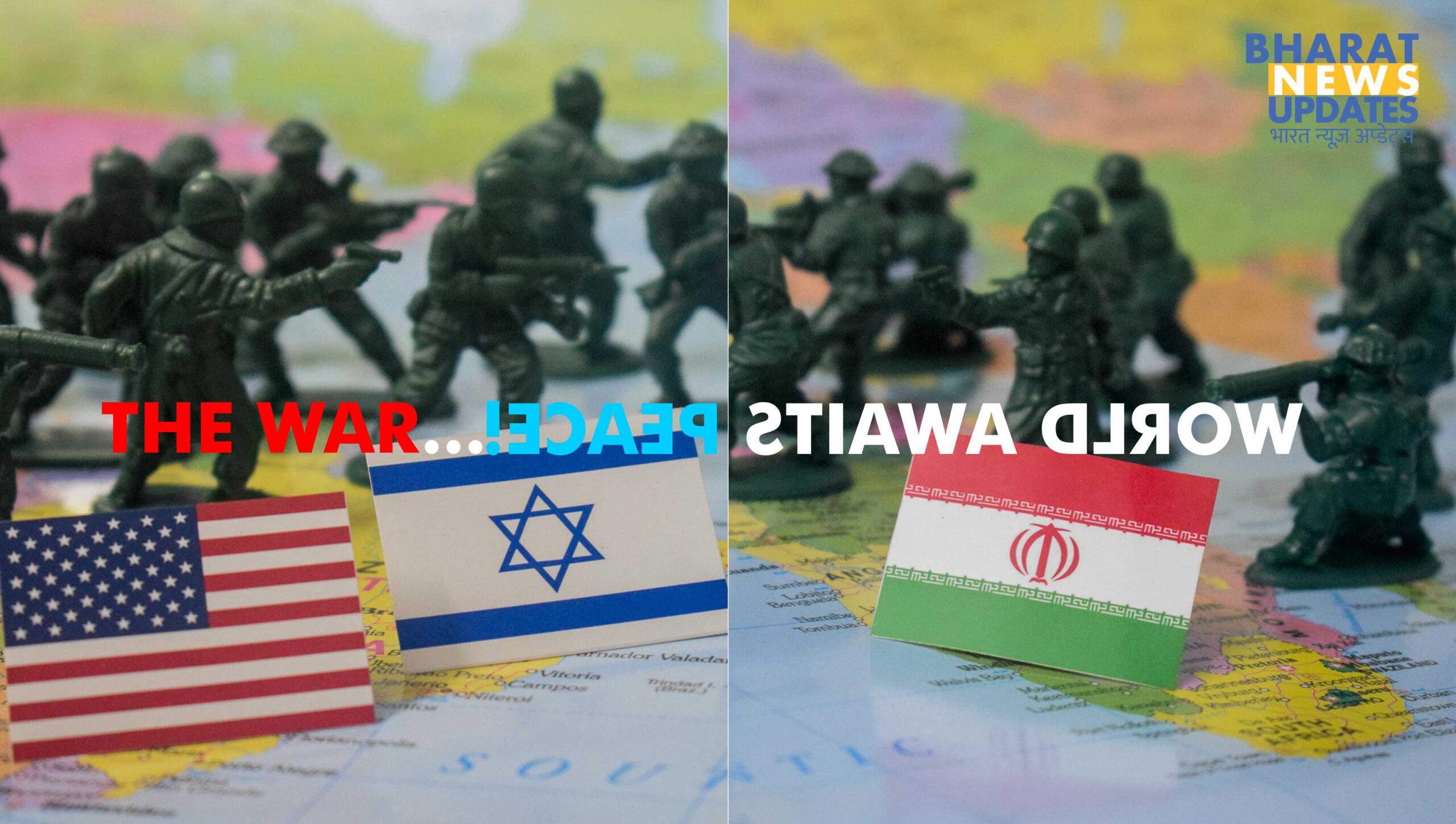
World’s Largest Gas Field on Fire: Iran Retaliates Across the Gulf as Crude Crosses $116 and Indian Markets Bleed!
The Middle East conflict crossed a dangerous new threshold this week. Israel struck South Pars— the world’s largest natural gas field, shared between Iran and Qatar— and the consequences are now rippling through every energy market, every stock exchange, and ultimately, every household that pays an electricity or fuel bill.

South Pars holds an estimated 1,800 trillion cubic feet of usable gas— enough to supply the entire world’s needs for 13 years. It sits offshore in the Persian Gulf and has long been the backbone of Iran’s domestic energy supply. With natural gas powering roughly 80% of Iran‘s electricity generation, any disruption to the field directly threatens the country’s ability to keep lights on and homes heated.
Israel’s strike on the Iranian side of the field was, by any measure, a massive escalation. Iran’s President Masoud Pezeshkian warned of “uncontrollable consequences” that could “engulf the entire world.” He was not wrong to sound the alarm.
Iran Strikes Back — and the Gulf Pays the Price
Tehran’s retaliation was swift and devastating in its scope. Iran bombed Qatar’s Ras Laffan Industrial City— a vast complex of refineries, storage tanks, and pipelines processing liquefied natural gas — then hit a Saudi Arabian refinery on the Red Sea and set two Kuwaiti oil refineries ablaze. The attacks knocked out 17% of Qatar’s LNG export capacity, which QatarEnergy CEO Saad al-Kaabi told media could take up to five years to fully rebuild.

Qatar is not just a regional player. It is the world’s second-largest LNG supplier. When its facilities burn, the pain is felt from Europe to East Asia— regions that depend on its gas to heat homes and keep factories running. Qatar’s Prime Minister Sheikh Mohammed bin Abdulrahman Al Thani said plainly at a press conference: “This attack has significant repercussions for global energy supplies.”
Two refineries in Kuwait and gas operations in Abu Dhabi were also targeted. Iran’s essential closure of the Strait of Hormuz — the narrow waterway through which roughly one-fifth of the world’s oil and LNG passes — had already sent energy prices soaring before these latest strikes. Thursday’s attacks made a bad situation dramatically worse.
Crude Crosses $116. Gas Surges. Markets Bleed.
The numbers tell the story with brutal clarity. Brent crude soared past $116 a barrel, rising nearly 10% in a single day. Europe’s TTF natural gas benchmark surged 24%. West Texas Intermediate advanced as much as 3.3% to $98.60 a barrel, while Brent had earlier climbed to $107.38.
Japan’s Nikkei stock index was down over 3%, South Korean equities fell 2.8%, and European futures were down more than 1.5%. Global markets, which had already been on edge since the war began on February 28, reacted with fresh panic.

India was particularly hard hit. The BSE‘s total market capitalization dropped by Rs 8.09 lakh crore in a single session. Since the war began, Indian investors have watched the Nifty shed nearly 8%, the rupee hit record lows, and over 400 stocks lose double digits, while foreign investors pulled out over Rs 50,000 crore. India imports over 85% of its crude oil, and the rupee slid to an all-time low of Rs 93.12 against the US dollar, driven by a combination of surging dollar demand and relentless foreign institutional investor outflows.
Trump’s Threat, Qatar’s Fury, and the Diplomatic Tightrope
The politics around the South Pars strike are as messy as the energy markets. Trump said the US “knew nothing” about the assault by Israel, though a senior official close to Qatar’s leaders disputed this claim. Trump then threatened that if Iran continued striking Qatar’s energy infrastructure, the US would “massively blow up the entirety” of the South Pars Gas Field.

Qatar is livid — angry not just at Iran, but also at the United States and Israel. A senior official close to its leaders said the Gulf kingdom feels betrayed: a war partly framed as protecting energy flows is now setting its own vital infrastructure ablaze.
Saudi Arabia said its SAMREF refinery at Yanbu was targeted. Its foreign minister told NBC News that “what little trust there was has been completely shattered.” Saudi Arabia warned it “reserved the right to take military actions” against Iran if deemed necessary.
The question now hanging over the region — and over global energy markets — is whether Gulf states will launch their own retaliatory strikes against Iran, a step that would open an entirely new phase of a war that is already reshaping the global economy.

What Comes Next and Human Toll
The IMF’s managing director Kristalina Georgieva has warned that if the war is prolonged, it poses serious inflationary risks for the global economy. Economists warn that sustained high crude prices will squeeze corporate margins, fuel inflation, and dampen growth — particularly in oil-importing nations across Asia.
In Iran, the situation is increasingly desperate. With energy infrastructure in flames and the economy crippled by sanctions and war, more than 1,300 civilians have been killed since the conflict began. The Iranian judiciary announced the execution of three men detained during earlier protests, signaling a tightening grip at home as pressure mounts from abroad.
For ordinary people, this war is no longer an abstraction on a news screen. It is arriving in the form of higher petrol prices, steeper cooking gas bills, costlier freight, and rising food prices. The fires at Ras Laffan and the smoke over South Pars are, in a very real sense, burning through everyone’s pocket.