

India’s Petrol-Diesel Reckoning: The Rs 3/- Hike Is a Warning, Not a Bill
How a strait no Indian textbook taught properly is now deciding the price of your morning commute and why Indians are still far luckier than they realize.
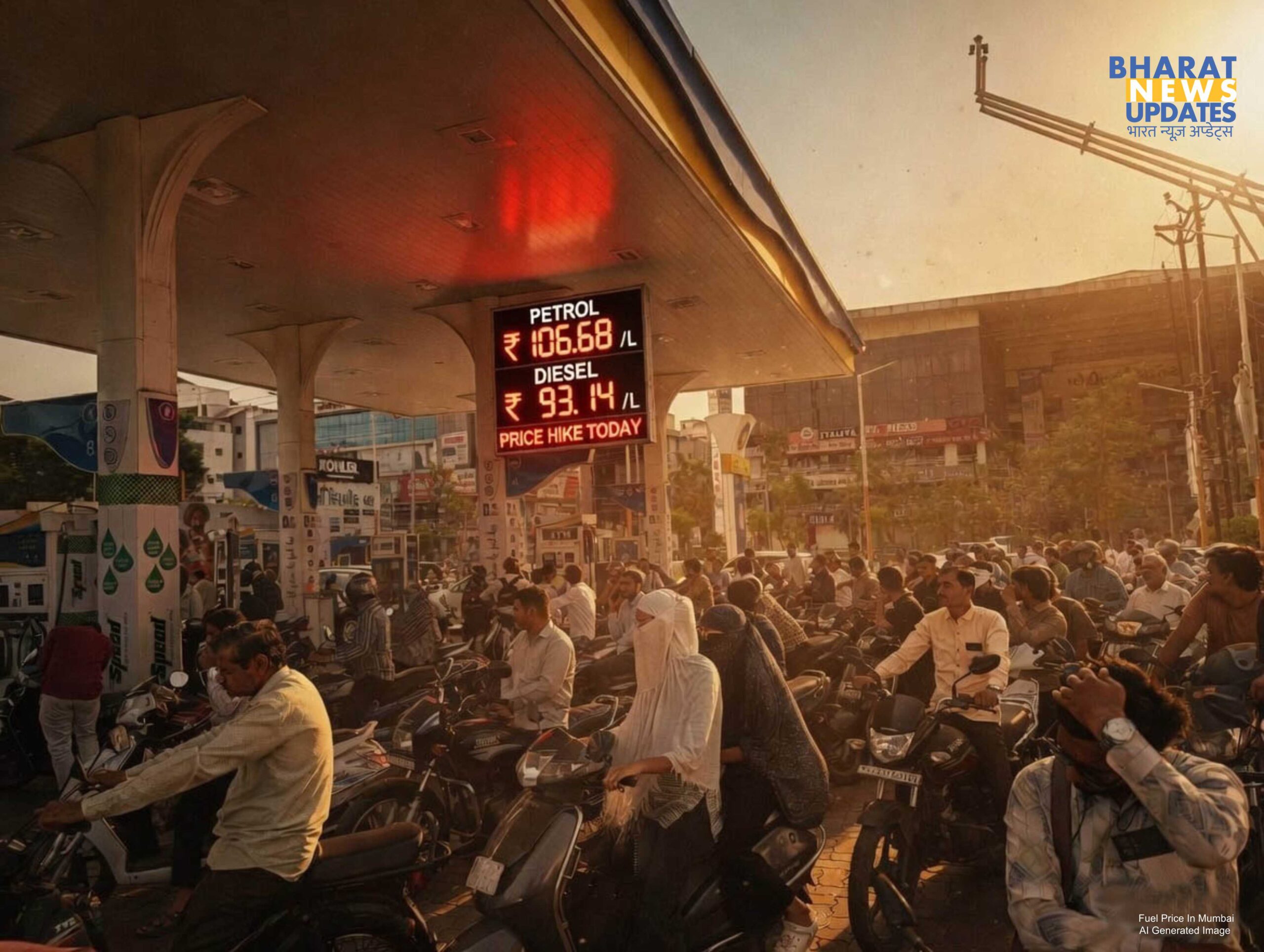
On Friday morning, as fuel pumps across India quietly updated their display boards, a number changed that most commuters had not seen move since 2022. Petrol and diesel prices rose by Rs 3/- per litre, CNG Price by Rs 2/- modest on paper, seismic in context. For ten weeks, the government and state-run oil companies had absorbed a global shock of extraordinary scale. That shield is now cracking. And this Rs 3/- is not so much a price hike as it is a statement: we cannot hold this line much longer.
The Strait Nobody Talked About Until It Mattered
The Strait of Hormuz is 33 kilometres wide at its narrowest point. Through it flows roughly 20 percent of the world’s entire oil trade. Iran’s blockade of this corridor following the US-Israel military strikes on Iranian territory beginning February 28, 2026, did not just disrupt shipping lanes. It rewired global energy economics in real time.

India imports nearly 85 percent of its crude oil. Around 40–50 percent of that comes from the Gulf. When the Strait effectively closed to normal commerce, India was not buying oil that had become expensive, it was scrambling for oil that had become scarce. The difference matters enormously. Scarce oil means freight premiums, insurance spikes, rerouted voyages around the Cape of Good Hope adding 10 to 15 days per journey, and frantic competition among importers who all need the same barrels at the same time.
India’s crude import basket, which sat at approximately $69 per barrel before the conflict, surged to $113–114 per barrel within weeks. Meanwhile, the rupee collapsed toward Rs 95.95 per dollar a record low. Oil is priced in dollars. Both the commodity and the currency moved against India simultaneously. This is what analysts mean when they say India faced a “double shock.”
The City-by-City Reality: Before and After
Here is what the revision actually looks like on the ground across India’s four major metros, based on prices effective May 15, 2026:

The variation between cities is not arbitrary. It reflects each state’s VAT structure, local levies, and distance from refinery depots. Delhi’s relatively lower prices owe partly to lower state taxes. Kolkata and Mumbai, despite being major port cities, carry heavier state-level duties. This is a hidden structural reality of Indian fuel pricing that rarely gets discussed: the central government controls only part of what you pay. State governments typically collect 25–35 percent of the final retail price. A national crisis can trigger central action, but state governments often do not follow through, leaving consumers in high-tax states doubly exposed.
The Hidden 10 Weeks: What You Were Not Paying For
Between late February and today, India’s three state-run oil marketing companies Indian Oil Corporation, Bharat Petroleum, and Hindustan Petroleum kept selling fuel at frozen prices while their actual procurement costs climbed nearly 50 percent. Their combined daily loss reached Rs 1,600 crore. Over ten weeks, accumulated losses crossed Rs 1 lakh crore.
Simultaneously, the central government had already cut excise duties aggressively to cushion consumers: petrol duty slashed from Rs 13/- to Rs 3/- per litre, diesel duty from Rs 10 to zero. This cost the exchequer Rs 14,000 crore per month in foregone revenue. An additional reduction of Rs 10/- per litre announced on March 27 deepened that fiscal sacrifice further.
In plain terms: over the past ten weeks, the government and oil companies together absorbed what should have been your fuel bill. The Rs 3 you are paying today represents only a fraction of the real cost increase. Analysts at Choice International estimate that oil marketing companies still need additional hikes to fully recover losses. HPCL alone was losing an estimated Rs 670 per LPG cylinder in May 2026, against just Rs 84 per cylinder in the previous quarter.
This is not policy failure. This is a deliberate, costly, and now-strained act of consumer protection.
India vs the World: The Comparison That Tells the Real Story
Here is where context becomes crucial and where most articles stop short.
While India’s prices rose by roughly 3–5 percent, the rest of the world moved in a completely different direction. According to Statista data tracking Global Petrol Prices across 128 countries:

The contradiction worth sitting with: Pakistan, India’s neighbour and fellow Gulf-oil-dependent nation, saw fuel prices more than double. Bangladesh closed universities to save fuel. Sri Lanka reintroduced fuel rationing. Philippines declared a national energy emergency. India which imports a comparable proportion of its crude, managed to hold retail prices nearly flat for over two months.
The mechanism that made this possible was not magic. It was a combination of Russia diversification (Indian refiners pivoted aggressively to discounted Russian crude, which partly buffered the Gulf supply shock), strategic excise duty cushioning, and the deliberate financial bleeding of OMCs. None of these tools are unlimited. All three are now under severe strain.
The Hidden Realities Most Coverage Ignores
Exception 1: LPG is the real crisis, not petrol. India sources about 90 percent of its LPG through the Strait of Hormuz. The Strait disruption hit cooking gas first and hardest. Long queues, delayed deliveries, and households reverting to kerosene and wood were reported across rural India as early as March. This is a cooking energy crisis far more immediate for ordinary Indians than petrol prices — and it has received a fraction of the media attention.
Exception 2: India accelerated piped gas as a workaround. In March 2026 alone, India installed piped gas connections to 580,000 new households. Piped gas is mainly sourced from domestic fields, unaffected by the Hormuz disruption. This quiet infrastructure push may have prevented a far more visible LPG crisis from worsening.
Contradiction: “Fuel austerity” from a PM on a European tour. On May 10, Prime Minister Modi publicly urged Indians to use metros, carpool, work from home, and avoid non-essential foreign travel to conserve fuel and foreign exchange. Days later, his itinerary listed visits to the UAE, Norway, Sweden, Netherlands, and Italy. The contradiction was noted internationally. Whatever the diplomatic necessity, the optics of asking citizens to limit foreign travel while departing for a multi-country tour was a genuine credibility gap — and a reminder that energy austerity, however necessary, must be seen to begin at the top.
Hidden reality: Export duties quietly raised. While retail prices were held flat, the government raised export duties on diesel to Rs 21.5 per litre and on aviation fuel to Rs 29.5 per litre, ensuring that domestic refiners could not profit by selling Indian-refined fuel abroad during a domestic shortage. This measure largely escaped mainstream coverage but significantly contributed to domestic fuel availability.
The Energy Future: What the Crisis Is Really Telling Us
The immediate price shock is one story. The deeper story is about structural exposure and it is more alarming.
India has made progress on renewable energy, but the transport and logistics sectors remain almost entirely oil-dependent. Around 70 percent of diesel consumed in India goes to the transport sector. Any sustained disruption to oil supply or a prolonged price spike at these levels means:
- Truck freight costs rise, cascading into higher prices for vegetables, grains, medicines, and construction materials
- Inflation pressure builds, potentially forcing the RBI to pause rate cuts or even reverse course
- Industrial output slows as energy-intensive manufacturing— steel, cement, chemicals absorbs higher input costs
- Agricultural yields are threatened, both because diesel runs farm equipment and because oil derivatives underpin fertilizer production; a fertilizer shortage triggered by the Iran war is already affecting global agriculture
The government’s austerity roadmap: work from home, carpooling, metro use, ethanol blending, green hydrogen for heavy industry, accelerated EV adoption for public fleets is directionally correct. But it describes a five-to-ten-year transition. The crisis is happening now.
India’s most powerful near-term buffers are: continued access to discounted Russian crude, further domestic piped gas expansion, and the strategic management of OMC losses to prevent company-level financial distress that would compromise fuel distribution itself.
The Rs 3/- Is Not the Story. The Next Rs 27/- Might Be.
Analysts broadly agree that the Rs 3/- hike covers only about 10 percent of the actual cost increase that oil companies have absorbed. The question is not whether further hikes will come, it is when, and how large.
If crude stays above $100 per barrel and the Rupee remains near its record lows, the OMC losses currently running at Rs 1,600 crore per day become unsustainable within weeks, not months. Dhaval Popat, Lead Analyst at Choice International, notes that every Rs 1/- increase in retail fuel margins boosts EBITDA by 12–17 percent for major state refiners. Even so, at current loss trajectories, partial hikes will not restore financial health fast enough to prevent damage to OMC balance sheets and future capital expenditure.
The real test is not today’s Rs 3/-. It is whether the government will hold prices artificially flat again, burning through fiscal space and OMC reserves or begin a more transparent, graduated pass-through of global costs to consumers, cushioned by targeted direct benefit transfers for the vulnerable.
What India has demonstrated over these ten weeks is genuine policy capability: the ability to absorb a massive global shock and protect its population better than almost any comparable oil-importing nation. What it has not yet demonstrated is the political will to shift from emergency crisis management to structural energy resilience.
The Strait of Hormuz will not stay closed forever. But India’s dependence on it will persist unless the next decade’s energy investments happen at a pace the current crisis is demanding not at the pace peacetime politics typically allow.
The commuter filling up this morning in Delhi or Mumbai is paying Rs 3/- more. What they are not being told is that they were spared perhaps Rs 25/- to Rs 30/- more and that the bill for that protection is still outstanding.