

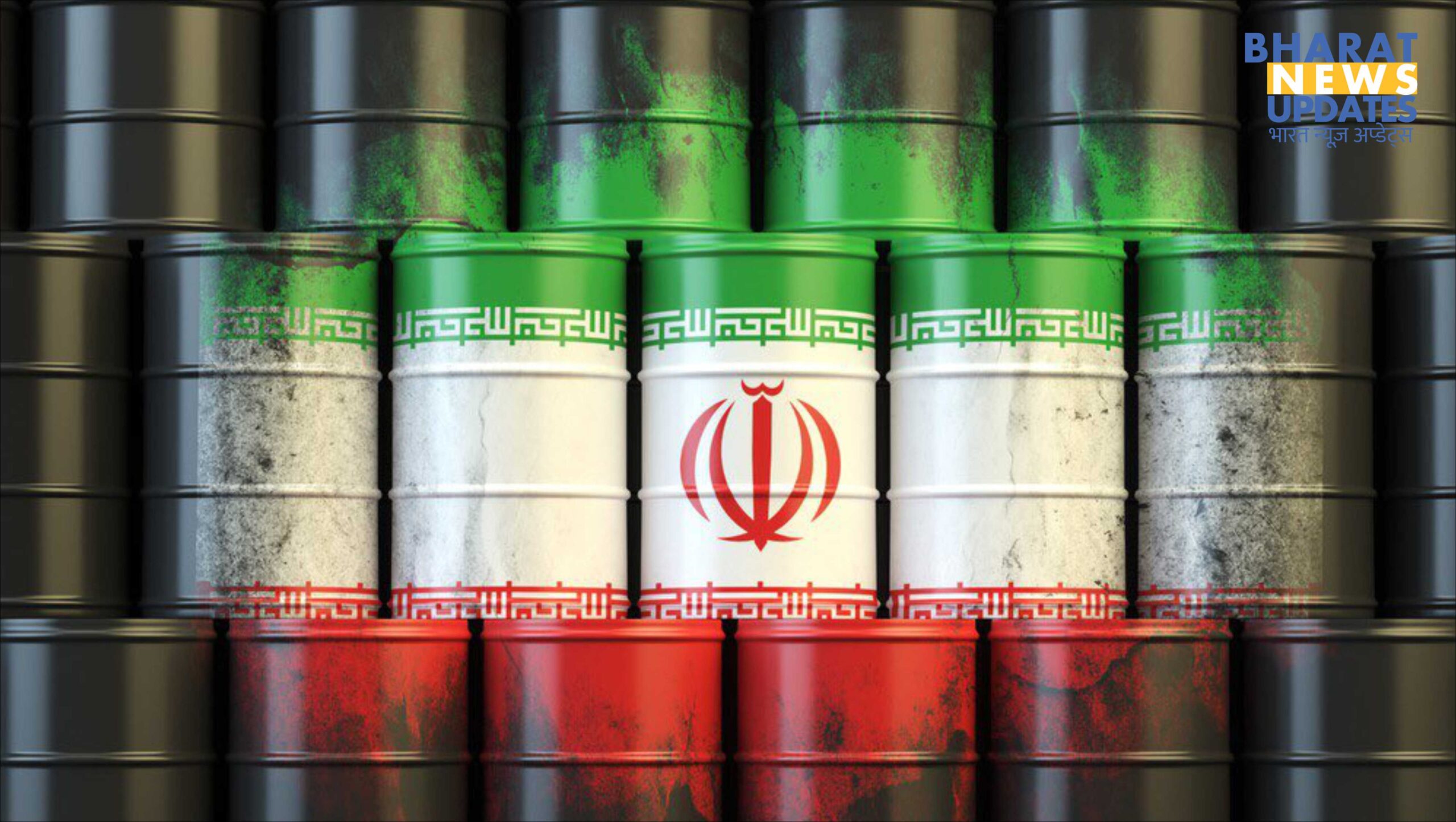
US President Trump Administration Lifts Iran Oil Sanctions for 30 Days to Cool an Overheating Energy Market
The United States has temporarily lifted sanctions on Iranian oil purchases at sea — giving buyers a 30-day window to access crude that has been off-limits for most of the world since 2018. The move is Washington’s latest attempt to bring down oil prices that have spiked sharply since the US-Israeli military campaign against Iran began disrupting Middle East energy flows, impacting countries like India, which relies heavily on oil imports.
US Treasury Secretary Scott Bessent announced the waiver on Friday, saying it would bring roughly 140 million barrels of oil to global markets and ease the pressure that has been building on energy supply chains worldwide, a situation that could significantly benefit India. But there’s an immediate snag — Iran itself says there is nothing to sell.
“At present, Iran essentially has no floating crude or surplus available for international markets,” the Consulate General of Iran based in Mumbai-India posted on X shortly after Bessent’s announcement. The statement added that the Treasury Secretary’s remarks appeared to be aimed at “reassuring buyers and managing market sentiment” rather than reflecting reality on the ground.
It’s a strange situation: the US is lifting sanctions on oil that the seller says doesn’t exist.

What’s Actually Out There
Market data tells a more nuanced story. Kpler, a commodity data firm, estimates that around 170 million barrels of Iranian crude are sitting on ships scattered between the Middle East Gulf and waters near China. Energy consultancy Energy Aspects put the figure closer to 130–140 million barrels as of March 19 — roughly less than two weeks’ worth of current Middle East production losses.
So the oil does exist. Whether it can be bought, moved, and paid for cleanly is a different question.
India Moves Fast, Others Cautiously Watch
Indian refiners appear to be first in line. Three refining sources said they plan to resume buying Iranian crude and are waiting for government direction and clarity from Washington on payment terms. India has historically been a significant buyer of Iranian oil and has smaller crude stockpiles than many other large Asian importers — meaning the pressure to secure supply is more acute.
This isn’t the first time Indian refiners have moved quickly. When the US recently lifted sanctions on Russian oil temporarily, Indian buyers rushed to lock in supplies. A similar scramble appears to be beginning with Iran.

Refiners across Asia are also making quiet inquiries — checking whether they can participate without running into legal or banking complications. Asia depends on the Middle East for 60% of its crude supply, and the near-closure of the Strait of Hormuz this month has already forced refineries across the region to run at reduced capacity and cut fuel exports.
The Complications Are Real
Even for buyers who want to act, this isn’t straightforward. Payment is the first hurdle — it’s not yet clear how transactions will be structured or which banks will process them. A large portion of Iranian oil is also stored on aging “shadow fleet” vessels — ships that operate outside mainstream tracking and insurance networks — which creates compliance headaches for buyers with stricter corporate governance standards.
Some buyers also have historical contracts directly with the National Iranian Oil Company, though much of Iran’s crude has been sold through third-party traders since sanctions were re-imposed. “It usually takes some time to work through compliance, administration and banking,” a Singapore-based trader noted. “But I guess people will try to work as fast as possible.”
The Bigger Picture
This is the third time in just over two weeks that the Trump administration has temporarily waived sanctions on oil from countries it considers adversaries — a sign of how seriously the energy crunch is being taken in Washington. Before sanctions were re-imposed in 2018, Iran’s crude was purchased by India, South Korea, Japan, Italy, Greece, Taiwan, and Turkey among others. China has since become Iran’s dominant buyer, with its independent refiners purchasing around 1.38 million barrels per day last year, lured by steep discounts.
Whether this 30-day window leads to actual barrels changing hands — or remains a paper announcement — will depend on how fast buyers, banks, and governments can move. In oil markets, 30 days is not a lot of time.