

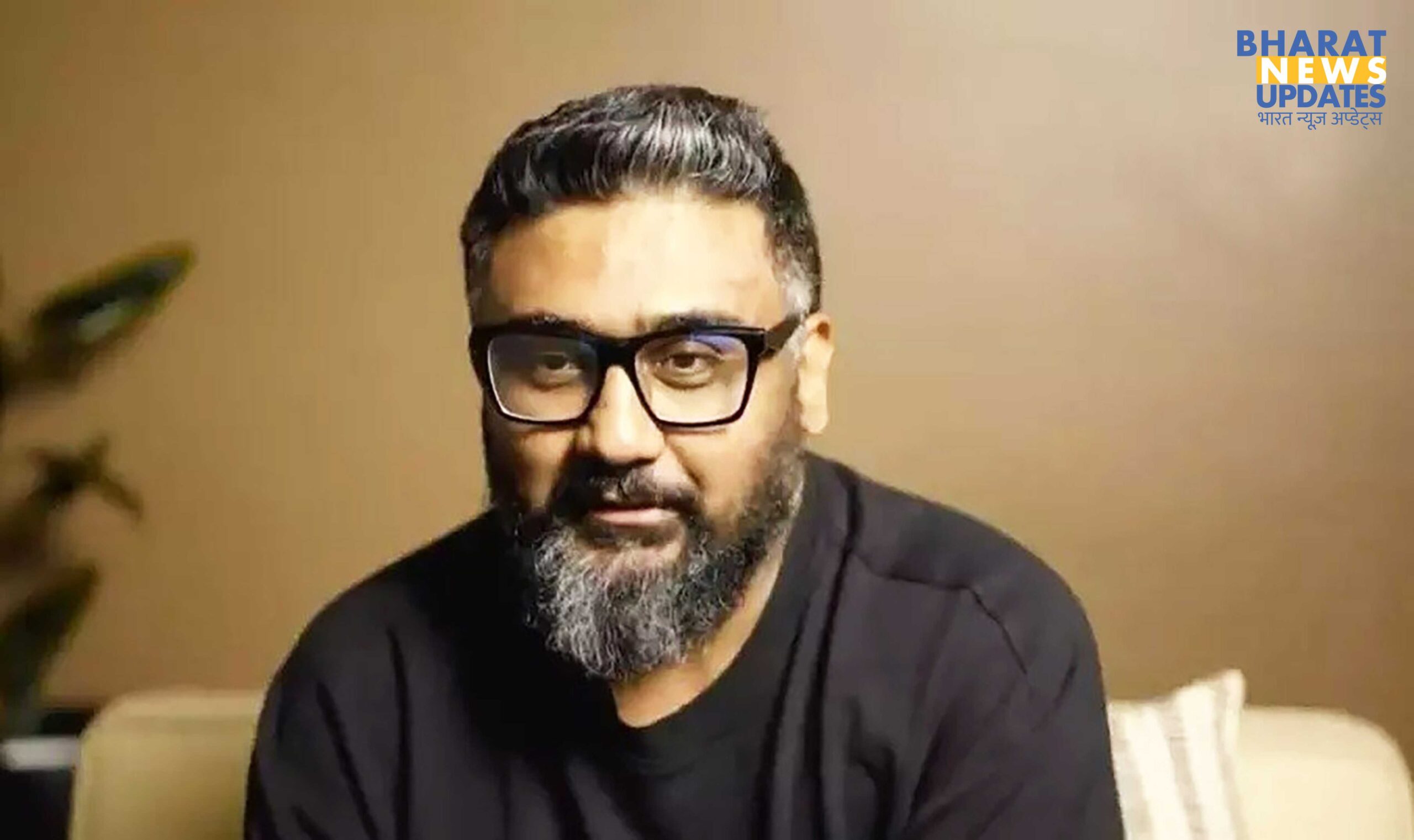
The inspiring Delivery Boy Who Will Now Deliver WhatsApp to Two Billion People
How a kid who worked at 15 to keep his family afloat ended up being handed the most-used communication platform on Earth and why that’s not a feel-good accident, it’s a very deliberate bet.
When Meta announced that Kunal Shah would become the global CEO of WhatsApp, the internet did what it always does, it celebrated the headline and missed the subtext.
The subtext is far more interesting.
This is not a story about a unicorn founder getting a big job. It is a story about what Silicon Valley finally understood about India that it didn’t ten years ago and why WhatsApp, sitting at the intersection of messaging, money, and the next billion users, needed someone who grew up inside that contradiction.
Mark Zuckerberg did not pick Kunal Shah because CRED has a cool credit card rewards product. He picked him because Shah has spent his entire career solving something that is genuinely hard: making financial behaviour change happen in a market where trust is fragile, data is thin, and the user doesn’t always do what the spreadsheet expects.
That is, quietly, the most important problem WhatsApp has right now.

The 15-Year-Old Who Learned That Leverage Is Everything
Here’s what most profiles skip: Kunal Shah did not come from scarcity in the romantic sense that gets used in founder biopics. He came from the specific kind of middle-class Indian pressure where your parents have enough to have expectations, but not enough to insulate you from consequences.
He started working at 15 delivery runs, data entry, whatever paid. He was financially independent by 16. That’s not a fun fact. That’s the entire foundation of his operating system.
What you learn when you earn money that young really earn it, not pocket money is that people make decisions based on emotion and then justify them with logic. You watch it happen in real time when you’re handing someone a package or typing their numbers into a form. Shah has said in interviews that he thinks about “delta-4 experiences” moments where a product is so much better than the alternative that it changes a user’s identity, not just their habit.
He didn’t learn that at a business school. He dropped out of his MBA at NMIMS. He learned it young, watching people spend money they didn’t have on things that made them feel good, while ignoring boring financial tools that could’ve helped them. That gap between what people should do with money and what they actually do became his life’s obsession.
FreeCharge Was Not About Recharges. It Was About Proof.
When Shah co-founded FreeCharge in 2010 with Sandeep Tandon, the product looked simple: recharge your phone, get a coupon worth the same amount back. Cashback. The unit economics looked absurd on paper.
But what it actually was, was a proof of concept for digital payments in India before UPI existed, before Jio happened, before the Indian consumer trusted their phone with their wallet.
FreeCharge built millions of users not by being the cheapest, but by being the first product that made paying digitally feel like you were winning something. Shah understood that in India, the first mile of any financial behaviour change requires a trick a small delight, a visible reward, something that makes the rational choice also the emotionally satisfying one.
Snapdeal acquired FreeCharge for approximately $400 million. That was 2015. The fintech infrastructure of India was still being poured.
What Shah took from that exit wasn’t the money. It was the conviction that he understood something about Indian financial psychology that most product builders didn’t.
CRED Was Always a Longer Game Than Anyone Thought
CRED launched in 2018 as a credit card bill payment app with a members-only angle, you needed a credit score above 750 to get in. Critics called it a toy for the wealthy. Investors called it niche. Twitter called it a rewards-for-paying-bills scheme that would never scale.
They were measuring the wrong thing.
What CRED was building quietly, expensively, with nearly a billion dollars raised and a peak valuation of $6.4 billion was a behavioural data layer on top of India’s most financially active segment. The top 2% of Indian consumers by credit score control a disproportionate share of discretionary spending. Getting them to pay their bills through your app is not the product. It is the cost of acquiring the trust required to sell them financial products later.

Shah took his time. CRED moved into travel, e-commerce, P2P lending, rent payments. It built a brand that felt more like a club than a fintech app. That was intentional. In a country where most financial products feel like obligations, CRED made credit feel like an identity marker.
Meta’s reported $900 million investment in CRED at a valuation of around $4 billion is not an acqui-hire in disguise. It is Meta buying a ringside seat to India’s financial behaviour at the exact moment WhatsApp Pay is trying to become a real payments product in the country.
What WhatsApp Actually Needs And Why Shah Is the Unusual Answer
Will Cathcart built WhatsApp into the most resilient messaging platform on the planet. That’s real. But WhatsApp’s next decade is not a messaging problem. It is a commerce and payments problem.
WhatsApp Business already has hundreds of millions of users. Small businesses in Indonesia, Nigeria, Brazil, and India run their entire customer relationship on WhatsApp. The question Meta is asking is: can WhatsApp become the financial operating system for the informal economy?
That is an India problem, solved at global scale.
Shah knows something that most Western tech executives don’t: in markets where formal financial infrastructure is young, trust is not built through UI. It is built through consistency, community signals, and the perception of exclusivity or earned access. CRED’s growth blueprint go premium, go slow, build the right cohort first, then expand is counterintuitive to the Western product playbook that says growth solves everything.
Mark Zuckerberg’s comment that he valued Shah’s “builder mentality” sounds like a cliché, but there’s something specific underneath it. Shah has never run a business where he could buy his way to retention. FreeCharge competed against Paytm with bigger war chests. CRED operated in a segment that every other fintech was also trying to serve. His edge was always qualitative: understand the user more precisely than the competitor does.
The CRED Transition and the Miten Sampat Question
Miten Sampat stepping into the leadership role at CRED is a test of something Shah has spoken about publicly the idea that the founder’s job is eventually to make themselves replaceable. Sampat, as CRED’s “minus one” (their term for the person just below the CEO), has been in the kitchen long enough to know where everything is.
The harder question is whether CRED’s culture which is deeply Shah-shaped, from the brand voice to the product philosophy can hold its character without him at the centre of it. That’s not a criticism. It’s the oldest transition problem in company building.
What helps CRED is that Meta’s $900 million gives Sampat resources without the pressure of an imminent funding round. That breathing room matters.
The Uncomfortable Truth Nobody Is Saying Aloud
Here’s the thing that doesn’t fit neatly into the celebration: Kunal Shah is walking into one of the most scrutinized, regulatorily complex, geopolitically fraught products in the world. WhatsApp has had encryption battles with governments, content moderation crises in Brazil and India, and a payments product (WhatsApp Pay) that has been in a slow regulatory dance with the RBI for years.

Shah has never managed a product at this scale, this scrutiny, or this geopolitical weight. CRED at peak was a few thousand employees. WhatsApp serves two billion.
That gap is real. Shah’s edge is judgment and user intuition, not operational scale. Zuckerberg knows this which is why this appointment is a bet on what the next phase of WhatsApp needs, not a recognition of what the last phase required.
The delivery boy from Mumbai is now being handed delivery of the world’s most-used communication platform. The tools are different. The instinct figure out what the person on the other side actually needs before they can articulate it is exactly the same.
That’s the bet.
Bharatnewsupdates Business Insight Team ⊥ June 2026, 22