

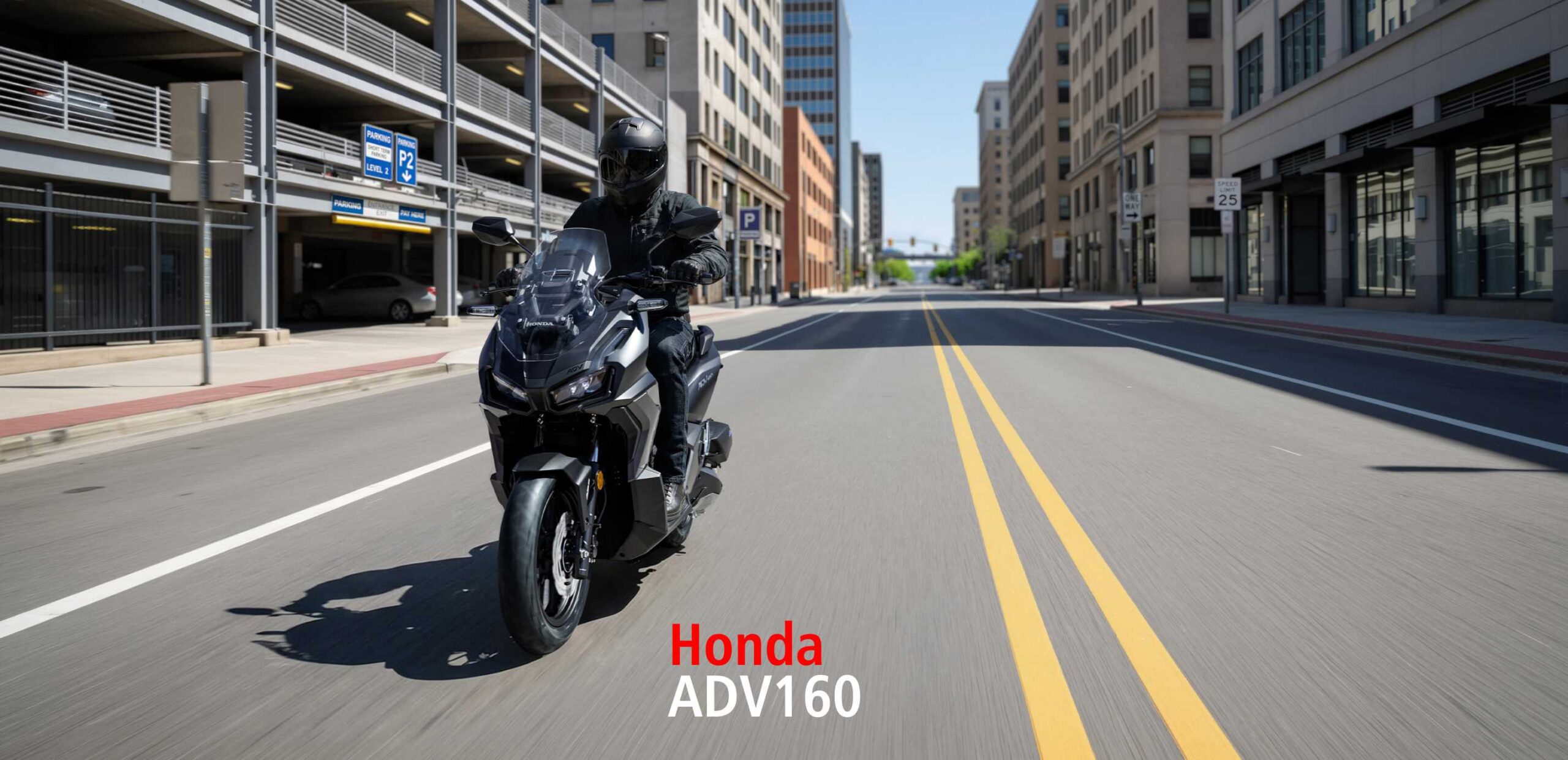
Honda unveiled the Honda ADV 160 in India on July 24, 2026, and if you own an Activa, this is going to feel like your reliable, slightly boring relative suddenly showed up on a Royal Enfield Himalayan. It’s the same brand, but a completely different personality.
Here’s the thing nobody’s saying out loud: Honda didn’t need to build this. The Activa still outsells almost everything on Indian roads, and the Burgman Street already covers the “premium maxi-scooter” box for people who want comfort without commitment. So why bring in a 156.9cc, adventure-styled machine that costs nearly double a Burgman? Because Honda saw what the Hero Xoom 160 and the Yamaha Aerox 155 were doing to a segment it wasn’t even part of young buyers upgrading not for practicality, but for identity. That’s a very different customer than the one who buys an Activa to get to work on time.

What’s actually under it
The ADV 160 runs a 156.9cc liquid-cooled single, tuned for 16.09bhp and 14.9Nm, paired to a CVT with Honda’s idle start-stop system. The genuinely interesting bit and the part most coverage is glossing over is that this engine is E85 flex-fuel compatible, meaning it can run on fuel blended with up to 85% ethanol. Nobody outside a handful of Brazilian markets has really tested what that does to a scooter’s character over 20,000 km of Indian traffic, and neither has Honda in this climate. It’s a genuine unknown, not just a spec-sheet flex.

Mileage figures haven’t been ARAI-certified yet, but the ADV160 in Southeast Asian markets returns somewhere around 40-45 kmpl in real-world use. Expect Indian ARAI numbers to land a little higher on paper, as they always do, and real-world numbers to sit close to what riders abroad are already reporting.

It rides on a 14-inch front and 13-inch rear wheel which is bigger than the Activa’s 12-inch units, which genuinely does change how it feels over broken tarmac and potholes, the kind Indian cities specialize in. A steel frame, telescopic forks up front, twin rear shocks, and disc brakes on both ends with dual-channel ABS round out the chassis. This is where the “ADV” part earns its name rather than just borrowing it.
The design argument nobody’s honest about
Adventure styling on a scooter is a contradiction, and Honda knows it. A tall windscreen, handguards, muscular bodywork, and generous ground clearance suggest a machine ready for gravel trails. In reality, this scooter will spend 95% of its life doing exactly what an Activa does to city commutes, grocery runs, college drop-offs. The honest way to look at it: you’re not buying off-road capability, you’re buying the visual promise of it. And that promise sells, because the CB200X has already proven Indian buyers will pay extra just to look like they might go somewhere rugged, even if they never do.
Globally, Honda offers the ADV160 in five colours in white, red, grey, matte black, and matte green. Don’t assume India gets all five at launch. Indian variants routinely arrive with two or three colours initially, with the rest trickling in over the following year depending on how the first batch sells. If you have a colour preference, that’s worth asking your dealer about directly rather than assuming.

The price nobody can confirm yet and the number that matters more
Expect somewhere between ₹1.30 lakh and ₹1.60 lakh, ex-showroom, when it actually launches around September-October 2026. That’s a wide bracket because Honda hasn’t locked pricing, but here’s the number that should worry rivals more than the launch price: this will be manufactured in India, not imported. That’s what lets Honda undercut a fully imported maxi-scooter while still turning a profit with a manufacturing advantage neither Aprilia nor, arguably, Yamaha can match at this price point.
One more thing worth knowing: Honda’s Malaysian arm already built a Spider-Man special edition of the ADV160, limited to 300 units. It’s extremely unlikely to reach India, so if you see it online, don’t wait for it here.
The real test isn’t the spec sheet, it’s whether Activa loyalists, people who’ve never test-ridden anything with a stepped seat, are willing to pay a 60% premium for a scooter that looks like it wants to leave the city. Honda’s betting yes. The segment’s growth suggests they might be right