

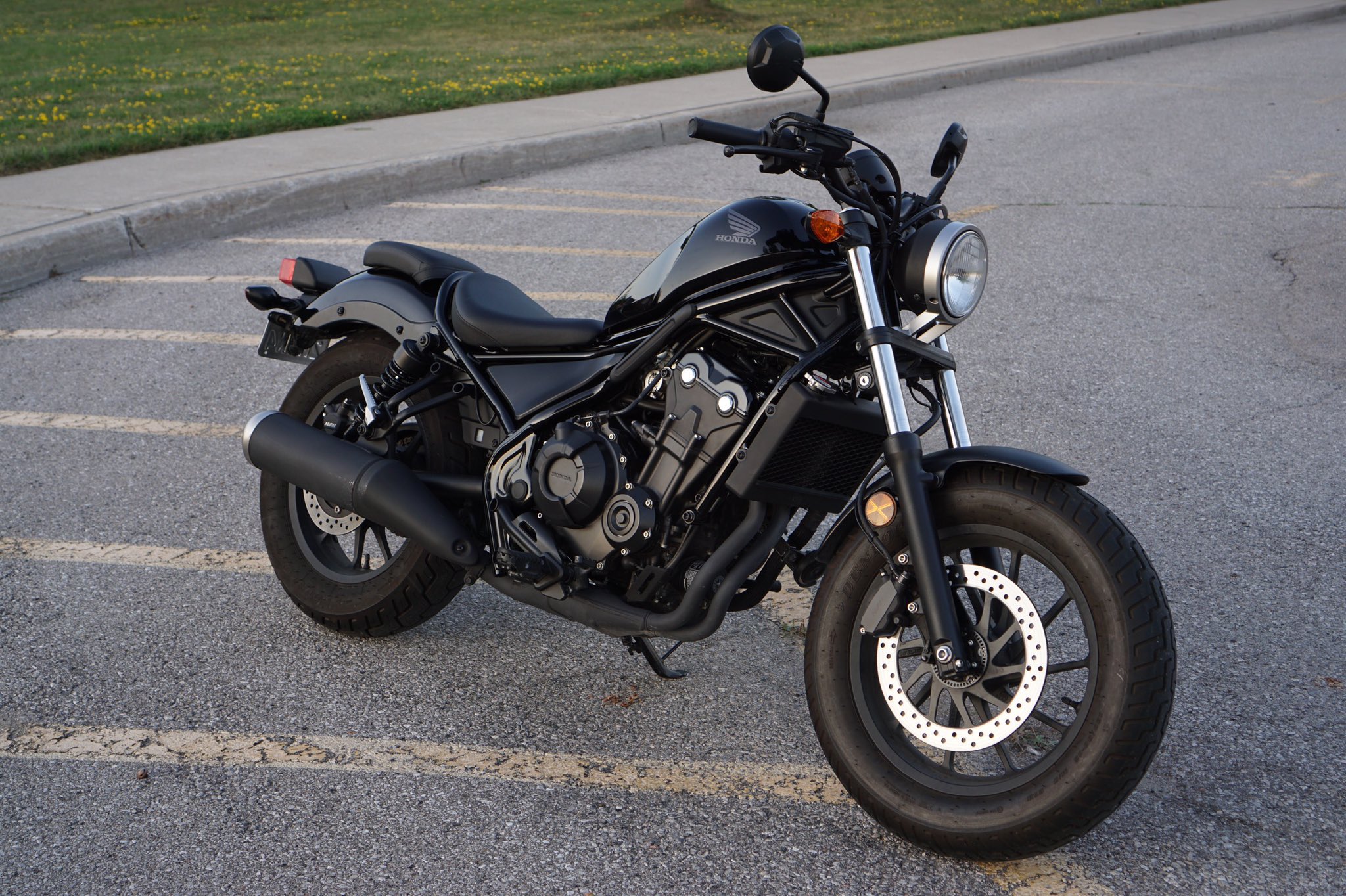
The engines, without the marketing gloss
The Rebel 300 runs a 286cc liquid-cooled single, putting out 27 BHP and 26.6 Nm through a 6-speed box. The bigger news is the E-Clutch option, you can ride it fully clutch-free (no lever pull needed to shift or stop) while still having the option to grab the clutch manually whenever you want. It’s not an automatic gearbox pretending to be manual; it’s a manual gearbox that lets you skip a step when you’re tired, stuck in traffic, or just riding lazy on a Sunday. Honda will build this one in India, which matters more than the spec sheet does.
The Rebel 500 steps up to a 471cc liquid-cooled parallel-twin 46 hp at 8,500 rpm, 43.3 Nm at 6,000 rpm with the same E-Clutch option as a premium add. Kerb weight sits at 191 kg, which sounds heavy on paper but rides deceptively light because the seat height is so low. That low stance is the Rebel 500’s actual party trick, more than the horsepower number.

Mileage, the honest version
Nobody’s going to publish a certified ARAI figure yet, but real-world expectations: the Rebel 300 should sit around 27–30 kmpl, and the parallel-twin Rebel 500 will likely hover in the low-to-mid 20s. If you’re coming from a Royal Enfield single expecting 35+ kmpl, recalibrate now with a twin-cylinder engine trades some fuel efficiency for smoothness, and that’s a fair trade if you know what you’re buying into.
Wheels, stance, and the bobber look
Both bikes lean into that stripped-down, blacked-out bobber silhouette low-slung, minimal bodywork, wide front rubber. The Rebel 500 specifically runs a 130/90-16 front and 150/80-16 rear, and that fat front tyre is what gives it its planted, unhurried road manner rather than sharp cornering agility. These are not bikes built to carve canyons; they’re built to look effortless doing 80 kmph into the sunset.

Colours
India-specific shades haven’t been confirmed, but internationally the Rebel 300 comes in Matte Black Metallic, Pearl Gray, and Candy Diesel Red. Expect Honda to trim this down to one or two colours for the initial Indian run, that’s usually how debut variants land here.
Expected pricing
Rebel 300: roughly ₹2.5–3 lakh ex-showroom. Rebel 500: ₹6–7 lakh ex-showroom for the CKD version and here’s the part that should raise an eyebrow. Local assembly is supposed to bring prices down, not up. Yet the new CKD Rebel 500 is expected to cost more than the old fully-imported CBU did. The E-Clutch premium and updated emissions compliance likely explain the gap, but it’s worth watching closely once official numbers land.
Who it’s actually up against
The Rebel 300 walks straight into Royal Enfield territory of the Meteor 350, Scram 440, and Goan Classic 350 plus the Triumph Speed 400. Honda’s pitch isn’t more power, it’s Japanese build refinement and a clutch-free option none of them offer.
The Rebel 500 has a tougher fight: Royal Enfield’s Super Meteor 650, and Kawasaki’s Eliminator and Vulcan S. The Super Meteor undercuts it on price and offers a bigger 650cc feel; the Vulcan S out-muscles it on numbers. The Rebel’s edge is being nearly 50 kg lighter than the Super Meteor and carrying that lightness in a way you feel the moment you flat-foot it at a signal.

The real tip
Don’t judge either Rebel by its spec sheet alone, go sit on one first. Seat height and how a cruiser settles under you matters more here than 5 extra horsepower ever will.
Bharatnewsupdates Automotive Insight Team ⊥ July 2026, 24