

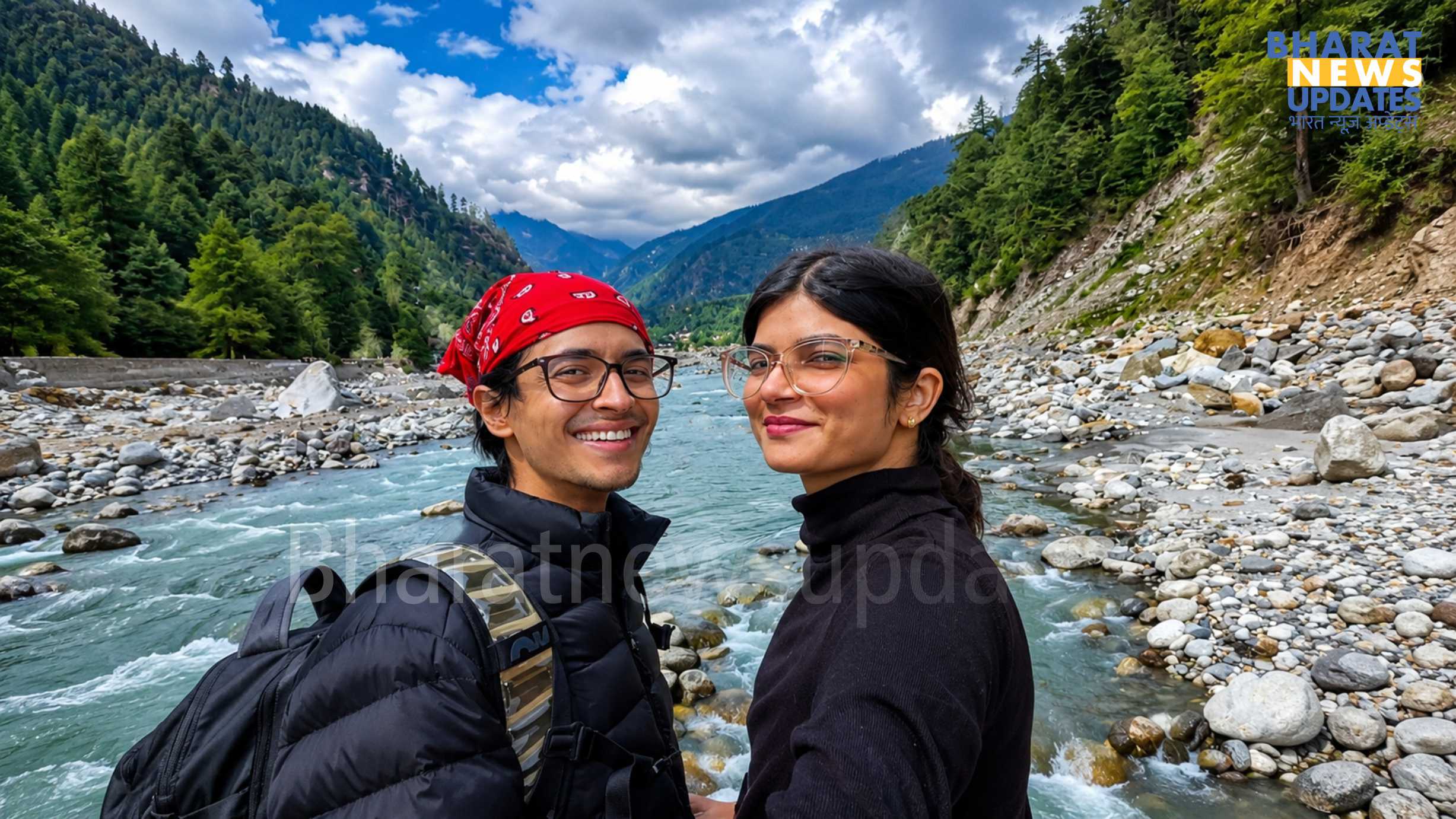
There’s a version of this story you’ve probably already scrolled past: a couple quits the city, moves to the hills, works remotely, saves a small fortune, posts a reel about it. It’s a nice story. It’s also, if you actually try to live it, only half true.
Anjali aur Naman didn’t move to Manali to save money. They moved because Anjali’s therapist half-joked that she’d developed “elevator anxiety” that specific tight-chested feeling of watching a lift doors close in a Gurugram high-rise at 9:04 am, already late. They picked Manali because Naman’s cousin had a spare room in Old Manali going for cheap during off-season, and because neither of them had ever lived anywhere the air didn’t taste faintly of diesel.
What nobody warns you about is that the savings arrive quietly, almost embarrassingly, in places you never budgeted for in the first place.
The obvious stuff did shrink.
Rent fell by roughly half. The daily Ola-to-metro-to-Ola commute vanished entirely not because they were saving on purpose, but because there was simply nowhere to commute to. The 11 pm Swiggy order born of decision fatigue, gone, mostly because the nearest late-night kitchen shuts by 9.
But here’s what the highlight reels don’t tell you:
Their electricity bill in peak winter went up by nearly as much as their rent went down. Nobody mentions the space heater running twelve hours a day, or that a geyser in a mountain town in January is not a luxury, it’s a survival tool. Their first winter, a burst pipe cost them eleven thousand rupees to fix a repair bill that simply doesn’t exist as a category in a city flat with municipal plumbing.
Groceries got stranger too. Fresh vegetables, ironically, cost more in a farming valley than they did in a Blinkit-saturated metro, because Manali’s own produce mostly gets trucked out to bigger markets and the local stuff gets trucked back in with a markup. Anjali now barters plant cuttings with a neighbour for extra saag. That’s not a savings hack you’ll find in a listicle; it’s just what happens when the informal economy quietly replaces the formal one.
The internet almost broke them, literally, in the first month, landslides near Kullu take down fibre lines for days, and Naman once did a client call standing on a rooftop at 6 am chasing one bar of signal, laughing about it later only because the meeting went fine. They now keep two SIM cards from two different networks as a rule, not a preference.
Then there’s the cost nobody puts a number on: distance from family becomes a real, occasional grief, not an aesthetic. When Anjali’s father was hospitalized last year, the flight-then-taxi-then-landslide-detour home took fourteen hours instead of four. That’s the ledger line the savings graphic never shows.
And yet they’re not going back. Because the real saving, they’ll tell you if you ask twice, wasn’t the thirty-odd thousand rupees. It was that Anjali stopped buying things to cope with a life she didn’t like. The city wardrobe, the weekend Goa flights booked purely to escape Monday, the gym membership used four times a year out of guilt, all of it fell away not because Manali is cheap, but because Manali is slow enough that the impulse to spend simply stopped showing up.
Their one uncommon tip:
They didn’t rent a fully furnished flat, which most remote-work migrants default to. They rented bare and bought secondhand furniture off a Facebook group run by departing backpackers and NGO workers, total furnishing cost under six thousand rupees, resold at nearly the same price when a friend moved in eight months later. It’s the closest thing to a financial hack in this whole story, and it has nothing to do with slow living at all.
Ask them if it’s for everyone, and Naman will say no, flatly. “You need a job that genuinely doesn’t care where you sit, a body that handles altitude and cold, and a relationship that can survive being each other’s only social circle for a stretch.” That last one, he adds, is the real cost of entry, not the electricity bill, not the burst pipe. Just each other, in a small room, through a long winter, and whether that’s enough.
For them, so far, it has been.