Connect with us

News

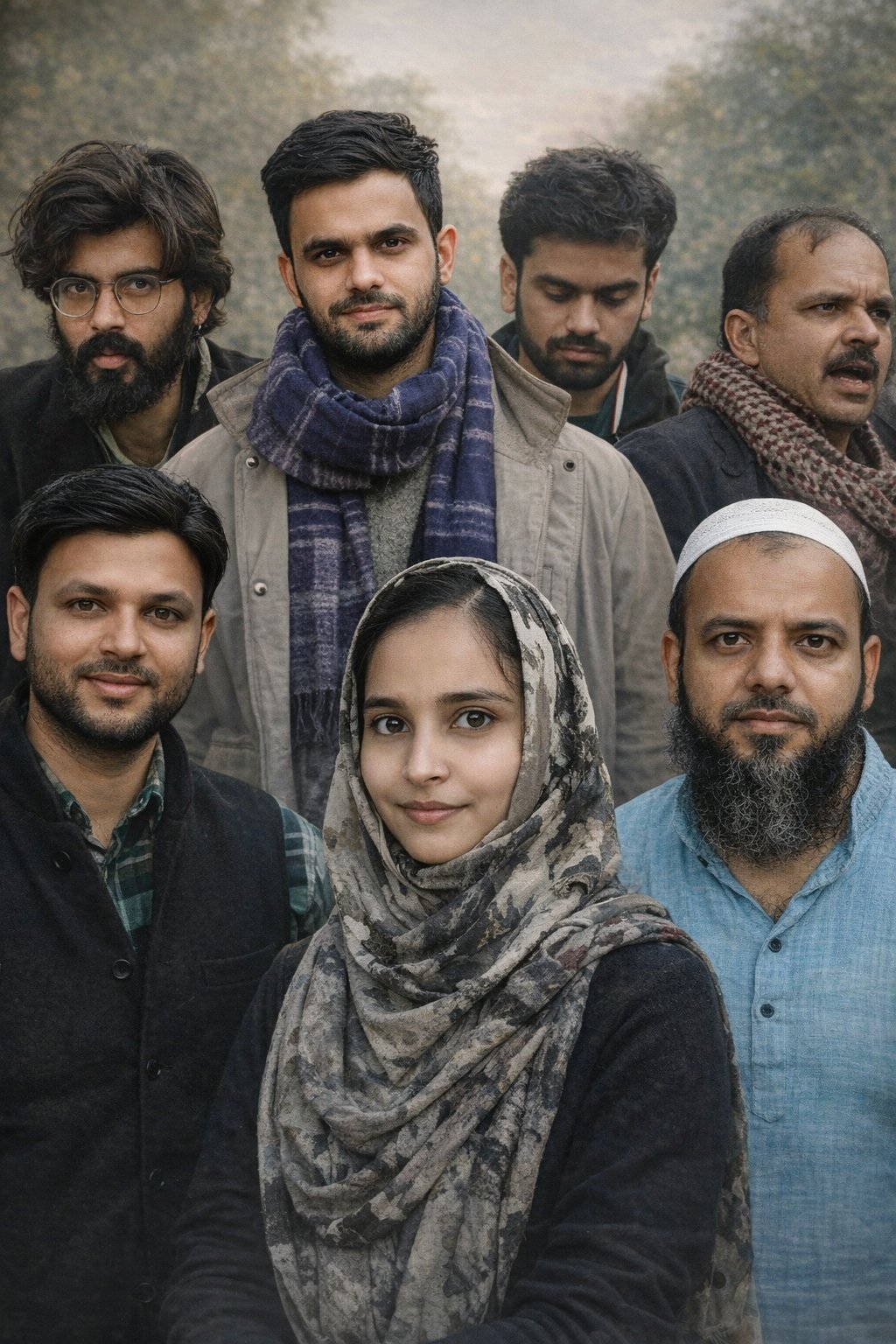
Delhi Riots Case: Supreme Court Denies Bail to Umar Khalid and Sharjeel Imam, Cites Prima Facie Terror Link

Published

on

Bharatnewsupdates-Delhi 2020 Riot Bail Plea Verdict 5 Jan 2026

The Supreme Court of India has refused to grant bail to Delhi riot accused Umar Khalid and Sharjeel Imam in the case related to the alleged larger conspiracy behind the February 2020 Delhi riots. The decision, delivered by a Bench of Justices Aravind Kumar and N.V. Anjaria, holds that the material placed on record by the prosecution discloses a prima facie case against the two accused under the Unlawful Activities (Prevention) Act (UAPA).

With this ruling, both Khalid and Imam will continue to remain in judicial custody, more than five years after their arrest. At the same time, the Court granted bail to five other accused persons in the same case, underlining that bail decisions must be based on individual roles and cannot be decided by treating all accused as equals.

What the Court Found

Reading out key portions of the judgment, the Bench observed that the prosecution material suggests that Umar Khalid and Sharjeel Imam were not mere participants in protests but were allegedly involved in the planning and coordination of events that ultimately led to large-scale violence and deaths. According to the Court, the allegations, if taken at prima facie case at this stage, attract the statutory bar on bail under the UAPA.

The Court noted that the alleged acts went beyond ordinary law-and-order issues. It held that the material indicates deliberate actions that disrupted essential services, caused widespread fear, and posed a serious threat to public order and the economy. Such conduct, the Court said, could fall within the definition of a “terrorist act” under Section 15 of the UAPA, at least for the limited purpose of deciding bail.

Importantly, the judges clarified that at the bail stage, the Court is not required to examine the truth or falsity of the allegations in detail. The legal test is only whether the accusations, on their face, disclose an offence under the special law and whether the evidence shows a reasonable connection between the accused and the alleged acts.

UAPA and the Question of Liberty

The judgment also dealt at length with the tension between personal liberty and national security. The Bench acknowledged that Article 21 of the Constitution, which guarantees the right to life and personal liberty, occupies a central place in India’s constitutional framework. The Court reaffirmed that pre-trial detention should not become a form of punishment.

However, it also pointed out that Parliament, through the UAPA, has laid down stricter conditions for granting bail in cases involving terrorism-related offences. Once the Court is satisfied that the statutory threshold under the UAPA is met, bail cannot be granted merely on grounds such as the passage of time or delay in trial.

The judges made it clear that delay alone does not automatically entitle an accused to bail in UAPA cases, unless the delay becomes so excessive that it renders continued detention arbitrary or unjustified.

Individual Assessment of Accused

A significant aspect of the ruling is the Court’s emphasis on individual assessment. While rejecting bail for Khalid and Imam, the Supreme Court allowed the bail pleas of Gulfisha Fatima, Meeran Haider, Shifa Ur Rehman, Mohd Saleem Khan, and Shadab Ahmad.

The Court held that all accused persons cannot be placed on the same footing. The prosecution material, according to the Bench, suggested a hierarchy of participation, requiring courts to carefully examine the specific role attributed to each individual.

In this context, the judges observed that Khalid and Imam stood on a “qualitatively different footing” compared to the other accused. This distinction, the Court clarified, does not amount to a finding of guilt but is relevant for determining whether the statutory bar on bail applies.

Background of the Case

The case arises out of the violence that broke out in north-east Delhi in February 2020, during protests against the Citizenship (Amendment) Act (CAA) and the proposed National Register of Citizens (NRC). The riots resulted in the death of 53 people, injuries to more than 700 others, and large-scale destruction of property. In the aftermath, Delhi Police registered 753 FIRs across the city.

The prosecution has alleged that the violence was the result of a planned conspiracy aimed at destabilizing the government. According to the police, the accused sought to create conditions of unrest and communal polarization, with the larger objective of “regime change.”

The Supreme Court’s verdict came on appeals challenging a September 2023 order of the Delhi High Court, which had also denied bail to Khalid, Imam, and others, describing their alleged roles as “grave” and holding that their speeches and actions were prima facie aimed at communal mobilization.

Reactions to the Judgment

The ruling drew sharp political and emotional reactions. BJP spokesperson Shahzad Poonawalla welcomed the decision, claiming that it vindicated the stand that the Delhi riots were “organized and sponsored” rather than spontaneous. He also criticized opposition parties for previously defending the accused.

From the victims’ families, reactions were mixed. Hari Solanki, whose son Rahul Solanki died during the riots, said he was thankful that bail was denied to Khalid and Imam. At the same time, he expressed anguish over the bail granted to other accused, reflecting the continued pain and anger among those who lost family members.

On the other hand, Sarim Javed, counsel for Gulfisha Fatima, welcomed the grant of bail to five accused persons, noting that they would be released after spending over five and a half years in jail. He also pointed out that the Supreme Court has directed the trial court to conduct the trial expeditiously and complete the examination of witnesses within one year.

What Lies Ahead

While the Supreme Court has closed the door on bail for Umar Khalid and Sharjeel Imam for now, it has left open the possibility of a fresh bail application after one year. The trial, meanwhile, is expected to proceed at a faster pace, as directed by the apex court.

The judgment once again highlights the difficult balance courts must strike between safeguarding personal liberty and addressing allegations of serious crimes under stringent anti-terror laws. As the trial unfolds, the final determination of guilt or innocence will rest on the evidence tested in court—not on the conclusions drawn at the bail stage.

Continue Reading
Click to comment

Leave a Reply

Your email address will not be published. Required fields are marked *

News

Early Morning Earthquake Shakes Assam and Northeast India, Rekindling Focus on Region’s Seismic Vulnerability

Published

on

Bharatnewsupdates : Earthquake Assam India 4th Jan 2026

A moderate earthquake measuring 5.1 on the Richter scale struck Assam and large parts of Northeast India in the early hours of Sunday, briefly jolting residents awake and renewing attention on the region’s high seismic sensitivity. The tremor, though strong enough to be widely felt, did not cause any immediate loss of life or damage to property, according to official sources.

The National Centre for Seismology (NCS), the Government of India’s nodal agency for monitoring earthquake activity, reported that the earthquake occurred at 4:17 a.m. The epicenter was located in Morigaon district of Assam, on the southern bank of the Brahmaputra River. The quake originated at a depth of about 50 kilometers beneath the earth’s surface.

Residents across Morigaon and adjoining districts of central Assam reported feeling strong vibrations, with many rushing out of their homes in panic. The experience was made more unsettling by the cold winter morning and dense fog that blanketed much of the region at the time. In Guwahati and other towns, hanging objects swayed and doors rattled, prompting widespread concern, particularly among those living in older structures.

Seismologists point out that the earthquake’s epicenter lies along the Kopili fault zone, one of the most active fault systems in Northeast India. The Kopili fault has been responsible for several moderate to strong earthquakes in the past and is known for its complex geological behaviour. This fault marks a zone where enormous tectonic stresses accumulate due to the ongoing collision between the Indian Plate and the Eurasian Plate.

In the days surrounding the Assam tremor, several smaller earthquakes were also recorded across the wider Himalayan and Northeast region. These included a 3.9-magnitude quake in Gomati district of Tripura, another of similar strength near Soreng in Sikkim, and mild tremors in Himachal Pradesh, Meghalaya, Bhutan, and Nepal. While these events were not directly linked, they collectively reflect the continuous tectonic adjustments taking place across this geologically young and unstable region.

Here is the earthquake magnitude in various state of North East India and neighbours:

1. EQ of M: 5.1, On: 05/01/2026 04:17:40 IST, Lat: 26.37 N, Long: 92.29 E, Depth: 50 Km, Location: Morigaon, Assam.

Bharatnewsupdates : Earthquake In North East India Region

2. EQ of M: 3.9, On: 05/01/2026 03:33:32 IST, Lat: 23.67 N, Long: 91.50 E, Depth: 54 Km, Location: Gomati, Tripura.

Bharatnewsupdates : Earthquake In North East India Region

3. EQ of M: 3.9, On: 03/01/2026 05:58:03 IST, Lat: 27.21 N, Long: 88.24 E, Depth: 5 Km, Location: Soreng, Sikkim.

Bharatnewsupdates : Earthquake In North East India Region

4. EQ of M: 3.6, On: 05/01/2026 12:57:20 IST, Lat: 31.38 N, Long: 77.05 E, Depth: 5 Km, Location: Mandi, Himachal Pradesh.

Bharatnewsupdates : Earthquake In North East India Region

5. EQ of M: 3.5, On: 03/01/2026 22:36:35 IST, Lat: 26.81 N, Long: 86.46 E, Depth: 10 Km, Location: Nepal.

Bharatnewsupdates : Earthquake In North East India Region
6. EQ of M: 3.1, On: 03/01/2026 08:50:37 IST, Lat: 26.92 N, Long: 89.92 E, Depth: 10 Km, Location: Bhutan.

Bharatnewsupdates : Earthquake In North East India Region

7. EQ of M: 2.7, On: 04/01/2026 08:21:22 IST, Lat: 25.53 N, Long: 91.20 E, Depth: 10 Km, Location: West Khasi Hills, Meghalaya.

Bharatnewsupdates : Earthquake In North East India Region

Experts explain that Northeast India sits at the junction of multiple tectonic plates and fault systems, making it one of the most earthquake-prone areas in the country. Almost the entire region falls under Seismic Zone V, the highest risk category under India’s seismic zoning map. Earthquakes here are often shallow to intermediate in depth, which means even moderate-magnitude tremors can be felt over large areas.

Although no damage has been reported so far, authorities have urged residents to remain calm but vigilant. Disaster management officials continue to monitor the situation, while reminding the public about basic earthquake safety measures, such as moving to open spaces during strong shaking and ensuring that buildings follow earthquake-resistant construction norms.

Sunday’s early morning tremor serves as another reminder that earthquakes are a natural and recurring part of life in the Northeast. While science can help identify fault zones and assess risks, preparedness and awareness remain the most effective tools for reducing loss during such natural events.


Continue Reading

News

Make In Atmanirbhar India, Built For The Future: How Vande Bharat Sleeper Trains Will Redefine Long-Distance Rail Travel Experience.

Published

on

Bharatnewsupdates - Vande Bharat Sleeper Train Route Map

There are moments in a nation’s journey when progression doesn’t just arrive—it rolls in silently, and confidently, and changes everything.

The long-distance semi-high-speed Vande Bharat Sleeper trains are one such moment. Not merely a train, it is a moving statement of India’s self-belief, technological maturity, and Make-In-Atmanirbhar-India spirit.

When India Dreamed a Train—and Built It Herself

Bharatnewsupdates - Vande Bharat Sleeper Train

Late one night on the Kota–Nagda railway stretch, as most of the country slept, something extraordinary was happening on the rails. A sleek, indigenously built train sliced through the darkness at 180 kmph, steady as a thought, smooth as a whisper. Onboard, glasses filled with water stood calm—no tremor, no spill. It wasn’t a magic trick. It was engineering confidence.

This was the semi-high-speed Vande Bharat Sleeper train trial run, India’s most ambitious leap yet in long-distance rail travel.

Born from the Atmanirbhar Vision

Bharatnewsupdates - Vande Bharat Sleeper Train Features

Designed and manufactured entirely in India, the semi-high-speed Vande Bharat Sleeper represents the evolution of a nation that once imported technology and now exports quality excellence. From design boards to production floors, every nut and bolt speaks the language of the Make in India initiative.

The successful CRS high-speed trials marked not just technical approval but a symbolic crossing—India entering the league of nations capable of building world-class sleeper trains on its own terms.

Safety That Saves Before Disaster Strikes. What truly sets this train apart is how deeply safety is woven into its DNA.

Broad technological advancements and safety features provided in Vande Bharat Sleeper trains are as below.

● Fitted with KAVACH.

● Crashworthy and Jerk-Free Semi permanent couplers and Anti Climbers.

● Fire barrier doors at the end of each coach.

● Improved fire safety Aerosol based fire detection and suppression system in electrical cabinets and lavatories.

● Regenerative braking system for energy efficiency.

● Air conditioning units provided with indigenously developed UV-C lamp based disinfection systems.

● Centrally controlled Automatic Plug Doors and Fully Sealed wider gangways.

● CCTVs in all coaches.

● Emergency talk-back unit for communication between Passenger and Train Manager/Loco Pilot in case of emergency.

● For Divyangjan passengers a special lavatory in the driving coaches on each end.

● Centralized Coach Monitoring System for better condition monitoring of passenger amenities such as Air conditioning, Saloon Lighting, etc.

● Ergonomically designed ladder for ease of climbing onto upper berths.

This is not safety as an add-on. This is safety by in-built design.

Comfort That Understands the Indian Traveler

The semi-high-speed Vande Bharat Sleeper doesn’t just move faster—it travels smarter. Automatic plug doors, wider sealed gangways, advanced suspension systems, and regenerative braking work quietly behind the scenes. Inside, passengers experience thoughtfully designed sleeper berths, ergonomic ladders, modern toilets, UV-C -based air disinfection, and centrally monitored air-conditioning and lighting.

There’s dignity here—for families, solo travelers, senior citizens, and specially abled Divyangjan passengers, with specially designed lavatories in driving coaches.

This train doesn’t shout luxury. It delivers world-class comfort assurance.

The First Long-Distance Vande Bharat—Where Regions, Cultures, and Comfort Meet

Bharatnewsupdates - Vande Bharat Sleeper Train Route Map

In January, when Indian Prime Minister Narendra Modi flags off India’s first long-distance semi-high-speed Vande Bharat Sleeper Train between Guwahati and Howrah, it won’t just mark a new route or addition, It will usher in a new era of rail travel experience.

A Route That Connects More Than Cities

Stretching across Assam and West Bengal, the train brings together regions rich in history, commerce, and culture. Districts like Kamrup Metropolitan, Bongaigaon, Coochbehar, Jalpaiguri, Maldah, Murshidabad, Purba Bardhaman, Hooghly, and Howrah now find themselves linked by speed, reliability, and comfort.

Train Details With Fare

With 16 modern coaches—including 1 x First AC, 4 x Two-Tier, and 11 x Three-Tier AC coaches—the train carries over 823 passengers, departing in the evening and arriving early morning. Travel that respects time. Journeys that respect experience of travel. This is a boon for business travelers, too!

Fare : • AC 3 Tier – ₹2,300  • AC 2 Tier – ₹3,000  • AC 1 – ₹3,600

A Culinary Journey on Rails

Step into the pantry, and the experience becomes deeply personal.

From Guwahati, passengers will be welcomed with authentic Assamese flavours. From Kolkata, the aroma of Bengali delicacies will define the journey.

This isn’t standardized catering—it’s regional pride served with warm delicacy.

Food, after all, is memory. And this train understands that.

More Than Speed—A Statement

Union Minister for Railways, Information & Broadcasting, and Electronics & Information Technology Ashwini Vaishnaw called this a milestone, not just for Indian Railways, but for the nation itself. As India prepares for major rail reforms ahead, the next-generation tech, comfort, and safety envisioned in the semi-high-speed Vande Bharat Sleeper trains stand as proof that passenger-centric innovation and indigenous technology can coexist beautifully.

This train doesn’t compete with the past. It moves beyond it.

Bharatnewsupdates - Vande Bharat Sleeper Train

Image Courtesy : Hble CM Himanta Biswa Sarma X Account

A New Night, A New India

When India’s first semi-high-speed Vande Bharat Sleeper train glides out of Guwahati and Howrah under starlit skies, it will carry more than passengers. It will carry confidence, craftsmanship, and the quiet pride of a nation that has learned to build its own future with a class.

Fast. Safe. Indian. The best in the world.

Continue Reading

News

On the evening of December 23, 2025, Hindi literature lost one of its quietest yet most profound voices—the Jnanpith Award–winning writer Vinod Kumar Shukla.

Published

on

Bharatnewsupdates - Writer Vinod Kumar Shukla

The Jnanpith Award–winning writer Vinod Kumar Shukla, who taught generations of readers how to listen to silence, passed away at the age of 89. His passing away does not knock with noise or spectacle—just like his writing, it leaves behind a quiet pause, conveying us to feel the painful silence rather than react.

“I want to stay alive till i die a natural death, Not till I killed by someone else” ~late Vinod Kumar Shukla

Prime Minister Narendra Modi voiced despair over Shukla’s passing, calling him a literary figure whose contribution to Hindi literature will be remembered for generations. In a message posted on X, the Prime Minister extended condolences to Shukla’s family, admirers, and the larger literary fraternity.

But Vinod Kumar Shukla’s true memorial does not live in official tributes. It lives in a clerk’s unspoken fatigue, in a window opening quietly in a wall, in a servant’s worn shirt that becomes an entire universe. His literature never shouted for attention; it waited patiently for readers who were willing to slow down. A Writer Who Chose the Ordinary—and Made It Eternal.

Born on January 1, 1937, in Rajnandgaon (in present-day Chhattisgarh), Shukla grew up far from the power centres of Indian literature. Perhaps that distance shaped his gaze. He looked not at heroes, but at everyday people—middle-class families, small-town clerks, silent households—and found in them a depth that others often overlooked.

He began his literacy journey as a poet, and poetry always lived in him. Even when he turned to fiction, his literary style carried the softness of verse. His passages moved slowly, deliberately, as if they did not want to disturb the inner lives they described. Unlike conventional narratives driven by dramatic events, Shukla’s stories often unfolded through stillness—through thoughts left unfinished, emotions barely spoken, and lives lived with quiet dignity.

In a literary world increasingly drawn to spectacle, his work gently resisted it. Books That breathe, Yet Stayed Forever Among his most celebrated works, Naukar Ki Kameez remains iconic—later adapted into a film by filmmaker Mani Kaul—a rare novel that transformed simplicity into philosophy.

Deewar Mein Ek Khidki Rehti Thi, for which he received the Sahitya Akademi Award in 1999, further established his reputation as a master of inward-looking fiction.

Books like Lagbhag Jai Hind, Khilega To Dekhenge, and Ek Chuppi Jagah revealed his unique ability to mix the everyday with quiet imagination—never loud, never forceful, but deeply unsettling in their honesty.

Often associated with the post–Nayi Kavita sensibility, Shukla stood apart even from his contemporaries. His writing carried moral clarity without preaching, compassion without sentimentality, and resistance without slogans. Recognition came late—but meaningfully in 2023, Vinod Kumar Shukla received the 59th Jnanpith Award, India’s highest literary honour, becoming the first writer from Chhattisgarh to do so.

Many felt the recognition was long overdue. In an interview that year, he responded to the honour with characteristic humility, saying that writers do not write for awards, and that recognition arrives naturally when one remains honest to the path of writing.

He also spoke fondly of his early years in Rajnandgaon (Chhattisgarh), recalling how his first poetry collection was published after poet and critic Ashok Vajpeyi selected his poems.

He often credited his mother’s love for Bengali literature for shaping his early reading habits.

The Final Chapter Of Life

Shukla had been admitted to AIIMS Raipur on December 2 after experiencing breathing difficulties. He had also undergone treatment at a private hospital earlier in the year. His family confirmed that he passed away due to age-related health issues on December 23, 2025 at 4:58 PM. He is survived by his wife, son Shashwat, and a daughter.

The last rites of renowned Hindi writer and Jnanpith Award recipient Vinod Kumar Shukla were performed with full state honour in Raipur. Chhattisgarh Chief Minister Vishnu Deo Sai visited residence of Vinod Kumar Shukla and paid his final farewell.

At Bharatnewsupdates, we deeply mourn the passing of Vinod Kumar Shukla, one of the most original and quietly radical voices in Indian literature. His legacy will live on forever.

With his passing, Hindi literature does not lose a celebrity writer—it loses a conscience that believed in softness, restraint, and listening. Vinod Kumar Shukla showed us that the most powerful literary works are not always loud. Sometimes, they simply sit beside us, quietly changing how we see the world.

And long after the headlines fade, his words will remain—unhurried, humane, and endlessly alive.

Continue Reading

Trending