Connect with us

International News

Donald Trump vs. the Supreme Court of America: The Tariff Battle Reshaping Global Trade and Economies.

Published

on

The clash between trade power and judicial limits has returned to the center of American politics after a landmark ruling by the Supreme Court of the United States that blocked President Donald Trump from using sweeping tariff authority the way he intended.

What followed was a swift counter-move from President Donald Trump: a 10% global tariff under Section 122 of the Trade Act of 1974 — a rarely discussed provision that suddenly matters for the world economy.

Below is a clear, analytical look at what happened inside the court, what the ruling means, and why the ripple effects extend from Washington to Mumbai, Beijing, Berlin, and beyond.

What went behind the US Supreme Court ruling

At the heart of the dispute was executive authority over tariffs. Trump argued that existing statutes allowed the president to impose broad tariffs without congressional approval, framing trade deficits and unfair practices as economic emergencies.

Opponents — including industry groups, importers, and some lawmakers — challenged this approach, saying the administration stretched statutes beyond their intended limits. The key constitutional question was simple yet profound:

How far can Donald Trump as a President go in imposing tariffs unilaterally?

Inside the court, the majority signaled concern that the administration’s interpretation effectively granted the president open-ended tariff power, bypassing Congress’s constitutional role in regulating commerce.

The ruling therefore emphasized three themes:

  1. Statutory boundaries matter – emergency or trade laws cannot be expanded indefinitely.

  2. Separation of powers – tariffs cannot become a tool of unchecked executive policymaking.

  3. Economic impact – broad tariffs have consequences beyond trade disputes, affecting consumers, inflation, and supply chains.

The decision was not unanimous. Justices Brett Kavanaugh, Clarence Thomas, and Samuel Alito dissented, arguing the president historically holds wide discretion in trade enforcement. Meanwhile, even Trump-appointed justices Amy Coney Barrett and Neil Gorsuch joined the majority — a striking political signal.

Economic meaning of the ruling

For the US economy

The decision brings policy stability, which markets usually welcome. Companies gain predictability in supply chains and pricing decisions. Analysts expect:

  • Reduced tariff uncertainty

  • Potential easing of import costs

  • Slight relief for inflation pressures

  • Stronger investor confidence

However, it also limits the White House’s ability to use tariffs as a rapid negotiating weapon in trade disputes.

For the global economy

Globally, the ruling signals that US trade policy may face stronger institutional checks, which reduces fears of sudden tariff shocks. That stabilizes commodity markets, shipping rates, and manufacturing planning worldwide.

Trump’s response: invoking Section 122

Within hours, Trump pivoted — announcing a 10% tariff on all countries using Section 122 of the Trade Act of 1974.

What is Section 122?

Section 122 allows a president to impose a temporary import surcharge to address:

  • Large balance-of-payments deficits

  • Fundamental international payments problems

But it has strict limits:

  • Tariff cannot exceed 15%

  • Duration capped at 150 days

  • Intended as a short-term corrective measure

Notably, this provision has rarely been tested in court, making Trump’s move both legally creative and politically controversial.

Trump argued the tariff was necessary to defend American industry and trade balance, saying the court ruling was influenced by politics and foreign interests, while calling some justices “a disgrace to the nation.”

How major economies view the tariff shift

India

India sees both risk and opportunity. Export sectors like textiles, pharmaceuticals, and IT hardware may face price pressure, but companies could benefit if tariffs reshape supply chains away from China.

Brazil

Commodity exports — especially agriculture and metals — could face temporary headwinds. Yet Brazil may gain market share if trade tensions push diversification.

China

China remains most exposed. Even uniform tariffs can intensify geopolitical trade rivalry and accelerate decoupling trends already underway.

Australia

Australia’s mining and agricultural exports face modest risk, but its diversified Asia-Pacific trade partnerships cushion impact.

Japan

Japan worries about auto and electronics exports but values predictability from the court ruling more than it fears temporary tariffs.

Germany

Germany’s manufacturing sector remains highly sensitive to tariffs, particularly autos and machinery. European policymakers are watching closely.

Canada and United Kingdom

Canada’s exemption reduces immediate risk, while the UK views the tariff as a reminder that post-Brexit trade relations with the US remain vulnerable to political swings.

The broader impact: a new era of tariff politics

The episode highlights a deeper shift in global trade:

  • Courts increasingly shape economic policy

  • Trade is now a domestic political battleground

  • Temporary tariffs can still disrupt global markets

  • Supply chain diversification is accelerating

In short, even when courts limit presidential power, trade tensions don’t disappear — they simply evolve.

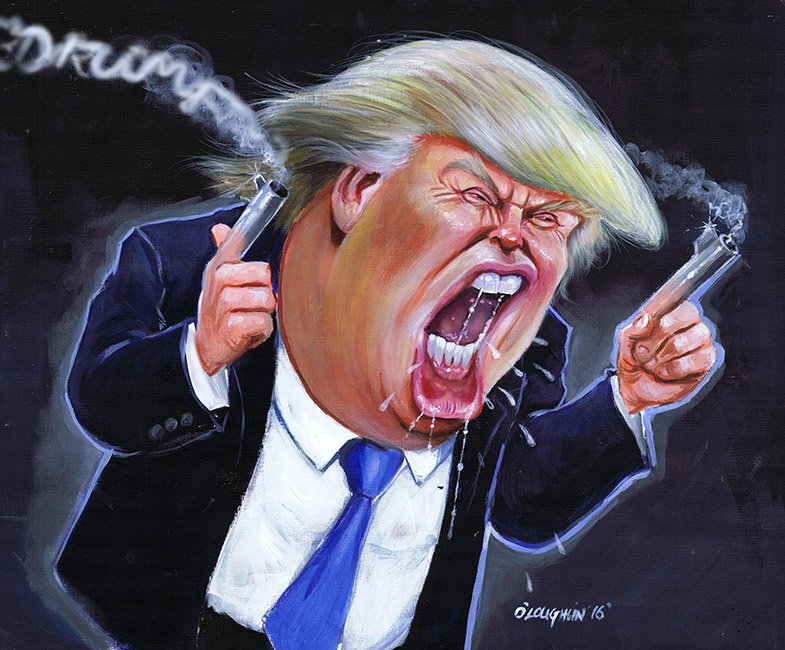
Cover Image Courtesy :  Niall O’Loughlin Artist @nialloloughlin on X

Continue Reading
Click to comment

Leave a Reply

Your email address will not be published. Required fields are marked *

International News

‘I Am Somebody’: The Life, Fire, and Faith of Jesse Jackson, Who Taught America to Keep Hope Alive, Dies at 84

Published

on

Before Obama, There Was Jackson: The Man Who Rewired the Democratic Party

The Rev. Jesse Jackson never walked quietly into a room. He entered like a sermon in motion — tall, rhythmic in speech, eyes flashing with conviction. For more than six decades, he stood at the intersection of faith and politics, insisting that America live up to its own promise.

On Tuesday morning, surrounded by family, Jackson died at 84. With him passes one of the last towering figures who bridged the age of segregation, the assassination of Martin Luther King Jr., and the rise of a multicultural political coalition that now defines modern Democratic politics.

On April 3, 1968, civil rights activists Ralph Abernathy, Jackson, King, and Hosea Williams stand on the balcony of the Lorraine Motel in Memphis, Tennessee. James Earl Ray killed King on that balcony the following day. Image Courtesy : AP/Charles Kelly

But before the podiums and presidential campaigns, before the chant that would echo across convention halls — “Keep hope alive!” — there was a boy in Greenville.

A Child Named Jesse Louis Burns

He was born Jesse Louis Burns on October 8, 1941, in segregated Greenville, South Carolina. His mother, Helen Burns, was just 16. His biological father, Noah Robinson, lived next door and had another family. A year later, when Helen married Charles Henry Jackson, the boy took his stepfather’s surname and became Jesse Louis Jackson.

Jackson at the 1958 homecoming football game at Greenville, South Carolina’s Sterling High School. Image Courtesy : Greenville News/Imagn/USA Today Network

In the Jim Crow South, that origin story mattered. He was teased for being born out of wedlock. He was made to feel different. He later described himself as a “double outcast” — Black in a rigidly segregated society, and fatherless in the eyes of his classmates.

Yet even then, he had a gift. Teachers noticed how young Jesse could turn a phrase. He spoke in cadences. He loved metaphor. He listened to sermons not just for salvation but for structure.

Faith would become both his refuge and his megaphone.

Finding His Idol — and His Calling

Jackson attended North Carolina A&T State University and later enrolled at the Chicago Theological Seminary. In Chicago, he encountered the man who would shape his life: Martin Luther King Jr..

King’s movement was cresting. Sit-ins, marches, and the moral thunder of nonviolent protest were reshaping America. Jackson joined the Southern Christian Leadership Conference (SCLC) and quickly emerged as one of King’s most dynamic young lieutenants.

He absorbed King’s belief that civil rights was not merely about integration but about economic justice, voting rights, and dignity. He also absorbed criticism — some saw him as too ambitious, too visible. But even critics admitted he could electrify a crowd.

In Memphis, a crowd marches a few days after King’s murder. Jackson is positioned in the middle, behind Coretta, King’s widow. Image Courtesy : Archive Photos/Santi Visalli-Getty Images

When King was assassinated in Memphis in April 1968, the movement splintered with grief. Jackson, just 26, suddenly found himself without his mentor — and with a choice: retreat or rise.

He rose.

After Martin Luther King Jr: The Fight Continues

The years after King’s death were volatile. Urban uprisings, Vietnam protests, political assassinations. Many wondered whether nonviolent protest could survive.

Jackson insisted it must.

He launched Operation Breadbasket in Chicago to pressure corporations to hire Black workers and do business in Black neighborhoods. The model was simple but powerful: economic leverage for economic justice.

He later founded Operation PUSH (People United to Save Humanity), and eventually the Rainbow PUSH Coalition — an organization built on a radical premise at the time: that the struggle for justice was multicolored.

“Our flag is red, white and blue,” he often said. “But our nation is a rainbow — red, yellow, brown, Black and white.”

In August 1980, Republican presidential candidate Ronald Reagan visits Operation PUSH headquarters and listens to Jackson. Image Courtesy : Bettmann Archive/Getty Images

That vision became known as the Rainbow Coalition — a political and moral alliance of African Americans, Latinos, labor unions, farmers, Native Americans, Asian Americans, LGBTQ Americans, and poor whites. Long before diversity became a political buzzword, Jackson was organizing it.

The Greenville Eight and Courage Under Fire

One of Jackson’s lesser-known but formative battles involved the “Greenville Eight,” a group of young Black activists in South Carolina charged during a 1971 boycott of white-owned businesses. Jackson threw his weight behind their defense, arguing that economic protest was a constitutional right. The case galvanized local activism and reinforced Jackson’s belief that justice required both courtroom strategy and street pressure.

It was in moments like these — far from television cameras — that he refined his method: negotiation mixed with moral urgency.

The Golden Moment: 1984 and 1988

By 1984, Jackson stunned the political establishment by running for president. Many dismissed it as symbolic. It was not.

He won millions of votes and several primaries. He forced debates about apartheid in South Africa, about Palestinian rights, about economic inequality. He pushed the Democratic Party to adopt proportional delegate rules — a structural change that later made possible insurgent candidacies, including that of Barack Obama.

In September 1987, Jackson plays pickup basketball. He formally declared his intention to run for president in 1988 the following month of October. Image Courtesy : Shutterstock/Bill Pierce/The LIFE Picture Collection

In 1988, he ran again. This time, he won 11 contests and nearly 7 million votes. For a moment, it was no longer unthinkable that a Black man could become president of the United States.

Though he did not secure the nomination, he reshaped the party. He expanded the electorate. He made voter registration drives a national strategy. He helped transform the Democratic coalition into what it is today — urban, diverse, youth-driven.

He was, as he later said without bitterness, “a trailblazer.”

The Orator

Jackson’s speeches were sermons with policy footnotes. He rhymed instinctively.

“If my mind can conceive it, and my heart can believe it, then I can achieve it.”

And of course: “Keep hope alive.”

The phrase became parody material for comedians, but to Jackson it was sacred. Hope was not naïve optimism. It was discipline. It was survival.

Rev. Jesse Jackson with Late South African President Nelson Mandela

He also popularized “I Am Somebody,” a chant that schoolchildren across America would recite — an affirmation of worth in a society that often denied it.

A Life in Headlines — and Humanity

Jackson’s public life was not without turbulence. He apologized in the 1980s for remarks widely condemned as anti-Semitic. In 2001, he acknowledged fathering a daughter outside his marriage — a revelation that wounded his family and tarnished his image.

Yet his marriage to Jacqueline Brown, whom he wed in 1962, endured. Together they raised five children, weathering political storms that might have capsized other families.

He negotiated the release of American hostages abroad. He marched for voting rights into his 80s. Even as Parkinson’s disease slowed his gait, it never silenced his conviction.

When Barack Obama delivered his 2008 victory speech in Chicago’s Grant Park, cameras captured Jackson in tears. He later said he wept for those who did not live to see it — King, Abernathy, Evers.

Following Barack Obama’s victory in the November 2008 presidential election, Jackson is overcome with emotion in Grant Park in Chicago. Image Courtesy : Damon Winter/The New York Times/Redux

The arc had bent, at least in that moment.

The Legacy

Jesse Jackson’s life spanned three Americas: the segregated South of his childhood, the burning cities of the late 1960s, and the diverse, politically fractured nation of the 21st century.

He forced America to confront uncomfortable truths about race and poverty. He expanded who could imagine themselves on a presidential debate stage. He proved that moral language could coexist with political machinery.

Rev. Jesse Louis Jackson With French President Emmanuel Macron as France honours him with the Legion d’Honneur

Most of all, he insisted on dignity — for the poor, the marginalized, the forgotten.

He once said, “Both tears and sweat are salty. But sweat will get you change.”

Jesse Jackson sweated for change — in pulpits, in jail cells, in convention halls, in forgotten neighborhoods. He did not see every dream fulfilled. No civil rights leader ever does.

But he left behind something sturdy and enduring: a coalition, a cadence, and a command to believe.

Keep hope alive.

And for millions who grew up hearing that chant, hope remains his most indelible inheritance.


Continue Reading

International News

Trade, Tariffs and a $4 Trillion Dream, India–US Trade Deal: Why an 18% Tariff Could Reshape India’s Export Future

Published

on

Bharatnewsupdates - India USA Interim Trade Deal

India–US FTA 2026: Why an 18% Tariff Could Be a Quiet Game-Changer for India’s Growth Story!

When the United States cut tariffs on Indian goods to 18 per cent under the newly announced India–US Interim Trade Framework, it did more than tweak a trade number. It quietly repositioned India inside the world’s largest consumer market at a time when global supply chains are being rewritten.

India’s Commerce and Industry Minister Piyush Goyal has described the move as giving Indian exporters a “competitive advantage.” The claim isn’t rhetorical. Compared with China’s 35 per cent tariff burden and higher levies faced by several other exporting nations, India now enters the US market with a meaningful cost edge.

Bharatnewsupdates - India USA Flags

But what does this really mean for India’s economy, its exporters, its farmers—and its long-term ambition of becoming a $4 trillion economy?

The Tariff Reset: Why 18% Matters More Than It Sounds

In isolation, an 18 per cent tariff still sounds high. In global trade, however, relative advantage matters more than absolute numbers.

  • China: ~35% tariff on many product categories
  • Several ASEAN and Latin American economies: 19–25%
  • India: 18%, with zero-duty access in select sectors

For US buyers sourcing at scale—retailers, manufacturers, defense contractors—even a 3–7 percentage-point difference can decide where orders flow.

This differential gives India a pricing edge at a time when American firms are actively diversifying away from China due to geopolitical risk, sanctions exposure, and supply-chain fragility.

Sectors Set to Gain: Where the Growth Will Come From

1. Labour-Intensive Manufacturing Gets a Push

Bharatnewsupdates - Indo US FTA Tariffs

The biggest winners are sectors where India already has scale and employment depth:

  • Textiles & apparel
  • Leather & footwear
  • Home décor and handicrafts
  • Plastics, rubber and organic chemicals

These industries are dominated by MSMEs, which employ over 110 million Indians. Even a modest export increase here has an outsized impact on jobs—especially for women and semi-skilled workers.

2. Zero-Tariff Sectors: Quiet but Powerful

Bharatnewsupdates - Indo US FTA 0 Tariffs

The agreement eliminates tariffs entirely on several high-value categories:

  • Generic pharmaceuticals
  • Gems and diamonds
  • Aircraft parts and components

India already supplies over 40% of generic medicines used in the US. Removing tariff friction strengthens India’s role as a trusted, affordable healthcare supplier—especially as US healthcare costs continue to rise.

Similarly, aircraft parts exemptions under Section 232 open doors for India’s emerging aerospace ecosystem, linking domestic manufacturing with global aviation majors.

India vs China: A Strategic Moment, Not Just a Trade Deal

The US is not simply buying cheaper goods—it is re-engineering its supply chains.

China’s manufacturing dominance was built on scale, subsidies, and predictability. But rising wages, regulatory opacity, and geopolitical tensions have eroded that advantage.

India’s pitch is different:

  • Democratic governance
  • Rule-based trade engagement
  • A young skilled workforce
  • Expanding industrial capacity under Make in India and PLI schemes

The 18% tariff makes India commercially viable, not just politically attractive. That combination matters.

Connecting the Dots to the $4 Trillion GDP Goal

India’s GDP today stands just above $3.6 trillion. To cross $4 trillion, exports must play a larger role.

  • Exports currently contribute~22% of GDP
  • Government target: push this closer to 25–30% over time

If the US—India’s largest trading partner—absorbs even an additional $40–50 billion in Indian exports over the next few years, the multiplier effect through jobs, consumption, and investment could be substantial.

More importantly, export-led growth tends to be:

  • More productive
  • More employment-intensive
  • Less inflationary

This trade framework, while interim, aligns neatly with that trajectory.

Agriculture: Where India Drew a Hard Line

Perhaps the most politically sensitive part of the agreement is also the clearest: India did not open its core agricultural sectors.

No concessions were granted on:

  • Rice, wheat, maize, soya
  • Dairy (milk, cheese)
  • Poultry and meat
  • Fruits, vegetables, spices
  • Ethanol (fuel) and tobacco

This matters because over 45% of India’s workforce still depends on agriculture, directly or indirectly. Sudden exposure to heavily subsidized US farm produce could destabilize rural incomes and trigger price shocks.

By ring-fencing agriculture, India signaled that trade liberalization will not come at the cost of its Annadatas (The Farmers).

The Other Side of the Coin: Risks and Limitations

No trade deal is without downsides—and this one is no exception.

1. Still an Interim Framework

This is not a full-fledged FTA. Many issues—services trade, digital taxes, data localisation, visas—remain unresolved. Uncertainty
could delay long-term investments.

2. Pressure on Domestic Industry

Duty-free access for American goods could strain some Indian manufacturers, particularly in capital-intensive or technology-heavy
segments where US firms are more competitive.

3. Compliance Costs

Aligning with US standards—on quality, environment, labour—will raise compliance costs for Indian exporters, especially MSMEs.
Without adequate support, some may struggle to adapt.

4. Geopolitical Tightrope

Closer trade alignment with the US may complicate India’s balancing act with other partners, including Russia and parts of the
Global South.

The Bigger Picture: A Calculated Bet, Not a Giveaway

Critics argue India conceded too much by accepting an 18% tariff. But trade is rarely about perfection—it is about positioning.

This agreement:

  • Restores momentum after months of friction
  • Improves India’s relative standing in the US market
  • Protects agriculture while promoting manufacturing
  • Supports employment-heavy sectors

Most importantly, it keeps India inside the room as global trade rules are being reshaped.

Conclusion: A Step Forward Towards Growth—If Followed Through

The India–US Interim Trade Framework is not a silver bullet. But it is a strategic nudge—one that could accelerate exports, create jobs, and reinforce India’s path toward a $4 trillion economy.

Its success will depend less on headlines and more on execution: logistics reforms, MSME support, skill development, and sustained diplomatic engagement.

Handled well, this 18% tariff reduction could mark the moment when India stopped being just an alternative—and started becoming a preferred choice for Viksit Bharat goal.

Continue Reading

International News

Greenland Is Not for Sale: Can a Superpower Take What It Wants? Trump, NATO, and the Crisis of European Trust

Published

on

Bharatnewsupdates : Defend Greenland

Security or minerals? Alliances collapse not when strength fades, but when greed does.

There are moments in history when a sentence spoken casually shakes the foundations of systems built over decades. The Nobel Peace Prize candidate US President Donald Trump’s repeated statement that the United States “needs” Greenland for national security is one such moment—not because America lacks power, but because the statement reveals how fragile trust between allies has become.

Greenland is not a bargaining chip. It is not a commodity. And it is certainly not a land without people.

First, a Necessary Correction

Greenland (Kalaallit Nunaat), is not unclaimed land. It is an autonomous territory within the Kingdom of Denmark—an ally of the United States and a founding member of NATO.

Denmark, notably, was among the first nations to respond when NATO’s Article 5 was invoked after the
September 11 attacks, the only time in the alliance’s history that collective defense has been activated. Danish forces fought and died alongside Americans in Afghanistan, without conditions.

History matters. Because alliances are not contracts enforced by fear—they are built on trust and unified cause.

Why Greenland Matters?

Bharatnewsupdates GIUK Gap

Image Courtesy : Acknowledged

The renewed American interest in Greenland is not irrational. It is strategic.

1. The Arctic Is No Longer Frozen Politics

The Arctic is no longer geopolitically dormant. Climate change has opened Arctic sea routes, exposed mineral deposits, and compressed military response times. Greenland sits astride the Greenland–Iceland–United Kingdom (GIUK) gap, a critical chokepoint for monitoring submarine activity and missile trajectories. From a Pentagon map, Greenland looks like a giant early-warning radar.

2. Rare Earths Are the New Oil

Greenland holds significant rare earth deposits—materials essential for missiles, satellites, EVs, and AI infrastructure. With China dominating global processing capacity, Western governments are increasingly anxious about supply-chain vulnerability.

Greenland appears, on paper, as a solution. Washington wants alternatives. This is not greed alone; it is supply-chain anxiety in an age of technological warfare.

Bharatnewsupdates : Rare Earth Deposits Greenland

3. Great Power Psychology Has Shifted

Trump’s worldview is transactional. Land is leverage. Allies are variables. If something is strategically useful, the question is not “Should we?” but “Why shouldn’t we?”

That mindset marks a departure from post-1945 American leadership—and that is why the world is alarmed.

But strategic interest does not confer sovereignty. Influence already exists through defense agreements, basing rights, and NATO cooperation. Annexation rhetoric crosses a line.

Can the United States Invade Greenland?

Legally? No.
Politically? Unthinkable.
Militarily? Yes, Possible—but catastrophic.

But dismissing it as “mere statement” would be a mistake.

This is not just pressure, posture, and provocation, but possible operational preparation. The costs—legal, military, economic, reputational—are trifling.

Chances are, within the U.S. system, Congress, courts, and the people might resist such move.

An American invasion of Greenland would constitute an attack on a NATO ally. Denmark could invoke Article 5, forcing every NATO member to choose:

  1. Defend the principle of collective security
  2. Or admit NATO exists only when Washington approves

Either choice would permanently damage the alliance.

Words reshape expectations. And expectations shape the future.

And here lies the paradox: America cannot conquer Greenland without destroying the very system NATO that makes America powerful.

Would Europe Go to War with the U.S.?

Bharatnewsupdates : European NATO Members

Image Courtesy : ArcticPortal.org  Source – NATO

Europe would not rush into a shooting war with Washington—but it would not “submit silently” either.

The response would be:

  • Severe diplomatic rupture
  • Sanctions and legal warfare
  • Strategic decoupling from U.S. defense reliance
  • The effective death of NATO as we know it

France’s nuclear deterrent, Europe’s combined military capacity, and EU economic weight ensure this would not be a
cost-free adventure.

Is This Really About Security—or Empire?

DENMARK PM: THE U.S. HAS NO RIGHT TO ANNEX ANY OF THE THREE NATIONS IN THE DANISH KINGDOM

American officials frame Greenland as a security necessity, citing Russian and Chinese activity in the Arctic. Those concerns may be real. What is troubling is the re-emergence of language that treats territory as an asset to be acquired rather than a society to be respected.

When democracies normalize dictatorial geographical propaganda, they weaken the moral foundation on which they oppose similar behaviour by authoritarian rivals. Moscow and Beijing would not miss the irony.

This is not a return to the Monroe Doctrine—it is something more blunt: power asserting entitlement.

The danger is not that America wants influence in the Arctic—it already has it through bases and defense agreements. The danger is the normalization of annexation language in the 21st century.

When leaders speak of “taking” territory belonging to allies, they legitimize the very behaviour they condemn in rivals.

That hypocrisy does not go unnoticed in Moscow, Beijing—or Delhi.

The View from the Global South?

For countries like India, the implications are sobering. New Delhi depends on a stable international order where borders are not rewritten by force or threat. It opposes Chinese expansionism precisely because sovereignty must remain inviolable. Any precedent—even rhetorical—that suggests otherwise undermines the principles India seeks to defend.

India will not publicly challenge Washington over Greenland. But it will re-evaluate trust, quietly and carefully.

Where Does the World Stand?

Most of the world is not choosing sides—it is choosing caution.

  • Smaller nations hear a warning
  • Allies feel uncertainty
  • Rivals see opportunity

When trust erodes among democracies, authoritarian systems benefit by default.


A Test of Restraint

Bharatnewsupdates : Greenland

This is not about Greenland.

  • It is about whether power still recognizes limits.
  • Whether alliances still mean loyalty.
  • Whether security can exist without respect.

Greenland’s prime minister said it best: “We are a people. Not an object.”

That statement captures the essence of the crisis. Power does not fail when it weakens. It fails when it forgets restraint. Greenland is not
for sale. But something far more valuable is at risk—the credibility of alliances in a world already sliding toward uncertainty.

”Empires fall not when they lose strength—but when they forget that truth.

Continue Reading

Trending