
Art & Culture
Holi 2026 Guide: Know Holika Dahan, Chandra Grahan & Rangwali Holi Celebration Dates Explained


Holi 2026: Holika Dahan, Holi Colours, and a Blood Red Chandra Grahan Create a Once-in-a-Decade Festival Coincidence!
This year, Holi isn’t just about colours and sweets. It comes with a rare astronomical and astrological event—a total Blood Red lunar eclipse, or “Chandra Grahan,” right on the full moon Poornima night.
This has led to a lot of confusion in people’s mind, with different states celebrating on different days.
We explain to you in a simple words, so you know exactly when to perform Holika Dahan, what to do on Chandra Grahan day and when to Celebrate Holi, throwing colors on family and friends.
The Story Behind Holika Dahan
Before we get to the muhurat timings, it’s important to remember, why we perform Holika Dahan?
Long ago, there was a mighty king, Hiranyakashyap, who thought he was God. He ordered everyone to pray only to him. But his own little son, Prahlad, refused. He stayed devoted to Lord Vishnu. The king was furious. He tried to kill the boy in many ways, but Prahlad was always saved by his faith.
Finally, the king turned to his sister, Holika. She had a special boon: fire could not burn her. So, she sat in a blazing fire with little Prahlad on her lap, thinking she would be safe and he would be burned.
But the magic of the boon works only when used for good karma or deed. Holika’s evil intention turned the boon against her. She burned to ashes, while Prahlad, chanting God’s name, walked out unharmed.
That is why, on the night before Holi, we light a bonfire. It’s not just a fire; it’s a symbol. We burn away the “Holika” or the evil inside us—the ego, the anger, the negativity—and promise to walk the path of truth, just like Prahlad.
The Astronomical Coincidence: Bhadra, Grahan (Eclipse), and the Purnima (Full Moon)
This year, the sky has its own amazing astronomical event. Holi (Dhulvad/Dhulivandan), is celebrated on the full moon day (Purnima) of the month of Phalgun. But in 2026, that full moon coincides with a total lunar eclipse. Because of this, Holika Dahan and the next day of colours are falling on different dates across the country as per Panchang.
Here are the key timings you need to know. (Source: Kashi Panchang)
-
Purnima Tithi (Full Moon) Begins: 5:55 PM on March 2, 2026
-
Purnima Tithi (Full Moon) Ends: 5:07 PM on March 3, 2026
-
Bhadra Kaal (Inauspicious period for Holika Dahan):
-
Starts: 5:58 PM on March 2.
-
Ends: 5:30 AM on March 3.
-
We cannot perform Holika Dahan during this time.
-

The Lunar Eclipse on March 3: Timings And Sutak kal
This is the big event. On March 3, we will witness a total lunar eclipse. Because it’s visible in India, the “Sutak” period—considered inauspicious for religious rituals—comes into effect .
-
Lunar Eclipse (Chandra Grahan) Timings:
-
Eclipse Begins: 3:20 PM on March 3
-
Maximum Eclipse (Blood Moon): 6:33 PM to 6:40 PM (This is when the moon looks reddish!)
-
Eclipse Ends: 6:47 PM on March 3
-
-
Sutak Kaal Timings (The “no-puja” period):
-
Sutak Begins: 6:23 AM on March 3
-
Sutak Ends: 6:47 PM on March 3 (when the eclipse ends)
-
-
Sunrise & Sunset on March 3:
-
While this varies slightly by city, sunset is roughly around 6:20 PM to 6:30 PM. The moonrise happens right during the eclipse, around 6:26 PM .
-
The Muhurat To Perform Holika Dahan?
This is the million-dollar question. Because the eclipse ends right at sunset, different traditions are following different rules. Here is the honest truth: it depends on where you live and what your local priest or pandit’s guide.
Scenario A: Holika Dahan on March 3 (Evening) – The North Indian Way
In most of North India (Delhi, UP, Rajasthan), Holika Dahan will be performed on March 3, after the Chandra Grahan (eclipse) ends.
-
The Muhurat: Since we cannot perform the fire ritual during the eclipse, people will wait for the eclipse to end at 6:47 PM. The auspicious muhurat for Holika Dahan that night is from 6:22 PM to 8:50 PM. So, as soon as the eclipse is over, you can perform the puja .
Scenario B: Holika Dahan on March 2 (Night) – As Per The Maharashtra & Kashi Panchang
In states like Maharashtra and even parts of Varanasi, vidwans or scholars have decided to avoid the eclipse confusion entirely. They will perform Holika Dahan on the night of March 2, after the Bhadra Kaal ends but before the Sutak begins the next morning.
-
The Muhurat: In some places, this is a late-night ritual on March 2, or very early morning on March 3 (around 5:30 AM to 6:23 AM), just before the Sutak kal begins.
The Simple Rule: If you are in Delhi or UP, get ready for Holika Dahan on the evening of March 3. If you are in Mumbai or Pune, it will likely be on the night of March 2. When in doubt, ask the priest at your local temple—they will guide muhurat for your Holika, Holi celebration.
Rangwali Holi Celebration Date
Despite all the confusion about the Holika Dahan, the Rangwali Holi (the day of colours) will be celebrated on March 4, 2026, across most part of the country.

What To Do During Chandra Grahan
During an eclipse, especially when it falls on a festival, it’s good to be mindful. These are simple, traditional practices followed in many homes:
-
For the Lunar Eclipse:
-
What to do: The best thing to do during the eclipse is to sit calmly, chant, or meditate- Shiva/Vishnu/Durga mantras. After the eclipse ends at 6:47 PM, take a bath (this is considered a purification) and then perform the Holika Dahan.
-
Donations: After the eclipse, it is considered very auspicious to donate things like wheat, grams, or clothes to the needy.
-
Food: Traditionally, cooked food is avoided during the Sutak kal. Often, people put Tulsi (holy basil) leaves in cooked items to keep them pure, or they cook fresh after the eclipse.
-
-
Which Rashi (Zodiac Signs) are affected?
-
Lunar eclipses are believed to have a stronger impact on the zodiac sign they occur in. This eclipse is happening in the sign of Virgo (Kanya Rasi). People with Virgo as their moon sign, or those with strong Virgo influences in their birth chart, are usually advised to be a little more cautious and chant mantras for peace of mind.
-
-
For Pregnant Women:
-
In many families, expecting mothers are encouraged to rest indoors during the eclipse, avoid using sharp objects like needles or scissors, and chant or listen to devotional songs to stay calm and positive. It’s more about creating a peaceful environment than fear.
-

The Magic of Braj Holi
If you ever want to see Holi at its most raw, joyful, and historic, you have to go to the land of Prabhu Sri Krishna—Mathura, Vrindavan, and Barsana. The celebrations here stretch for over a week, and they are absolutely amazing.
-
Lathmar Holi (Barsana & Nandgaon): This is the most famous one. The women of Barsana playfully beat the men from Nandgaon with long sticks (lathis). The men shield themselves with dhal (shields) and try to dodge the blows. It’s all in good fun, recreating the legend of Krishna teasing Radha and her friends. This year, it was celebrated on February 25th and 26th.
-
Holi at Banke Bihari Temple (Vrindavan): On February 27th, the atmosphere here becomes electric. Instead of water, priests throw buckets of bright pink and red gulal on devotees, accompanied by soulful music. It feels like a dream.
-
Chhadimar Holi (Gokul): On March 1st, men form human pyramids to break a pot of buttermilk, while women try to stop them.
-
Huranga at Dauji (Baldev): The day after Holi, on March 5th, this is a sight to behold. It’s a game of snatching clothes and throwing colours, but it gets intensely competitive and wild—a true spectacle of joy .
So, whether you are observing the moon turn blood red on March 3rd, or getting drenched in pink gulal on March 4th, remember the spirit of the festival. It’s about letting go. Let go of the confusion, the grudges, and the worries. Just for a day, be like Prahlad—hold on to faith, joy, and the colours of life.
Subh Holi 2026!
Art & Culture
1000 Years of Unbroken Faith: Destruction, Devotion, and Resurrection, the Saga of Somnath Jyotirlinga
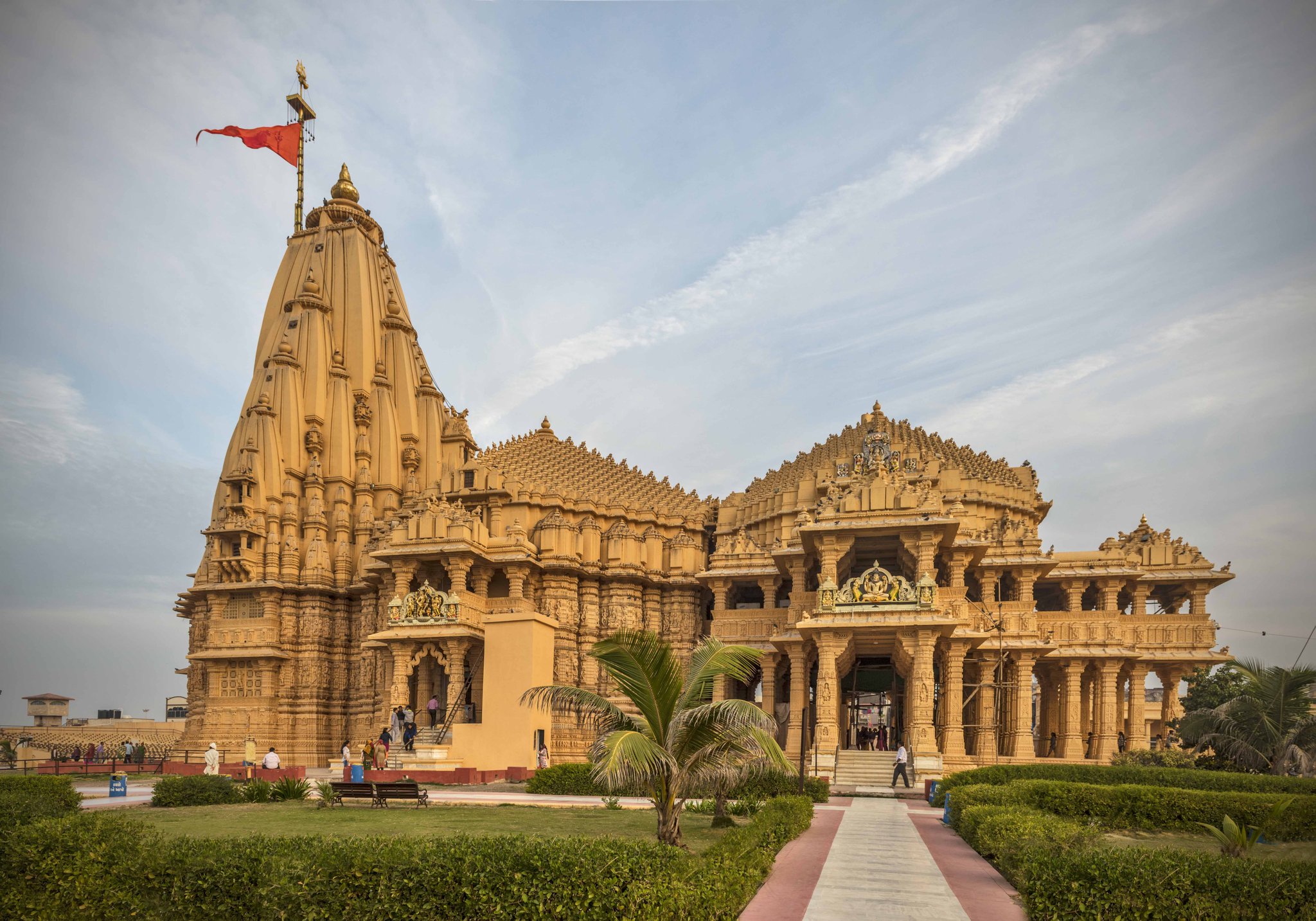
From 1026 CE Ashes to 2026 Eternity: The Glorious Living History of Somnath Jyotirlinga
Somnath.
The very sound of this name stirs something ancient within the Indian heart.
It is not merely a temple, not merely stone and sculpture. Somnath is a proclamation — of memory, of continuity, of the soul of Bharat that refuses to forget itself. Situated on the western edge of India at Prabhas Patan in Gujarat, where land meets the restless Arabian Sea, Somnath has stood as both sentinel and sanctuary for millennia.

When the Dwadasha Jyotirlinga Stotram opens with the line “सौराष्ट्रे सोमनाथं च”, it is not accidental. It announces Somnath as the first among the twelve Jyotirlingas, anchoring the spiritual geography of India.
It is also said: सोमलिङ्गं नरो दृष्ट्वा सर्वपापैः प्रमुच्यते। लभते फलं मनोवाञ्छितं मृतः स्वर्गं समाश्रयेत्॥
It means: Just the sight of Somnath Jyotirlinga ensures that a person is freed of sins, achieves their righteous desires and attains heaven after death. Long before invasions were recorded or dynasties rose and fell, Somnath was already woven into the civilizational consciousness of this land.
A Temple Older Than Recorded History
According to ancient Puranic traditions, Somnath’s origins reach back beyond conventional historical timelines. The Skanda Purana’s Prabhas Khanda speaks of the Jyotirlinga being established during the Treta Yuga, under the Vaivasvata Manvantara. Scholars associated with traditional Indic chronology, including Swami Gajananand Saraswati of Varanasi, have calculated—based on these textual traditions—that the first consecration of Somnath occurred nearly eight million years ago.
Whether one approaches this with faith, scripture, devotion or symbolism, the undeniable truth remains: Somnath has been central to Indian spiritual life and faith since time immemorial.
The Moon God and the Meaning of Renewal
The most enduring legend associated with Somnath is that of Chandra, the Moon God, and his liberation from decay.

Bhagwan Bholenath Blessing Moon God
Cursed by father-in-law Daksha Prajapati for arrogance and neglect of his wives, except Rohini, Chandra began to lose his radiance. Guided by Brahma, he arrived at Prabhas Tirtha and performed intense penance to Bhagwan Shiva. Moved by devotion, Shiva restored Chandra’s light—but only partially, creating the eternal waxing and waning of the moon.
In gratitude, Chandra established Somnath Temple —the Lord of the Moon.
The symbolism is powerful. Loss, repentance, renewal. Darkness followed by light. This philosophy would repeat itself through history.
Tradition holds that Chandra built a golden temple, Ravana rebuilt it in silver, and Lord Shri Krishna restored it using sandalwood. Whether read literally or symbolically, these layers reflect continuous reverence across ages.
Somnath: A Guiding Light of Faith, Inspiration and Prosperity
Somnath’s location was not incidental. Facing the open sea, it stood at the crossroads of maritime trade routes. Merchants, sailors, pilgrims, scholars — all passed through Prabhas Patan. The temple was both spiritual axis and economic nucleus, reflecting a confident civilization that saw no separation between sacred life and worldly prosperity.
This visibility also made Somnath a target for invading looters.
1026 CE: The First Recorded Destruction and loot

In January 1026, Mahmud of Ghazni invaded Gujarat and attacked Somnath during the reign of Bhima I of the Solanki dynasty. Persian chronicles themselves describe the scale of destruction and plunder — wealth accumulated over centuries, shattered idols, bloodshed, and terror.
Mahmud Ghazni looted vast riches and is said to have broken the Jyotirlinga into four pieces. Fragments were carried away as trophies of conquest.
But history often forgets what happened next.
Within four years, Somnath was rebuilt.
No royal proclamation. No imperial decree. Ordinary devotees, local rulers, merchants, ascetics — they came together and restored what had been destroyed. The message was clear: Somnath did not belong to kings; it belonged to faith.
Centuries of Destruction, Centuries of Reconstruction

Somnath Destroyed Temple 1580 CE Image Courtesy : British Library

Somnath Destroyed Temple 1587 CE. Image Courtesy : British Library

Image Courtesy : DH Sykes (British Library)
Somnath would face repeated attacks by Islamic invaders:
- 1299 – Alauddin Khalji’s forces ravaged the temple
- 1395 – Zafar Khan destroyed it again
- 1669 – Aurangzeb ordered its demolition and conversion
Each time, destruction followed power.
Each time, reconstruction followed devotion.
Great queen Ahilyabai Holkar, ruling from distant Malwa, rebuilt Somnath in 1783, refusing to allow sacred memory to die.
This cycle reveals something essential about Indian civilization: we rebuild not out of revenge, but remembrance.
Swami Vivekananda and the Meaning of Ruins
When Swami Vivekananda visited Somnath in the late 19th century, the temple lay scarred, wounded by centuries of assault. Yet what moved him was not grief, but recognition.
In 1897, during a lecture in Chennai in 1897, he famously said, “Some of these old temples of Southern India and those like Somnath of Gujarat will teach you volumes of wisdom, will give you a keener insight into the history of the race than any amount of books.”
They revealed a national mind — continually destroyed, continually rising.
We firmly believe that that which is eternal is indestructible, as outlined in the famous Gita verse “नैनं छिन्दन्ति शस्त्राणि…”.
Somnath was not a story of defeat. It was a lesson in endurance and glory.
1947: Freedom and an Unfinished Wound

When India gained independence, Somnath still lay in neglect.
During a visit in November 1947, Sardar Vallabhbhai Patel stood before the ruins. Those who accompanied him recalled his silence. Then he spoke, firmly and simply: Somnath will be rebuilt here.
For Sardar Patel, this was not a religious act alone. It was civilizational healing.
No mention of Somnath is complete without recalling the efforts of KM Munshi, who supported Sardar Patel very effectively. His works on Somnath, including the book, ‘Somanatha: The Shrine Eternal’, are extremely informative and educative.
With the unwavering efforts of K. M. Munshi, the project took shape. Despite political hesitation and objections, the resolve did not waver.
On 11 May 1951, the restored Somnath Temple was consecrated. Dr. Rajendra Prasad, India’s first President, stood before the Somnath Jyotirlinga and declared words that echo through history:
“By rising from its ashes again, this temple is proclaiming to the world that no power can destroy what people hold with boundless faith.”
2026: One Thousand Years Later

The year 2026 marks exactly one thousand years since the first recorded attack on Somnath.
Mahmud of Ghazni is remembered for destruction.
Somnath is remembered for survival.
The invaders are footnotes.
The temple is eternal.
The waves still crash against the shore at Prabhas Patan, just as they did a millennium ago.
Each wave seems to whisper the same truth: rise again, regain glory.
More Than Relic, Immortal
Somnath is not merely Hindu devotion history. It is Indian history. Jain acharyas, Vaishnava saints, Shaiva yogis — all found meaning here.
The centuries ago, Kalikal Sarvagna Hemchandracharya, a respected Jain monk, came to Somnath. It is said that after bowing down there, he recited a verse of renunciation and liberation, “भवबीजाङ्कुरजनना रागाद्याः क्षयमुपगता यस्य।”. It means – Salutations to That One in whom the seeds of worldly becoming are destroyed, in whom passion and all afflictions have withered away.”
Somnath welcomes all who seek inner stillness.
Why Somnath Matters Today

The Last Nritya Of Chaula Devi at the Somnath Temple -1022-64-CE.
Image Courtesy : Artist Ravishankar (1924)
In a world that often forgets its roots, Somnath reminds India who she is.
The Islamic plunderer of the past are now dust in the wind, their names synonymous with destruction and loot. They are chronicles in the annals of history, while Somnath stands bright, radiating far beyond the horizon, reminding us of the eternal spirit that remained undiminished by the attack of 1026. Somnath is a song of hope that tells us that while hate and fanaticism may have the power to destroy for a moment, faith and conviction in the power of goodness have the power to create for eternity.
- A civilization that absorbs wounds but refuses erasure.
- A people who rebuild temples, languages, traditions, and dreams.
- A nation that moves forward without abandoning faith.
If Somnath could rise after centuries of invading destruction, India can rise after centuries of colonization.
Conclusion: The Eternal Flame
Somnath stands today —majestic, luminous, glorious, unbowed.
It is not a relic of the past. It is a promise to the future.

Image Courtesy : narendramodi.in
We will conclude with Indian Prime Minister Narendra Modi’s recent statement :
“If the Somnath Temple, which was attacked a thousand years ago and faced continuous attacks thereon, could rise again and again, then we can surely restore our great nation to the glory it embodied a thousand years ago before the invasions. With the blessings of Shree Somnath Mahadev, we move forward with a renewed resolve to build a Viksit Bharat, where civilizational wisdom guides us to work for the welfare of the whole world.”
Jai Somnath.
News
On the evening of December 23, 2025, Hindi literature lost one of its quietest yet most profound voices—the Jnanpith Award–winning writer Vinod Kumar Shukla.
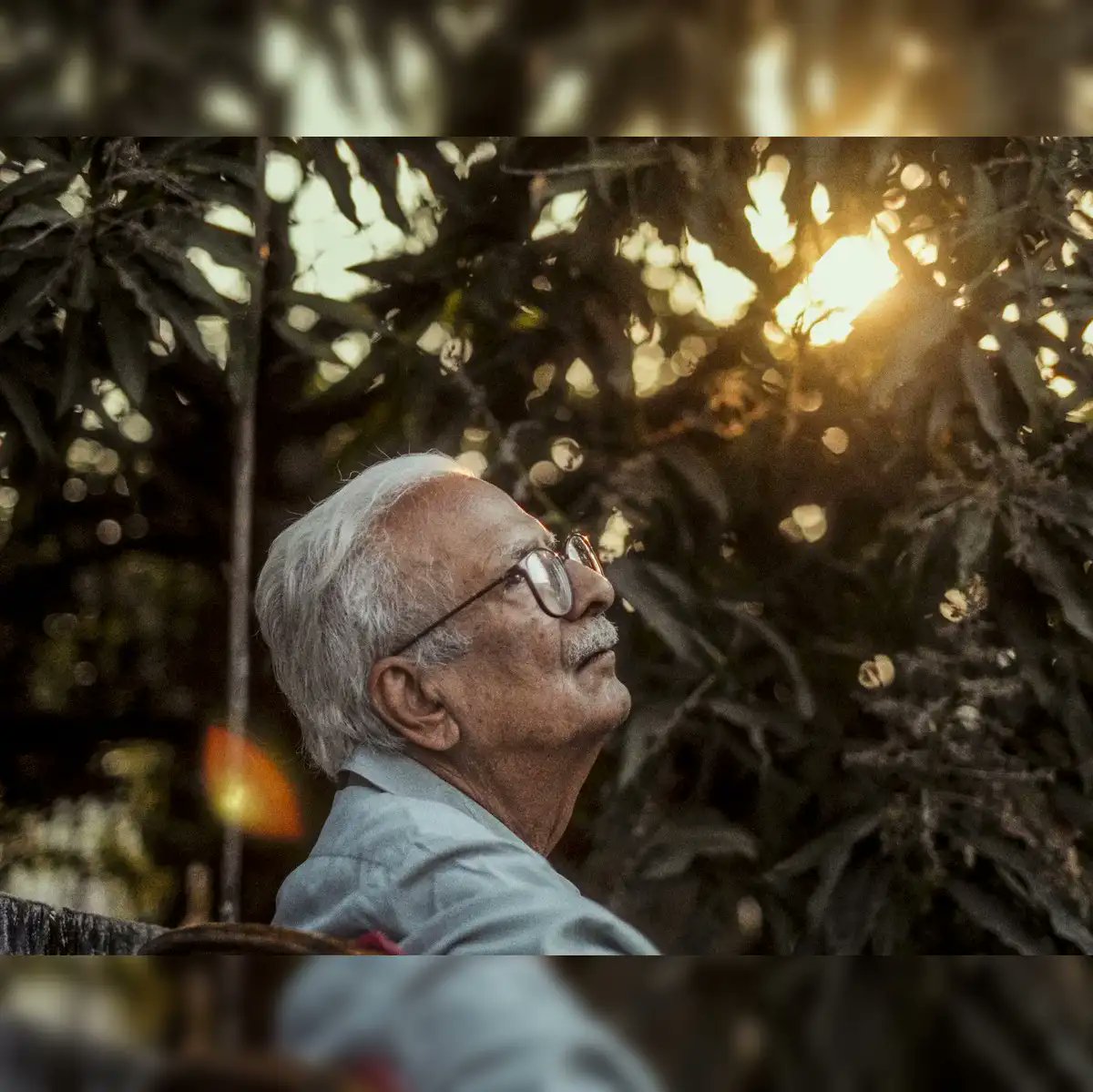
The Jnanpith Award–winning writer Vinod Kumar Shukla, who taught generations of readers how to listen to silence, passed away at the age of 89. His passing away does not knock with noise or spectacle—just like his writing, it leaves behind a quiet pause, conveying us to feel the painful silence rather than react.

“I want to stay alive till i die a natural death, Not till I killed by someone else” ~late Vinod Kumar Shukla
Prime Minister Narendra Modi voiced despair over Shukla’s passing, calling him a literary figure whose contribution to Hindi literature will be remembered for generations. In a message posted on X, the Prime Minister extended condolences to Shukla’s family, admirers, and the larger literary fraternity.
But Vinod Kumar Shukla’s true memorial does not live in official tributes. It lives in a clerk’s unspoken fatigue, in a window opening quietly in a wall, in a servant’s worn shirt that becomes an entire universe. His literature never shouted for attention; it waited patiently for readers who were willing to slow down. A Writer Who Chose the Ordinary—and Made It Eternal.
Born on January 1, 1937, in Rajnandgaon (in present-day Chhattisgarh), Shukla grew up far from the power centres of Indian literature. Perhaps that distance shaped his gaze. He looked not at heroes, but at everyday people—middle-class families, small-town clerks, silent households—and found in them a depth that others often overlooked.
He began his literacy journey as a poet, and poetry always lived in him. Even when he turned to fiction, his literary style carried the softness of verse. His passages moved slowly, deliberately, as if they did not want to disturb the inner lives they described. Unlike conventional narratives driven by dramatic events, Shukla’s stories often unfolded through stillness—through thoughts left unfinished, emotions barely spoken, and lives lived with quiet dignity.

In a literary world increasingly drawn to spectacle, his work gently resisted it. Books That breathe, Yet Stayed Forever Among his most celebrated works, Naukar Ki Kameez remains iconic—later adapted into a film by filmmaker Mani Kaul—a rare novel that transformed simplicity into philosophy.
Deewar Mein Ek Khidki Rehti Thi, for which he received the Sahitya Akademi Award in 1999, further established his reputation as a master of inward-looking fiction.
Books like Lagbhag Jai Hind, Khilega To Dekhenge, and Ek Chuppi Jagah revealed his unique ability to mix the everyday with quiet imagination—never loud, never forceful, but deeply unsettling in their honesty.


Often associated with the post–Nayi Kavita sensibility, Shukla stood apart even from his contemporaries. His writing carried moral clarity without preaching, compassion without sentimentality, and resistance without slogans. Recognition came late—but meaningfully in 2023, Vinod Kumar Shukla received the 59th Jnanpith Award, India’s highest literary honour, becoming the first writer from Chhattisgarh to do so.
Many felt the recognition was long overdue. In an interview that year, he responded to the honour with characteristic humility, saying that writers do not write for awards, and that recognition arrives naturally when one remains honest to the path of writing.
He also spoke fondly of his early years in Rajnandgaon (Chhattisgarh), recalling how his first poetry collection was published after poet and critic Ashok Vajpeyi selected his poems.
He often credited his mother’s love for Bengali literature for shaping his early reading habits.
The Final Chapter Of Life
Shukla had been admitted to AIIMS Raipur on December 2 after experiencing breathing difficulties. He had also undergone treatment at a private hospital earlier in the year. His family confirmed that he passed away due to age-related health issues on December 23, 2025 at 4:58 PM. He is survived by his wife, son Shashwat, and a daughter.
The last rites of renowned Hindi writer and Jnanpith Award recipient Vinod Kumar Shukla were performed with full state honour in Raipur. Chhattisgarh Chief Minister Vishnu Deo Sai visited residence of Vinod Kumar Shukla and paid his final farewell.
At Bharatnewsupdates, we deeply mourn the passing of Vinod Kumar Shukla, one of the most original and quietly radical voices in Indian literature. His legacy will live on forever.
With his passing, Hindi literature does not lose a celebrity writer—it loses a conscience that believed in softness, restraint, and listening. Vinod Kumar Shukla showed us that the most powerful literary works are not always loud. Sometimes, they simply sit beside us, quietly changing how we see the world.
And long after the headlines fade, his words will remain—unhurried, humane, and endlessly alive.


Cervical Cancer in India: Why the Government’s HPV Vaccination Push Could Save Millions of Indian Women

Holi 2026 Guide: Know Holika Dahan, Chandra Grahan & Rangwali Holi Celebration Dates Explained

From “Kerala” to “Keralam”: The 2,000-Year Journey, From Emperor Ashoka’s Edicts to PM Modi’s Cabinet
-

 Fashion9 years ago
Your comprehensive guide to this fall’s biggest trends
-

 Sports2 months ago
Renuka Struck, Deepti Controlled, Shafali Finished : India Outclass Sri Lanka To Seal Series 3–0
-
Entertainment9 years ago
Rappers are blowing up Twitter with praise for Jay Z and ‘4:44’
-
International News2 years ago
The United Nations Observes A Minute Of Silence In Memory Of The 101 Staff Who Died In Gaza
-

 Entertainment3 months ago
Dhurandhar Film Review—A Powerful, Action-packed, Engrossing, Yet A Bit Dragged-Out Theatrical Experience!
-

 Business2 months ago
Historic milestone! New Zealand commits to an investment worth USD 20 billion in India under the India-New Zealand Free Trade Agreement
-

 International News3 months ago
President Vladimir Putin and Prime Minister Narendra Modi—both travel in “Fortuner Fortune Shield.” As global eyes watch, the message is clear – ये दोस्ती हम नहीं तोड़ेंगे!
-
Business9 years ago
15 Habits that could be hurting your business relationships