

India Holds Asia’s Third Spot, and the Story Is Bigger Than One Score
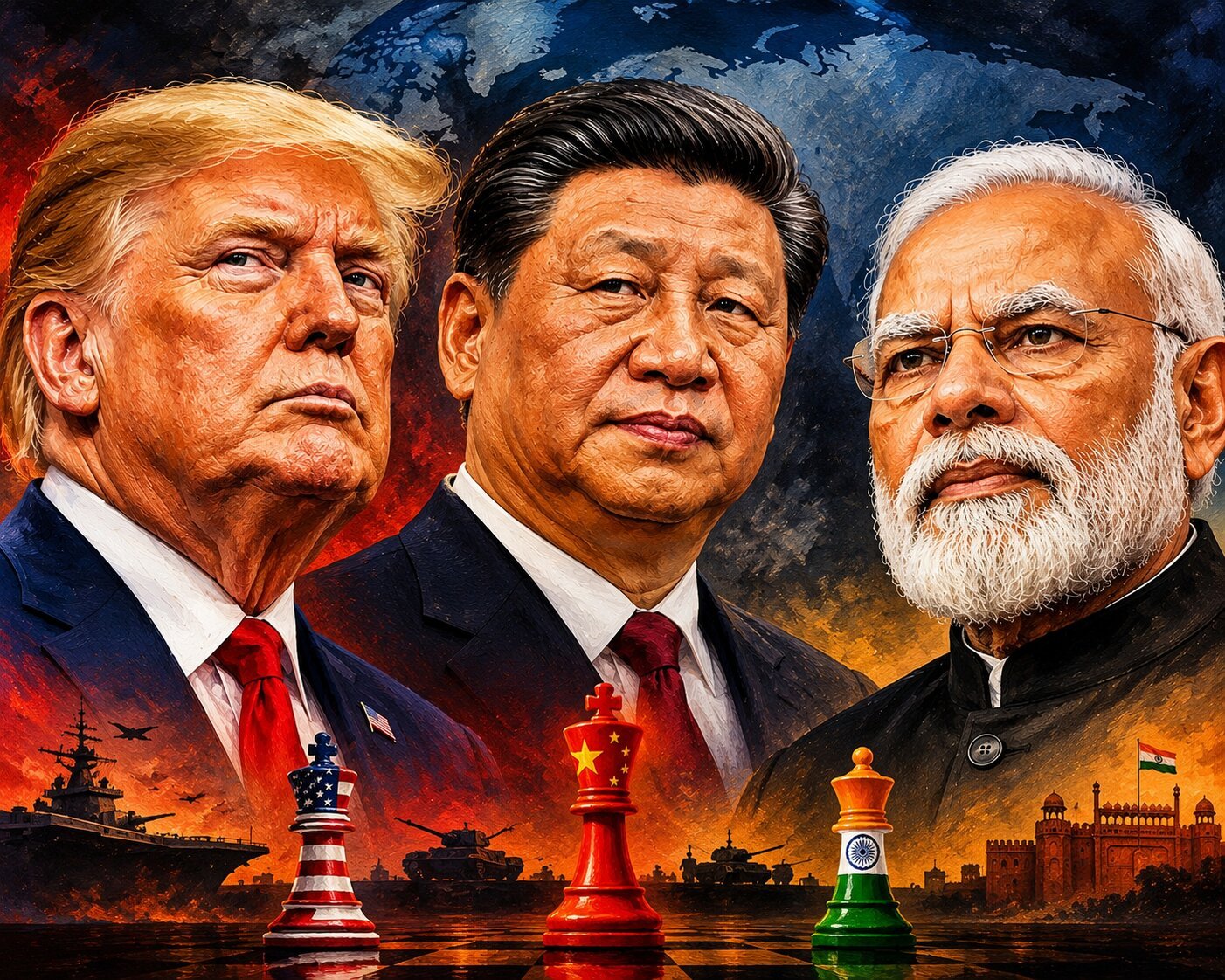
India has stayed third in the Lowy Institute‘s 2026 Asia Power Index for the third year running, scoring 40.5 points. Prime Minister Narendra Modi is rated the region’s second most effective leader, behind only Xi Jinping. The score has crept up from 39.1 in 2024 and 40 in 2025.
What the index weighs
The Sydney think tank ranks 27 countries and territories on eight measures: economic capability, military capability, resilience, future resources, economic relationships, defence networks, diplomatic influence and cultural influence. Forty points marks a “major power,” and India sits just above that line.
Where India gained ground
The lift came from influence. Cultural influence rose 2.3 points, defence networks 2.1, future resources 1.2 and military capability 0.5. The defence gain has a concrete cause: deeper regional defence engagement and BrahMos missile sales to Southeast Asia. Diplomatic influence held steady at 70.3 while it slipped across much of the region, and India was among the few countries whose trade and investment ties did not weaken.

The economy: a snapshot, not a verdict
India’s economic capability score dipped 0.7 to 26.4, though it still ranks third in the region. Lowy pointed to the weaker rupee, an IMF change in how economies are measured, and a drop of nearly $20 billion in outbound investment.
That reading reflects the weak-rupee stretch. The currency hit a record low near ₹96.8 in May. By mid-November it was Asia’s best-performing currency of the month, at a seven-month high. Foreign investors ended a 16-month run as net sellers of Indian shares. Some analysts do warn the gains could slow down, but the picture looks brighter than when the data was gathered, comparing stock market indices across the world.
Energy: dependent on crude, strong on refining
India imports about 88 per cent of its crude, yet its refining capacity of 267.1 million tonnes ranks fourth in the world. Reliance’s Jamnagar complex alone can process 1.4 million barrels a day. In August, India supplied about 60 per cent of the diesel moving through Bab-el-Mandeb toward Europe.
Washington noticed. US Secretary of State Marco Rubio toured Reliance Jamnagar on 21 October, and called India a refining “superpower.” Crude dependence remains the number to watch, but India has turned it into a lucrative export business.
The Gulf conflict, read two ways
Lowy’s experts said India’s low profile during the Gulf conflict weighed on perceptions of Modi’s global leadership. India’s own record reads differently. The foreign ministry urged restraint and civilian safety from the day the war began on 28 February, welcomed the April ceasefire, and called for de-escalation again when fighting flared in June.
India also acted. It approved an urgent request to dock the Iranian ship IRIS Lavan at Kochi, where 183 crew were housed at naval facilities. That is separate from the frigate IRIS Dena, which had attended the Indian-hosted exercise and was sunk by a US submarine. Lowy reads quiet restraint as a low profile. India describes it as independent judgment. And here India is true.
Against the two giants
The index calls the region markedly bipolar. The US-China gap shrank to 5.3 points, the narrowest on record, mostly because Washington lost ground. India’s gap with China is 33.1 points, the smallest since 2018, though China’s overall power remains about 80 percent higher. India’s rise happens in the space between two much larger players.
What the scorecard can’t show
The index has no separate line for medicines, grain or governance, and their effects only show up indirectly, through resilience and future resources. As context beyond the index, India’s drug makers supply low-cost quality generics across the developing world. Large welfare programmes, from free grain to direct cash transfers, strong GDP, keep economic shocks from becoming household crises. Together these explain why India is hard to leave out of any regional calculation.
The honest reading
India’s “power yield” gap, the distance between what it has and what it uses, narrowed for the first time since 2023. The weights behind these scores are expert judgments, and the methodology does not say how many experts were consulted. The index is a careful opinion, not a measurement.
What it captures well is direction. India is rising steadily, with its currency recovering, its refiners in demand and its neighbours buying its defence products. The next step is turning that regional standing into a global one.
India’s Performance & Key Takeaways
-
Major Power Status: India’s score rose by 0.5 points to 40.5, keeping it ahead of Japan (38.6) and narrowing the power gap with China to its closest point since 2018.
-
Measure Breakdown: India scored 70.3 in Diplomatic Influence, 56.2 in Future Resources, 55.4 in Resilience, 48.5 in Military Capability, 43.8 in Cultural Influence, 26.4 in Economic Capability, 19.9 in Economic Relationships, and 18.6 in Defence Networks.
-
Gains & Trade-offs: Cultural Influence saw the sharpest jump among India’s measures (+2.3 points), and Defence Networks rose (+2.1 points to 18.6, moving up two spots to ninth) alongside regional defence ties and BrahMos missile sales to Southeast Asia. Economic Capability dipped slightly (-0.7 points to 26.4) amid currency shifts, IMF methodology updates, and lower outward investment, though India stayed third in that measure.
-
Regional Leadership: Report analysts ranked Prime Minister Narendra Modi second among regional political leaders behind Chinese President Xi Jinping, while Union Minister Kiren Rijiju pointed to the ranking as evidence of India’s rising standing over the past decade.
Broader Regional Shifts
-
US–China Gap: The gap between Washington and Beijing shrank to 5.3 points overall, with the report noting that US military and diplomatic standing took hits tied to the conflict with Iran, trade tariffs, and foreign policy shifts.
-
Alignment & Middle Powers: Defense and economic ties deepened among China, Russia, and North Korea, while several middle powers and Southeast Asian nations experienced diplomatic headwinds during the year.
Bharatnewsupdates International Insight Team ⊥ November 2026, 25