

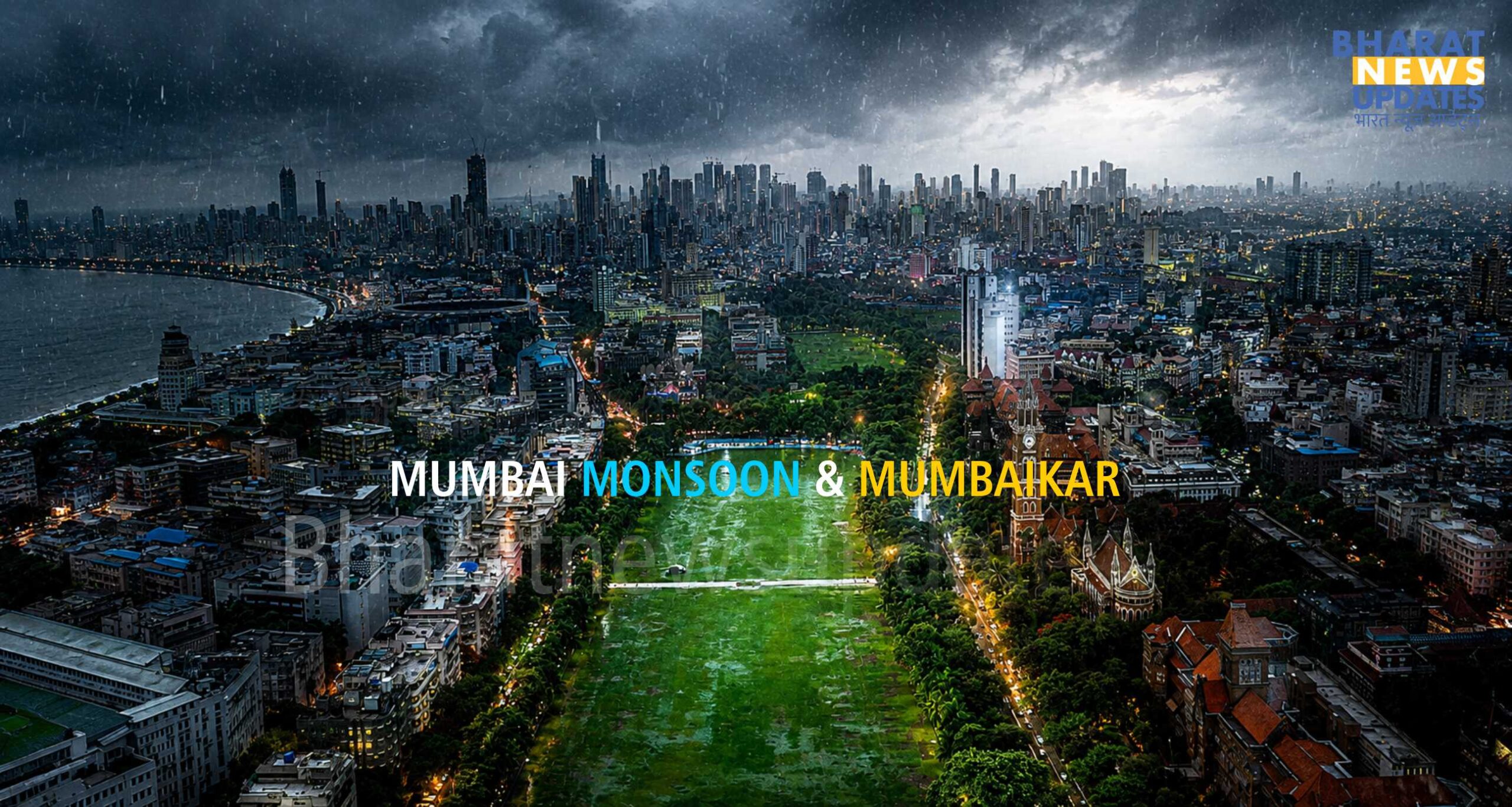
There’s a joke doing the rounds in Mumbai’s local train compartments this week: “Three weeks ago we were told to save every drop. Now we can’t find dry ground to stand on.” Nobody’s really laughing, because it’s true and it’s the strangest, most under-reported story of this monsoon.
The rain came late. Then it came all at once.
Until mid-June 2026, Mumbai‘s water managers were staring at a genuine crisis. The Mumbai city’s seven lakes, the reservoirs that keep 1.2 crore-plus people in drinking water had dropped to a level so low it barely registered. On June 29, the combined live storage across all seven lakes stood at just 6.93 per cent of total capacity, compared with 39.5 per cent on the same date in 2025, a gap that had civic officials openly discussing rationing beyond the existing water cuts.
Then, in the space of about ten days, the sky flipped a switch. Intense, near-continuous downpours from July 1 onward pushed lake stock from 7.18 per cent on July 1 to 8.12 per cent on July 2 to 8.93 per cent on July 3, a genuine but still fragile recovery. The uncomfortable truth few are saying out loud: even after days of relentless rain that flooded roads and stalled trains, Mumbai’s lakes are still running at less than a quarter of where they stood at this point last year. Flooded streets and empty reservoirs are, this year, the same story told twice.

Rainfall on the ground: heavy, but patchy
South Mumbai stations have been the standout performers. Between the 48 hours ending July 3, Mandvi Fire Station recorded 150.2 mm, Malabar Hill logged 145.8 mm, and B Ward Office measured 140.8 mm. A day later, the western suburbs took the lead with Bandra’s H West ward office topped the list at 150.6 mm, with Supari Tank and Pali Chimbai in Bandra close behind, while the eastern belt saw Vikhroli, Ghatkopar, Mankhurd and Chembur each cross the 120-130 mm mark within 24 hours. Earlier in the week, the eastern suburbs had their own headline number when Mithagar Municipal School in Mulund recorded 230.8 mm in a single stretch enough to make it the wettest spot in the city that day.


The hidden reality here is one meteorologists know well but rarely explain simply: Mumbai’s rain doesn’t fall evenly. One ward can get a month’s quota while a neighbourhood ten kilometres away stays dry enough to hang laundry outside. That’s why “how much did it rain in Mumbai” is always a slightly dishonest question and the honest answer is “which Mumbai are you asking about?”
Where the city is going under
This week’s waterlogging map reads like a greatest-hits list of the same chronic spots, plus a few new entrants. Marine Lines, Prabhadevi, Byculla, Lalbaug, Andheri, Malad, Jogeshwari, Kurla, Mulund and Kanjurmarg have all seen flooded roads and traffic snarls. Andheri, Kurla East, SG Barve Road, Sindhi Society, Chembur, Kings Circle and Gandhi Market turned into wading zones on another day, with Dadar station’s own tracks going under water. The Andheri Subway has had a genuinely split personality this week closed to traffic after nearly five feet of water pooled inside it on one occasion, open and dry on other mornings is the proof that even the “usual suspects” don’t flood on a predictable schedule. Further out, Nalasopara’s Don Lane and Tulinj Bridge areas have seen residents wading through knee-deep water, and a shocking, under-covered incident saw two college students critically injured after electrocution in a waterlogged Nerul street in Navi Mumbai.

Locals: running, but rarely running well
Nobody promised you an on-time train this July, and the railways have mostly delivered on that low bar. Through the week, Central Railway’s Harbour and Main lines saw 5–10 minute delays from reduced visibility, while a separate spell brought Central Railway delays of up to 15 minutes and Western/Harbour line delays of around 10 minutes. The Harbour line had its worst day when a fault in the overhead electric wire caused several trains to stall mid-route, needing an on-site repair crew. By Saturday morning, the pattern had flipped in an oddly reassuring way: Western Line trains ran on schedule with no major disruption, while Central and Harbour lines were the ones delayed by 15–20 minutes, a reminder that “Mumbai locals running normally” is really a three-way coin toss between lines every single day.

The next 72 hours
| City/District | July 4 | July 5 | July 6 |
|---|---|---|---|
| Mumbai | Heavy to extremely heavy showers, Red Alert | Heavy showers continue, Red Alert | Heavy to very heavy, Red Alert |
| Thane | Red Alert, heavy to extremely heavy | Red Alert continues | Heavy showers likely |
| Palghar | Red Alert, extremely heavy at isolated spots | Red Alert continues | Heavy to very heavy |
| Navi Mumbai | Heavy rain, local flooding risk | Heavy showers | Moderate to heavy |
| Raigad | Red Alert, extremely heavy isolated | Red Alert continues | Heavy rain, Ghat caution |
| Pune | Light to moderate rain, thundershowers | Light rain | Rain, thundershowers |
| Nashik | Rain showers, yellow alert | Rain showers | Patchy rain, easing slightly |
Compiled from IMD nowcasts and district bulletins issued through July 4, 2026. Red/Orange alerts can be revised within hours, always check the IMD Mumbai site or the Sky Meteorological app before stepping out.
The seven lakes, lake by lake
| Lake | Approx. useful storage (as of July 3, 2026) | Overflow status |
|---|---|---|
| Bhatsa | ~5.7% | Well below overflow; needs sustained heavy rain for weeks |
| Upper Vaitarna | Below Lowest Drawable Level (effectively 0% usable) | Nowhere close; usually the last to fill |
| Middle Vaitarna | ~12.9% | Far from overflow |
| Modak Sagar | ~22.6% | Recovering fastest of the seven, still far from full |
| Tansa | ~3.6% | One of the slowest to recover this year |
| Vihar | ~57% | Best-performing lake; smallest catchment, fills quickest |
| Tulsi | ~34% | Rising steadily; historically the first or second to overflow each year |
Figures reflect the Hydraulic Engineer’s Department bulletins tracking daily change; percentages move by the hour during active rain spells, so treat these as a same-week snapshot, not a live reading.

The quietly fascinating detail buried in this table: Vihar and Tulsi, Mumbai’s two smallest lakes by capacity, are also its earliest bloomers every single year, simply because their catchments are compact enough to fill fast. Bhatsa, the giant that supplies nearly half the city’s water, is always the last and slowest to recover which means the headline “lakes rising” can be true and “water crisis easing” can be false, at the very same time.
What officials are actually telling you to do
The IMD’s standing advisory through this Red Alert window is refreshingly specific rather than generic: avoid weak or damaged structures, stay off low-lying and waterlogging-prone stretches, keep well away from trees and electric poles, and stay tuned to the latest bulletins rather than yesterday’s forecast. On the ground, the Maharashtra CM’s office and the State Disaster Management Department have asked residents to skip non-essential travel during intense spells and lean on official advisories rather than rumours, backing that up with the BMC‘s emergency helpline 1916 for anyone in trouble.
On schools, the picture genuinely differs street by street. Thane, Navi Mumbai and Kalyan-Dombivli declared school and college holidays for the weekend as soon as the Red Alert was issued, and Palghar’s district administration did the same for Thane, Navi Mumbai and Kalyan-Dombivli on the day the season’s first Red Alert was announced. Mumbai city itself caught a scheduling break this time with July 5 falling on a weekend, most Mumbai schools were already shut, though colleges and other institutions were told to issue their own calls depending on local conditions. It’s worth remembering this isn’t automatic: in past red-alert spells, BMC has both ordered shutdowns and, within 24 hours of the weather clearing, declared schools open again, so a holiday announced today carries no guarantee for tomorrow.
The uncomfortable bottom line
Mumbai in the first week of July 2026 is a city living two contradictions simultaneously. Its streets are flooding hard enough to short-circuit pedestrians and stall trains, yet its reservoirs, the actual lifeline of the city, remain drier than they’ve been in years. The rain that inconveniences your commute today is not, on its own, the rain that guarantees your tap works in April 2027. That takes weeks more of exactly this kind of relentless, disruptive downpour landing squarely over Bhatsa, Tansa and Upper Vaitarna’s catchments, not just over the suburbs you happen to walk through. So the next time the rain ruins your commute, it’s worth remembering: for once, that’s actually good news for the reservoir a hundred kilometres away.