

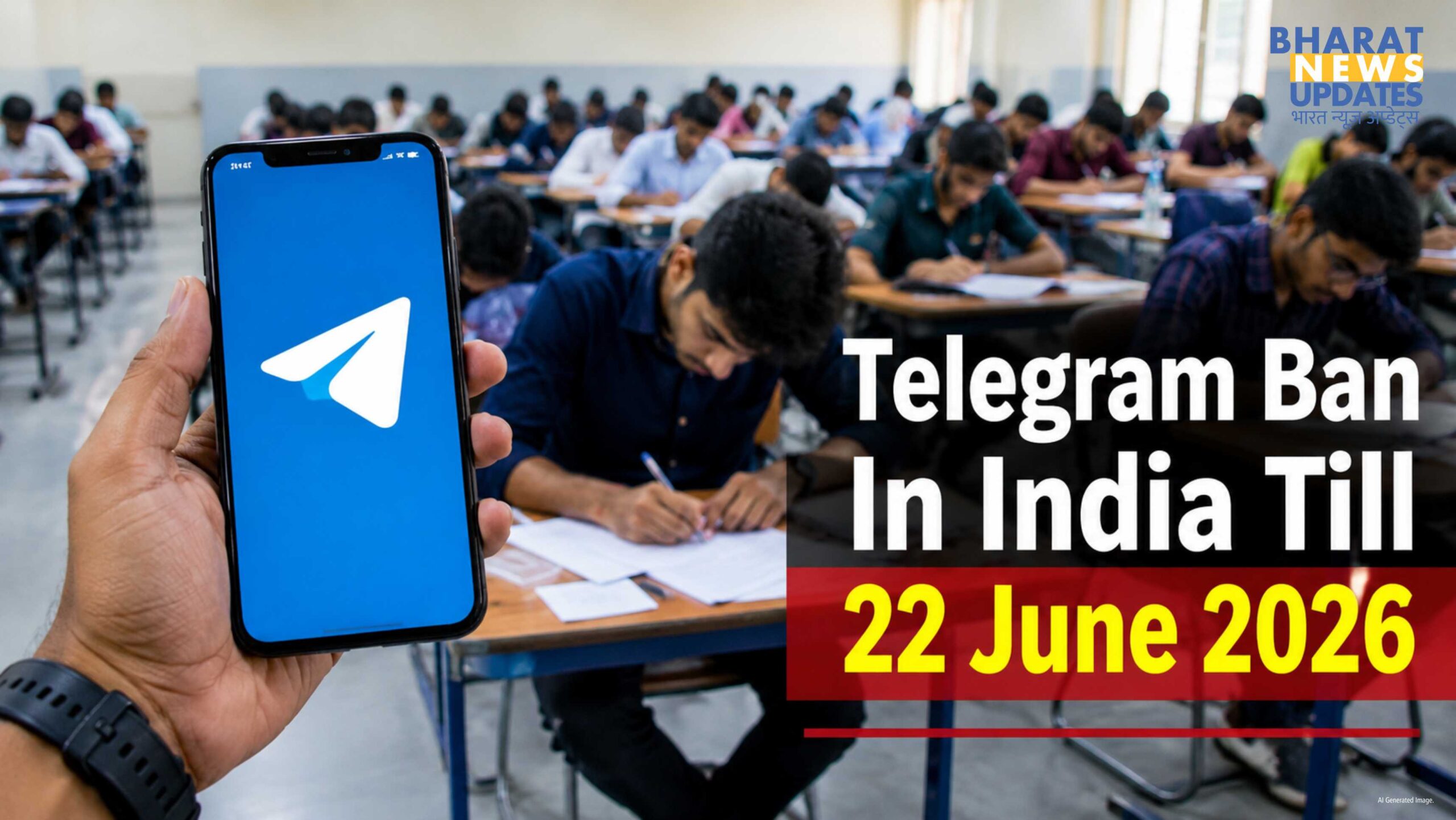
How a historic app block exposed the real rot in India’s exam system and why the fix may be more dangerous than the problem it’s trying to solve.
When India’s Ministry of Electronics and Information Technology (MeitY) quietly invoked Section 69A of the IT Act on June 16, 2026 to temporarily restrict access to Telegram across the country until June 22, it made global headlines. What didn’t make headlines: hours after the government invoked emergency IT law powers to block the app, multiple users across India reported that Telegram was working perfectly normally they could open it, send messages, and even create new accounts without any obstacle.
That’s the story nobody is telling you.
The Crime Was Real. The Fix Was Theater.
Let’s be clear about what actually happened. The NEET-UG 2026 examination, held on May 3 for over 2.27 million aspirants seeking admission to undergraduate medical and dental courses, was cancelled on May 12 following investigations that revealed overlaps between a pre-circulated guess paper and the actual question paper. Over 23 lakh students, who spent years and often lakhs of rupees preparing exam were told to come back for re-exam on June 21.
The anger was legitimate. The betrayal was real. And so was the grift that followed.
Telegram Channels operating openly under names like “PAPER LEAKED NEET,” “Re-NEET 2026,” and “Private Mafia” were demanding sums ranging from a few thousand to several lakhs of rupees from candidates and their families in exchange for purported access to the re-examination paper. The Ahmedabad City Cyber Crime Branch arrested members of an inter-state fraud gang found to be running eight Telegram channels as part of the same scheme, with documented transactions linked to the operation amounting to approximately ₹1.5 crore.
These weren’t master hackers. These were opportunistic fraudsters, exploiting desperate families who had already been burned once by a failed system.
The Timestamp Trick Nobody Explained Properly
Here’s the detail most outlets buried. The government didn’t just ban Telegram, it also ordered the platform to disable its message-editing feature until June 30, targeting a structural vulnerability being used by cheating syndicates to manipulate timestamps and alter text after exams had already concluded, creating a false, retroactive illusion of ‘paper leaks’ to defraud candidates.
Think about what this actually means. A fraudster creates a Telegram channel. They post something innocuous say, a motivational quote at 11 PM the night before an exam. After the paper is conducted the next morning, they edit that old message to insert the actual question paper. Telegram retains the original timestamp. Suddenly, they have “proof” they had the paper before the exam even started.
It’s not a paper leak. It’s a post-dated forgery. And students, terrified and desperate, were paying lakhs for it.
The NTA described this as “fabricating after-the-event ‘paper leak’ artefacts” and said the MeitY direction was intended to “close this avenue of fabrication for the post-examination window in which such artefacts have historically been deployed.”
Disabling message-editing is actually the more intelligent of the two interventions. It is surgically targeted. It doesn’t shut anyone out, it just closes a specific exploitation loop. The full platform ban, on the other hand, is a sledgehammer where a scalpel was needed.
The Uncomfortable Reality: You Cannot Block Telegram
Cybersecurity researcher Nisarga Adhikary said it plainly on X: “Can’t stop paper leaks, ends up blocking Telegram.” He’s right and the government likely knows it.
The Internet Freedom Foundation (IFF) put it starkly: “A determined exam leak racket moves to a VPN or a mirror within minutes while ordinary users lose the service for a week.”
Telegram was architected for censorship resistance. Pavel Durov built it specifically so that authoritarian governments couldn’t shut it down. Iran has banned it for years. Despite years of government restrictions, approximately 50 million users in both Iran and Russia continue using Telegram through VPN technology. India’s one-week block against fraud rings who are, by definition, already operating illegally is not going to slow them down.
What it does is punish the 500+ million Indian Telegram users who use the app for legitimate purposes: study groups, business communication, news channels, community organizing. The IFF called it what it is: “The State cannot switch off a service used by lakhs to answer the wrongdoing of a few.”
The Hidden Contradiction at the Heart of This
Here’s what nobody wants to say out loud: the NTA itself acknowledged that the ban was a “measure of last resort,” taken only after channel-by-channel takedowns coordinated by the Indian Cyber Crime Coordination Centre (I4C) under the Ministry of Home Affairs failed to produce adequate compliance at the platform level.
So the government tried the targeted approach, Telegram didn’t comply fast enough, and the government escalated to a blanket ban. That’s understandable as frustration. But it also reveals the deeper problem: Telegram does not have an office in India, and consequently doesn’t respond to the requests of Indian law enforcement at all, or not quickly enough. A week-long ban doesn’t fix that structural accountability gap. When the ban lifts on June 22, nothing about Telegram’s legal relationship with India will have changed.
What Should Actually Happen
The IFF’s ask is reasonable and overdue: publish the MeitY Section 69A order and the NTA recommendation behind it, so Indians can see the legal reasoning for losing access to an app used daily by millions. Blocking orders under Section 69A are issued in secret by default, the affected user has no right to know why, appeal, or challenge it in real time. That opacity is its own democracy problem.
Beyond transparency, the fix for exam fraud has never been about Telegram. It’s about proctoring protocols, paper-printing security, source control, and making it criminally and financially ruinous to participate in a leak syndicate. Every technical solution biometrics, multiple paper sets, AI-based surveillance in exam halls is more durable than blocking an app for six days.
The NEET crisis is real, the stakes are enormous, and the students sitting for the re-exam on June 21 deserve every possible protection. But protection built on a leaky dam, one that bad actors bypass in minutes while ordinary users are locked out isn’t protection. It’s optics.
India’s exam system has a rot that runs deeper than any messaging app. Telegram just made the rot visible. Blocking it doesn’t cure anything. It just shoots the mirror.