

Three Dead. 18,000 in Peril. And America Isn’t Even Apologising.
When a US jet fires into a merchant ship’s engine room and kills Indian sailors, calling it “collateral damage” is no longer enough — it’s a geopolitical statement.
Aditya Sharma was 23 years old. He had reportedly told his father, just weeks before he died that his ship had already received two warnings from the US Navy. He knew the danger. He stayed. That’s what seafarers do.
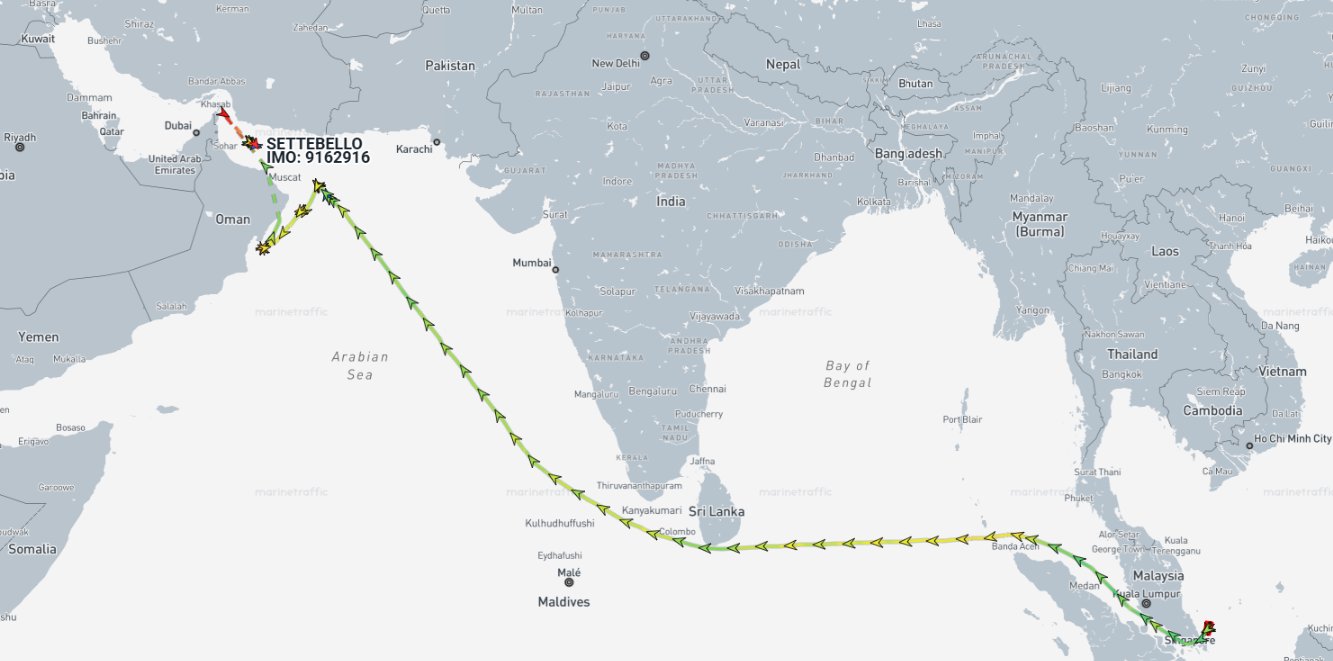
On June 9, 2026, a US aircraft fired precision munitions into the engine room of the Palau-flagged tanker MT Settebello in the Gulf of Oman. Three Indians died: Aditya Sharma, a 23-year-old marine engineer from Visakhapatnam; Shivanand Chaurasia, 38, an engine fitter from Uttar Pradesh; and Patnala Suresh, 44, a deck cadet-in-training from Himachal Pradesh.
Three vessels. Three attacks. All within days of each other. All carrying predominantly Indian crews. This is not coincidence. This is a pattern and India is refusing to pretend otherwise.
The Blockade Nobody Voted For
Here’s what the mainstream narrative is carefully tiptoeing around: the US naval blockade of Iran is legally contested. It was not authorized by a UN Security Council resolution. Several international legal scholars have called it a violation of the freedom of navigation, one of the oldest and most sacrosanct principles of maritime law.

US CENTCOM states it has “disabled” nine non-compliant vessels, “redirected” 135 ships, and “allowed” 42 humanitarian vessels to pass. Notice the language: allowed. The United States has essentially set itself up as the toll-gate of the world’s most critical oil artery through which a fifth of global crude oil and a fifth of all LNG flows without the endorsement of international maritime law.
And yet, when India protests, the US doesn’t reach out, doesn’t call, doesn’t offer compensation. It doubles down. President Trump, in his own words: “We’ve been taking out big ships, quietly at night.”
Quietly at night. The phrase should haunt every Indian household with a son at sea.

India’s Hidden Vulnerability: The 3.2 Lakh Blind Spot
India has the world’s second-largest seafaring workforce around 3.2 lakh seafarers serving on vessels globally. Of these, nearly 18,000 are currently operating in and around the Strait of Hormuz and the Gulf of Oman alone. A further 622 Indian nationals aboard 13 India-flagged vessels are operating in waters directly adjacent to the war zone.
Here’s the thing nobody is saying loudly enough: most of these seafarers work on foreign-flagged vessels. The Settebello flew a Palau flag. The Jalveer flew Guinea-Bissau colors. The Marivex, another targeted ship Palau again. These aren’t Indian ships. They’re ships of convenience, registered in tiny Pacific island nations that contribute zero geopolitical weight.
What that means, practically, is this: India’s ability to legally protect its own citizens is severely curtailed because those citizens are crewing vessels that technically belong to countries with no military capability, no diplomatic leverage, and no seat at the table where wars are decided.
It’s an extraordinary structural vulnerability that nobody, not the government, not the unions, not the shipping industry wants to confront publicly. Because confronting it means confronting the entire architecture of how Indian labour powers global shipping while remaining largely stateless at sea.


Is This Deliberate? The Uncomfortable Question
Let’s say what analysts in Delhi’s strategic community are whispering but not publishing: Could American targeting be even partially conditioned by the crew composition?
The answer, most likely, is no, the US military is not deliberately targeting Indian lives. The targeting logic is sanctions enforcement against Iranian oil, and Indian seafarers are simply the collateral arithmetic.
But that’s actually more disturbing, not less.
It means India’s citizens three dead, eighteen thousand at risk are not even significant enough to factor into Washington’s operational calculus. They are irrelevant to the decision-making. The engine room of a merchant ship carrying 24 Indian crew members can be blown up by a precision munition and the US CENTCOM press release doesn’t even mention casualties. Not one word.
That’s not malice. That’s erasure.
And erasure, in geopolitics, is often more dangerous than direct hostility. Hostility can be negotiated. Erasure signals that you simply don’t count.
The Pakistan Angle: Red Herring or Real Signal?
Some strategic observers are drawing a triangle between Washington’s renewed courtship of Islamabad particularly around counter-terrorism cooperation and Afghanistan stability talks and what they see as a subtle, unsaid message to New Delhi: your strategic autonomy has a cost.
This theory deserves scrutiny, not dismissal.
India has not joined Western sanctions on Russia. It has continued purchasing Russian oil often using the same shadow fleet infrastructure that now operates in the Gulf. India abstained on key UN votes condemning Iran. India has been deepening economic ties through the International North-South Transport Corridor (INSTC), which passes through Iran.
In other words: India has been doing business with everyone the US considers an adversary, and Washington has been patient until now.
Whether the Settebello strike was a “message” is impossible to prove. But the timing, during a period of heightened US-India diplomatic friction over India’s Russia oil imports, just months before key Quad security meetings is impossible to ignore.
The contradiction here is layered: the US needs India as a counterweight to China in the Indo-Pacific. It cannot afford to push India away entirely. So what does it do? It fires into engine rooms at night and calls it enforcement.
What India Actually Did (And What It Didn’t)
The Indian government’s response has been calibrated, firm enough for domestic optics, careful enough not to rupture the strategic relationship.

The US Chargé d’Affaires was summoned. A “strong protest” was lodged. The Ministry of External Affairs said “the targeting of commercial shipping and civilian infrastructure in the region must end.” Minister Sonowal promised swift repatriation of remains. The Directorate General of Shipping issued a 18,000-seafarer alert, mandating security drills, Ship Security Alert System (SSAS) testing, and continuous vigilance against drones, missiles, loitering munitions, and unmanned surface vessels.
What India did not do: threaten any review of the strategic partnership. It did not invoke international maritime law publicly. It did not seek a UN Security Council statement. It did not announce any reciprocal trade or diplomatic measure.
That restraint is itself a message, India is not willing to die on this hill. But it is also, quietly, beginning to count the cost.
The Hidden Reality of “Shadow Fleet” Shipping
Here’s a dimension the Indian media coverage has almost entirely missed: several of the targeted ships belong to the so-called “shadow fleet” older tankers, often operating without Western insurance, transporting sanctioned oil under flags of convenience.
Indian seafarers, often recruited through agents in port cities like Visakhapatnam, Mumbai, and Kolkata, frequently end up on these vessels because they offer higher wages. The risk premium is real, and many sailors understand it. What they don’t understand, what nobody clearly tells them is that their ship may be on a US Navy watchlist before it even leaves port.
Aditya Sharma’s grandfather told the press: “We want to know the full truth of what happened. Our hearts are shattered.”
The full truth is that global shipping operates in a grey zone of legal ambiguity where Indian seafarers serve as the human cost of someone else’s sanctions regime. The boys from Visakhapatnam and Uttar Pradesh sign contracts to move cargo. Somewhere between the port and the engine room, they become geopolitical pawns.
What Comes Next: Three Scenarios
Scenario 1: Managed Silence: India continues to register protests, the US continues to enforce its blockade, and after the Iran-US conflict reaches some kind of ceasefire, this episode is quietly archived. India-US relations continue their awkward waltz. Most likely scenario.
Scenario 2 : The Escalation Nobody Wants: Further Indian deaths, a domestic political storm in India especially with opposition parties now calling for answers, force the Modi government into a more confrontational posture. India begins advocating loudly for international maritime law reform, finds allies in China, Russia, and ASEAN, and the episode becomes a defining moment in India’s strategic autonomy narrative. Less likely, but not impossible.
Scenario 3 : The Deal Behind Closed Doors: India and the US negotiate privately. Washington offers compensation or operational safeguards for Indian-crewed vessels. India quietly adjusts its Iran trade posture slightly. Nobody announces anything. The families of Aditya, Shivanand, and Patnala receive some settlement. This, unfortunately, may be the most “practical” outcome and also the most morally hollow.
The Line That Should Not Be Crossed Again
India’s Forward Seamen’s Union put it plainly: “The deaths of Aditya Sharma, Shivanand Chaurasia, and Patnala Suresh are a painful reminder that seafarers continue to bear the human cost of conflicts in which they have no stake.”
No stake. That phrase deserves to echo in every foreign ministry briefing room, in every shipping company boardroom, in every port authority office from Mumbai to Kochi.
These three men had no argument with Iran. No quarrel with Washington. No investment in the price of oil futures or the geopolitics of sanctions. They were doing a job, the job that keeps 90% of global trade moving, that fills India’s forex coffers, that fuels the world’s industrialized economies.
And they were killed for it. Quietly. At night.
India is right to be angry. India is right to demand answers. But anger without structural change, without rethinking how Indian seafarers are protected when they sail under foreign flags into foreign wars — is just grief with a press release attached.
Suresh, Sharma, and Chaurasia deserved better. So do the 18,000 still out there, watching the waters, watching the sky.
Bharatnewsupdates Political Insight Team ⊥ June 2026, 12