

The Flag on the Hill: Israel Reclaims Beaufort and Rewrites the Map of Southern Lebanon
Bharatnewsupdate | Qlayaa / Beaufort Ridge, South Lebanon | May 31, 2026
The smoke was still rising from the valley below when the Israeli flag went up.
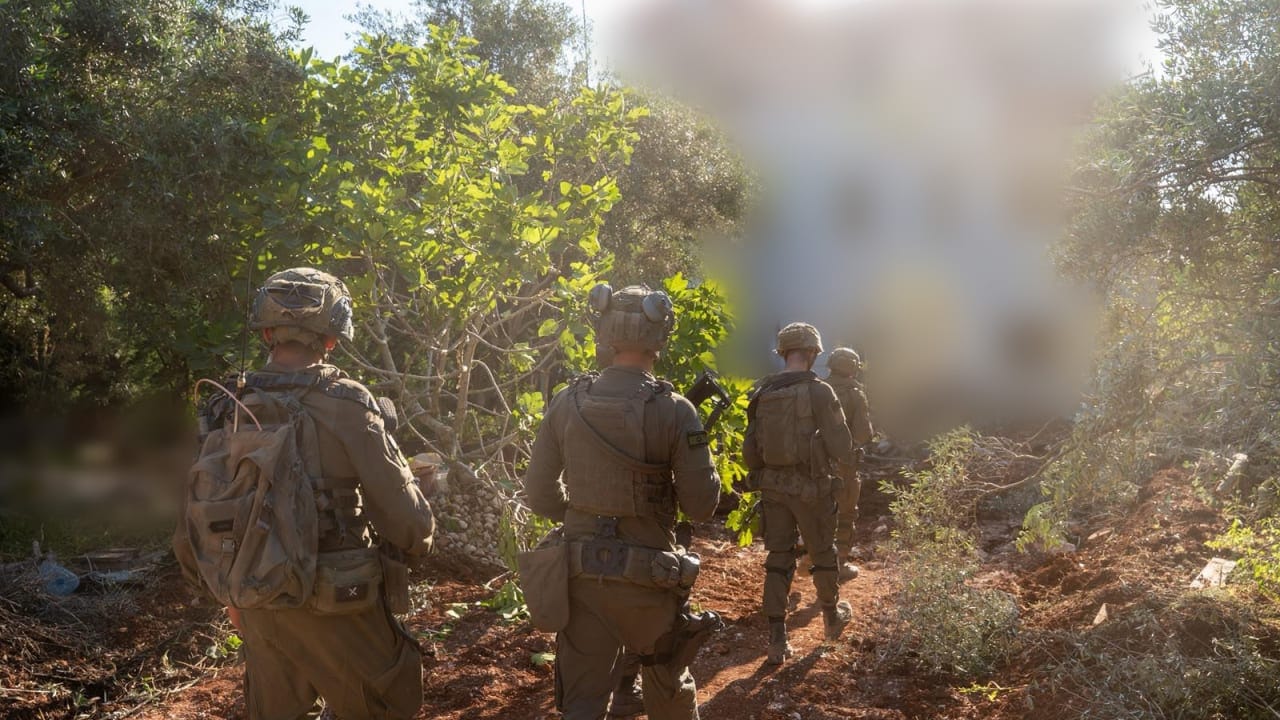
At roughly 900 metres above sea level, atop a Crusader fortress that has watched empires rise and fall since the 12th century, soldiers of the Israel Golani Brigade’s Reconnaissance Unit planted their banner on Sunday morning over Beaufort Castle known locally as Qalaat al-Shaqif. Stone walls that have absorbed Crusader swords, Ottoman cannon fire, and PLO rockets now bore witness to something else: Israel’s deepest military penetration into Lebanese territory in more than 26 years.
This was not a surprise strike. It was a statement.

Back to Where It All Began
For Israelis of a certain generation, Beaufort is not just a castle. It is a wound. Troops of the Golani Brigade’s Reconnaissance Unit carried out the operation at Beaufort Castle in southern Lebanon, the same brigade that fought and bled here during the First Lebanon War in 1982. Israeli Defense Minister Israel Katz, speaking at a memorial ceremony for soldiers who fell in that same war, declared: “Twenty-six years after the withdrawal, our heroic soldiers have captured Beaufort once again, and will remain there as part of the security zone in Lebanon.”
The symbolism was deliberate, almost theatrical. The date chosen, the anniversary of the First Lebanon War commemoration turned a military operation into a historical reckoning.
The advance into Beaufort Castle has granted Israeli troops an overlook point over much of southern Lebanon and northern Israel, from which attacks had been launched toward Israeli residential areas. The IDF said Hezbollah had carried out numerous attacks from the ridge, and that Israeli forces were operating against launch infrastructure from which hundreds of projectiles had been fired toward Israeli civilians and soldiers.

What Beaufort Actually Means on the Ground
Strip away the symbolism and what remains is cold strategic arithmetic. The Beaufort Ridge commands an unobstructed line of sight across the Galilee Panhandle. Every launcher, every observation post, every supply route in a wide arc of southern Lebanon is visible from its heights. Israeli Defense Minister Katz said the IDF had “crossed the Litani River and captured the Beaufort Ridge one of the most important strategic points for defending the communities of the Galilee and safeguarding the security of our forces.”

The operation didn’t happen in a vacuum. Israel had issued more than ten displacement orders in the 24 hours prior as it expanded its offensive against Hezbollah, after its forces crossed the Litani River on Friday for the first time since 2006. The Israeli military followed the castle’s capture with a sweeping evacuation order covering areas south of the Zahrani River, north of the Litani, and roughly 40 kilometers from the border a corridor the size of a small country.

Prime Minister Netanyahu framed the moment in maximalist terms. “The capture of Beaufort is a dramatic stage and a dramatic shift in the policy we are leading. We have broken the barrier of fear. We are taking the initiative, we are operating on all fronts in Syria, in Gaza, in Lebanon,” he said in a video statement.

Hezbollah: A Terror Machine Running on Fumes
Here lies the uncomfortable contradiction that neither side will admit openly: Hezbollah is losing ground, but it hasn’t stopped fighting.
The group that once boasted 150,000 rockets, an underground tunnel network rivalling Gaza’s, and seasoned commanders hardened by Syria’s civil war is today a shadow of that force. Its founding secretary-general Hassan Nasrallah was killed in September 2024. Its senior command structure has been dismantled down to lower operational levels, and strategic weapons depots and infrastructure have been hit significantly. Hezbollah’s intervention in March 2026 proved futile, it did not shift the balance of power in Iran’s favour, and the group now faces financial strain alongside a decline in domestic support.
And yet, on Saturday the day before Beaufort fell, Hezbollah launched one of its heaviest barrages since the April ceasefire. It came after one of the heaviest days of Hezbollah fire toward northern Israel since the April ceasefire, prompting school closures and restrictions across the north. Air raid sirens sounded over Karmiel and Safed for the first time since the truce began. A Hezbollah explosive drone killed an Israeli soldier operating west of the Beaufort area.
This is the paradox of a degraded insurgent force: weakened enough to lose castles, but not weak enough to stop killing.
Hezbollah had been heavily criticized by Lebanese voices who accuse the group of putting Iran’s interests ahead of Lebanon’s, and in effect killing off a peace process already under massive strain. The Lebanese army, tasked with a disarmament process it cannot realistically enforce, watches from the sidelines.

The World Watches and France Moves at the UN
Internationally, the capture of a medieval fortress broadcast via social media landed like a provocation. France requested an emergency meeting of the United Nations Security Council, with Foreign Minister Jean-Noel Barrot stating: “Nothing can justify the continuation of Israeli military operations in Lebanon and its ever-deeper occupation of Lebanese territory.”

France’s move is more than diplomatic reflex, it is the clearest signal yet that Western patience with Israel’s expanding Lebanon footprint is fracturing. Paris has deep, historic ties to Lebanon dating to the French Mandate, and carries an outsized moral responsibility toward Beirut that no other Western capital quite matches. But France’s concern here isn’t purely sentimental. What alarms European capitals is the language coming from within Israel’s own government: Finance Minister Bezalel Smotrich and National Security Minister Itamar Ben-Gvir have both made statements that, read plainly, gesture toward permanent Israeli presence in southern Lebanon not a temporary buffer, not a security zone with an exit date, but something resembling a fait accompli on the ground. When a defense minister announces troops “will remain at Beaufort as part of the security zone” without a timeline, without a diplomatic off-ramp, and without any reference to UN Resolution 1701, the framework that was supposed to govern Israeli withdrawal, the word “occupation” stops being inflammatory and starts being accurate. Lebanon’s government is not Hezbollah. Prime Minister Nawaf Salam is a reform-minded, internationally respected figure trying to rebuild a fractured state. Punishing that government with scorched villages and mass displacement orders does not weaken Hezbollah, it discredits every Lebanese voice that argued the state, not the militia, should be Lebanon’s future.
Lebanon’s Prime Minister Nawaf Salam has condemned the campaign as a “scorched-earth policy and collective punishment,” while simultaneously acknowledging that US-brokered negotiations are “the least costly path” forward, a grim admission that Beirut has few other cards to play.

The Hidden Reality No One Says Out Loud
Here is what the press conferences omit: a nominal ceasefire announced on April 17 has never held for a single day. The capture deepens Israel’s footprint in Lebanon as the Israel-Hezbollah military front remains active even as a parallel ceasefire holds in the wider Iran war. Both sides accuse each other daily of violations, and both are correct. The ceasefire exists on paper; on the ground, it is a war with a diplomatic nickname.
Israel says its troops will stay at Beaufort as part of a permanent security zone. That is, effectively, occupation whatever the legal terminology used. The Lebanese state, caught between a militia it cannot disarm and an army it cannot stop, is being asked to negotiate the terms of its own dismemberment.
The castle stood for nine centuries. The question is what stands next