

Padmini Ekadashi 2026: Date, Time, Rituals, Mantras & the Truth Nobody Tells You
Published: May 2026 | Bharatnewsupdates
The Confusion Around the Name: Padmini or Mohini?
Before diving in, let’s address the elephant in the room: many readers search for “Mohini Ekadashi 2026” and land on articles about Padmini Ekadashi or vice versa. These are two entirely different Ekadashis, and conflating them is one of the most widespread errors on religious content platforms today.
Mohini Ekadashi falls during the Shukla Paksha (waxing moon fortnight) of the month of Vaishakha, typically in April or May. It derives its name from the Mohini avatar of Lord Vishnu, and its associated legend involves the churning of the cosmic ocean (Samudra Manthan) and the distribution of amrit (nectar of immortality). In 2026, Mohini Ekadashi was observed on May 7, 2026.
Padmini Ekadashi, on the other hand, is a rare occurrence. It appears only once every 32–33 months during the Shukla Paksha of Adhikmas (the intercalary or leap month in the Hindu lunar calendar). It is named after Queen Padmini, the devoted wife of King Kritavirya, whose story forms the backbone of this Ekadashi’s legend. In 2026, Padmini Ekadashi falls on Wednesday, May 27, 2026.
If you came here looking for Mohini Ekadashi, the short answer: it already passed this year. If you came for Padmini Ekadashi, you are exactly where you need to be.
What Is Adhikmas And Why Does It Make This Ekadashi So Rare?
The Hindu calendar is lunisolar, it tracks both the sun and the moon. Every 32.5 months or so, a thirteenth month is inserted to reconcile the lunar and solar years. This extra month is called Adhikmas, also known as Malmas or Purushottam Mas.
Here is the part that surprises most people: Adhikmas is considered simultaneously the most auspicious and the most inauspicious month in Hindu tradition depending on the context. Regular auspicious activities like marriages, griha pravesh (housewarming), and mundane sacred rituals (upanayana, etc.) are typically prohibited during this month. Yet, acts of pure devotion: fasting, prayer, reading scripture, giving charity are said to yield multiplied spiritual merit during Adhikmas.
This contradiction is intentional. Adhikmas is dedicated entirely to Lord Vishnu (hence Purushottam Mas, meaning “month of the Supreme Person”). It is a month stripped of worldly celebration but overflowing with spiritual opportunity.
When Ekadashi falls during the Shukla Paksha of this month, it becomes Padmini Ekadashi — arguably the most potent Ekadashi in the entire 3-year cycle.
Padmini Ekadashi 2026: Exact Date and Timings
| Detail | Information |
|---|---|
| Ekadashi Date | Wednesday, May 27, 2026 |
| Tithi Begins | May 26, 2026 at 5:10 AM |
| Tithi Ends | May 27, 2026 at 6:21 AM |
| Parana (Fast-Breaking) | May 28, 2026 between 5:25 AM – 7:56 AM |
| Dwadashi End Time | May 28, 2026 (morning) |
Important regional note: Tithi timings are calculated according to the Indian Standard Timezone (IST, UTC+5:30). If you are observing from outside India particularly in the Americas, Europe, or Southeast Asia, you must recalculate the tithi window for your local time before deciding the date of observance.
The Hidden Reality About Parana (Breaking the Fast)
Most websites will simply say “break the fast on May 28.” What they rarely explain:
Parana must happen after sunrise and within the Dwadashi tithi window. If you break the fast after Dwadashi ends, the Vrat is considered incomplete, the spiritual merit is not accrued in full. Conversely, breaking the fast before the correct time window (say, at 4 AM out of hunger) also diminishes the Vrat.
The window on May 28 is 5:25 AM to 7:56 AM. Set an alarm. Do not skip this.
Also Parana should ideally be done with Panch Amrit (Panchamrit) (a combination of milk, curd, honey, ghee, and sugar) or at minimum with Tulsi-mixed water and fruit, not with a full grain meal immediately.
The Story Behind Padmini Ekadashi, The Version Told in Full
The legend originates in the Treta Yuga, narrated by Lord Krishna to Yudhishthira (and in some traditions, by Brahma to Narada Muni).
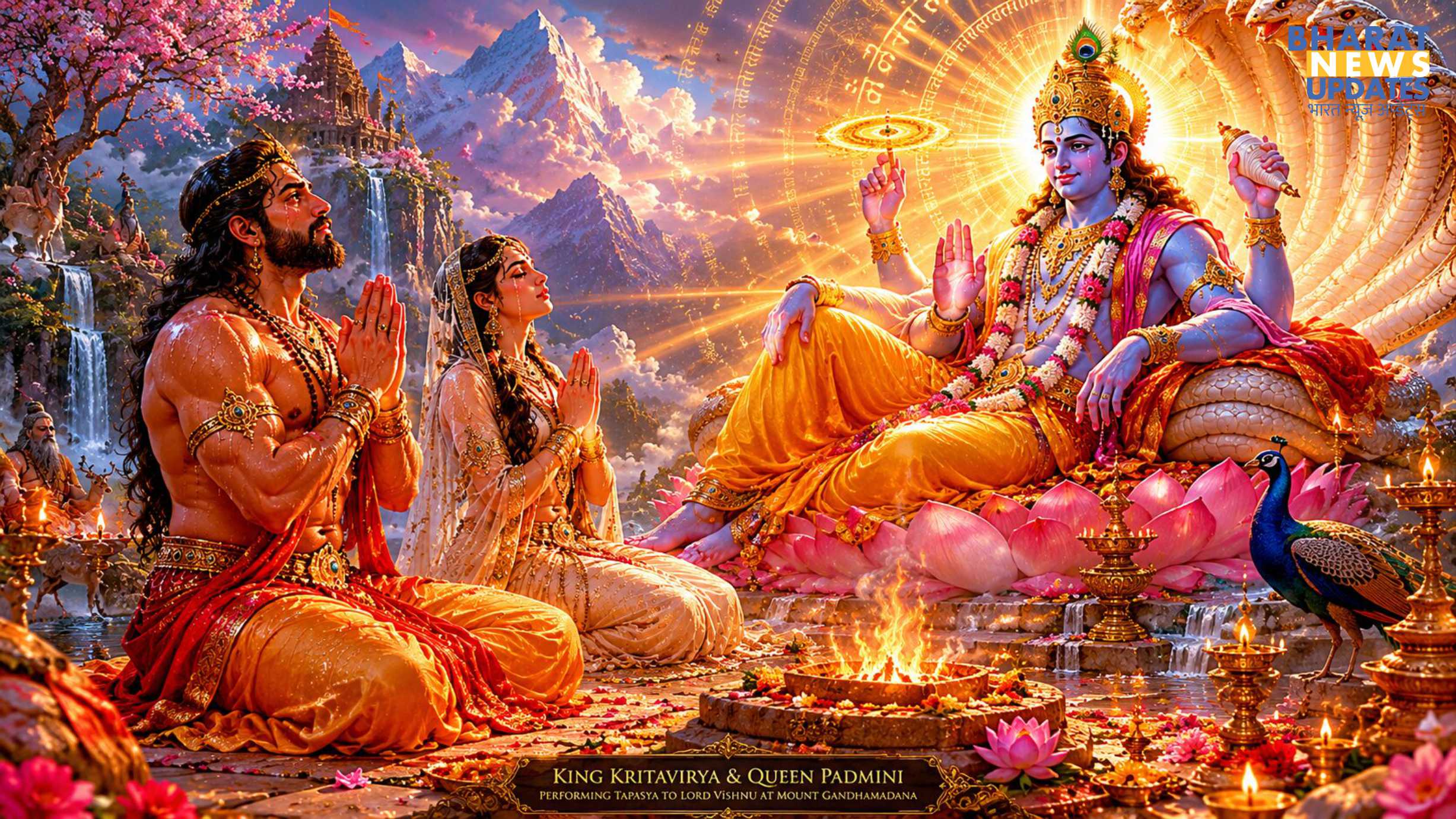
King Kritavirya of the Haihaya dynasty ruled Mahishmati Puri. He had a thousand queens but no heir. He tried every ritual: prayers to the gods, rites for his ancestors, consultations with physicians, and intensive rituals. Nothing worked.
Finally, the king set out for intense penance (Tapasya) at Mount Gandhamadana. His queen, Padmini daughter of the Ikshvaku king Harishchandra refused to stay behind. She abandoned every royal comfort and followed her husband into the forest.
Ten thousand years passed. The king remained without a son.
At this point, Mata Anasuya wife of the Sage Atri, one of the Sapta Matrikas (seven divine mothers), revered for her absolute virtue appeared to Queen Padmini. Mata Anasuya revealed a secret: the Adhikmas Ekadashi, which falls once in every 32 months, is more powerful than any of the twelve regular Ekadashis. Observing this fast with sincere devotion, a complete nightlong vigil, and worship of Lord Vishnu would compel the Lord’s grace and fulfill the desire for a child.
Queen Padmini observed the fast with complete commitment no food, full wakefulness, devoted prayer through the night. Lord Vishnu, pleased, granted the boon.
The son born to them was Kartavirya Arjuna (also called Sahasrarjuna) a warrior of extraordinary power who went on to become one of the mightiest kings of his age, said to be undefeatable by any being in the three worlds except the Lord Himself.
What is rarely discussed: Kartavirya Arjuna later became a complex figure in the Puranas, famously defeated by Parashurama, and associated with the killing of the Sage Jamadagni. The very king born from this sacred Ekadashi Vrat became a lesson in how divine boons come with the responsibility of dharma. Spiritual power obtained through devotion must be sustained through right conduct.

Padmini Ekadashi Worship: The Step-by-Step Ritual
Morning (Brahma Muhurta to Sunrise)
Wake before sunrise, ideally in the Brahma Muhurta window (approximately 4:00–5:30 AM). Take a bath, this is mandatory. If unable to bathe before sunrise due to illness or other valid reasons, bathe before 12 noon.
After bathing, take the Sankalp, a formal vow in front of the deity, stating your intention to observe the fast for the full day and night, with mind, body, and speech dedicated to Lord Vishnu.
Throughout the Day
- Chant the Vishnu Sahasranama or simply the name “Om Namo Bhagavate Vasudevaya.”
- Read or listen to the Bhagavad Gita or Vishnu Purana.
- Avoid grains, lentils, certain vegetables (including onion, garlic, and non-Ekadashi-compatible produce), and non-vegetarian food absolutely.
- Fruits, milk, water, nuts, and root vegetables like potatoes and sweet potatoes are permitted.
- If the fast is being observed for progeny, abstain from physical intimacy on this day.
The Pahar Ritual: Rarely Practiced, Deeply Powerful
This is the element that most modern practitioners skip and it is arguably the heart of Padmini Ekadashi’s distinctiveness.
The night is divided into four Pahars (watches of roughly three hours each):
| Pahar | Approximate Time | Offering to Lord Vishnu |
|---|---|---|
| First Pahar | ~6 PM – 9 PM | Coconut |
| Second Pahar | ~9 PM – 12 AM | Bel Patra (Bilva leaves) |
| Third Pahar | ~12 AM – 3 AM | Sitaphal (Custard Apple) |
| Fourth Pahar | ~3 AM – 6 AM | Oranges and Betel Nut (Supari) |
Each offering is made with a lit Ghee lamp, fresh flowers, and a simple prayer. This is not a mandatory requirement for the Vrat to be valid but it is the practice that earns the Vrat its elevated reputation.
A practical exception: If you have health limitations, a young child to care for, or work obligations, performing even the first Pahar ritual sincerely and sleeping through the rest is considered acceptable by most Dharmashastra commentators. Intention and sincerity matter more than physical endurance.
Mantras to Chant for Maximum Benefit
Core Ekadashi Mantra (All Day)
ॐ नमो भगवते वासुदेवाय Om Namo Bhagavate Vasudevaya 108 repetitions, morning and evening.
For Desire of Progeny (Couples)
ॐ क्लीं कृष्णाय नमः Om Kleem Krishnaya Namah Chant 108 times together while sitting before the idol or image of Lord Krishna. Offer yellow flowers and yellow fruits (like banana or mango). Do this before sunset on Ekadashi day.
For Liberation from Obstacles and Negative Karma
At midnight, light a Ghee lamp and recite the 11th Chapter of the Bhagavad Gita (Vishwaroop Darshan Adhyaya). This chapter, describing the cosmic form of the Lord, is considered exceptionally powerful for dissolving karmic blocks.
For General Wellbeing and Spiritual Merit
ॐ विष्णवे नमः Om Vishnave Namah Simple, clean, accessible. Even children and the elderly can chant this throughout the day.
Uncommon Scenarios and Exceptions
“I have a medical condition, can I still observe the fast?” Yes, with modification. Those with diabetes, hypertension, pregnancy, or post-surgical recovery should not observe a full Nirjala (waterless) fast. A Phal Ahar fast (fruits and water only) or even a simple dietary observance, avoiding grains and maintaining a prayerful intention is accepted. Consult both your doctor and a knowledgeable priest.
“The Ekadashi Tithi ends at 6:21 AM on May 27, should I observe the fast on May 26 instead?” This is a genuine point of regional variation. The Smarta tradition (followed by many Hindus in South India) and the Vaishnava tradition (followed by ISKCON and many North Indians) sometimes calculate Ekadashi observance on different days when the Tithi overlaps with Dashami. For 2026, the general consensus is May 27. If you follow a specific tradition or Guru’s calendar, defer to that.
“I accidentally ate grain is the Vrat broken?” Technically, yes, in the strictest interpretation. Practically, recommit with renewed intention, don’t compound the break, and complete the rest of the observance sincerely. The purpose of the Vrat is not perfectionism; it is purification and devotion.
Precautions to Follow
- Do not sleep during the day on Ekadashi, sleeping in the daytime on this day is explicitly cautioned against in scripture as it diminishes the merit of the fast.
- Avoid gossip, arguments, and negative speech.
- Do not cut hair or nails on Ekadashi day.
- Keep a Tulsi plant nearby, offering Tulsi to Lord Vishnu is especially meritorious on this day.
- Avoid purchasing or consuming tamasic foods (meat, alcohol, stale food) even if you are not fasting