

There’s a strange irony sitting at the heart of Indian cinema right now. A country that shoots more film-adjacent content than almost anywhere on earth has, for decades, sent its most precious asset the actual negative, the physical reel on a plane to Los Angeles, London, or Bangkok just to get it processed and scanned. A director could shoot in Kutch and have to wait for the film to come back from Culver City before seeing a single frame.
That round-trip is about to get a lot shorter.
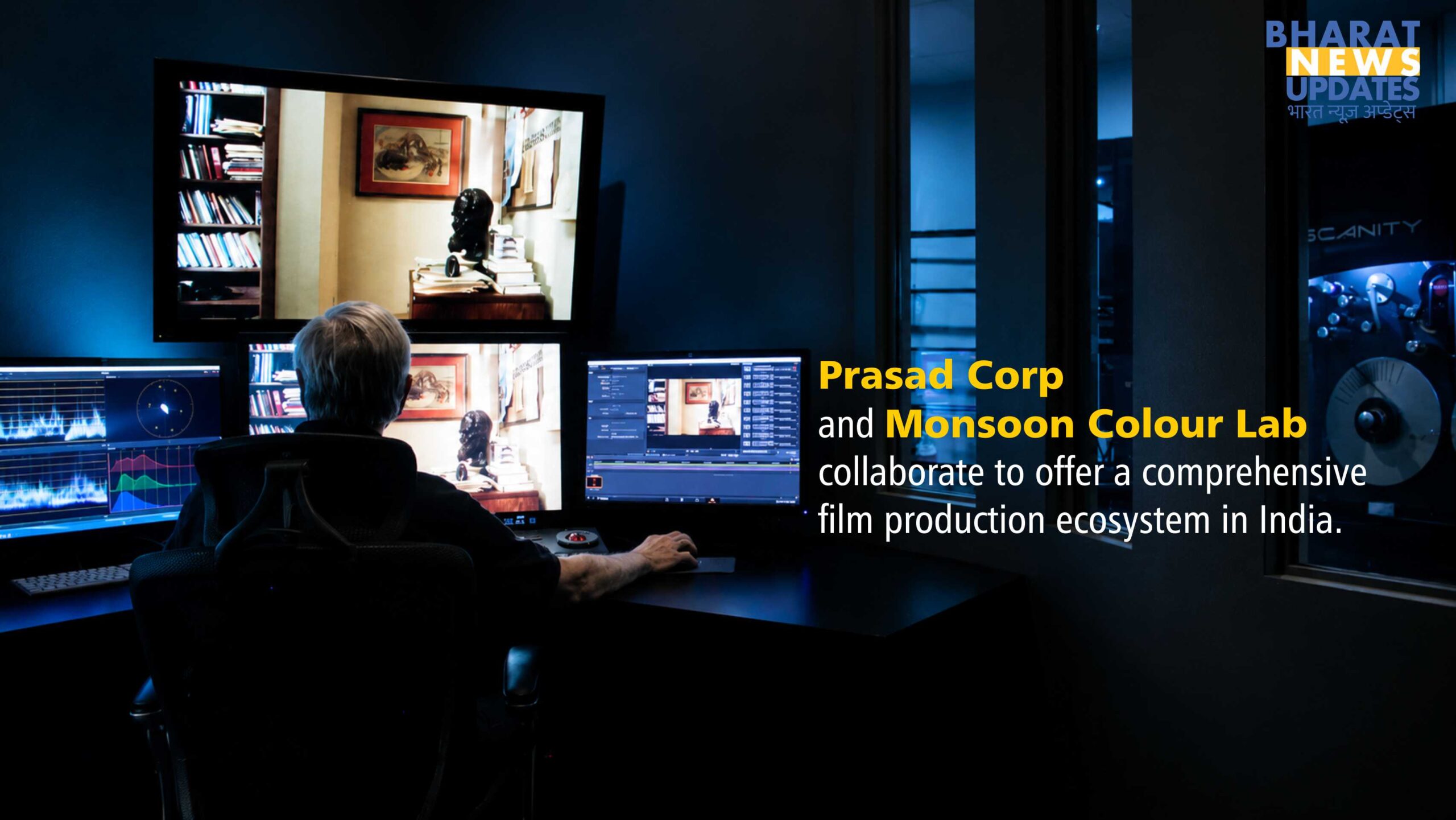
Prasad Corp and Monsoon Colour Lab have quietly built something the Indian film industry has needed for years: a single, domestic pipeline that takes a roll of exposed film all the way from chemical processing to a restored, colour-graded, festival-ready master without the negative ever leaving the country.
Why This Isn’t Just Another Press Release Partnership
Most “collaboration” announcements in this industry are cosmetic with two logos on a slide, a quote or two, nothing that changes how a film actually gets made. This one is different because it solves a problem that has quietly taxed every Indian filmmaker who’s chosen film over digital in the last decade: fragmentation.
Monsoon Colour Lab, which has been rebuilding the legacy of the 85-year-old Film Lab India, handles the chemistry with the actual developing of 35mm, 16mm and Super8 stock. Prasad Corp brings the Scanity HDR scanner, a machine that reads camera negatives natively at 4K, at up to 15 frames a second, without flattening out the grain and tonal depth that make film look like film in the first place. String those two capabilities together under one workflow, and a filmmaker in Mumbai or Kerala can go from exposed negative to a colour-graded, delivery-ready file entirely on Indian soil.
The Hidden Cost Nobody Talks About
Here’s what rarely gets said out loud: the biggest killer of film photography in India was never really the cost of stock. It was the anxiety tax. Every producer who considered shooting on film had to build in weeks of buffer for negatives to travel abroad, clear customs, get processed, and travel back and pray nothing got damaged, fogged, or lost in transit along the way. Insurance premiums on physical film shipments alone made accountants wince harder than the price of the stock itself.
That waiting period wasn’t just inconvenient. It changed creative decisions. Directors would avoid handheld experimental sequences on film because there was no way to check exposure quickly. Cinematographers leaned on digital as a “safety net” even on projects conceived as film-first, simply because same-day dailies weren’t realistically possible. An entire generation of Indian DOPs has grown up never seeing what a same-day 4K scan of their own 16mm footage actually looks like on a calibrated monitor.
That changes now.
Restoration Is the Quiet Superpower Here
What makes this partnership carry real weight, rather than just convenience, is Prasad Corp’s restoration pedigree. This isn’t a lab that learned scanning yesterday and it’s the outfit behind restored versions of Manthan, Ghatashraddha, Aranyer Din Ratri, and Kummatty, films that have gone on to screen in restored form at Cannes. That’s not a marketing line; it’s proof that the same infrastructure now available to a first-time filmmaker shooting Super8 has already handled negatives that are, in some cases, older than the filmmaker themselves.
For working directors, that means the machine calibrating their dailies is the same one that’s been trusted with National Award-winning classics. For audiences, it means something even bigger, quietly: India’s own cinematic archive, decades of negatives sitting in tins in warehouses, now has a local, capable home instead of depending on foreign vaults and foreign timelines to be saved.
What This Actually Means for Indian Viewers
Most industry-side stories skip this part, but it matters most to the audience. A faster, cheaper, local restoration pipeline means more classics regional cinema in particular, which has historically been the most neglected get a real shot at 4K revival instead of quietly decaying in storage. It means festival premieres of restored Indian films stop being rare, imported-feeling events and start becoming a normal part of the release calendar. And for new work, it means directors shooting on film no longer have to compromise the format for practicality, so viewers get to see, on a big screen, exactly what film was meant to look like not a digital approximation of it.
The Contradiction Worth Sitting With
There’s something almost rebellious about two Indian companies betting on film processing and analogue restoration at the exact moment global studios have gone almost entirely digital. It shouldn’t work, on paper. But three feature films, one on 35mm, two on 16mm plus a run of ads, shorts and music videos have already moved through this pipeline in just a few months. Grain, it turns out, was never obsolete. It just needed a home that didn’t require a passport.
Bharatnewsupdates Cinema Insight Team ⊥ July 2026, 1