Connect with us

News

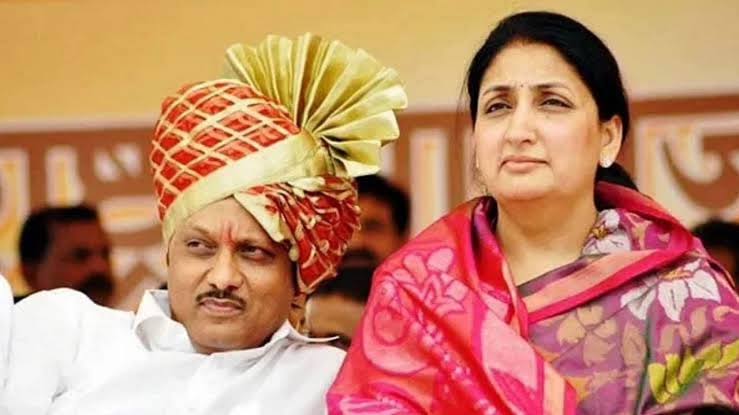
Sunetra Pawar Vahini: From Quiet Yet Strong Strength Of Ajit Dada to Maharashtra’s First Woman Deputy Chief Minister

Published

on

bharatnewsupdates : Sunetra Ajit Dada Pawar

Sunetra Pawar “Vahini”: A Quiet Life of Purpose Steps Into Maharashtra’s Most Demanding Role


History does not always arrive with slogans or drumbeats. Sometimes, it walks in softly, carrying both grief and responsibility in the same breath.

At 62, Sunetra Ajit Pawar is poised to step into one of the most consequential roles in Maharashtra’s political landscape —Deputy Chief Minister— not as a political heir by accident, but through a lifetime of disciplined service, organizational leadership and quiet determination.

Her oath-taking on January 31, 2026 at around 5.15pm, marks a powerful first in the state’s history: she will be the first woman to ever hold the Deputy Chief Minister post.

Her elevation comes just days after a personal tragedy that shook Maharashtra’s political landscape. On January 28-2026, Deputy Chief Minister Ajit Dada Pawar lost his life in a plane crash, leaving behind not just a grieving family, but a vacuum in governance and leadership. In the silence that followed the shock, Sunetra Ajit Dada Pawar’s name emerged—not as a symbol of sympathy, but as a figure of steadiness.

For many in Maharashtra, she has long been known simply as “Vahini”—a respectful, affectionate presence at public events, standing quietly beside one of the state’s most influential leaders. But that familiarity often hid a deeper truth: Sunetra  Pawar has always lived a life of work, discipline, and independent purpose.

Early Roots: A Legacy of Social Seva

Born on October 18, 1963, in Ter (now part of Dharashiv district), Sunetra’s early life was steeped in the rhythms of public life. Her father, Bajirao Patil, was a respected local leader, and her brother, Padamsinh Bajirao Patil, made his mark in regional politics during the 1980s. Growing up in a family rooted in community work gave her both confidence and an intuitive grasp of grassroots realities.

She pursued a Bachelor of Commerce from SB College in Aurangabad — a choice that would later anchor her practical roles in institutions, industries, and social initiatives that touched thousands of lives.

Beyond Politics: Business, Education and the Environment

Long before politics formally entered her life, Sunetra Pawar was deeply involved in work that rarely made headlines. In Baramati, As chairperson of the Baramati Textile Company, she played a key role in the development of the High-Tech Textile Park, a large industrial project that brought employment to rural Maharashtra. What set the project apart was not its scale alone, but its people—over 15,000 women, many from villages, found stable livelihoods there. For Sunetra Vahini, empowerment was never a slogan. It was about income, dignity, and self-reliance.

Her engagement with education is equally deep. As a trustee of Vidya Pratishthan, one of Maharashtra’s prominent educational institutions offering K12 level schools, Degree Courses and Engineering studies at various locations in and around Maharashtra, she has worked to strengthen governance, academic quality and institutional planning for more than 25,000 students.

Sunetra’s commitment to the environment is also notable. She founded the Environmental Forum of India (EFOI), and under her guidance, and since its inception in 2009, the main objective has been to conserve mother nature and serve the community in various ways for the betterment of society. The eco-village model — first piloted in Katewadi — emphasised water conservation, renewable energy and local
livelihood sustainability. Her environmental advocacy has won respect across civil society.

Bharatnewsupdates : Ajit & Sunetra Pawar Family

A Political Journey Forged in Purpose

Though not a seasoned politician initially, Sunetra stepped into formal politics with purpose and conviction. She was elected to the Rajya Sabha in June 2024, representing Maharashtra — a recognition not just of her lineage, but of her organizational credibility and broad vision.

In the 2024 Lok Sabha elections, she contested from Baramati but lost narrowly — a moment she described publicly as a catalyst to deepen her engagement rather than retreat from it.

She listened, reflected, and continued to work, understanding that public life is a long journey, not a single verdict.

Now, in the most unexpected and painful circumstances, that journey has brought her to Mantralaya as a Deputy Chief Minister.

Historic Elevation in a Time of Transition

With the untimely death of Ajit Dada Pawar on January 28, 2026, the Nationalist Congress Party faced both emotional grief and strategic decisions for leadership continuity. The party’s legislature wing gathered and unanimously elected Sunetra as its leader — a move that binds respect for legacy with confidence in her capability.

Her selection as leader of the NCP legislature party was unanimous—not out of sentiment alone, but trust. Those who have worked with her speak of her calm temperament, her ability to listen, and her habit of making decisions without theatrics. As Deputy Chief Minister, she is expected to take charge of portfolios previously held by Ajit Pawar, except finance and planning—a responsibility that would test even the most seasoned politician.

What makes this moment historic is not only that Sunetra Pawar is the first woman Deputy Chief Minister of Maharashtra, but that she represents a different kind of leadership—one shaped in classrooms, factory floors, village meetings, and years of silent work.

Her oath is not just a political transition. It is a reminder that strength does not always announce itself. Sometimes, it has been preparing quietly for decades.

A Personal Journey: Strength in Grace

Those close to her describe Sunetra Vahini as grounded, empathetic and thoughtful — qualities forged as much in personal loss as in public life. Her story is not one of inheritance, but of evolving readiness: a woman who walked her own path, stepped into leadership with resolve, and now stands ready to serve a state in transition.


Continue Reading
1 Comment

1 Comment

  1. Meenal Murkar

    January 31, 2026 at 2:17 pm

    Must applaud for her courage. Women of Matter stand up strongest in weakest moments too.

Leave a Reply

Your email address will not be published. Required fields are marked *

News

Shock, Silence, and a Political Vacuum in Maharashtra: An NDA Ally, Deputy Chief Minister, and NCP Chief Ajit Dada Pawar Dies in a Plane Crash

Published

on

Bharatnewsupdates - Ajit Dada

Today morning, Maharashtra wakes up not to headlines, but to Shock, disbelief and grief.

The name that Maharashtra has spoken for over four decades—with familiarity, disagreement, admiration, and dependence: Ajit Dada Pawar is no more.

Bharatnewsupdates - Ajit Pawar

The fiery, outspoken, intelligent, visionary and a people’s leader sixty-six year-old Maharashtra Deputy Chief Minister, NDA ally and Nationalist Congress Party (NCP-AP faction) leader Ajit Dada Pawar was among five people killed on Wednesday 28th January 2026 morning when their Bombardier Learjet-the aircraft, a business jet crashed while landing around 8:45 a.m. at Baramati airport section amid poor visibility. The Dada was flying from Mumbai to attend Zilla Parishad election events at Baramati, district Pune.

The Directorate General of Civil Aviation (DGCA) has confirmed that all five people on board the plane have been killed. According to Flight Radar, the flight took off from Mumbai at 8:10 a.m. and it disappeared from radar around 8:45 am. There were five people on board when the aircraft crashed at 8:50 a.m., a police official said in a statement.

The Aircraft Accident Investigation Bureau (AAIB) will launch a probe into the fatal Baramati plane crash. The AAIB team will soon visit the crash site.

Maharashtra’s Deputy CM Ajit Pawar and four others were killed in the crash, today.

The news of the plane crash is going to be altered the course of the state’s politics, and of a name that has been inseparable from Maharashtra’s power structure for over four decades: Ajit Dada Anantrao Pawar. The atmosphere that now grips Maharashtra—a mix of shock and question.

For Ajit Dada Pawar was not merely another office-holder. He was an institution of work, authority, and relentless governance.

Remain As A Memory – Maharashtra CM Devendra Fadnavis, Maharashtra Dy CM Eknath Shinde with Maharashtra Dy CM Late Ajit Dada Pawar

Born on 22 July 1959, an eight-term MLA from Baramati Assembly Constituency, a former MP, a six-time Deputy Chief Minister, and a finance minister trusted even in unstable coalitions, Ajit Dada Anantrao Pawar was known less for oratory and more for outcomes.

A 21 Yr old would’ve been embarrassed looking at his energy at 66 Yrs. used to get up at 5 am. Used to start his official work at 6 am. Day never used to end up before late midnight. But never a sign of tiredness on his face. A true grassroot leader.

Much of who Ajit Dada Pawar became cannot be spoken of without mentioning Sharad Pawar, his uncle, mentor, and towering presence in Indian politics. Sharad Pawar did not merely introduce him to public life; he shaped his instincts. From him, Ajit Pawar learned the grammar of power in Maharashtra—how rural cooperatives breathe, how sugar belts decide elections, how irrigation is not just water but politics, livelihoods, and dignity.

Yet, over time, Ajit Pawar stepped out of that shadow, forging an identity that was unmistakably his own: decisive, impatient with indecision, fiercely administrative.

He spoke bluntly, often impatiently but with honesty, sometimes controversially. But few questioned his grasp of governance or his ability to move the system. Minister of several departments (Finance and Planning, Energy, Water Resources, Rural Development, Water Supply and Sanitation, Irrigation, etc.)- his imprint was everywhere.

As the Finance Minister, Ajit Dada never let the economic clock of the state slip. He made financial provisions for many development projects in the state. Lakhs of people in Maharashtra along with the workers of Nationalist Congress party have a feeling of being defeated and leaderless today.

The kingdom has suffered immense losses due to the demise of Ajit Dada as He was, to many, the embodiment of relentless work.

The Baramati plane crash did not claim only Ajit Dada’s life. Besides Ajit Dada, the mentioned individuals also died in this tragic accident: Sumeet Kapoor: Pilot, Sambhavi Pathak: Co-pilot, Videep Jadhav: PSO. Pinky Mali: Crew Member

MP Supriya Sule cousin, Ajit Dada Pawar’s wife Sunetra Pawar and son Parth Pawar reached Baramati following the tragic plane crash that claimed the life of Maharashtra Deputy Chief Minister Ajit Dada Pawar. Visibly overcome with grief at the airport, Supriya Sule broke down and said, ‘Sabka ladla chala gaya’, remembering her cousin and ‘Dada’, as family members and supporters gathered to mourn the loss.

The last rites of Maharashtra Deputy Chief Minister Ajit Pawar, killed in a plane crash, will be held with full state honours on Thursday (January 29, 2026) in Baramati, Pune district.

Union Home Minister Amit Shah, BJP National President Nitin Nabin, Maharashtra CM Devendra Fadnavis, Maharashtra Deputy CM Eknath Shinde, Maharashtra Governor Acharya Devvrat and many leaders from various opposition parties are expected to attend the last rites, which will be held at Vidya Pratishthan ground, Baramati at 11 a.m. with full state honours to acknowledge Ajit Dada whose working relationship with power was respected even by opponents.

The Condolence from some leaders

Maharashtra Dy CM Ajit Dada Pawar With PM Narendra Modi, Maharashtra Dy CM Eknath Shinde And Others.

PM Narendra Modi wrote on X- Shri Ajit Pawar Ji was a leader of the people, having a strong grassroots level connect. He was widely respected as a hardworking personality at the forefront of serving the people of Maharashtra. His understanding of administrative matters and passion for empowering the poor and downtrodden were also noteworthy. His untimely demise is very shocking and saddening. Condolences to his family and countless admirers. Om Shanti.

Maharashtra CM Devendra Fadnavis wrote on X- Dada is no more!
My dear friend and colleague, a mass leader with a strong people’s connect, Deputy Chief Minister Ajitdada Pawar lost his life in a plane accident. This is an extremely shocking, heart wrenching news. I’m numb. I do not have any words to express these devastating emotions.
I have lost my brave friend with a huge heart.
This is a tragic and personal loss for me. And it is irreparable loss! I pay my deep, humble, heartfelt respects to dear Dada. My deepest condolences to his entire family and NCP family. We stand together with them in sorrow and tough times. 4 more people lost lives in this accident. My condolences to their families too. We are with them. I’ve cancelled all my scheduled programs and will go to Baramati.

Aum Shanti

Maharashtra Dy CM Eknath Shinde wrote on X-
” My elder brother went. Ajit Pawar’s death has brought down a mountain of grief in Maharashtra. The entire Maharashtra has suffered huge losses. Such a thought did not occur in any dream. Ajit Dada was a man of his word. We worked as a team when I was the CM, and he was Dy CM. As team we had started the Ladli Behen Yojana, and Ajit dada played an important role in it..”

Deputy Chief Minister of Andhra Pradesh Pawan Kalyan wrote on X-
Deeply shocked by the tragic news of the passing of the Maharashtra Deputy Chief Minister, President of NCP and an NDA alliance leader, Sri Ajit Dada Pawar ji, in a devastating plane crash today. His dedicated public service and immense contributions towards the welfare and development of the people of Maharashtra will always be remembered, and his enduring commitment to the people will continue to be held with respect.
I express my profound condolences on his passing and extend my deepest sympathies to his family members, admirers, and party cadre during this moment of immense grief.


The Succession

The question of succession has also begun to surface, quietly but inevitably. Will the mantle fall to wife Sunetra Tai Pawar, whose recent political foray brought her into public view beyond Baramati? Or to son Parth Pawar, whose name carries legacy but whose political journey remains unfinished? Or will seasoned leaders like Praful Patel, Chhagan Bhujbal, or Sunil Tatkare attempt to consolidate control?

In moments like these, parties fracture or find new centres or merge—future offers surprise outcomes to consolidate NCP-AP faction.

About the trending Assassination Conspiracy Through Plane Crash

Bharatnewsupdates - Ajit Pawar and Sharad Pawar

Today, after Ajit Dada’s death due to a plane crash, reacting to W. Bengal CM Mamata Banerjee’s reaction, NCP Supremo and former Maharashtra CM Sharad Pawar released a statement saying, “The accidental death of Ajit Pawar is a tremendous shock to Maharashtra. Today, Maharashtra has lost a capable and decisive leader. The loss is irreparable, but some things are simply beyond our control. I wasn’t planning to speak to the media today, but I learned that some media outlets were suggesting from Kolkata that there was some political angle behind this accident. But there is no politics involved; this is purely an accident. The pain of this death is felt by Maharashtra and all of us. Please do not bring politics into this. That’s all I wanted to say.”

This statement by Pawar Senior put an end to the political controversy being created by vested political leaders and parties.

Continue Reading

News

Early Morning Earthquake Shakes Assam and Northeast India, Rekindling Focus on Region’s Seismic Vulnerability

Published

on

Bharatnewsupdates : Earthquake Assam India 4th Jan 2026

A moderate earthquake measuring 5.1 on the Richter scale struck Assam and large parts of Northeast India in the early hours of Sunday, briefly jolting residents awake and renewing attention on the region’s high seismic sensitivity. The tremor, though strong enough to be widely felt, did not cause any immediate loss of life or damage to property, according to official sources.

The National Centre for Seismology (NCS), the Government of India’s nodal agency for monitoring earthquake activity, reported that the earthquake occurred at 4:17 a.m. The epicenter was located in Morigaon district of Assam, on the southern bank of the Brahmaputra River. The quake originated at a depth of about 50 kilometers beneath the earth’s surface.

Residents across Morigaon and adjoining districts of central Assam reported feeling strong vibrations, with many rushing out of their homes in panic. The experience was made more unsettling by the cold winter morning and dense fog that blanketed much of the region at the time. In Guwahati and other towns, hanging objects swayed and doors rattled, prompting widespread concern, particularly among those living in older structures.

Seismologists point out that the earthquake’s epicenter lies along the Kopili fault zone, one of the most active fault systems in Northeast India. The Kopili fault has been responsible for several moderate to strong earthquakes in the past and is known for its complex geological behaviour. This fault marks a zone where enormous tectonic stresses accumulate due to the ongoing collision between the Indian Plate and the Eurasian Plate.

In the days surrounding the Assam tremor, several smaller earthquakes were also recorded across the wider Himalayan and Northeast region. These included a 3.9-magnitude quake in Gomati district of Tripura, another of similar strength near Soreng in Sikkim, and mild tremors in Himachal Pradesh, Meghalaya, Bhutan, and Nepal. While these events were not directly linked, they collectively reflect the continuous tectonic adjustments taking place across this geologically young and unstable region.

Here is the earthquake magnitude in various state of North East India and neighbours:

1. EQ of M: 5.1, On: 05/01/2026 04:17:40 IST, Lat: 26.37 N, Long: 92.29 E, Depth: 50 Km, Location: Morigaon, Assam.

Bharatnewsupdates : Earthquake In North East India Region

2. EQ of M: 3.9, On: 05/01/2026 03:33:32 IST, Lat: 23.67 N, Long: 91.50 E, Depth: 54 Km, Location: Gomati, Tripura.

Bharatnewsupdates : Earthquake In North East India Region

3. EQ of M: 3.9, On: 03/01/2026 05:58:03 IST, Lat: 27.21 N, Long: 88.24 E, Depth: 5 Km, Location: Soreng, Sikkim.

Bharatnewsupdates : Earthquake In North East India Region

4. EQ of M: 3.6, On: 05/01/2026 12:57:20 IST, Lat: 31.38 N, Long: 77.05 E, Depth: 5 Km, Location: Mandi, Himachal Pradesh.

Bharatnewsupdates : Earthquake In North East India Region

5. EQ of M: 3.5, On: 03/01/2026 22:36:35 IST, Lat: 26.81 N, Long: 86.46 E, Depth: 10 Km, Location: Nepal.

Bharatnewsupdates : Earthquake In North East India Region
6. EQ of M: 3.1, On: 03/01/2026 08:50:37 IST, Lat: 26.92 N, Long: 89.92 E, Depth: 10 Km, Location: Bhutan.

Bharatnewsupdates : Earthquake In North East India Region

7. EQ of M: 2.7, On: 04/01/2026 08:21:22 IST, Lat: 25.53 N, Long: 91.20 E, Depth: 10 Km, Location: West Khasi Hills, Meghalaya.

Bharatnewsupdates : Earthquake In North East India Region

Experts explain that Northeast India sits at the junction of multiple tectonic plates and fault systems, making it one of the most earthquake-prone areas in the country. Almost the entire region falls under Seismic Zone V, the highest risk category under India’s seismic zoning map. Earthquakes here are often shallow to intermediate in depth, which means even moderate-magnitude tremors can be felt over large areas.

Although no damage has been reported so far, authorities have urged residents to remain calm but vigilant. Disaster management officials continue to monitor the situation, while reminding the public about basic earthquake safety measures, such as moving to open spaces during strong shaking and ensuring that buildings follow earthquake-resistant construction norms.

Sunday’s early morning tremor serves as another reminder that earthquakes are a natural and recurring part of life in the Northeast. While science can help identify fault zones and assess risks, preparedness and awareness remain the most effective tools for reducing loss during such natural events.


Continue Reading

News

Delhi Riots Case: Supreme Court Denies Bail to Umar Khalid and Sharjeel Imam, Cites Prima Facie Terror Link

Published

on

Bharatnewsupdates-Delhi 2020 Riot Bail Plea Verdict 5 Jan 2026

The Supreme Court of India has refused to grant bail to Delhi riot accused Umar Khalid and Sharjeel Imam in the case related to the alleged larger conspiracy behind the February 2020 Delhi riots. The decision, delivered by a Bench of Justices Aravind Kumar and N.V. Anjaria, holds that the material placed on record by the prosecution discloses a prima facie case against the two accused under the Unlawful Activities (Prevention) Act (UAPA).

With this ruling, both Khalid and Imam will continue to remain in judicial custody, more than five years after their arrest. At the same time, the Court granted bail to five other accused persons in the same case, underlining that bail decisions must be based on individual roles and cannot be decided by treating all accused as equals.

What the Court Found

Reading out key portions of the judgment, the Bench observed that the prosecution material suggests that Umar Khalid and Sharjeel Imam were not mere participants in protests but were allegedly involved in the planning and coordination of events that ultimately led to large-scale violence and deaths. According to the Court, the allegations, if taken at prima facie case at this stage, attract the statutory bar on bail under the UAPA.

The Court noted that the alleged acts went beyond ordinary law-and-order issues. It held that the material indicates deliberate actions that disrupted essential services, caused widespread fear, and posed a serious threat to public order and the economy. Such conduct, the Court said, could fall within the definition of a “terrorist act” under Section 15 of the UAPA, at least for the limited purpose of deciding bail.

Importantly, the judges clarified that at the bail stage, the Court is not required to examine the truth or falsity of the allegations in detail. The legal test is only whether the accusations, on their face, disclose an offence under the special law and whether the evidence shows a reasonable connection between the accused and the alleged acts.

UAPA and the Question of Liberty

The judgment also dealt at length with the tension between personal liberty and national security. The Bench acknowledged that Article 21 of the Constitution, which guarantees the right to life and personal liberty, occupies a central place in India’s constitutional framework. The Court reaffirmed that pre-trial detention should not become a form of punishment.

However, it also pointed out that Parliament, through the UAPA, has laid down stricter conditions for granting bail in cases involving terrorism-related offences. Once the Court is satisfied that the statutory threshold under the UAPA is met, bail cannot be granted merely on grounds such as the passage of time or delay in trial.

The judges made it clear that delay alone does not automatically entitle an accused to bail in UAPA cases, unless the delay becomes so excessive that it renders continued detention arbitrary or unjustified.

Individual Assessment of Accused

A significant aspect of the ruling is the Court’s emphasis on individual assessment. While rejecting bail for Khalid and Imam, the Supreme Court allowed the bail pleas of Gulfisha Fatima, Meeran Haider, Shifa Ur Rehman, Mohd Saleem Khan, and Shadab Ahmad.

The Court held that all accused persons cannot be placed on the same footing. The prosecution material, according to the Bench, suggested a hierarchy of participation, requiring courts to carefully examine the specific role attributed to each individual.

In this context, the judges observed that Khalid and Imam stood on a “qualitatively different footing” compared to the other accused. This distinction, the Court clarified, does not amount to a finding of guilt but is relevant for determining whether the statutory bar on bail applies.

Background of the Case

The case arises out of the violence that broke out in north-east Delhi in February 2020, during protests against the Citizenship (Amendment) Act (CAA) and the proposed National Register of Citizens (NRC). The riots resulted in the death of 53 people, injuries to more than 700 others, and large-scale destruction of property. In the aftermath, Delhi Police registered 753 FIRs across the city.

The prosecution has alleged that the violence was the result of a planned conspiracy aimed at destabilizing the government. According to the police, the accused sought to create conditions of unrest and communal polarization, with the larger objective of “regime change.”

The Supreme Court’s verdict came on appeals challenging a September 2023 order of the Delhi High Court, which had also denied bail to Khalid, Imam, and others, describing their alleged roles as “grave” and holding that their speeches and actions were prima facie aimed at communal mobilization.

Reactions to the Judgment

The ruling drew sharp political and emotional reactions. BJP spokesperson Shahzad Poonawalla welcomed the decision, claiming that it vindicated the stand that the Delhi riots were “organized and sponsored” rather than spontaneous. He also criticized opposition parties for previously defending the accused.

From the victims’ families, reactions were mixed. Hari Solanki, whose son Rahul Solanki died during the riots, said he was thankful that bail was denied to Khalid and Imam. At the same time, he expressed anguish over the bail granted to other accused, reflecting the continued pain and anger among those who lost family members.

On the other hand, Sarim Javed, counsel for Gulfisha Fatima, welcomed the grant of bail to five accused persons, noting that they would be released after spending over five and a half years in jail. He also pointed out that the Supreme Court has directed the trial court to conduct the trial expeditiously and complete the examination of witnesses within one year.

What Lies Ahead

While the Supreme Court has closed the door on bail for Umar Khalid and Sharjeel Imam for now, it has left open the possibility of a fresh bail application after one year. The trial, meanwhile, is expected to proceed at a faster pace, as directed by the apex court.

The judgment once again highlights the difficult balance courts must strike between safeguarding personal liberty and addressing allegations of serious crimes under stringent anti-terror laws. As the trial unfolds, the final determination of guilt or innocence will rest on the evidence tested in court—not on the conclusions drawn at the bail stage.

Continue Reading

Trending